No portrait yet
Plains Apache Erotic
Southern Great Plains of the United States; today mainly Caddo County in southwestern Oklahoma, around Anadarko and Apache
Plains Apache (Na-Dene, Southern Athabaskan), no longer spoken fluently; English; historically Kiowa (Kiowa-Tanoan) as a second language
Native American Church, Christianity, and traditional Plains ceremonial practice
Southern Athabaskan (Apachean) peoples; historically a band within the Kiowa camp circle; organized today as the Apache Tribe of Oklahoma
About Plains Apache People
The Plains Apache are an Athabaskan-speaking people who lived for centuries on the southern Great Plains, so close to the Kiowa that outsiders gave them their allies' name. Kiowa Apache stayed in government records for generations, but the people have their own name, Na'isha. Their story goes back to the long Athabaskan migration south from the north of the continent. Most live today in southwestern Oklahoma, around Anadarko and the small town of Apache in Caddo County. They govern themselves as the federally recognized Apache Tribe of Oklahoma.
The alliance with the Kiowa runs through their whole history. The Apache camped as one band within the Kiowa camp circle and took part in the Kiowa Sun Dance. They hunted bison on horseback across the same country and signed the same treaties. Those included the Medicine Lodge agreements of 1867, which put the Kiowa, Comanche and Apache on a shared reservation in Indian Territory. What makes the partnership striking is that the two peoples spoke unrelated languages. Plains Apache is a Southern Athabaskan language, related to Navajo and the other Apache languages, but it sits on a branch of its own and is the most distinct of them. Kiowa belongs to the Kiowa-Tanoan family. Many Apache people also spoke Kiowa, and Plains Indian Sign Language covered the rest. The last fully fluent speaker of Plains Apache died in 2008, so language work now draws on records and recordings made with earlier generations of elders.
Allotment broke up the reservation in 1901, and the land left over after individual allotments was opened to non-Native settlers. The Native American Church took deep root in this corner of Oklahoma. For many families, peyote meetings are still part of religious life, alongside Christian churches. The Manatidie, often called the Blackfeet Society, is an old dancing society that was revived in the mid-twentieth century and still brings dancers and singers together. One point worth getting right: the Apache Tribe of Oklahoma is a separate nation from the Fort Sill Apache, whose ancestors were Chiricahua prisoners of war moved to Fort Sill in 1894.
Related ethnic groups
Groups that share Plains Apache's homeland, region, language, or religious tradition. These are likely candidates for comparative phenotype reference.
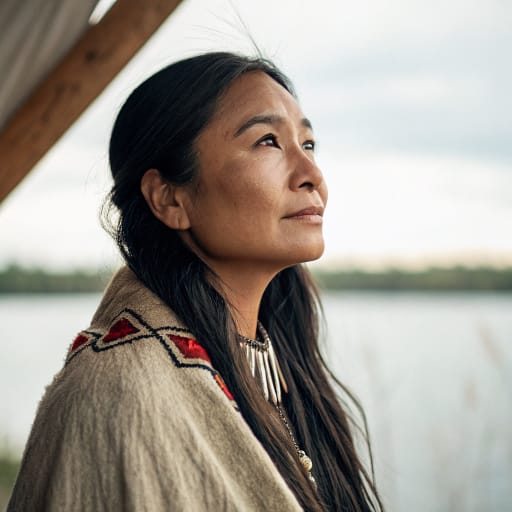
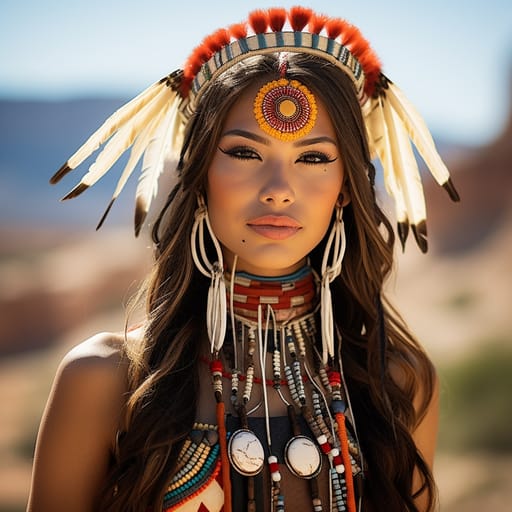
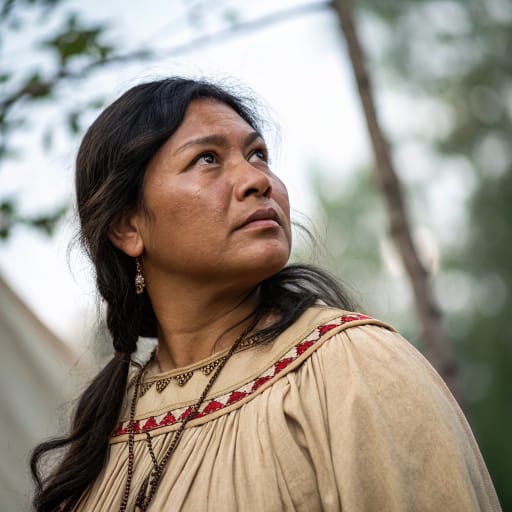
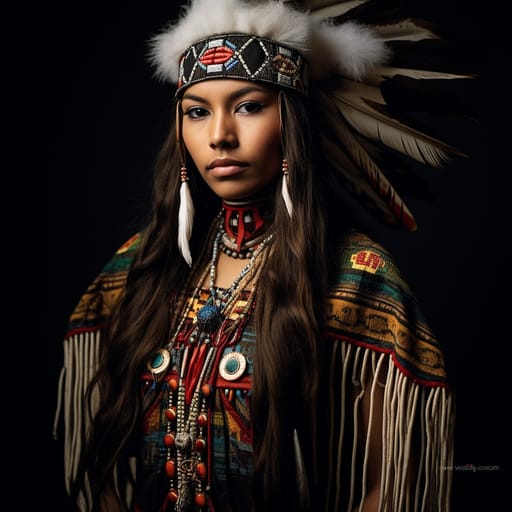
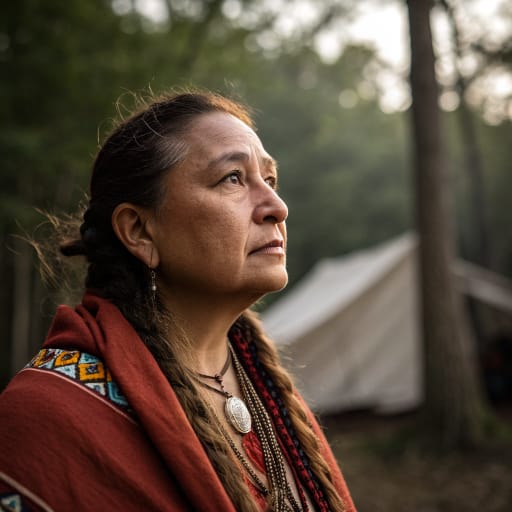
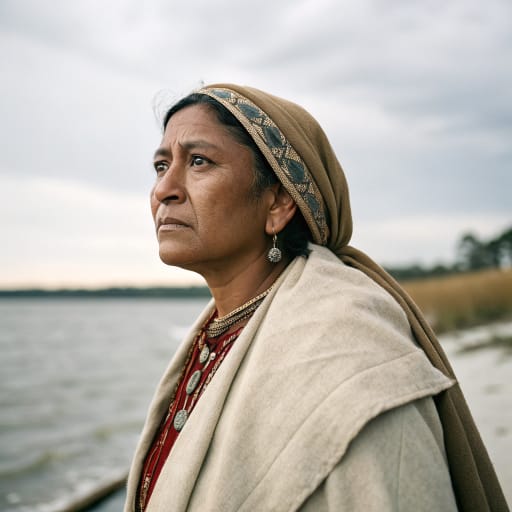
Typical Plains Apache Phenotypes
Reference for AI generation: hair, eyes, skin, facial structure, build
Plains Apache Body & Anatomy Reference
Indigenous Northern American / Algonquian-Iroquoian phenotype: anatomy reference for AI nude generation
Plains Apache Boobs & Breasts
The typical Plains Apache bust is medium cup, moderate projection, in line with the wider Indigenous Northern American / Algonquian-Iroquoian pattern. Areolas usually fall in the 30-44mm range, with medium-brown areolar pigmentation against the copper-to-medium-brown skin tone. Compared with the smaller East Asian bust, Plains Apache breasts sit forward and are generally full and moderate projection. A faithful AI render of Plains Apache tits keeps that shape and areola size.
Plains Apache Ass & Hips
Butt shape among Plains Apache women: medium, moderate-to-full projection, over medium iliac crests. This follows Indigenous Northern American / Algonquian-Iroquoian ancestry and looks quite unlike the slim East Asian narrow-hip profile. An accurate Plains Apache ass in adult AI imagery keeps both the silhouette and the overall build (mesomorph, broader frame in northern Indigenous populations) instead of a generic average.
Plains Apache Vagina & Pussy
Vulvar anatomy among Plains Apache women: medium-brown labial pigmentation. Pubic hair tends to be straight medium-coarse texture, in the usual inverted-triangle pattern. Both follow Indigenous Northern American / Algonquian-Iroquoian pigmentation, which is why Plains Apache pussy renders should not fall back on a pale, sparse Western template.
Plains Apache Dicks & Penis
The Plains Apache cock profile, from Indigenous Northern American / Algonquian-Iroquoian anthropometric data: regional mean ~13cm erect; moderate girth; medium-brown shaft pigmentation. Pubic hair has a straight medium-coarse texture and forms the usual inverted-V pattern. Whether Plains Apache men are circumcised follows religious and cultural practice rather than phenotype.
Plains Apache Body, Curves & Build
Build and curves among Plains Apache women follow the Indigenous Northern American / Algonquian-Iroquoian pattern: mesomorph, broader frame in northern Indigenous populations, mean adult female BMI 25-28. Proportions matter as much as skin tone, so Plains Apache figures should keep their regional height and limb ratios.
Plains Apache Skin Tone & Hair Texture
The Plains Apache skin range is copper to medium-brown (Fitzpatrick III-V), and hair tends to be straight 1A, dark-brown to black, often thick and dense. That combination marks the Indigenous Northern American / Algonquian-Iroquoian phenotype, and skin tone is the trait AI generators most often get wrong for Plains Apache women.
Explore phenotype categories
Structured taxonomy with peer-reviewed scales · 22 anatomical categories
Erotic Poses & Sex Positions
From the pose catalog: 219 named positions with reference skeletons
Frequently asked questions about Plains Apache people
Where is the Plains Apache homeland?
The Plains Apache homeland is Southern Great Plains of the United States; today mainly Caddo County in southwestern Oklahoma, around Anadarko and Apache in North America.
What language do Plains Apache people speak?
Plains Apache people primarily speak Plains Apache (Na-Dene, Southern Athabaskan), no longer spoken fluently; English; historically Kiowa (Kiowa-Tanoan) as a second language.
What religion do Plains Apache people practice?
The predominant religion among Plains Apache people is Native American Church, Christianity, and traditional Plains ceremonial practice.






Make your own Plains Apache images
Five a day, free, no credits to buy. The studio starts from this group's phenotype data, so you can set body type, pose and style and keep the traits accurate.
Start with Plains Apache