Help us get this right
Does this portrait look right for Cape Fear Indians?
One tap. It takes a second and it is recorded.
1 says it looks right, 0 say it looks off.
Cape Fear Indians Erotic
The lower Cape Fear River and nearby coast of southeastern North Carolina, United States, around present-day Wilmington and Brunswick County.
Unrecorded, probably an Eastern Siouan language (Siouan-Catawban)
Indigenous traditional religion, details unrecorded
Probably one of the Eastern Siouan peoples of the Carolina coastal plain, grouped with the Waccamaw and Pee Dee; survivors likely absorbed by the Catawba
About Cape Fear Indians People
The Cape Fear Indians were a small coastal people who lived along the lower Cape Fear River, in what is now southeastern North Carolina, through the 1600s and into the early 1700s. By the middle of that century they no longer existed as a distinct community, and their survivors were probably drawn into larger neighbors such as the Catawba. Even their name is borrowed. English colonists named them after the river, which took its own name from the cape at its mouth and the shoals that wrecked ships off it. Whatever they called themselves was never written down, and that silence runs through nearly everything about them. No word list of their language survives. Scholars generally place them among the Eastern Siouan peoples of the Carolina coastal plain, grouped with the Waccamaw and Pee Dee to the southwest, but that classification rests on geography and association rather than recorded speech. Their religion, ceremonies and village life also went unrecorded. The Englishmen who met them wanted land, trade and captives, not ethnography.
What does survive is a record of contact, and most of it is a record of harm. A party of New Englanders tried to settle the river in the early 1660s and soon gave up amid poor relations with the local people. In 1663 William Hilton explored the river for a group of Barbados planters, and a short-lived colony called Charles Town stood on its banks from 1664 to 1667. One episode cuts against the grain. In the mid-1690s Carolina governor John Archdale returned Cape Fear people who had been taken captive. When a New England ship wrecked on that coast soon after, the tribe sheltered the survivors and helped them reach the English settlements. For the rest of the story, the Indian slave trade, epidemic disease and the regional wars of the early 1700s wore them down. A South Carolina count in 1715 put them at about 200 people in five villages. After that the trail thins to scattered mentions and then goes quiet. No community today carries their name. Some Native communities of southeastern North Carolina, including the state-recognized Waccamaw Siouan, trace their ancestry to the small Siouan peoples of the coastal plain in general. The name itself is still in everyday use across the lower Cape Fear region, where it now belongs to a river, a cape and a coastline rather than to the people who first lived there.
Related ethnic groups
Groups that share Cape Fear Indians's homeland, region, language, or religious tradition. These are likely candidates for comparative phenotype reference.
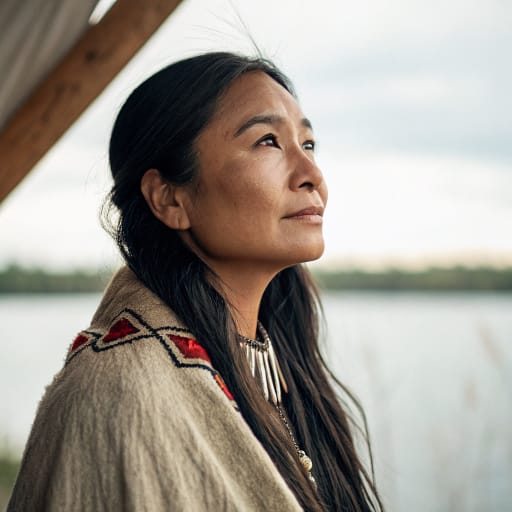
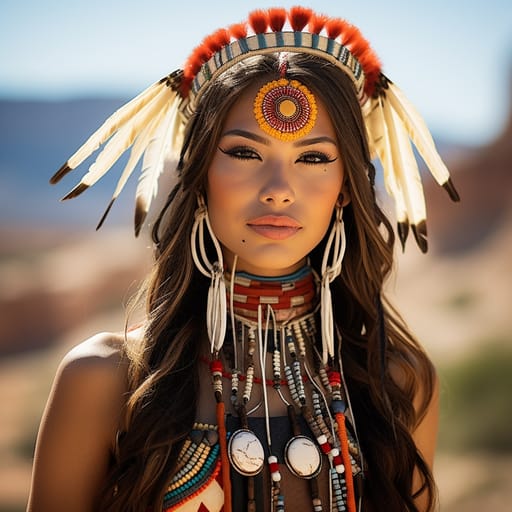
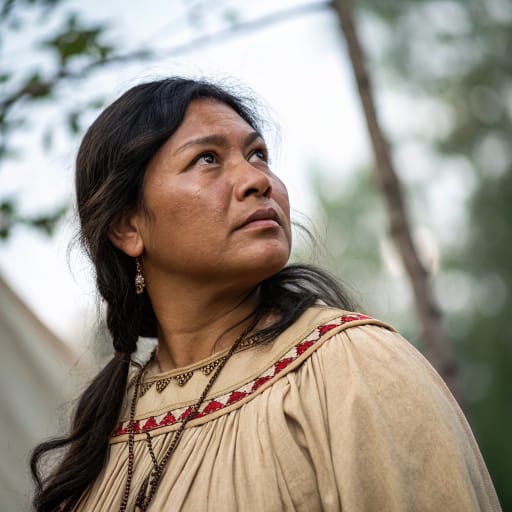
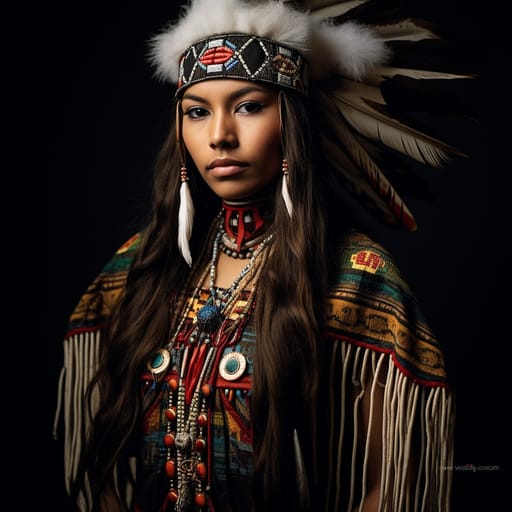
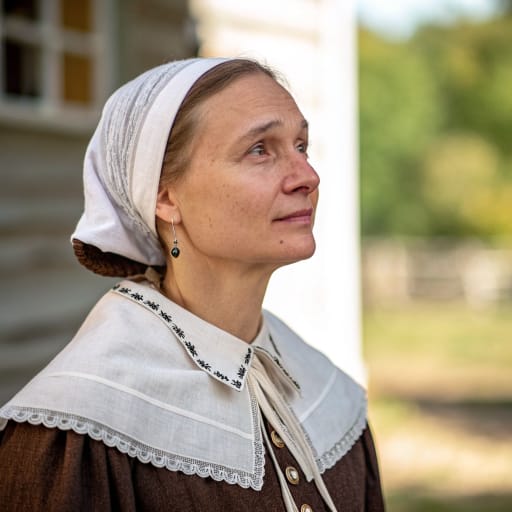
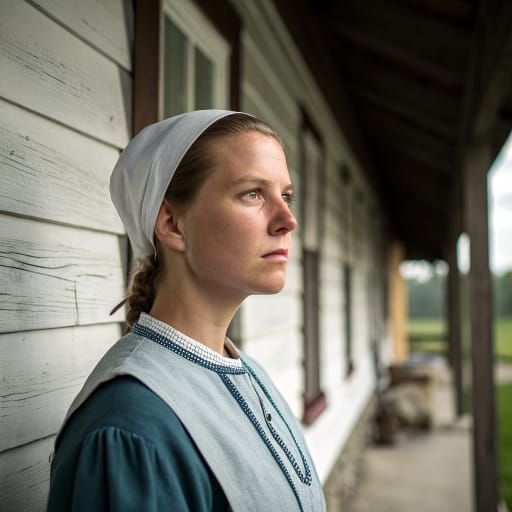
Typical Cape Fear Indians Phenotypes
Reference for AI generation: hair, eyes, skin, facial structure, build
Cape Fear Indians Body & Anatomy Reference
Anatomy by feature, Indigenous Northern American / Algonquian-Iroquoian phenotype
Cape Fear Indians Boobs & Breasts
Bust reference for Cape Fear Indians women: medium cup, moderate projection, which is typical of Indigenous Northern American / Algonquian-Iroquoian ancestry. Areolas measure about 30-44mm across, with medium-brown pigmentation. Body type (mesomorph, broader frame in northern Indigenous populations) shapes the bust as well, so Cape Fear Indians tits are usually full and moderate projection. In AI imagery, keep the forward-set shape rather than drifting toward the smaller East Asian bust.
Cape Fear Indians Ass & Hips
The Cape Fear Indians ass is typically medium, moderate-to-full projection, which sets it apart from the slim East Asian narrow-hip profile. Underneath, the pelvis shows medium iliac crests, part of the Indigenous Northern American / Algonquian-Iroquoian skeletal pattern. For Cape Fear Indians butt pics and AI renders, match that silhouette and the overall build (mesomorph, broader frame in northern Indigenous populations).
Cape Fear Indians Vagina & Pussy
Cape Fear Indians pussy and vulvar anatomy presents medium-brown labial pigmentation, consistent with the Indigenous Northern American / Algonquian-Iroquoian phenotype's pigmentation pattern. Cape Fear Indians pubic hair is typically straight medium-coarse texture, in the inverted-triangle pattern. For anatomically accurate Cape Fear Indians pussy renders the labial coloration should match the surrounding copper to medium-brown skin tone with a continuous gradient, and the hair should keep its straight medium-coarse texture.
Cape Fear Indians Dicks & Penis
Cape Fear Indians dicks follow the Indigenous Northern American / Algonquian-Iroquoian reference data: regional mean ~13cm erect; moderate girth; medium-brown shaft pigmentation. Shaft color should track the copper to medium-brown skin tone with a smooth change toward the glans, and Cape Fear Indians pubic hair keeps its straight medium-coarse texture.
Cape Fear Indians Body, Curves & Build
Cape Fear Indians body type and overall build presents as mesomorph, broader frame in northern Indigenous populations, with mean adult female BMI 25-28: the characteristic Indigenous Northern American / Algonquian-Iroquoian habitus. Cape Fear Indians curves and proportions should keep the regional skeletal frame (height, shoulder-to-hip ratio, limb proportions) rather than a generic mesomorph default.
Cape Fear Indians Skin Tone & Hair Texture
Cape Fear Indians skin sits in the copper to medium-brown (Fitzpatrick III-V) band. Hair is typically straight 1A, dark-brown to black, often thick and dense, in keeping with the Indigenous Northern American / Algonquian-Iroquoian phenotype. In nude renders the skin should stay one even tone from face to body, and body, pubic and head hair should match.
Explore phenotype categories
Structured taxonomy with peer-reviewed scales · 22 anatomical categories
Erotic Poses & Sex Positions
From the pose catalog: 219 named positions with reference skeletons
Frequently asked questions about Cape Fear Indians people
Where is the Cape Fear Indians homeland?
The Cape Fear Indians homeland is The lower Cape Fear River and nearby coast of southeastern North Carolina, United States, around present-day Wilmington and Brunswick County. in North America.
What language do Cape Fear Indians people speak?
Cape Fear Indians people primarily speak Unrecorded, probably an Eastern Siouan language (Siouan-Catawban).
What religion do Cape Fear Indians people practice?
The predominant religion among Cape Fear Indians people is Indigenous traditional religion, details unrecorded.






Make your own Cape Fear Indians images
Five a day, free, no credits to buy. The studio starts from this group's phenotype data, so you can set body type, pose and style and keep the traits accurate.
Start with Cape Fear Indians