Help us get this right
Does this portrait look right for Androscoggin?
One tap. It takes a second and it is recorded.
1 says it looks right, 0 say it looks off.
Androscoggin Erotic
Androscoggin River valley in present-day Maine and New Hampshire, United States; later the Saint-François mission (Odanak), Quebec, Canada
Eastern Abenaki (Algonquian)
Traditional Wabanaki spiritual practice; many converted to Roman Catholicism through French Jesuit missions from the seventeenth century
An Eastern Abenaki people of the wider Wabanaki world, neighbors of the Kennebec and Pigwacket; survivors merged into the Saint-François (Odanak) Abenaki of Quebec
About Androscoggin People
The Androscoggin were an Eastern Abenaki people who lived along the Androscoggin River in what is now Maine and New Hampshire. They were there before Europeans arrived and stayed into the eighteenth century, until epidemics and generations of frontier war drove most survivors north to the French mission of Saint-François in Quebec. Their descendants are part of the Abenaki community at Odanak today.
The river defined them. Their country ran from the headwater lakes near the present state line down to the falls at Pejepscot, near modern Brunswick, where the Androscoggin drops toward Merrymeeting Bay. Like other Wabanaki peoples, they followed the seasons: spring runs of salmon, shad and alewives at the falls, summers closer to the coast, and winters hunting moose and deer inland. Villages sat on the river's fertile floodplains, including one at Canton Point remembered as Rockomeka. The Kennebec lived one river to the east and the Pigwacket lived on the Saco to the west, and all three moved within the same Wabanaki world of kinship, trade and alliance.
They spoke Eastern Abenaki, an Algonquian language they shared, with local differences, with the Kennebec and Penobscot. It was one link in a chain of related languages running along the northeastern coast. Their spiritual life was tied to the land, its animals and its spirit beings, and healers held real authority. From the seventeenth century on, French Jesuit missionaries drew many Wabanaki into Catholicism. The alliance with New France that grew up alongside the missions would decide where the Androscoggin ended up.
Contact came hard. The epidemics that swept the New England coast in the 1610s thinned the Wabanaki before most English settlers arrived, and settlement then crept up the lower river. Fights over land and trade fed a long series of wars, from the Maine front of King Philip's War in the 1670s through Dummer's War in the 1720s. Colonial militia burned villages and cornfields, and Androscoggin warriors raided English settlements in turn, usually as allies of the French. Families left for Saint-François in stages. They became so prominent there that English writers at times used Arosaguntacook as a name for the whole mission community. The wars followed them: in 1759 Robert Rogers and his rangers attacked and burned the village.
In Maine they survive mostly as a name. The river, Androscoggin County and Androscoggin Lake all carry it, a reminder that the valley had an owner long before it had mill towns.
Related ethnic groups
Groups that share Androscoggin's homeland, region, language, or religious tradition. These are likely candidates for comparative phenotype reference.
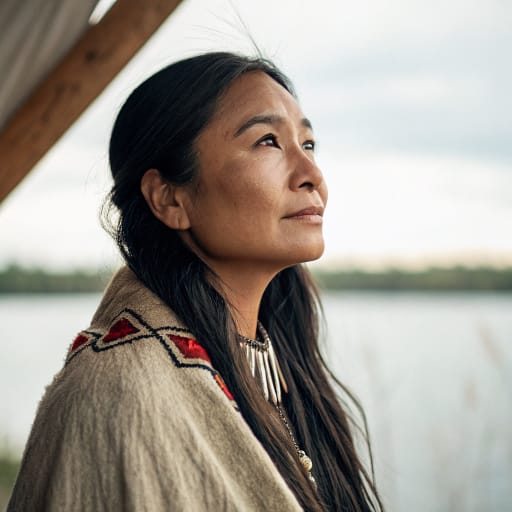
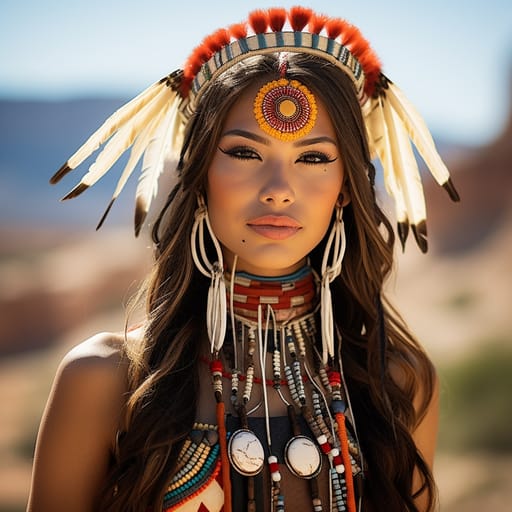
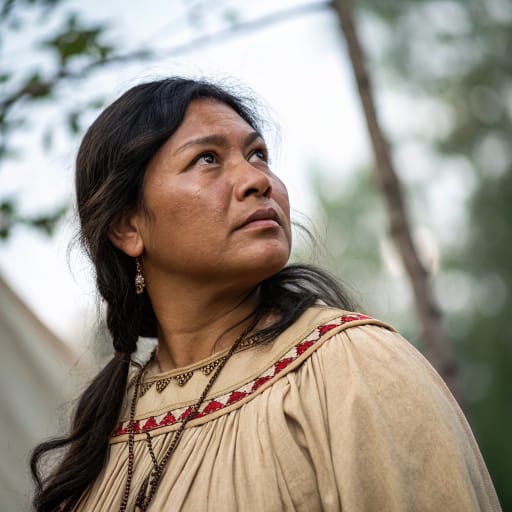
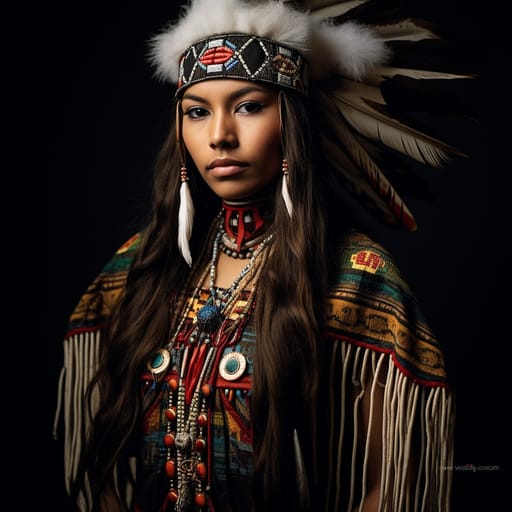
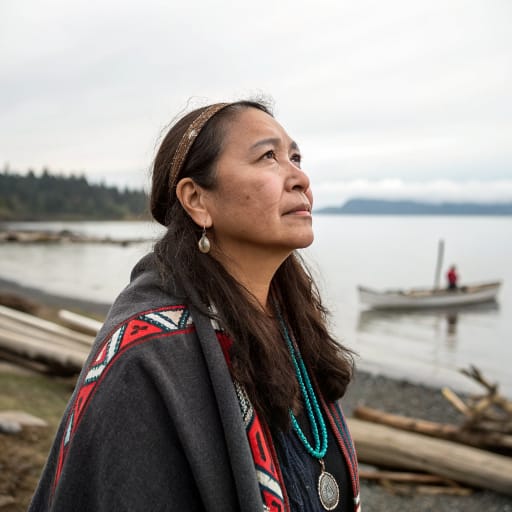
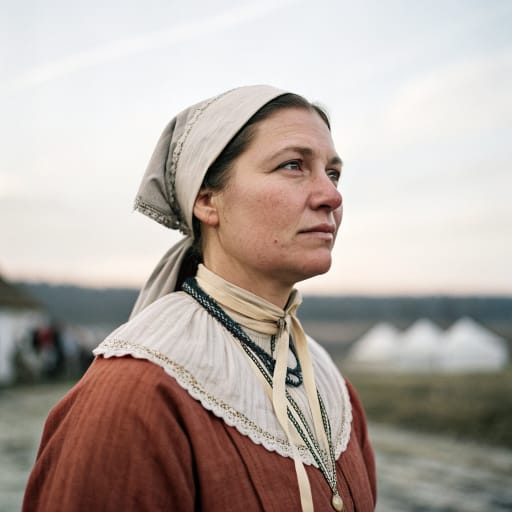
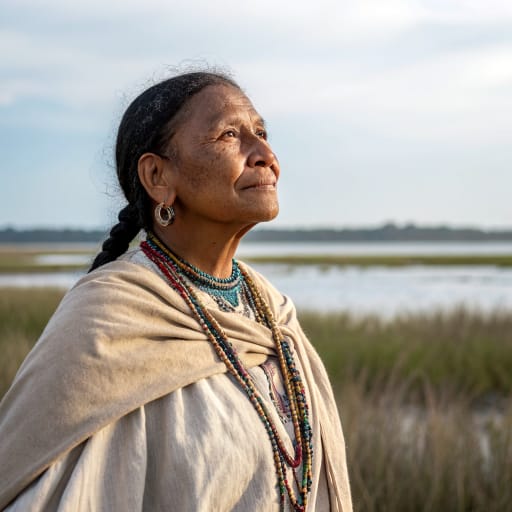
Typical Androscoggin Phenotypes
Reference for AI generation: hair, eyes, skin, facial structure, build
Androscoggin Body & Anatomy Reference
Indigenous Northern American / Algonquian-Iroquoian phenotype: anatomy reference for AI nude generation
Androscoggin Boobs & Breasts
Androscoggin boobs follow the Indigenous Northern American / Algonquian-Iroquoian profile: medium cup, moderate projection. Areolar diameter is usually 30-44mm, and the coloring is medium-brown areolar pigmentation against the copper-to-medium-brown skin tone. Breast shape tracks body composition (mesomorph, broader frame in northern Indigenous populations, mean adult female BMI 25-28), so Androscoggin breasts tend to be full and moderate projection. Expect a forward-set shape, not the smaller East Asian bust.
Androscoggin Ass & Hips
Androscoggin ass and hip morphology presents as medium, moderate-to-full projection, distinctly different from the slim East Asian narrow-hip profile. The Androscoggin pelvic profile shows medium iliac crests, anchored in the Indigenous Northern American / Algonquian-Iroquoian skeletal pattern. Androscoggin butt shots in adult AI imagery should render the medium, moderate-to-full projection silhouette with the overall build (mesomorph, broader frame in northern Indigenous populations) and the fat distribution typical of the Indigenous Northern American / Algonquian-Iroquoian phenotype.
Androscoggin Vagina & Pussy
Androscoggin pussy anatomy typically shows medium-brown labial pigmentation. Pubic hair is usually straight medium-coarse texture. In AI-generated Androscoggin nudes, labial color should blend into the copper to medium-brown skin with a gradual transition, and the hair should keep its straight medium-coarse texture.
Androscoggin Dicks & Penis
Penis reference for Androscoggin men: regional mean ~13cm erect, moderate girth. Coloring: medium-brown shaft pigmentation. An accurate Androscoggin cock in AI imagery matches the surrounding copper to medium-brown skin rather than a generic porn default. Circumcision depends on religion and custom, not ancestry.
Androscoggin Body, Curves & Build
The Androscoggin figure is generally mesomorph, broader frame in northern Indigenous populations, with mean adult female BMI 25-28, characteristic of Indigenous Northern American / Algonquian-Iroquoian ancestry. AI image tools tend to flatten regional body types into a few stock shapes; here the Androscoggin build is kept as its own reference.
Androscoggin Skin Tone & Hair Texture
Skin: copper to medium-brown (Fitzpatrick III-V). Hair: straight 1A, dark-brown to black, often thick and dense. Both are typical of Indigenous Northern American / Algonquian-Iroquoian ancestry. The most common mistake in AI nudes of Androscoggin women is a body rendered lighter than the face.
Explore phenotype categories
Structured taxonomy with peer-reviewed scales · 22 anatomical categories
Erotic Poses & Sex Positions
From the pose catalog: 219 named positions with reference skeletons
Frequently asked questions about Androscoggin people
Where is the Androscoggin homeland?
The Androscoggin homeland is Androscoggin River valley in present-day Maine and New Hampshire, United States; later the Saint-François mission (Odanak), Quebec, Canada in North America.
What language do Androscoggin people speak?
Androscoggin people primarily speak Eastern Abenaki (Algonquian).
What religion do Androscoggin people practice?
The predominant religion among Androscoggin people is Traditional Wabanaki spiritual practice; many converted to Roman Catholicism through French Jesuit missions from the seventeenth century.






Make your own Androscoggin images
Five a day, free, no credits to buy. The studio starts from this group's phenotype data, so you can set body type, pose and style and keep the traits accurate.
Start with Androscoggin