Help us get this right
Does this portrait look right for Mocama?
Nobody has judged this one yet. You would be the first.
Mocama Erotic
Atlantic sea islands and coastal marshes from St. Simons Island, Georgia, south to the mouth of the St. Johns River near present-day Jacksonville, Florida (United States).
Mocama dialect of Timucua (language isolate, no proven relatives); extinct, documented by the Franciscan Francisco Pareja in the early 1600s.
Indigenous Timucua religion led by chiefs and shamans; largely converted to Roman Catholicism under Spanish Franciscan missions from the late 1500s.
Eastern, coastal branch of the Timucua peoples. Main chiefdoms: Saturiwa (mouth of the St. Johns River) and Tacatacuru (Cumberland Island), plus Guadalquini on St. Simons Island.
About Mocama People
The Mocama were a Timucua-speaking people of the Atlantic coast who lived, from well before European contact until the early 1700s, on the sea islands and tidal marshes between St. Simons Island in present-day Georgia and the mouth of the St. Johns River in Florida. They did not survive colonization as a people: epidemics, slave raids and war reduced them to a handful of mission refugees around St. Augustine, and the last Timucua speakers left for Cuba with the Spanish in 1763. No descendant community is known today. Their name comes from their own dialect, where it means roughly of the sea, and it fit. They lived off oysters, fish and the estuary, moved by dugout canoe through the creeks behind the barrier islands, and farmed corn on a smaller scale than their Timucua relatives inland.
Politically they were not one nation but a set of chiefdoms sharing a dialect. The two that mattered most in the sixteenth century were the Saturiwa, centered near the mouth of the St. Johns where Jacksonville now stands, and the Tacatacuru of Cumberland Island. When Jean Ribault's French expedition landed in 1562, and when the Huguenots built Fort Caroline two years later, it was Saturiwa's people who received them, traded with them, and tried to pull them into local wars. After the Spanish destroyed the French colony in 1565, the Mocama fought the newcomers for years before accepting Franciscan missions toward the end of the century, among them San Juan del Puerto on Fort George Island and San Pedro de Mocama on Cumberland Island.
Those missions produced the Mocama's most durable legacy. The friar Francisco Pareja, stationed at San Juan del Puerto, published catechisms and a confessional in Timucua beginning in 1612, followed by a grammar, written largely in the Mocama dialect. They are the earliest surviving books in any Indigenous language of what is now the United States, and they are the reason linguists can study Timucua at all. The language has no proven relatives, so without Pareja it would be little more than a list of place names. The confessional's questions also preserve, unintentionally, a record of the beliefs and daily habits the friars were trying to stamp out.
The end came quickly. By the late 1600s disease had emptied most towns, and raids by English-backed groups from Carolina pushed survivors south. The Carolina assault of 1702 finished the mission chain. What remains is archaeological: shell middens, a local pottery that archaeologists call San Pedro, and town and mission sites still being excavated around Jacksonville and on the Georgia islands.
Related ethnic groups
Groups that share Mocama's homeland, region, language, or religious tradition. These are likely candidates for comparative phenotype reference.
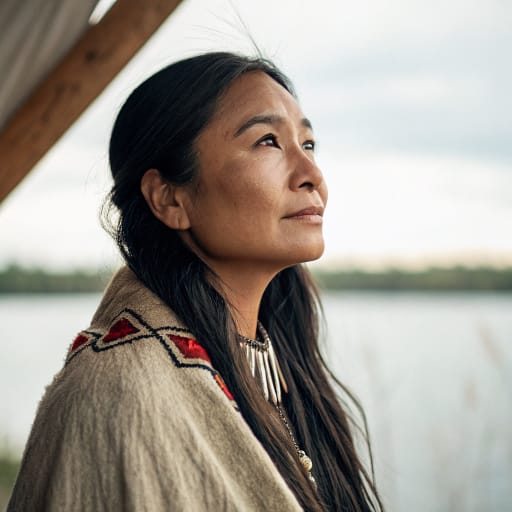
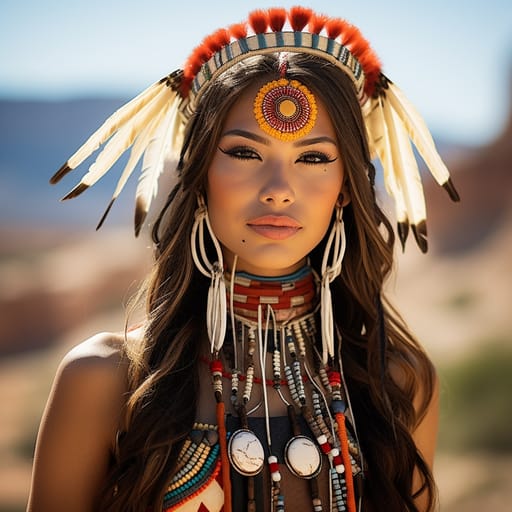
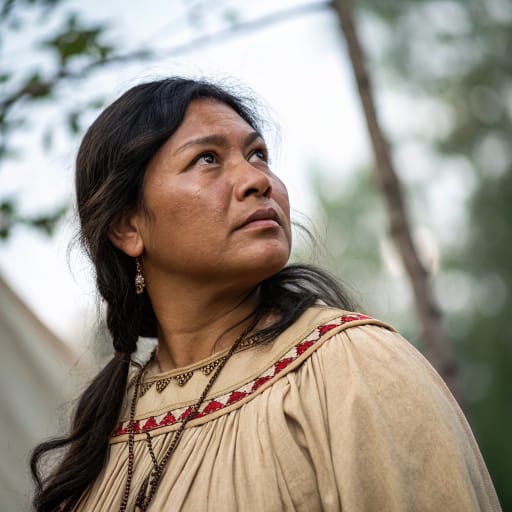
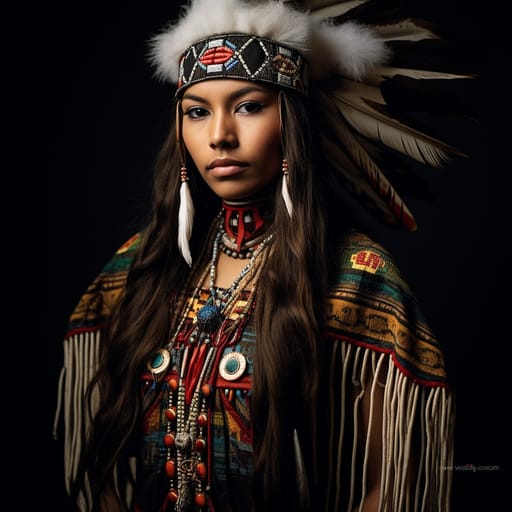
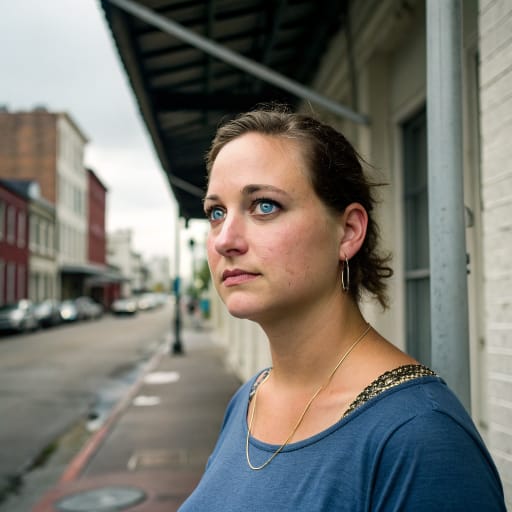
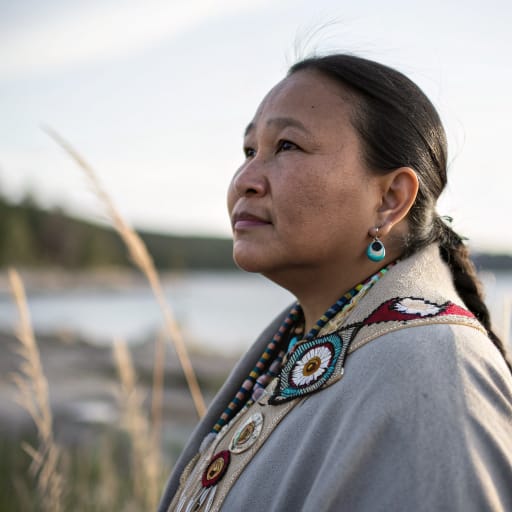
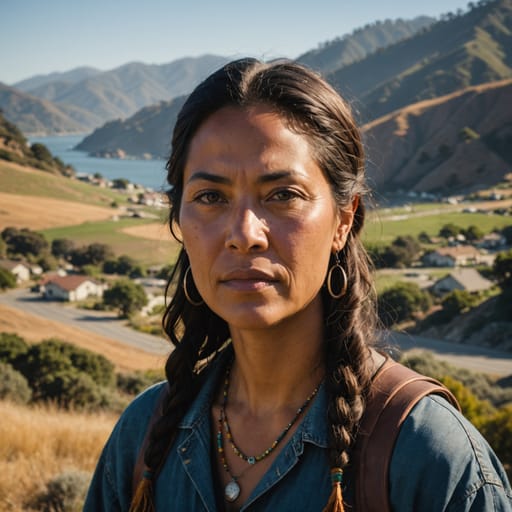
Typical Mocama Phenotypes
Reference for AI generation: hair, eyes, skin, facial structure, build
Mocama Body & Anatomy Reference
Anatomy by feature, Indigenous Northern American / Algonquian-Iroquoian phenotype
Mocama Boobs & Breasts
Mocama tits and boobs run medium cup, moderate projection, the classic Indigenous Northern American / Algonquian-Iroquoian bust profile. Mocama nipples and areolas show medium-brown areolar pigmentation against the copper-to-medium-brown skin tone, with areolar diameter typically in the 30-44mm range and forward-set positioning rather than the smaller East Asian bust. Mocama breasts trend full and moderate projection, a function of the mesomorph, broader frame in northern Indigenous populations body habitus and the mean adult female BMI 25-28. For anatomically accurate AI-generated Mocama nudes the render preserves the medium cup, moderate projection shape, 30-44mm areolas with medium-brown pigmentation, and the torso proportions of the Indigenous Northern American / Algonquian-Iroquoian phenotype.
Mocama Ass & Hips
Mocama hips and butt usually read as medium, moderate-to-full projection. The skeletal base is medium iliac crests, the Indigenous Northern American / Algonquian-Iroquoian pattern. Set against the slim East Asian narrow-hip profile, the difference is easy to see, and the hip-to-waist ratio is often what identifies Mocama women in photos.
Mocama Vagina & Pussy
Expect medium-brown labial pigmentation on Mocama women, in keeping with Indigenous Northern American / Algonquian-Iroquoian ancestry. The pubic hair is straight medium-coarse texture. Coloring should run evenly from the copper to medium-brown skin of the thighs to the labia, and Mocama nude imagery should keep the hair's straight medium-coarse texture.
Mocama Dicks & Penis
Mocama dick and penile anatomy in adult AI generation should anchor on the regional reference data: regional mean ~13cm erect, moderate girth, and medium-brown shaft pigmentation. The Mocama cock profile reflects the Indigenous Northern American / Algonquian-Iroquoian population's anthropometric measurements. The shaft pigmentation should track the surrounding copper to medium-brown skin tone, and the pubic hair should keep its straight medium-coarse texture in the typical inverted-V escutcheon.
Mocama Body, Curves & Build
Mocama body type: mesomorph, broader frame in northern Indigenous populations, with mean adult female BMI 25-28. This is the typical Indigenous Northern American / Algonquian-Iroquoian build. Height range, shoulder-to-hip ratio and fat distribution all follow from it, which is what an accurate Mocama nude body should show.
Mocama Skin Tone & Hair Texture
Mocama skin tone falls in the copper to medium-brown (Fitzpatrick III-V) band, the surface signal most often miscalibrated by generic AI nude generators. Mocama hair texture is typically straight 1A, dark-brown to black, often thick and dense, characteristic of the Indigenous Northern American / Algonquian-Iroquoian phenotype. In Mocama nude renders the skin should hold that band consistently across the body.
Explore phenotype categories
Structured taxonomy with peer-reviewed scales · 22 anatomical categories
Erotic Poses & Sex Positions
From the pose catalog: 219 named positions with reference skeletons
Frequently asked questions about Mocama people
Where is the Mocama homeland?
The Mocama homeland is Atlantic sea islands and coastal marshes from St. Simons Island, Georgia, south to the mouth of the St. Johns River near present-day Jacksonville, Florida (United States). in North America.
What language do Mocama people speak?
Mocama people primarily speak Mocama dialect of Timucua (language isolate, no proven relatives); extinct, documented by the Franciscan Francisco Pareja in the early 1600s..
What religion do Mocama people practice?
The predominant religion among Mocama people is Indigenous Timucua religion led by chiefs and shamans; largely converted to Roman Catholicism under Spanish Franciscan missions from the late 1500s..






Make your own Mocama images
Five a day, free, no credits to buy. The studio starts from this group's phenotype data, so you can set body type, pose and style and keep the traits accurate.
Start with Mocama