Help us get this right
Does this portrait look right for Ohlone?
Nobody has judged this one yet. You would be the first.
Ohlone Erotic
The central California coast from the Carquinez Strait and San Francisco Bay south through the Santa Clara and Salinas valleys to Big Sur, United States.
Ohlone or Costanoan languages: Chochenyo, Ramaytush, Tamyen, Awaswas, Mutsun, Rumsen, Chalon, Karkin (Utian family, within the proposed Penutian grouping). Chochenyo and Mutsun are under active revitalization.
Roman Catholic since the mission era, alongside revived traditional ceremonial and dance practice.
Eight language groups and dozens of village-level tribelets. Modern bands include the Muwekma Ohlone, Amah Mutsun, Ramaytush Ohlone, Confederated Villages of Lisjan, and the Ohlone/Costanoan-Esselen Nation. Part of the Utian family alongside the Miwok.
About Ohlone People
The Ohlone were never a single people in the way the name suggests. Before the Spanish came, the central California coast from the Carquinez Strait down to Big Sur held dozens of independent tribelets, each a few hundred people with its own territory, its own leadership, its own marriage ties to the neighbors. They spoke eight related but distinct languages: Karkin, Chochenyo, Tamyen, Ramaytush, Awaswas, Mutsun, Rumsen, Chalon. The umbrella came later. Spanish soldiers called them Costanoans, coast people, and in the twentieth century the communities took up Ohlone instead, borrowed from a village name on the San Mateo coast, largely because it was theirs and the other one was not.
This was among the most densely settled country in North America north of Mexico, and the bay is why. Acorns leached of their tannin were the staple, but the marshes gave waterfowl, the tidal flats gave clams and mussels, the creeks gave salmon, and the hills were burned on a schedule to hold them open for elk and seed grasses. People crossed the water in boats bundled out of tule reeds. The shell mounds they left ran hundreds of feet across and rose several stories, built up over thousands of years, holding the dead as well as the kitchen refuse. Nearly all of them were carted off for road fill and paving between 1850 and 1930.
Seven missions founded between 1770 and 1797 took that world apart. Disease, forced labor, and the shattering of the tribelets cut the population by something close to ninety percent within two generations, and when the missions were secularized in 1834 the land went to ranchers rather than to the people who had been held on it. The eighteen treaties California tribes signed in 1851 were never ratified; the Senate sealed the files for fifty years. Most Ohlone bands today, the Muwekma of the East Bay and the Amah Mutsun among them, remain without federal recognition, which is a matter of paperwork and politics rather than of whether they are here.
They are largely Catholic, largely urban, and largely living within sight of where their ancestors did. Chochenyo and Mutsun are spoken again, rebuilt out of the notebooks J.P. Harrington filled with the last fluent speakers in the 1920s and 1930s. The Sogorea Te' Land Trust, run by Ohlone women out of Oakland, has been putting Bay Area ground back into Indigenous hands and collecting a voluntary land tax from the people who live on it.
Related ethnic groups
Groups that share Ohlone's homeland, region, language, or religious tradition. These are likely candidates for comparative phenotype reference.
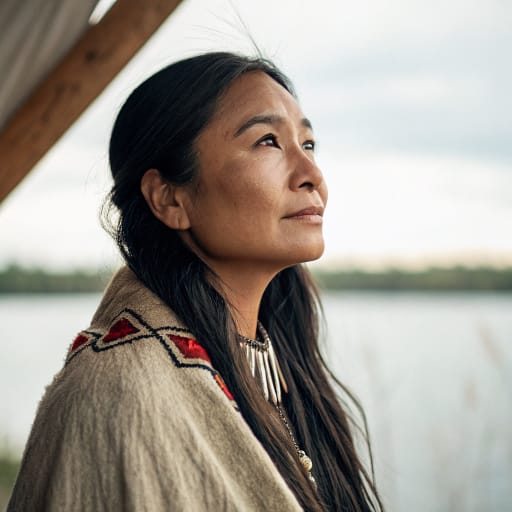
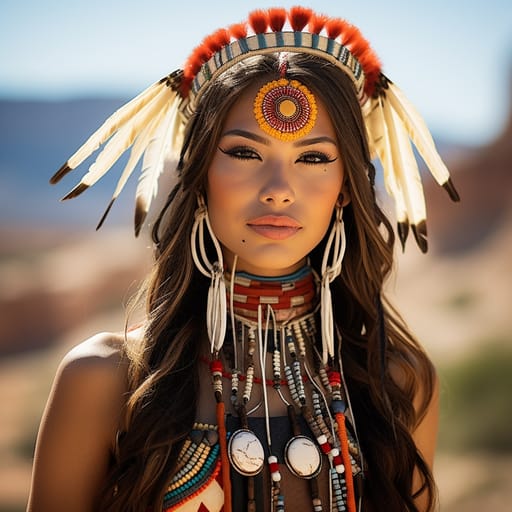
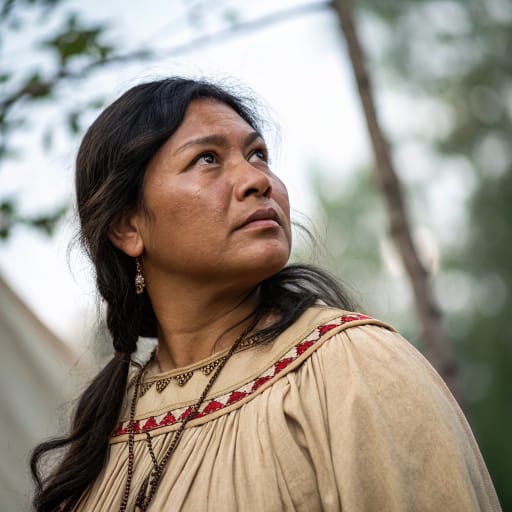
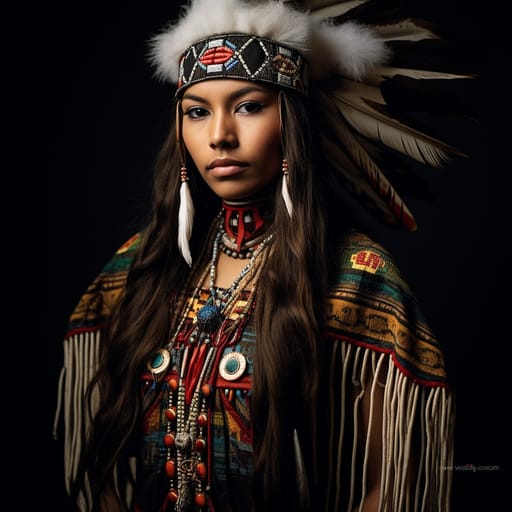
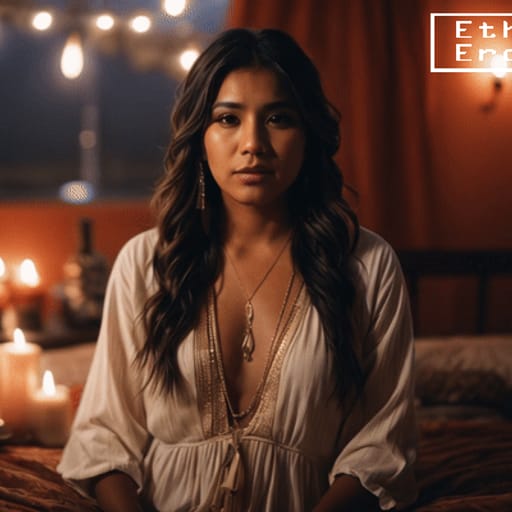
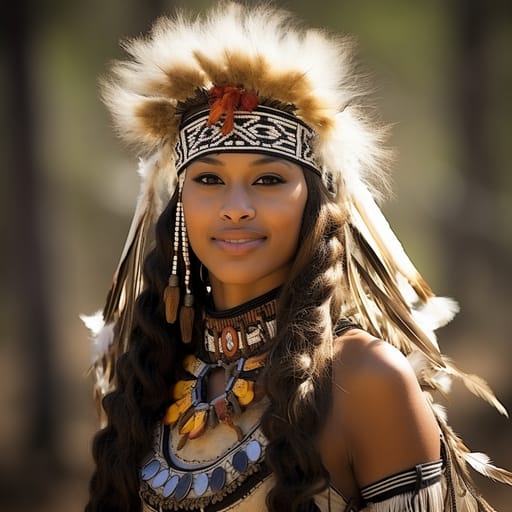
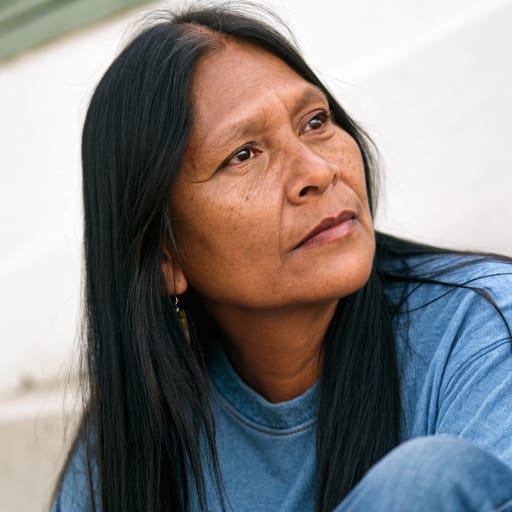
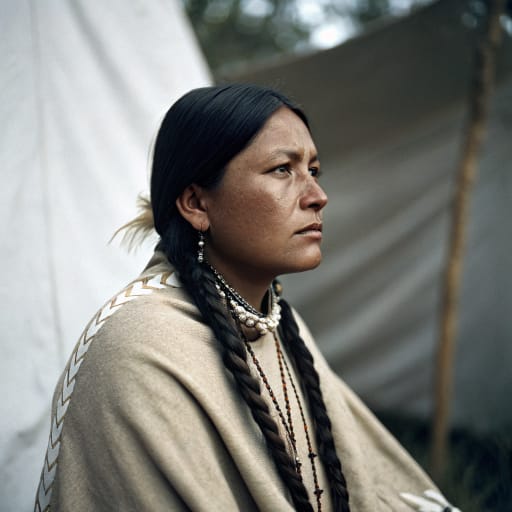
Typical Ohlone Phenotypes
Reference for AI generation: hair, eyes, skin, facial structure, build
Ohlone Body & Anatomy Reference
Per-feature anatomical profile for AI nude generation: Indigenous Northern American / Algonquian-Iroquoian phenotype
Ohlone Boobs & Breasts
The typical Ohlone bust is medium cup, moderate projection, in line with the wider Indigenous Northern American / Algonquian-Iroquoian pattern. Areolas usually fall in the 30-44mm range, with medium-brown areolar pigmentation against the copper-to-medium-brown skin tone. Compared with the smaller East Asian bust, Ohlone breasts sit forward and are generally full and moderate projection. A faithful AI render of Ohlone tits keeps that shape and areola size.
Ohlone Ass & Hips
Butt shape among Ohlone women: medium, moderate-to-full projection, over medium iliac crests. This follows Indigenous Northern American / Algonquian-Iroquoian ancestry and looks quite unlike the slim East Asian narrow-hip profile. An accurate Ohlone ass in adult AI imagery keeps both the silhouette and the overall build (mesomorph, broader frame in northern Indigenous populations) instead of a generic average.
Ohlone Vagina & Pussy
Vulvar anatomy among Ohlone women: medium-brown labial pigmentation. Pubic hair tends to be straight medium-coarse texture, in the usual inverted-triangle pattern. Both follow Indigenous Northern American / Algonquian-Iroquoian pigmentation, which is why Ohlone pussy renders should not fall back on a pale, sparse Western template.
Ohlone Dicks & Penis
The Ohlone cock profile, from Indigenous Northern American / Algonquian-Iroquoian anthropometric data: regional mean ~13cm erect; moderate girth; medium-brown shaft pigmentation. Pubic hair has a straight medium-coarse texture and forms the usual inverted-V pattern. Whether Ohlone men are circumcised follows religious and cultural practice rather than phenotype.
Ohlone Body, Curves & Build
Build and curves among Ohlone women follow the Indigenous Northern American / Algonquian-Iroquoian pattern: mesomorph, broader frame in northern Indigenous populations, mean adult female BMI 25-28. Proportions matter as much as skin tone, so Ohlone figures should keep their regional height and limb ratios.
Ohlone Skin Tone & Hair Texture
The Ohlone skin range is copper to medium-brown (Fitzpatrick III-V), and hair tends to be straight 1A, dark-brown to black, often thick and dense. That combination marks the Indigenous Northern American / Algonquian-Iroquoian phenotype, and skin tone is the trait AI generators most often get wrong for Ohlone women.
Explore phenotype categories
Structured taxonomy with peer-reviewed scales · 22 anatomical categories
Erotic Poses & Sex Positions
From the pose catalog: 219 named positions with reference skeletons
Frequently asked questions about Ohlone people
Where is the Ohlone homeland?
The Ohlone homeland is The central California coast from the Carquinez Strait and San Francisco Bay south through the Santa Clara and Salinas valleys to Big Sur, United States. in North America.
What language do Ohlone people speak?
Ohlone people primarily speak Ohlone or Costanoan languages: Chochenyo, Ramaytush, Tamyen, Awaswas, Mutsun, Rumsen, Chalon, Karkin (Utian family, within the proposed Penutian grouping). Chochenyo and Mutsun are under active revitalization..
What religion do Ohlone people practice?
The predominant religion among Ohlone people is Roman Catholic since the mission era, alongside revived traditional ceremonial and dance practice..






Make your own Ohlone images
Five a day, free, no credits to buy. The studio starts from this group's phenotype data, so you can set body type, pose and style and keep the traits accurate.
Start with Ohlone