No portrait yet
Sahtu Erotic
Great Bear Lake and the central Mackenzie Valley, Sahtu Settlement Area, Northwest Territories, Canada; the communities of Délı̨nę, Tulita, Norman Wells, Fort Good Hope and Colville Lake
North Slavey, Sahtúot'įnę Yatı̨́ (Northern Athabaskan, Na-Dene), in Bear Lake, Hare and Mountain dialects; English
Roman Catholic since the Oblate missions of the 1800s, interwoven with Dene spirituality and the prophecies of Ehtséo Ayah of Délı̨nę
Dene (Northern Athabaskan); branches: Sahtúgot'ı̨nę (Bear Lake Dene), K'áshogot'ı̨nę (Hare Dene), Shíhgot'ı̨nę (Mountain Dene); Sahtu Métis share the settlement area
About Sahtu People
The Sahtu are the Dene of Great Bear Lake, and the lake is the first thing to understand about them. Sahtú means Bear Water in their own language, and the people call themselves Sahtúot'įnę, the people of that water. Great Bear Lake is the largest lake lying entirely inside Canada, and its trout and whitefish still feed the communities around it. The Sahtu Settlement Area spreads from the lake across the central Mackenzie Valley of the Northwest Territories: Délı̨nę on the lakeshore, Tulita and Norman Wells on the Mackenzie River, and Fort Good Hope and Colville Lake farther north, straddling the Arctic Circle. Their language is North Slavey, a Northern Athabaskan tongue in the Na-Dene family, close kin to South Slavey and Tłı̨chǫ spoken farther south, and still spoken at home in the smaller communities. Its three dialects double as the main branches of the people: the Bear Lake Dene of Délı̨nę, the Hare Dene of Fort Good Hope and Colville Lake, named by outsiders for their reliance on the snowshoe hare, whose skins they wove into robes and blankets, and the Mountain Dene of Tulita, whose ancestors hunted the Mackenzie Mountains to the west. Sahtu Métis families share the region and signed the same land claim.
Catholicism came up the Mackenzie with Oblate missionaries in the nineteenth century, and Fort Good Hope's hand-painted mission church still stands. It did not displace Dene spirituality so much as fuse with it. The prophet Ehtséo Ayah of Délı̨nę, who died in 1940, was a devout Catholic whose prophecies are still recited, among them a vision of Great Bear Lake as one of the last clean refuges on earth. Délı̨nę carries a heavier history too: its men hauled sacks of radium and uranium ore from the Port Radium mine on the eastern shore, ore that fed the Manhattan Project, and enough of them later died of cancer that the town called itself the village of widows. In 1998 a delegation traveled to Hiroshima to apologize. The modern turning points are legal ones. Oil at Norman Wells prompted Treaty 11 in 1921, the Sahtu Dene and Métis land claim followed in 1993, and in 2016 Délı̨nę became the first community in Canada to run a single Indigenous public government for everyone living there. The same year the lake's whole watershed became the Indigenous-led Tsá Tué biosphere reserve. Drum dances, hand games played with hidden tokens against a wall of drummers, spring fish camps and fall caribou hunts still set the calendar. And Délı̨nę makes a straight-faced claim to the first recorded game of ice hockey, played by Franklin's men on the lake ice in 1825.
Related ethnic groups
Groups that share Sahtu's homeland, region, language, or religious tradition. These are likely candidates for comparative phenotype reference.
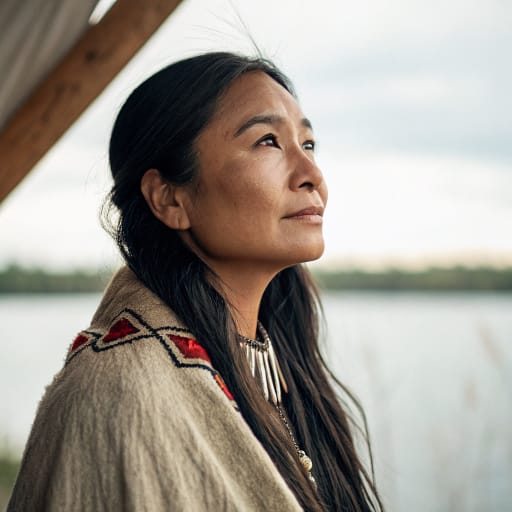
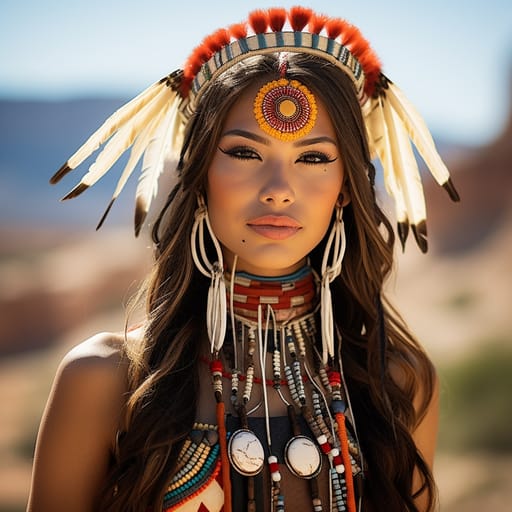
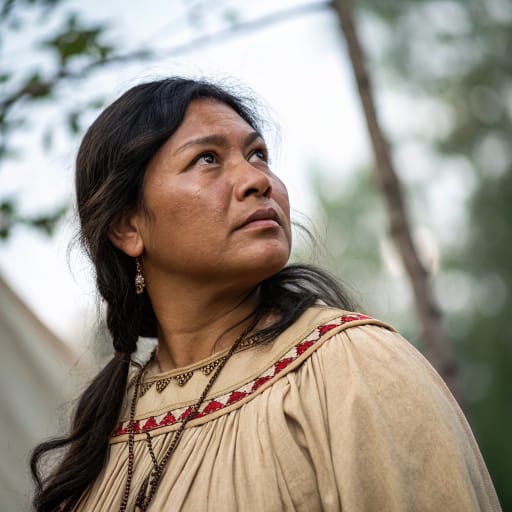
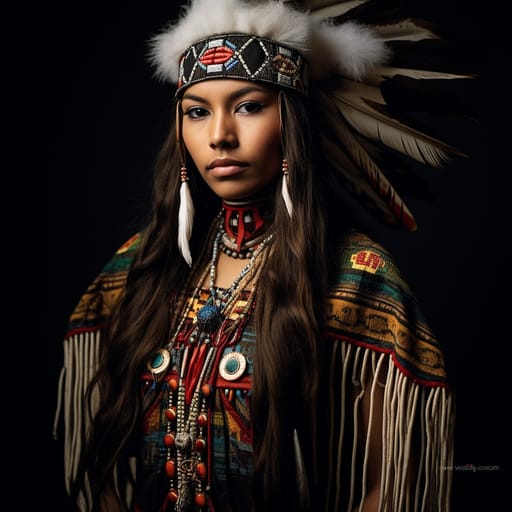
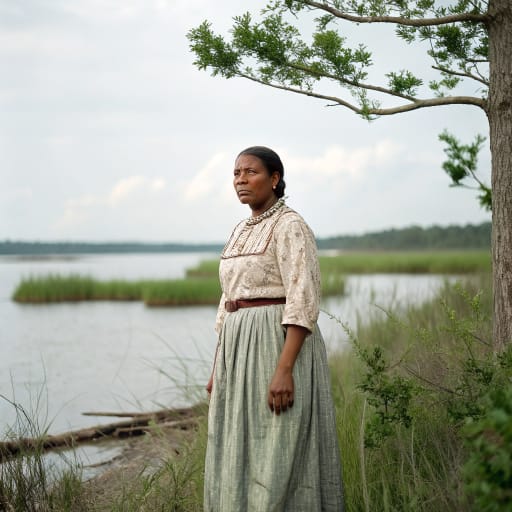
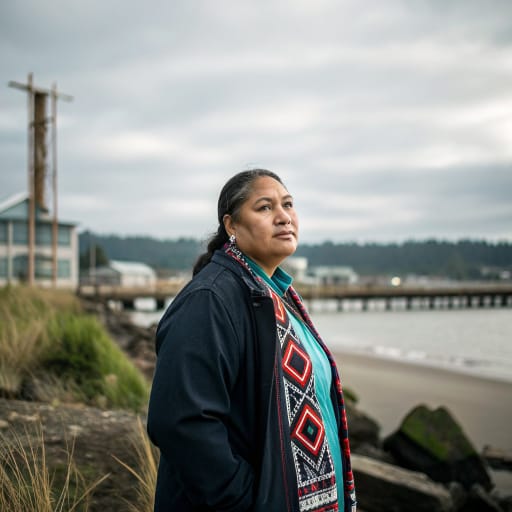
Typical Sahtu Phenotypes
Reference for AI generation: hair, eyes, skin, facial structure, build
Sahtu Body & Anatomy Reference
Per-feature anatomical profile for AI nude generation: Indigenous Northern American / Algonquian-Iroquoian phenotype
Sahtu Boobs & Breasts
Bust reference for Sahtu women: medium cup, moderate projection, which is typical of Indigenous Northern American / Algonquian-Iroquoian ancestry. Areolas measure about 30-44mm across, with medium-brown pigmentation. Body type (mesomorph, broader frame in northern Indigenous populations) shapes the bust as well, so Sahtu tits are usually full and moderate projection. In AI imagery, keep the forward-set shape rather than drifting toward the smaller East Asian bust.
Sahtu Ass & Hips
The Sahtu ass is typically medium, moderate-to-full projection, which sets it apart from the slim East Asian narrow-hip profile. Underneath, the pelvis shows medium iliac crests, part of the Indigenous Northern American / Algonquian-Iroquoian skeletal pattern. For Sahtu butt pics and AI renders, match that silhouette and the overall build (mesomorph, broader frame in northern Indigenous populations).
Sahtu Vagina & Pussy
Sahtu pussy and vulvar anatomy presents medium-brown labial pigmentation, consistent with the Indigenous Northern American / Algonquian-Iroquoian phenotype's pigmentation pattern. Sahtu pubic hair is typically straight medium-coarse texture, in the inverted-triangle pattern. For anatomically accurate Sahtu pussy renders the labial coloration should match the surrounding copper to medium-brown skin tone with a continuous gradient, and the hair should keep its straight medium-coarse texture.
Sahtu Dicks & Penis
Sahtu dicks follow the Indigenous Northern American / Algonquian-Iroquoian reference data: regional mean ~13cm erect; moderate girth; medium-brown shaft pigmentation. Shaft color should track the copper to medium-brown skin tone with a smooth change toward the glans, and Sahtu pubic hair keeps its straight medium-coarse texture.
Sahtu Body, Curves & Build
Sahtu body type and overall build presents as mesomorph, broader frame in northern Indigenous populations, with mean adult female BMI 25-28: the characteristic Indigenous Northern American / Algonquian-Iroquoian habitus. Sahtu curves and proportions should keep the regional skeletal frame (height, shoulder-to-hip ratio, limb proportions) rather than a generic mesomorph default.
Sahtu Skin Tone & Hair Texture
Sahtu skin sits in the copper to medium-brown (Fitzpatrick III-V) band. Hair is typically straight 1A, dark-brown to black, often thick and dense, in keeping with the Indigenous Northern American / Algonquian-Iroquoian phenotype. In nude renders the skin should stay one even tone from face to body, and body, pubic and head hair should match.
Explore phenotype categories
Structured taxonomy with peer-reviewed scales · 22 anatomical categories
Erotic Poses & Sex Positions
From the pose catalog: 219 named positions with reference skeletons
Frequently asked questions about Sahtu people
Where is the Sahtu homeland?
The Sahtu homeland is Great Bear Lake and the central Mackenzie Valley, Sahtu Settlement Area, Northwest Territories, Canada; the communities of Délı̨nę, Tulita, Norman Wells, Fort Good Hope and Colville Lake in North America.
What language do Sahtu people speak?
Sahtu people primarily speak North Slavey, Sahtúot'įnę Yatı̨́ (Northern Athabaskan, Na-Dene), in Bear Lake, Hare and Mountain dialects; English.
What religion do Sahtu people practice?
The predominant religion among Sahtu people is Roman Catholic since the Oblate missions of the 1800s, interwoven with Dene spirituality and the prophecies of Ehtséo Ayah of Délı̨nę.






Make your own Sahtu images
Five a day, free, no credits to buy. The studio starts from this group's phenotype data, so you can set body type, pose and style and keep the traits accurate.
Start with Sahtu