Help us get this right
Does this portrait look right for Machapunga?
One tap. It takes a second and it is recorded.
1 says it looks right, 0 say it looks off.
Machapunga Erotic
Coastal northeastern North Carolina around Lake Mattamuskeet and the lower Pamlico, in present-day Hyde County and neighboring counties, United States
Carolina Algonquian, closely related to Pamlico (Eastern Algonquian, Algonquian)
Traditional Carolina Algonquian religion, with priests, spirit beings and temple houses for the honored dead
Carolina Algonquian peoples; closely tied to the Secotan and Pamlico, and settled with the Coree at Mattamuskeet after 1715
About Machapunga People
The Machapunga were a small Algonquian-speaking people of coastal North Carolina. They appear in colonial records of the late 1600s and 1700s around Lake Mattamuskeet, in the flat, waterlogged country between Pamlico Sound and the Alligator River that is now Hyde County. They stopped being a distinct nation in the decades after the Tuscarora War, and their surviving families are generally thought to have merged into the rural population of the sound country. What defined them was a place as much as a lineage. The big shallow lake and the pocosin swamps around it shaped how they ate, how they fought and, in the end, how long they held out.
They belonged to the Carolina Algonquian world, the southern end of the Eastern Algonquian languages that ran up the Atlantic coast. Their speech was close kin to that of the Pamlico and of the Secotan towns that the Roanoke colonists described in the 1580s. It sat beside very different neighbors: the Iroquoian-speaking Tuscarora inland and Siouan-speaking peoples farther west. Life followed the water. Towns of bark- and mat-covered houses stood near fields of corn, beans and squash, while fish weirs, dugout canoes, oyster beds and the great winter flocks of waterfowl filled out the year. Among these coastal Algonquians, English observers recorded a religion with many spirit beings and priests who dealt with them. They also described temple houses where the preserved remains of leading men were kept.
By 1701, when the explorer John Lawson passed through, the Machapunga were down to a single town with a few dozen fighting men. Disease and English settlement pushing south from the Albemarle had worn them down. When the Tuscarora War broke out in 1711, they joined the Tuscarora and the Coree against the colonists. After the main Tuscarora resistance collapsed in 1713, they kept up raids from the swamps around Mattamuskeet before making peace in 1715. The colony then confined the survivors, along with Coree refugees, to reserved land near the lake. That land was sold off piece by piece over the following decades, and by the end of the century the Machapunga no longer stood as a separate community.
What remains of them today is mostly on the map. Lake Mattamuskeet, the largest natural lake in North Carolina and now the center of a national wildlife refuge, carries the name of their town. The clearest picture of their world is still John White's 1585 watercolors of neighboring Algonquian villages, painted more than a century before Lawson counted the Machapunga's last town.
Related ethnic groups
Groups that share Machapunga's homeland, region, language, or religious tradition. These are likely candidates for comparative phenotype reference.
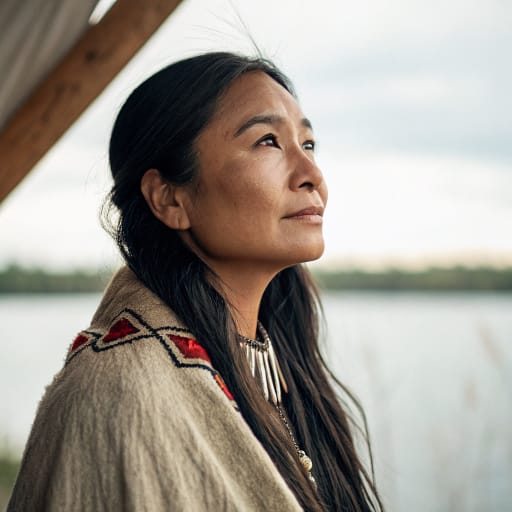
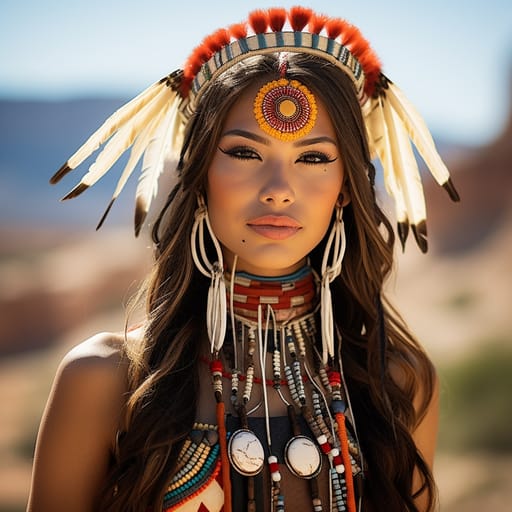
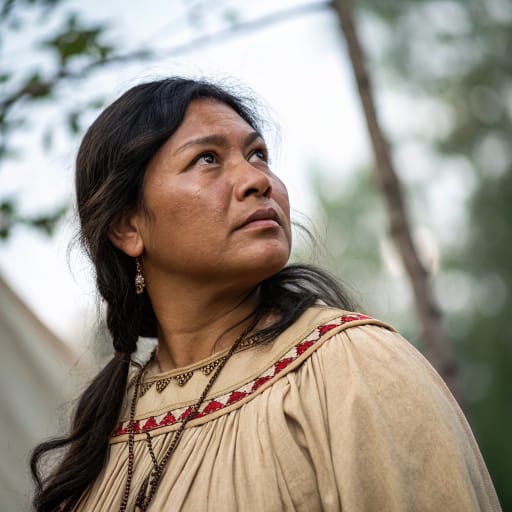
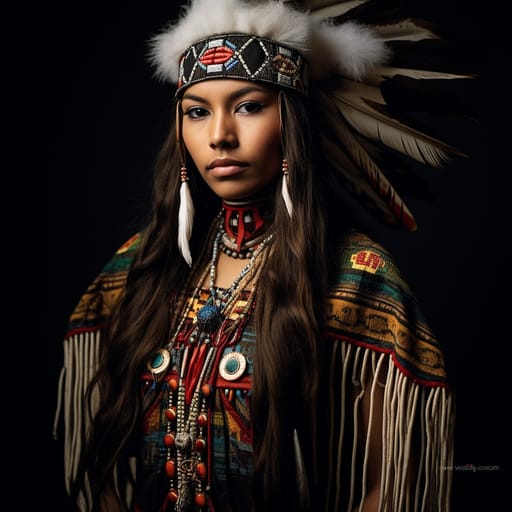
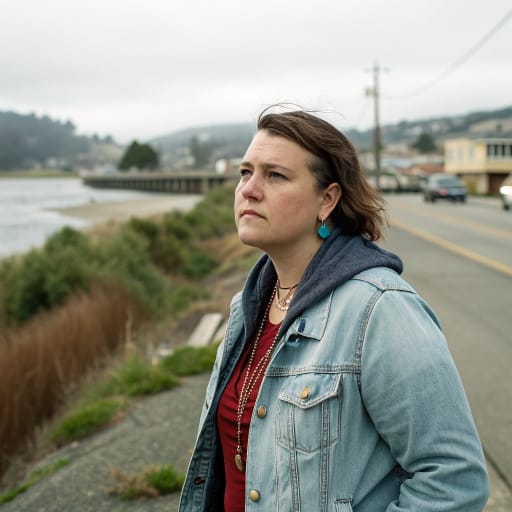
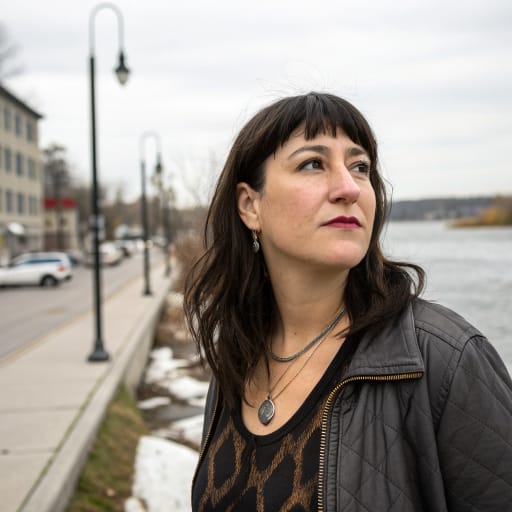
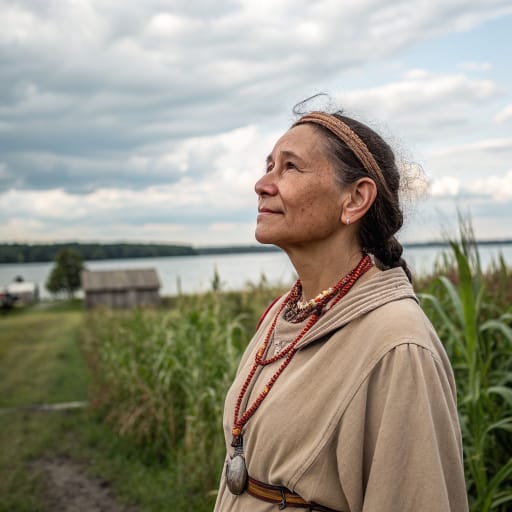
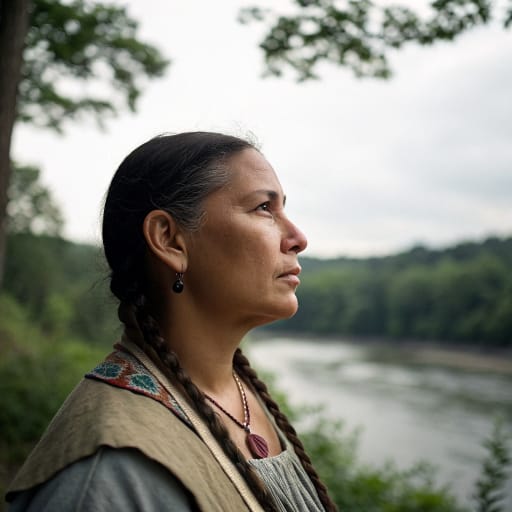
Typical Machapunga Phenotypes
Reference for AI generation: hair, eyes, skin, facial structure, build
Machapunga Body & Anatomy Reference
Anatomy by feature, Indigenous Northern American / Algonquian-Iroquoian phenotype
Machapunga Boobs & Breasts
The typical Machapunga bust is medium cup, moderate projection, in line with the wider Indigenous Northern American / Algonquian-Iroquoian pattern. Areolas usually fall in the 30-44mm range, with medium-brown areolar pigmentation against the copper-to-medium-brown skin tone. Compared with the smaller East Asian bust, Machapunga breasts sit forward and are generally full and moderate projection. A faithful AI render of Machapunga tits keeps that shape and areola size.
Machapunga Ass & Hips
Butt shape among Machapunga women: medium, moderate-to-full projection, over medium iliac crests. This follows Indigenous Northern American / Algonquian-Iroquoian ancestry and looks quite unlike the slim East Asian narrow-hip profile. An accurate Machapunga ass in adult AI imagery keeps both the silhouette and the overall build (mesomorph, broader frame in northern Indigenous populations) instead of a generic average.
Machapunga Vagina & Pussy
Vulvar anatomy among Machapunga women: medium-brown labial pigmentation. Pubic hair tends to be straight medium-coarse texture, in the usual inverted-triangle pattern. Both follow Indigenous Northern American / Algonquian-Iroquoian pigmentation, which is why Machapunga pussy renders should not fall back on a pale, sparse Western template.
Machapunga Dicks & Penis
The Machapunga cock profile, from Indigenous Northern American / Algonquian-Iroquoian anthropometric data: regional mean ~13cm erect; moderate girth; medium-brown shaft pigmentation. Pubic hair has a straight medium-coarse texture and forms the usual inverted-V pattern. Whether Machapunga men are circumcised follows religious and cultural practice rather than phenotype.
Machapunga Body, Curves & Build
Build and curves among Machapunga women follow the Indigenous Northern American / Algonquian-Iroquoian pattern: mesomorph, broader frame in northern Indigenous populations, mean adult female BMI 25-28. Proportions matter as much as skin tone, so Machapunga figures should keep their regional height and limb ratios.
Machapunga Skin Tone & Hair Texture
The Machapunga skin range is copper to medium-brown (Fitzpatrick III-V), and hair tends to be straight 1A, dark-brown to black, often thick and dense. That combination marks the Indigenous Northern American / Algonquian-Iroquoian phenotype, and skin tone is the trait AI generators most often get wrong for Machapunga women.
Explore phenotype categories
Structured taxonomy with peer-reviewed scales · 22 anatomical categories
Erotic Poses & Sex Positions
From the pose catalog: 219 named positions with reference skeletons
Frequently asked questions about Machapunga people
Where is the Machapunga homeland?
The Machapunga homeland is Coastal northeastern North Carolina around Lake Mattamuskeet and the lower Pamlico, in present-day Hyde County and neighboring counties, United States in North America.
What language do Machapunga people speak?
Machapunga people primarily speak Carolina Algonquian, closely related to Pamlico (Eastern Algonquian, Algonquian).
What religion do Machapunga people practice?
The predominant religion among Machapunga people is Traditional Carolina Algonquian religion, with priests, spirit beings and temple houses for the honored dead.






Make your own Machapunga images
Five a day, free, no credits to buy. The studio starts from this group's phenotype data, so you can set body type, pose and style and keep the traits accurate.
Start with Machapunga