No portrait yet
Mahican Erotic
Upper Hudson River valley and the Housatonic valley of New York, Massachusetts and Connecticut, United States; today the Stockbridge-Munsee reservation in Shawano County, Wisconsin
Mahican (Algic, Eastern Algonquian), dormant since the 1930s and under revival; English
Christianity (Congregational by mission history), alongside revived traditional ceremony
Eastern Algonquian peoples; historically the Housatonic and related Hudson valley bands; today the Stockbridge-Munsee Community Band of Mohican Indians, sharing a reservation with a Munsee Lenape band
About Mahican People
The Mahican are the people of the upper Hudson, and their own name says so: Muh-he-con-neok, the people of the waters that are never still, after the tidal river that reverses its flow twice a day as far north as Troy. Their homeland ran along that river from near Lake Champlain south to the Catskills and reached east into the Housatonic valley of Massachusetts and Connecticut. They are not the Mohegan of eastern Connecticut, a separate people with a similar name. James Fenimore Cooper blurred the two in 1826, and the Mahican have spent two centuries correcting a novelist who declared them extinct while they were busy staying alive. Their language belongs to the Eastern Algonquian branch, closest to Munsee to the south and the Algonquian languages of southern New England to the east. The last fluent speakers died in the 1930s, and the tribe is rebuilding it from Moravian and Congregational missionary records. Society was matrilineal and organized by clan, Bear, Wolf and Turtle among them, in villages on river terraces, palisaded when the Mohawk were a threat, which after the Dutch opened Fort Orange in 1624 was often. The fur trade made them middlemen, the Mohawk wanted that position, and a war in the 1620s pushed most Mahican east of the river.
The turn that shaped everything after came in 1734, when a Congregational mission at Stockbridge, Massachusetts, gathered Mahican families into a Christian town where they held office, ran a school and for a time owned the land. They fought for the Continental Army and lost a company of men at Kingsbridge in 1778, then watched their white neighbors take Stockbridge anyway. Under the sachem Hendrick Aupaumut, who wrote a history of his people and served as an American diplomat to the western tribes, they moved among the Oneida in New York, then to Indiana, then to Wisconsin, where they joined with a band of Munsee. The Stockbridge-Munsee Community Band of Mohican Indians holds a reservation in Shawano County near Bowler, most of it lost to allotment after 1871 and partly rebuilt after the 1930s. The tribe is Christian by long history and still keeps the Stockbridge Bible, a two-volume gift from England in 1745, held in a Massachusetts museum for six decades and returned in 1991. Powwow and clan identity have come back alongside it. Less known is that the tribe never let go of the Hudson. It runs a historic preservation office in the East, has had parcels along the river returned to it in recent years, and its members visit Albany and Stockbridge as people coming home.
Related ethnic groups
Groups that share Mahican's homeland, region, language, or religious tradition. These are likely candidates for comparative phenotype reference.
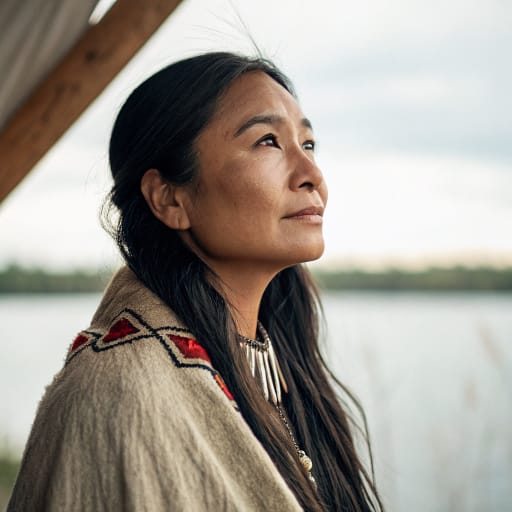
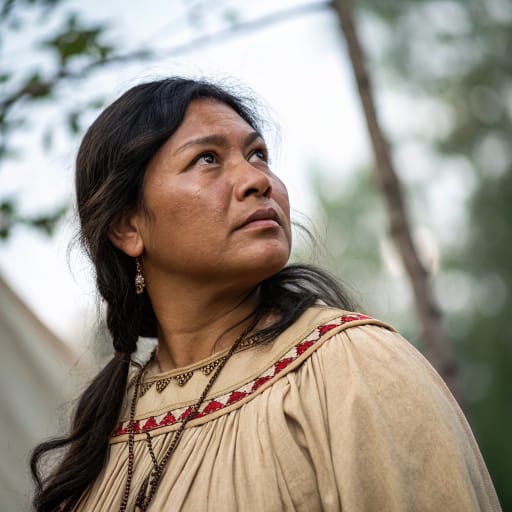
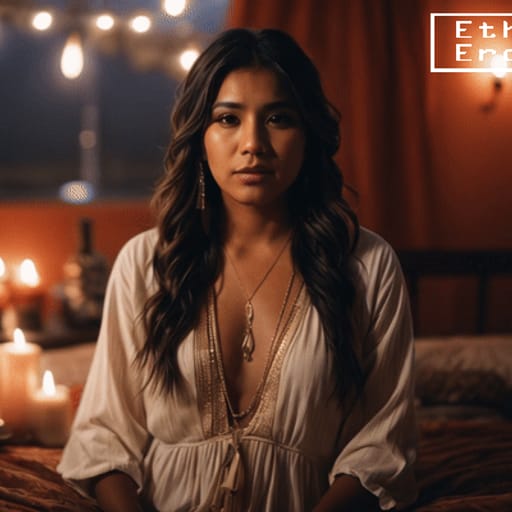
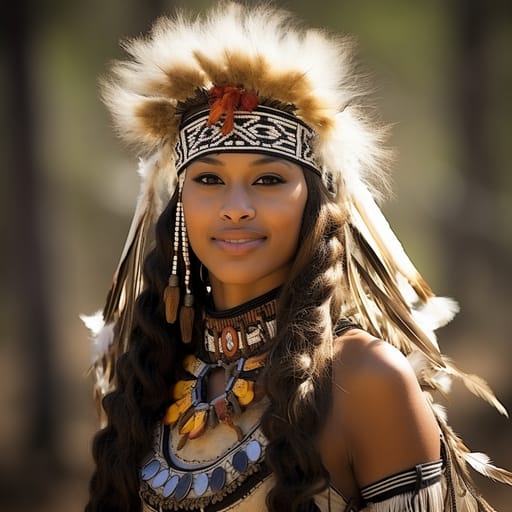
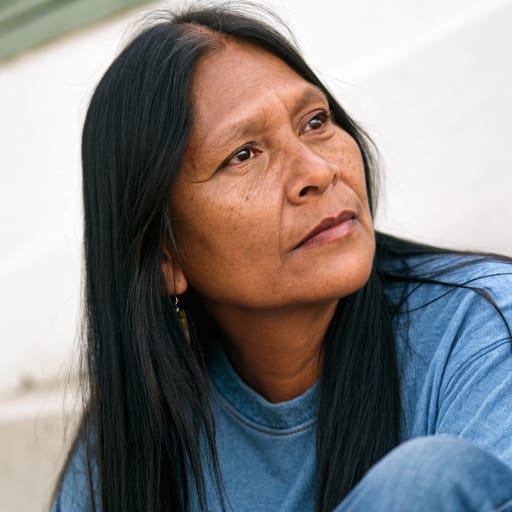
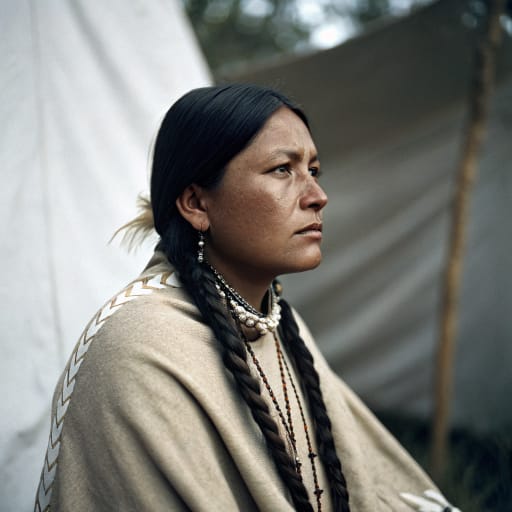
Typical Mahican Phenotypes
Reference for AI generation: hair, eyes, skin, facial structure, build
Mahican Body & Anatomy Reference
Per-feature anatomical profile for AI nude generation: Indigenous Northern American / Algonquian-Iroquoian phenotype
Mahican Boobs & Breasts
The typical Mahican bust is medium cup, moderate projection, in line with the wider Indigenous Northern American / Algonquian-Iroquoian pattern. Areolas usually fall in the 30-44mm range, with medium-brown areolar pigmentation against the copper-to-medium-brown skin tone. Compared with the smaller East Asian bust, Mahican breasts sit forward and are generally full and moderate projection. A faithful AI render of Mahican tits keeps that shape and areola size.
Mahican Ass & Hips
Butt shape among Mahican women: medium, moderate-to-full projection, over medium iliac crests. This follows Indigenous Northern American / Algonquian-Iroquoian ancestry and looks quite unlike the slim East Asian narrow-hip profile. An accurate Mahican ass in adult AI imagery keeps both the silhouette and the overall build (mesomorph, broader frame in northern Indigenous populations) instead of a generic average.
Mahican Vagina & Pussy
Vulvar anatomy among Mahican women: medium-brown labial pigmentation. Pubic hair tends to be straight medium-coarse texture, in the usual inverted-triangle pattern. Both follow Indigenous Northern American / Algonquian-Iroquoian pigmentation, which is why Mahican pussy renders should not fall back on a pale, sparse Western template.
Mahican Dicks & Penis
The Mahican cock profile, from Indigenous Northern American / Algonquian-Iroquoian anthropometric data: regional mean ~13cm erect; moderate girth; medium-brown shaft pigmentation. Pubic hair has a straight medium-coarse texture and forms the usual inverted-V pattern. Whether Mahican men are circumcised follows religious and cultural practice rather than phenotype.
Mahican Body, Curves & Build
Build and curves among Mahican women follow the Indigenous Northern American / Algonquian-Iroquoian pattern: mesomorph, broader frame in northern Indigenous populations, mean adult female BMI 25-28. Proportions matter as much as skin tone, so Mahican figures should keep their regional height and limb ratios.
Mahican Skin Tone & Hair Texture
The Mahican skin range is copper to medium-brown (Fitzpatrick III-V), and hair tends to be straight 1A, dark-brown to black, often thick and dense. That combination marks the Indigenous Northern American / Algonquian-Iroquoian phenotype, and skin tone is the trait AI generators most often get wrong for Mahican women.
Explore phenotype categories
Structured taxonomy with peer-reviewed scales · 22 anatomical categories
Erotic Poses & Sex Positions
From the pose catalog: 219 named positions with reference skeletons
Frequently asked questions about Mahican people
Where is the Mahican homeland?
The Mahican homeland is Upper Hudson River valley and the Housatonic valley of New York, Massachusetts and Connecticut, United States; today the Stockbridge-Munsee reservation in Shawano County, Wisconsin in North America.
What language do Mahican people speak?
Mahican people primarily speak Mahican (Algic, Eastern Algonquian), dormant since the 1930s and under revival; English.
What religion do Mahican people practice?
The predominant religion among Mahican people is Christianity (Congregational by mission history), alongside revived traditional ceremony.






Make your own Mahican images
Five a day, free, no credits to buy. The studio starts from this group's phenotype data, so you can set body type, pose and style and keep the traits accurate.
Start with Mahican