No portrait yet
Shasta Erotic
Middle Klamath River, Shasta Valley and Scott Valley in Siskiyou County, northern California, extending into the Rogue and Applegate river drainages of southern Oregon, United States.
Shasta, with the related New River Shasta, Konomihu and Okwanuchu (Shastan family, tentatively grouped under the disputed Hokan hypothesis); English is now the everyday language, with revitalization work underway.
Ancestral practice centered on spirit power, shamanic healing and life-cycle ceremony, held by many alongside Christianity introduced during the reservation era.
Four historic divisions in the Klamath canyon, Shasta Valley, Scott Valley and the Oregon Rogue country; the wider Shastan family also included New River Shasta, Konomihu and Okwanuchu. Descendants today are enrolled in the Shasta Indian Nation, the Quart
About Shasta People
The Shasta took their bearings from rivers. Their country was the middle Klamath and its feeder streams, the Scott and Shasta valleys in what is now Siskiyou County, California, and a stretch north over the state line into the Rogue and Applegate drainages of southern Oregon. Mount Shasta stands over the southern edge of it and carries their name in English, though the borrowing runs the other way from what most visitors assume: the mountain was named after the people. Four main divisions organized the whole, one in the Klamath canyon, one each in Shasta and Scott valleys, and one on the Oregon side. Each held its own villages and its own headmen, and each recognized the others as the same people.
Their language anchored a small family that also included New River Shasta, Konomihu, and Okwanuchu, none of which is still spoken as a first language. Linguists have filed Shastan alongside Karuk, Chimariko, and a scattering of other California languages under the Hokan hypothesis, which is less a settled family than a long argument; revitalization work today leans on grammars and word lists recorded in the early and middle twentieth century. Wealth was counted in strings of dentalium shell, and that mattered legally as well as socially: a killing or an injury was settled by negotiated payment through a formal go-between, and a settlement that failed to close became a feud. Shamans were mostly women, by the accounts on record. Girls were danced into adulthood over several nights, and women wore three vertical lines tattooed on the chin.
Gold on the Klamath and the Scott after 1850 brought miners, massacres, and a collapse the community has never been allowed to forget. Shasta leaders signed treaties in 1851 that the U.S. Senate never ratified and then kept sealed for fifty years. The Rogue River Wars of the mid-1850s ended with the Oregon Shasta marched to the Grand Ronde and Siletz reservations, where their descendants are enrolled today, while others stayed in Siskiyou County around Quartz Valley. The Shasta Indian Nation still lacks federal recognition and has been pressing for it for decades. When the Klamath dams came down in 2024 and Copco Lake drained off a village site it had drowned for a century, California returned roughly 2,800 acres of that ground to the Nation. It is the largest thing to go right for them in a hundred and seventy years.
Related ethnic groups
Groups that share Shasta's homeland, region, language, or religious tradition. These are likely candidates for comparative phenotype reference.
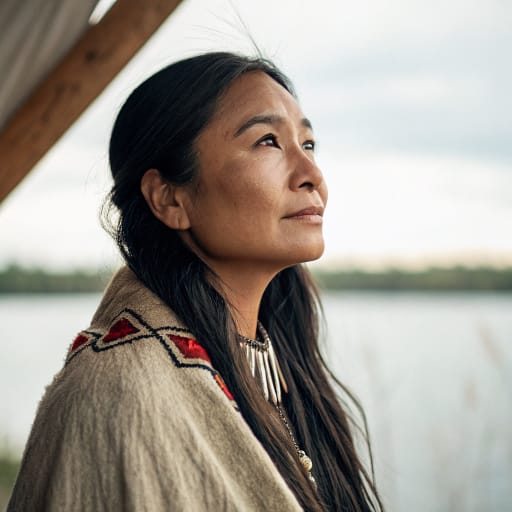
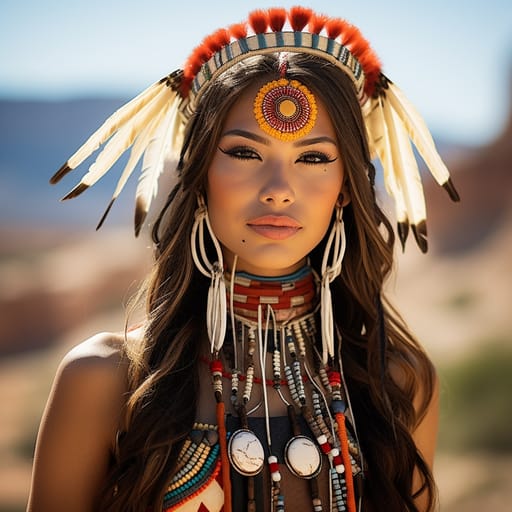
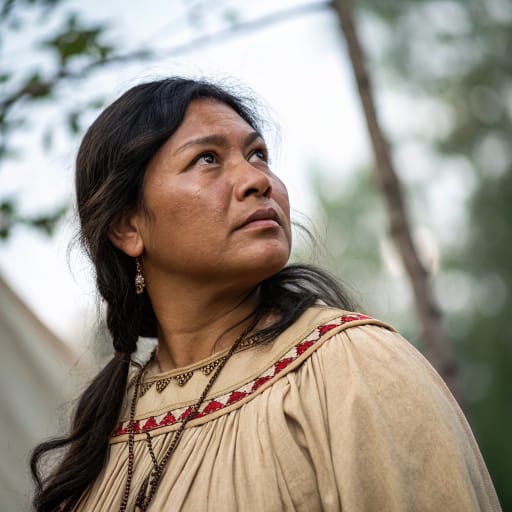
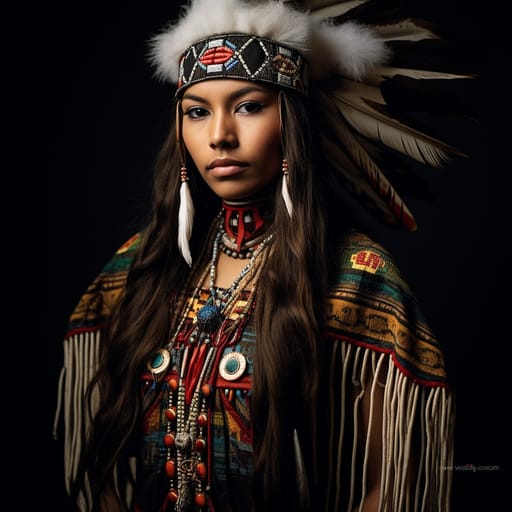
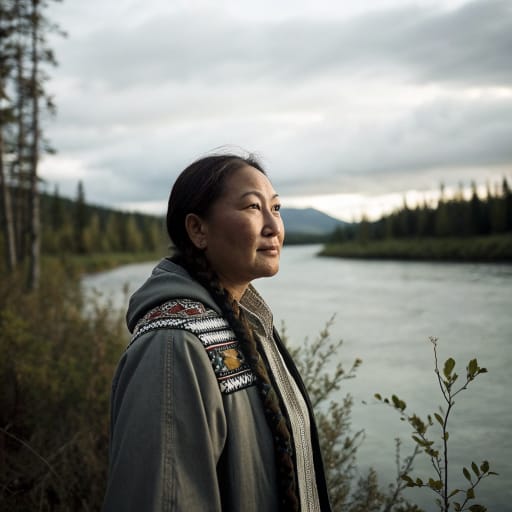
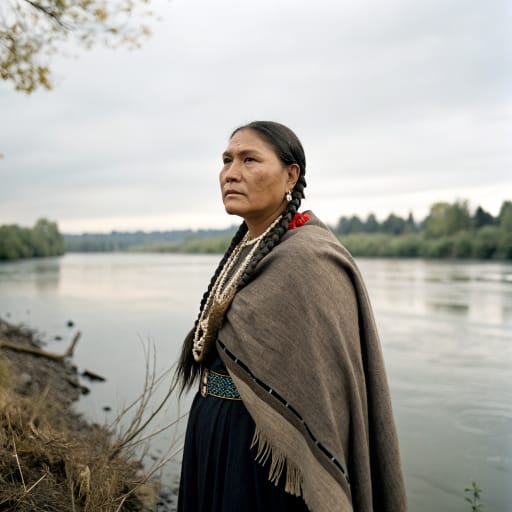
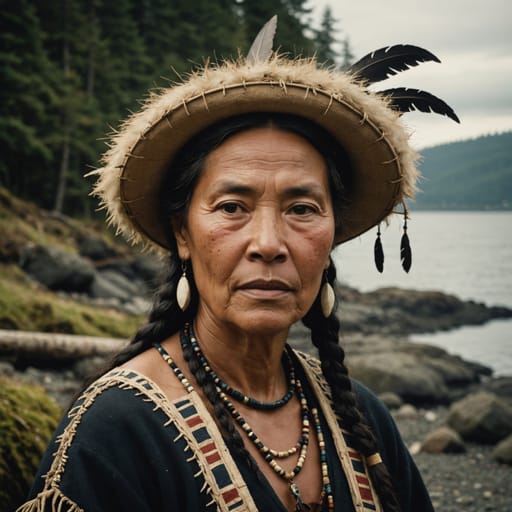
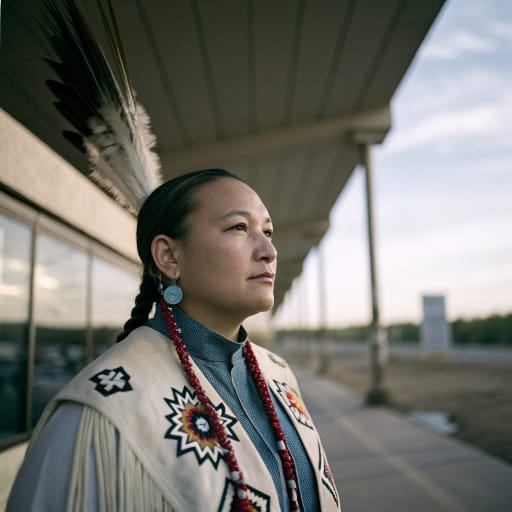
Typical Shasta Phenotypes
Reference for AI generation: hair, eyes, skin, facial structure, build
Shasta Body & Anatomy Reference
Per-feature anatomical profile for AI nude generation: Indigenous Northern American / Algonquian-Iroquoian phenotype
Shasta Boobs & Breasts
Shasta boobs follow the Indigenous Northern American / Algonquian-Iroquoian profile: medium cup, moderate projection. Areolar diameter is usually 30-44mm, and the coloring is medium-brown areolar pigmentation against the copper-to-medium-brown skin tone. Breast shape tracks body composition (mesomorph, broader frame in northern Indigenous populations, mean adult female BMI 25-28), so Shasta breasts tend to be full and moderate projection. Expect a forward-set shape, not the smaller East Asian bust.
Shasta Ass & Hips
Shasta ass and hip morphology presents as medium, moderate-to-full projection, distinctly different from the slim East Asian narrow-hip profile. The Shasta pelvic profile shows medium iliac crests, anchored in the Indigenous Northern American / Algonquian-Iroquoian skeletal pattern. Shasta butt shots in adult AI imagery should render the medium, moderate-to-full projection silhouette with the overall build (mesomorph, broader frame in northern Indigenous populations) and the fat distribution typical of the Indigenous Northern American / Algonquian-Iroquoian phenotype.
Shasta Vagina & Pussy
Shasta pussy anatomy typically shows medium-brown labial pigmentation. Pubic hair is usually straight medium-coarse texture. In AI-generated Shasta nudes, labial color should blend into the copper to medium-brown skin with a gradual transition, and the hair should keep its straight medium-coarse texture.
Shasta Dicks & Penis
Penis reference for Shasta men: regional mean ~13cm erect, moderate girth. Coloring: medium-brown shaft pigmentation. An accurate Shasta cock in AI imagery matches the surrounding copper to medium-brown skin rather than a generic porn default. Circumcision depends on religion and custom, not ancestry.
Shasta Body, Curves & Build
The Shasta figure is generally mesomorph, broader frame in northern Indigenous populations, with mean adult female BMI 25-28, characteristic of Indigenous Northern American / Algonquian-Iroquoian ancestry. AI image tools tend to flatten regional body types into a few stock shapes; here the Shasta build is kept as its own reference.
Shasta Skin Tone & Hair Texture
Skin: copper to medium-brown (Fitzpatrick III-V). Hair: straight 1A, dark-brown to black, often thick and dense. Both are typical of Indigenous Northern American / Algonquian-Iroquoian ancestry. The most common mistake in AI nudes of Shasta women is a body rendered lighter than the face.
Explore phenotype categories
Structured taxonomy with peer-reviewed scales · 22 anatomical categories
Erotic Poses & Sex Positions
From the pose catalog: 219 named positions with reference skeletons
Frequently asked questions about Shasta people
Where is the Shasta homeland?
The Shasta homeland is Middle Klamath River, Shasta Valley and Scott Valley in Siskiyou County, northern California, extending into the Rogue and Applegate river drainages of southern Oregon, United States. in North America.
What language do Shasta people speak?
Shasta people primarily speak Shasta, with the related New River Shasta, Konomihu and Okwanuchu (Shastan family, tentatively grouped under the disputed Hokan hypothesis); English is now the everyday language, with revitalization work underway..
What religion do Shasta people practice?
The predominant religion among Shasta people is Ancestral practice centered on spirit power, shamanic healing and life-cycle ceremony, held by many alongside Christianity introduced during the reservation era..






Make your own Shasta images
Five a day, free, no credits to buy. The studio starts from this group's phenotype data, so you can set body type, pose and style and keep the traits accurate.
Start with Shasta