No portrait yet
Nafana Erotic
Banda area of Ghana's Bono Region, near the Black Volta, and the Bondoukou district of eastern Côte d'Ivoire.
Nafaanra (Niger-Congo, Senufo branch, usually grouped with Gur); many also speak Twi or French.
Christianity and Islam alongside indigenous shrine and masquerade traditions such as Bedu.
Southeasternmost branch of the Senufo peoples; communities in Ghana (Banda) and Côte d'Ivoire (Bondoukou area).
About Nafana People
The Nafana are Senufo who ended up far from the other Senufo. Their language, Nafaanra, belongs to a cluster whose heartland lies in northern Côte d'Ivoire, southeastern Mali and western Burkina Faso, yet the Nafana live well to the southeast, in the forest-savanna borderland where western Ghana meets eastern Côte d'Ivoire. In Ghana they center on the Banda area of the Bono Region, near the Black Volta; across the border their villages lie around Bondoukou. That distance is the key to them: a Senufo-speaking people who have lived for centuries among Akan, Kulango and Mande neighbors, borrowing freely without disappearing into any of them.
Nafaanra is a Niger-Congo language usually filed with the Gur group, though linguists still argue over exactly where Senufo fits. It shares little with the Akan speech that surrounds it in Ghana, and many Nafana are bilingual in Twi, or in French on the Ivorian side. Older records sometimes hide them under outsiders' names such as Banda or Pantera.
Their country sits inside an old commercial world. Nearby Begho was a market town where Mande merchants gathered gold and kola for the routes north toward the Niger, and Banda was bound into that traffic. In the eighteenth century Banda fell under Asante overrule, while the Abron kingdom of Gyaman dominated the Bondoukou district. The colonial border between the Gold Coast and French Côte d'Ivoire then split the Nafana between two states. On the Ghanaian side the political center is the paramount stool at Banda Ahenkro, and its chieftaincy follows Akan forms of office, laid over a Senufo-speaking community.
Religious life is layered the same way. Christianity and Islam both have followings, but older shrine practice persists, and outside the region the Nafana are best known for one of its offshoots. Bedu, a masquerade that took shape in Nafana villages near Bondoukou during the twentieth century, brings out tall, flat plank masks painted with geometric designs and danced in pairs: the male crowned with horns, the female with a disc. They appear during an annual festival period to draw illness and misfortune away from the community, and people seek out their blessing. Bedu filled the place of an earlier anti-witchcraft cult that had faded under colonial and Muslim pressure, and Kulango and Degha neighbors later took it up, making it a Nafana invention that traveled outward.
Related ethnic groups
Groups that share Nafana's homeland, region, language, or religious tradition. These are likely candidates for comparative phenotype reference.
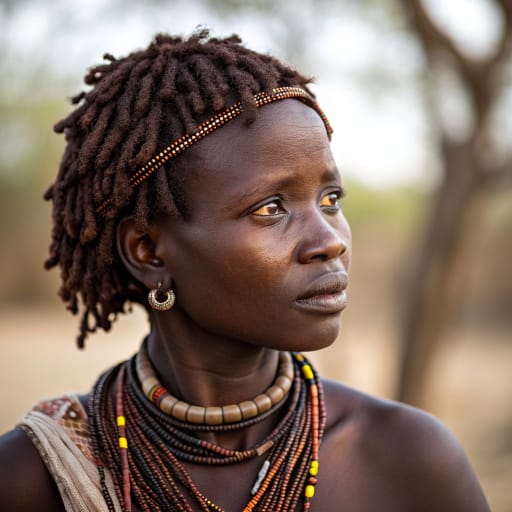
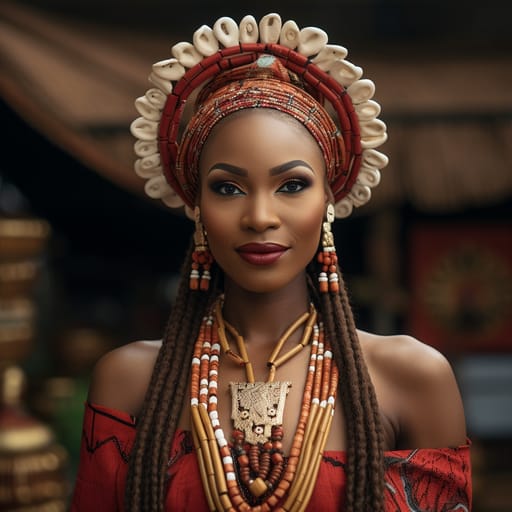
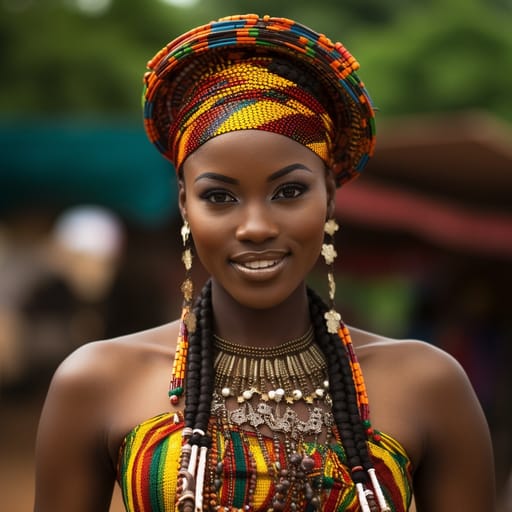
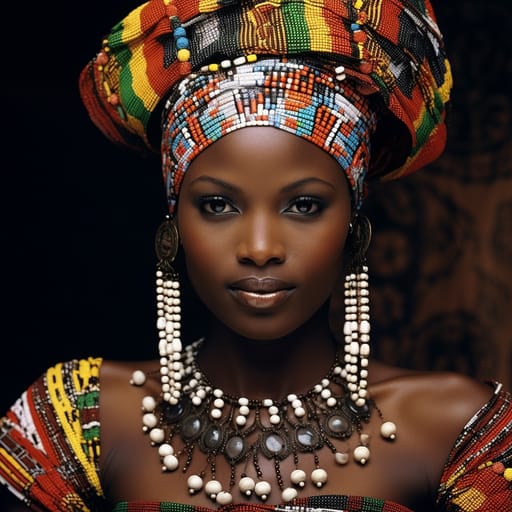
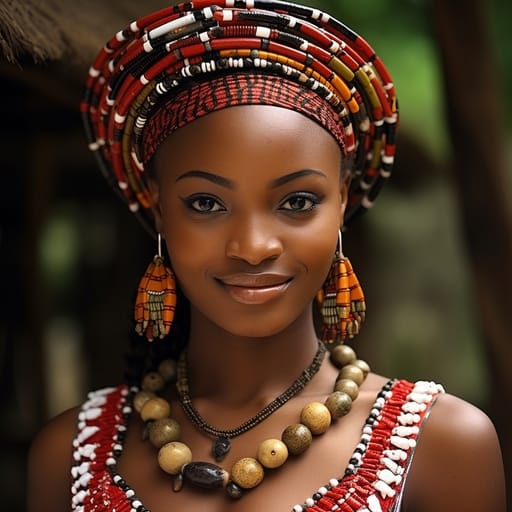
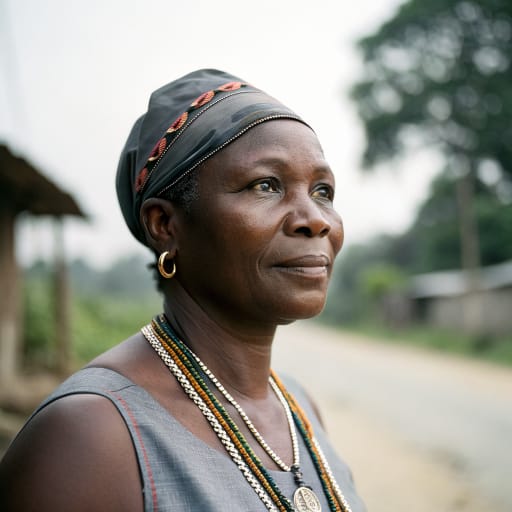
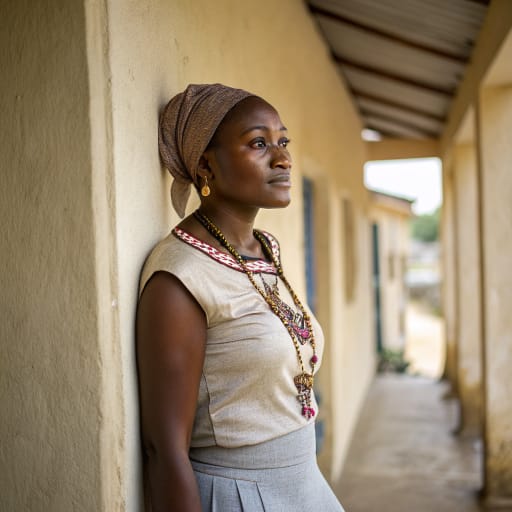
Typical Nafana Phenotypes
Reference for AI generation: hair, eyes, skin, facial structure, build
Nafana Body & Anatomy Reference
West African Niger-Congo phenotype: anatomy reference for AI nude generation
Nafana Boobs & Breasts
Bust reference for Nafana women: medium-to-large cup, full, projecting, which is typical of West African Niger-Congo ancestry. Areolas measure about 35-50mm across, with deep-brown to near-black pigmentation. Body type (mesomorph with strong gluteal-femoral fat distribution) shapes the bust as well, so Nafana tits are usually fuller and more projecting than the East African norm. In AI imagery, keep the forward-set shape rather than drifting toward the smaller conical Cushitic East African profile.
Nafana Ass & Hips
The Nafana ass is typically wide-set, full, heavily projected glutes, which sets it apart from the slim narrow-hip Cushitic East African profile. Underneath, the pelvis shows wide iliac crests, broad gynoid pelvic pattern, high glute-to-waist ratio, part of the West African Niger-Congo skeletal pattern. For Nafana butt pics and AI renders, match that silhouette and the overall build (mesomorph with strong gluteal-femoral fat distribution).
Nafana Vagina & Pussy
Nafana pussy and vulvar anatomy presents deep-brown to near-black labial pigmentation, fuller labia minora, consistent with the West African Niger-Congo phenotype's pigmentation pattern. Nafana pubic hair is typically tightly-coiled coarse texture, densely distributed, in the inverted-triangle pattern. For anatomically accurate Nafana pussy renders the labial coloration should match the surrounding medium-brown to deep-brown skin tone with a continuous gradient, and the hair should keep its tightly-coiled coarse texture.
Nafana Dicks & Penis
Nafana dicks follow the West African Niger-Congo reference data: regional mean ~14-15cm erect; above-average girth, ~13cm circumference; deep-brown-to-near-black shaft pigmentation. Shaft color should track the medium-brown to deep-brown skin tone with a smooth change toward the glans, and Nafana pubic hair keeps its tightly-coiled coarse texture.
Nafana Body, Curves & Build
Nafana body type and overall build presents as mesomorph with strong gluteal-femoral fat distribution, with mean adult female BMI 24-27: the characteristic West African Niger-Congo habitus. Nafana curves and proportions should keep the regional skeletal frame (height, shoulder-to-hip ratio, limb proportions) rather than a generic mesomorph default.
Nafana Skin Tone & Hair Texture
Nafana skin sits in the medium-brown to deep-brown (Fitzpatrick V-VI) band. Hair is typically tight 4A-4C coil, often worn natural, braided, or relaxed, in keeping with the West African Niger-Congo phenotype. In nude renders the skin should stay one even tone from face to body, and body, pubic and head hair should match.
Explore phenotype categories
Structured taxonomy with peer-reviewed scales · 22 anatomical categories
Erotic Poses & Sex Positions
From the pose catalog: 219 named positions with reference skeletons
Frequently asked questions about Nafana people
Where is the Nafana homeland?
The Nafana homeland is Banda area of Ghana's Bono Region, near the Black Volta, and the Bondoukou district of eastern Côte d'Ivoire. in Western Africa.
What language do Nafana people speak?
Nafana people primarily speak Nafaanra (Niger-Congo, Senufo branch, usually grouped with Gur); many also speak Twi or French..
What religion do Nafana people practice?
The predominant religion among Nafana people is Christianity and Islam alongside indigenous shrine and masquerade traditions such as Bedu..






Make your own Nafana images
Five a day, free, no credits to buy. The studio starts from this group's phenotype data, so you can set body type, pose and style and keep the traits accurate.
Start with Nafana