No portrait yet
Mohegan Erotic
The lower Thames River valley of southeastern Connecticut, United States, centered on Uncasville and Montville.
English; Mohegan-Pequot, also called Mohegan-Montauk-Narragansett (Eastern Algonquian, Algic), dormant since 1908 and under active revitalization
Mostly Christian, historically Congregational, alongside continuing Mohegan traditional practice
Eastern Algonquian peoples of southern New England; separated from the Pequot in the early 17th century, and kin to the Narragansett, Niantic and Montauk. Distinct from the Mahican of the Hudson Valley.
About Mohegan People
The Mohegan call themselves the Wolf People, and the name has done real work over four centuries: it marks them off from the Pequot they broke with in the 1630s, and it is not, despite a famous novel, the same word as Mahican. Cooper borrowed the sound and left the confusion behind him. The homeland is small and specific, the lower Thames River valley in southeastern Connecticut around present-day Uncasville and Montville: tidal river, oak ridge and salt marsh, country that fed people on corn, fish and shellfish without anyone having to travel far.
The split was political. Uncas, a sachem with his own claim to Pequot leadership, pulled away and allied with the English, and when the Pequot War came in 1636 he fought on the colonial side. The alliance held through King Philip's War forty years later. It is a hard inheritance and the tribe does not pretend otherwise: it kept the Mohegan in place while their neighbors were destroyed, and it bought far less protection than promised. Mohegan Indians v. Connecticut, the case over what was left of the land, ran from 1704 to 1773 and was argued in London before the Privy Council, one of the longest legal fights in colonial America. The colony kept the land.
What held the tribe together afterward was mostly the work of people who kept records nobody had asked them to keep. Samson Occom, a Mohegan minister and one of the first Native Americans to publish in English, raised the money in England that ended up founding Dartmouth College and watched it go elsewhere. Fidelia Fielding, who died in 1908, kept diaries in Mohegan-Pequot, an Eastern Algonquian language close enough to Narragansett and Montauk that linguists often treat the three as one; she is usually named its last fluent speaker, and her notebooks are the backbone of the revitalization program that has since produced a dictionary and a grammar. Gladys Tantaquidgeon, a medicine woman who trained as an anthropologist and lived to 106, opened a museum with her father and brother in 1931 that is still open, the oldest Native-run museum in the country. The Congregational church on Mohegan Hill, built in 1831, became a tribal institution rather than an imposed one, and the August Wigwam Festival grew out of it. Federal recognition came in 1994, Mohegan Sun opened two years later in Uncasville, and the revenue now pays for tribal government, elder care and land the tribe is buying back. Beadwork still carries the Trail of Life, the zigzag motif that reads as a path with its turns left in.
Related ethnic groups
Groups that share Mohegan's homeland, region, language, or religious tradition. These are likely candidates for comparative phenotype reference.
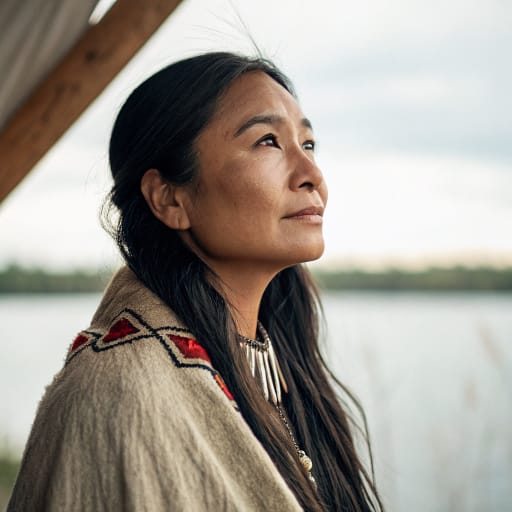
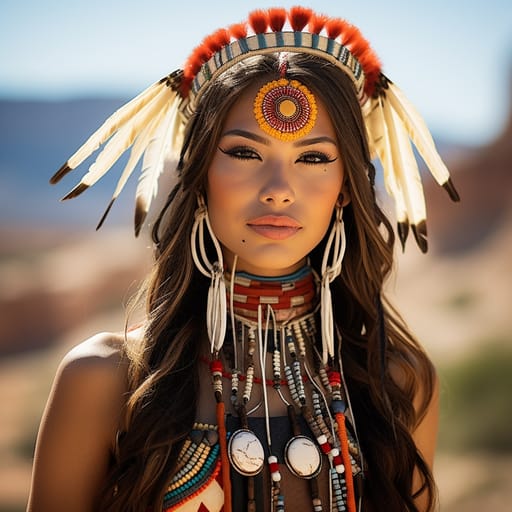
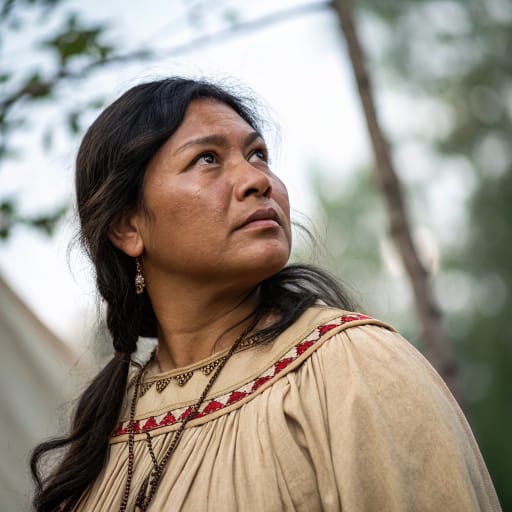
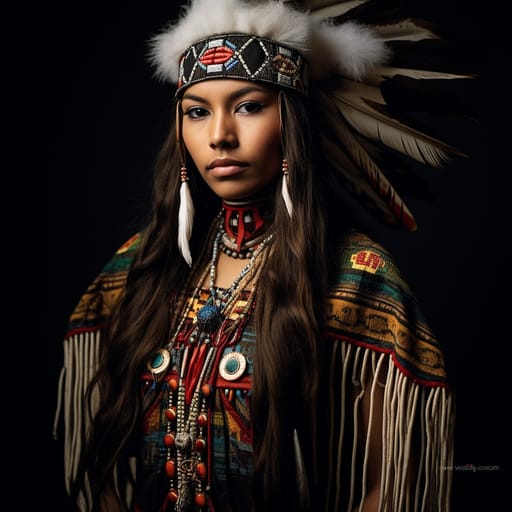
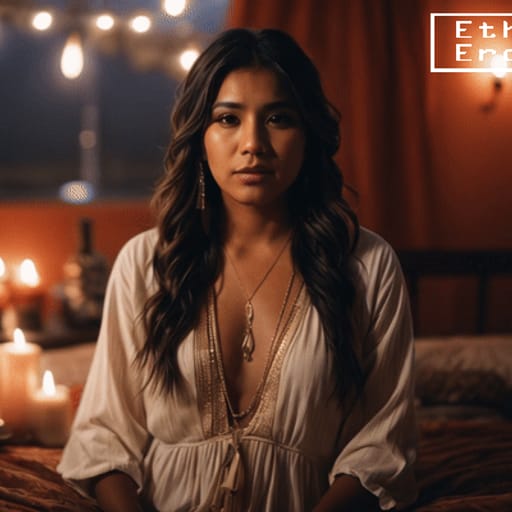
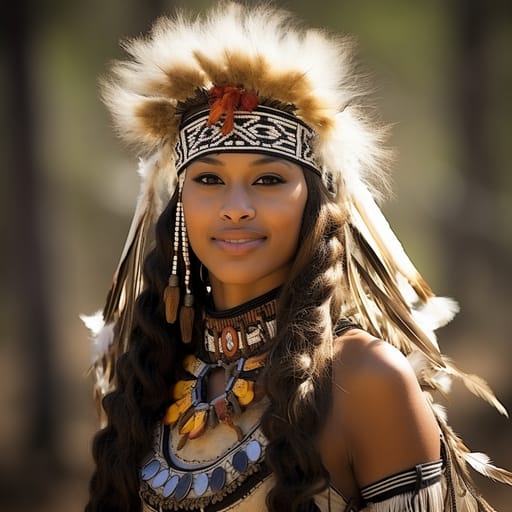
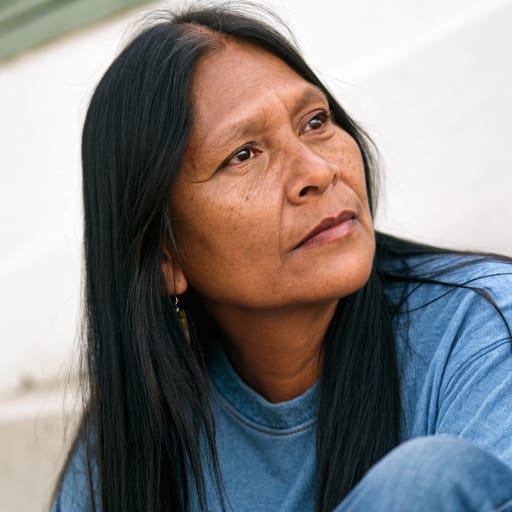
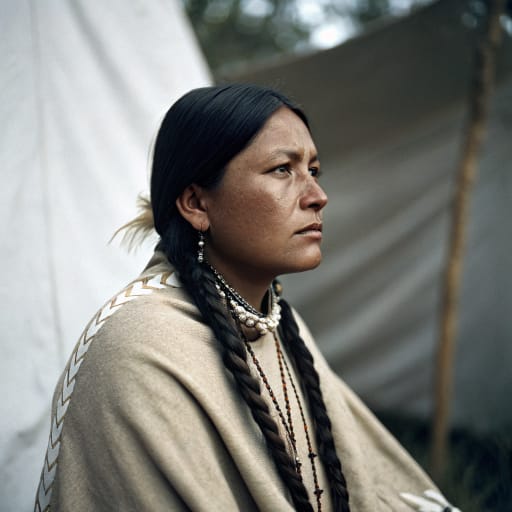
Typical Mohegan Phenotypes
Reference for AI generation: hair, eyes, skin, facial structure, build
Mohegan Body & Anatomy Reference
Per-feature anatomical profile for AI nude generation: Indigenous Northern American / Algonquian-Iroquoian phenotype
Mohegan Boobs & Breasts
Bust reference for Mohegan women: medium cup, moderate projection, which is typical of Indigenous Northern American / Algonquian-Iroquoian ancestry. Areolas measure about 30-44mm across, with medium-brown pigmentation. Body type (mesomorph, broader frame in northern Indigenous populations) shapes the bust as well, so Mohegan tits are usually full and moderate projection. In AI imagery, keep the forward-set shape rather than drifting toward the smaller East Asian bust.
Mohegan Ass & Hips
The Mohegan ass is typically medium, moderate-to-full projection, which sets it apart from the slim East Asian narrow-hip profile. Underneath, the pelvis shows medium iliac crests, part of the Indigenous Northern American / Algonquian-Iroquoian skeletal pattern. For Mohegan butt pics and AI renders, match that silhouette and the overall build (mesomorph, broader frame in northern Indigenous populations).
Mohegan Vagina & Pussy
Mohegan pussy and vulvar anatomy presents medium-brown labial pigmentation, consistent with the Indigenous Northern American / Algonquian-Iroquoian phenotype's pigmentation pattern. Mohegan pubic hair is typically straight medium-coarse texture, in the inverted-triangle pattern. For anatomically accurate Mohegan pussy renders the labial coloration should match the surrounding copper to medium-brown skin tone with a continuous gradient, and the hair should keep its straight medium-coarse texture.
Mohegan Dicks & Penis
Mohegan dicks follow the Indigenous Northern American / Algonquian-Iroquoian reference data: regional mean ~13cm erect; moderate girth; medium-brown shaft pigmentation. Shaft color should track the copper to medium-brown skin tone with a smooth change toward the glans, and Mohegan pubic hair keeps its straight medium-coarse texture.
Mohegan Body, Curves & Build
Mohegan body type and overall build presents as mesomorph, broader frame in northern Indigenous populations, with mean adult female BMI 25-28: the characteristic Indigenous Northern American / Algonquian-Iroquoian habitus. Mohegan curves and proportions should keep the regional skeletal frame (height, shoulder-to-hip ratio, limb proportions) rather than a generic mesomorph default.
Mohegan Skin Tone & Hair Texture
Mohegan skin sits in the copper to medium-brown (Fitzpatrick III-V) band. Hair is typically straight 1A, dark-brown to black, often thick and dense, in keeping with the Indigenous Northern American / Algonquian-Iroquoian phenotype. In nude renders the skin should stay one even tone from face to body, and body, pubic and head hair should match.
Explore phenotype categories
Structured taxonomy with peer-reviewed scales · 22 anatomical categories
Erotic Poses & Sex Positions
From the pose catalog: 219 named positions with reference skeletons
Frequently asked questions about Mohegan people
Where is the Mohegan homeland?
The Mohegan homeland is The lower Thames River valley of southeastern Connecticut, United States, centered on Uncasville and Montville. in North America.
What language do Mohegan people speak?
Mohegan people primarily speak English; Mohegan-Pequot, also called Mohegan-Montauk-Narragansett (Eastern Algonquian, Algic), dormant since 1908 and under active revitalization.
What religion do Mohegan people practice?
The predominant religion among Mohegan people is Mostly Christian, historically Congregational, alongside continuing Mohegan traditional practice.






Make your own Mohegan images
Five a day, free, no credits to buy. The studio starts from this group's phenotype data, so you can set body type, pose and style and keep the traits accurate.
Start with Mohegan