No portrait yet
Puyallup Erotic
The Puyallup River watershed and Commencement Bay in southern Puget Sound, Pierce County, Washington State, United States.
Twulshootseed, the southern dialect of Lushootseed (Salishan); English in daily use.
Coast Salish ceremonial traditions including winter smokehouse dancing, the Indian Shaker Church, and Catholic and Protestant Christianity.
Coast Salish; the Southern Lushootseed speaking peoples of southern Puget Sound, alongside the Nisqually, Squaxin Island, Steilacoom and Muckleshoot.
About Puyallup People
The Puyallup call themselves spuyaləpubš, a name usually explained as the generous ones, the people who welcome anyone who comes into their land. Their country is a river and the bay it empties into. The Puyallup River comes off the glaciers of the mountain they call təqʷuʔbəʔ and most maps label Rainier, drops through a wide valley of black bottom soil, and spreads into tideflats at Commencement Bay. The older economy followed that gradient: salmon and smelt in the river, clams and saltwater fishing below, cedar, elk and berry ground above. They are Coast Salish, bound by language, marriage and winter ceremony to the Nisqually, Squaxin Island, Steilacoom and Muckleshoot, and the lines between those peoples were porous in a way treaty maps were never built to show.
Their language is Twulshootseed, the southern dialect of Lushootseed, part of the Salishan family and unrelated to anything spoken by neighbors to the south and east. First language speakers are gone. What survives is the product of deliberate work: archival recordings, tribal language staff, and daily instruction at Chief Leschi Schools, which the tribe runs itself. The school is named for the Nisqually leader hanged in 1858 after the Puget Sound War, a war that began because the Treaty of Medicine Creek, signed at the end of 1854, handed the signing tribes reservations of steep timber and no usable waterfront. A Washington historical court exonerated Leschi in 2004.
Allotment took most of what was left. By the mid twentieth century the Port of Tacoma, rail yards and heavy industry stood on reservation ground, and Puyallup fishermen were being arrested on their own river for netting the salmon the treaty had guaranteed them. They kept fishing. The Boldt decision of 1974 confirmed the treaty meant what it said: half the harvest, and a seat as co-manager of the fishery. A 1989 settlement over the Tacoma tideflats returned land, cash and job commitments worth more than 160 million dollars. The tribe now runs a health authority, a school system, a casino and a fishery, and is among the largest employers in Pierce County. Winter smokehouse dancing continues and is not a public event. The Indian Shaker Church, founded nearby in the 1880s, still has a following, alongside Catholic and Protestant congregations. In 2018 the Puyallup hosted the annual canoe journey, and more than a hundred canoes came ashore on their beach.
Related ethnic groups
Groups that share Puyallup's homeland, region, language, or religious tradition. These are likely candidates for comparative phenotype reference.
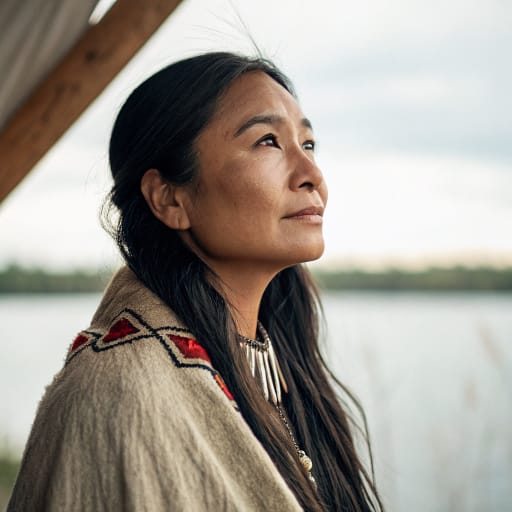
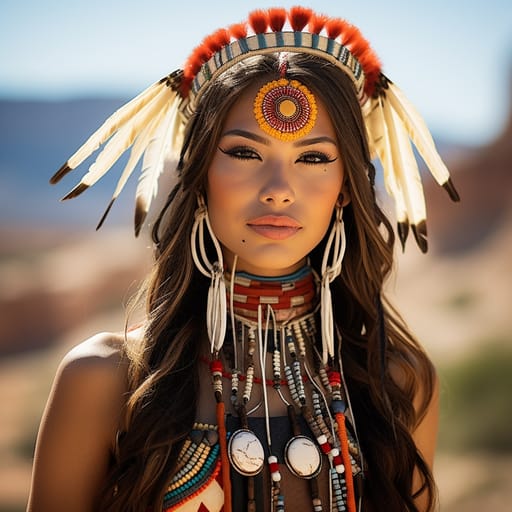
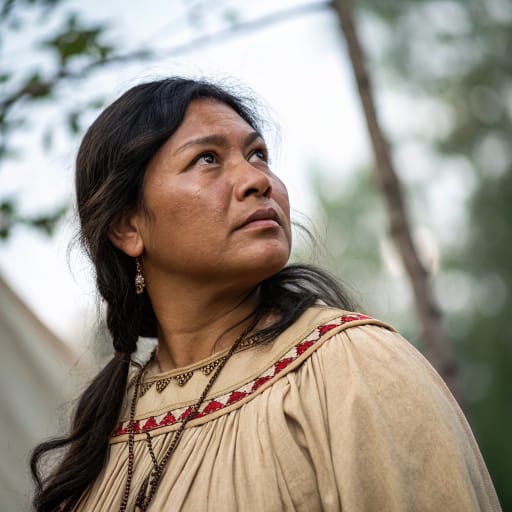
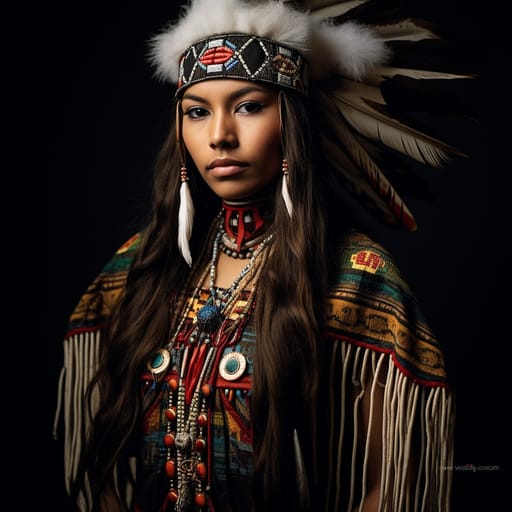
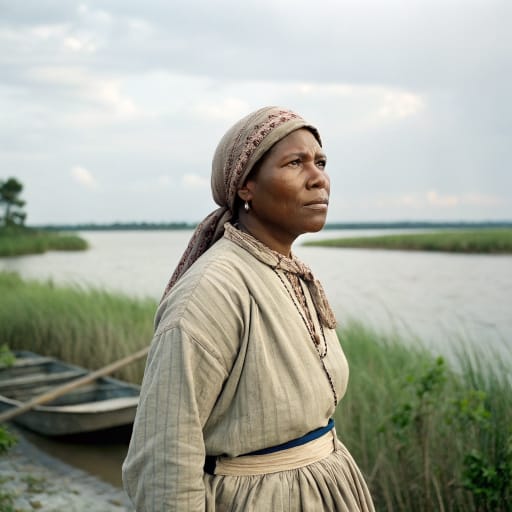
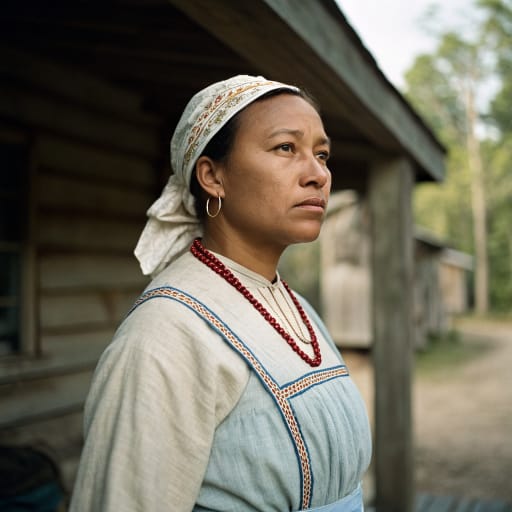
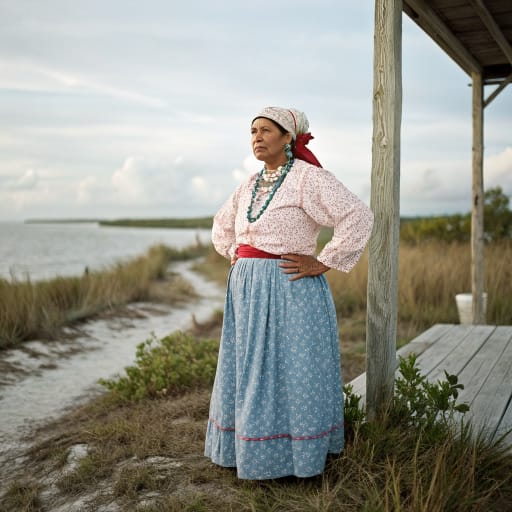
Typical Puyallup Phenotypes
Reference for AI generation: hair, eyes, skin, facial structure, build
Puyallup Body & Anatomy Reference
Indigenous Northern American / Algonquian-Iroquoian phenotype: anatomy reference for AI nude generation
Puyallup Boobs & Breasts
Puyallup boobs follow the Indigenous Northern American / Algonquian-Iroquoian profile: medium cup, moderate projection. Areolar diameter is usually 30-44mm, and the coloring is medium-brown areolar pigmentation against the copper-to-medium-brown skin tone. Breast shape tracks body composition (mesomorph, broader frame in northern Indigenous populations, mean adult female BMI 25-28), so Puyallup breasts tend to be full and moderate projection. Expect a forward-set shape, not the smaller East Asian bust.
Puyallup Ass & Hips
Puyallup ass and hip morphology presents as medium, moderate-to-full projection, distinctly different from the slim East Asian narrow-hip profile. The Puyallup pelvic profile shows medium iliac crests, anchored in the Indigenous Northern American / Algonquian-Iroquoian skeletal pattern. Puyallup butt shots in adult AI imagery should render the medium, moderate-to-full projection silhouette with the overall build (mesomorph, broader frame in northern Indigenous populations) and the fat distribution typical of the Indigenous Northern American / Algonquian-Iroquoian phenotype.
Puyallup Vagina & Pussy
Puyallup pussy anatomy typically shows medium-brown labial pigmentation. Pubic hair is usually straight medium-coarse texture. In AI-generated Puyallup nudes, labial color should blend into the copper to medium-brown skin with a gradual transition, and the hair should keep its straight medium-coarse texture.
Puyallup Dicks & Penis
Penis reference for Puyallup men: regional mean ~13cm erect, moderate girth. Coloring: medium-brown shaft pigmentation. An accurate Puyallup cock in AI imagery matches the surrounding copper to medium-brown skin rather than a generic porn default. Circumcision depends on religion and custom, not ancestry.
Puyallup Body, Curves & Build
The Puyallup figure is generally mesomorph, broader frame in northern Indigenous populations, with mean adult female BMI 25-28, characteristic of Indigenous Northern American / Algonquian-Iroquoian ancestry. AI image tools tend to flatten regional body types into a few stock shapes; here the Puyallup build is kept as its own reference.
Puyallup Skin Tone & Hair Texture
Skin: copper to medium-brown (Fitzpatrick III-V). Hair: straight 1A, dark-brown to black, often thick and dense. Both are typical of Indigenous Northern American / Algonquian-Iroquoian ancestry. The most common mistake in AI nudes of Puyallup women is a body rendered lighter than the face.
Explore phenotype categories
Structured taxonomy with peer-reviewed scales · 22 anatomical categories
Erotic Poses & Sex Positions
From the pose catalog: 219 named positions with reference skeletons
Frequently asked questions about Puyallup people
Where is the Puyallup homeland?
The Puyallup homeland is The Puyallup River watershed and Commencement Bay in southern Puget Sound, Pierce County, Washington State, United States. in North America.
What language do Puyallup people speak?
Puyallup people primarily speak Twulshootseed, the southern dialect of Lushootseed (Salishan); English in daily use..
What religion do Puyallup people practice?
The predominant religion among Puyallup people is Coast Salish ceremonial traditions including winter smokehouse dancing, the Indian Shaker Church, and Catholic and Protestant Christianity..






Make your own Puyallup images
Five a day, free, no credits to buy. The studio starts from this group's phenotype data, so you can set body type, pose and style and keep the traits accurate.
Start with Puyallup