Help us get this right
Does this portrait look right for Mosopelea?
Nobody has judged this one yet. You would be the first.
Mosopelea Erotic
The middle Ohio Valley in present-day southern Ohio, then the lower Mississippi and the Yazoo River country in Mississippi and Louisiana.
Ofo, also called Ofogoula (Ohio Valley Siouan, Siouan-Catawban family), extinct in the early twentieth century.
Not documented in detail; Indigenous ceremonial practice, with descendants absorbed into the largely Catholic Tunica-Biloxi community.
Ohio Valley Siouan, alongside Biloxi and Tutelo; known after the migration south as the Ofo or Ofogoula, later merged into the Tunica-Biloxi.
About Mosopelea People
The Mosopelea were a Siouan-speaking people of the middle Ohio Valley, in what is now southern Ohio, known to Europeans for barely a generation in the second half of the 1600s before war pushed them off their land for good. What became of them is one of the few genuine reconstructions in the ethnography of the region: they went south, they were the people later called the Ofo, and their descendants are counted today among the Tunica-Biloxi Tribe of Louisiana. They enter the written record already losing. Marquette's map of 1673 carries their name, spelled Monsoupelea, with a notation counting eight villages, and the towns are marked as destroyed. The destroyers were almost certainly Iroquois war parties, whose raids for hunting territory and captives emptied a wide belt of the Ohio country in those decades. Some archaeologists tie the Mosopelea to the late Fort Ancient towns along the Scioto, which would make them the last occupants of a farming tradition several centuries old, though the connection is inference rather than proof.
They ran downriver. French maps of the 1680s place them on the Mississippi below the mouth of the Ohio, later notices put them far to the south near the Taensa, and finally on the lower Yazoo, living beside the Yazoo, Koroa and Tunica as one small town among several. There they were the Ofogoula, the ending a common Mobilian trade jargon element meaning people, the same one heard in Pascagoula and Bayogoula. When the Natchez rose against the French in 1729 and the Yazoo and Koroa joined them, the Ofo did not; they withdrew to the Tunica towns and stayed. Absorption followed, slowly. The link back to the Ohio is a linguistic one, and it held: in 1908 John Swanton found Rosa Pierrette in Louisiana, the last person who spoke Ofo, and the vocabulary he took down from her showed the language to be Siouan, a relative of Biloxi and Tutelo, stranded hundreds of miles inside Muskogean and Tunican country. That word list is very nearly the whole surviving record of the language, and it is the thread that ties a name on a seventeenth-century map to people still living.
Related ethnic groups
Groups that share Mosopelea's homeland, region, language, or religious tradition. These are likely candidates for comparative phenotype reference.
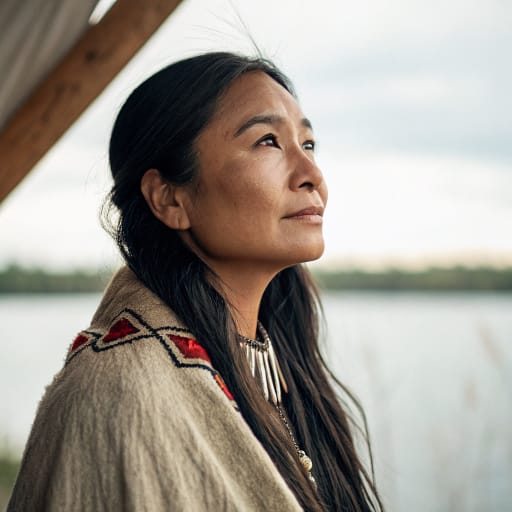
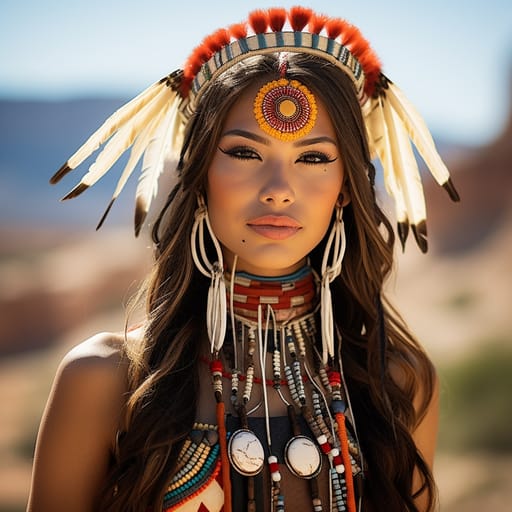
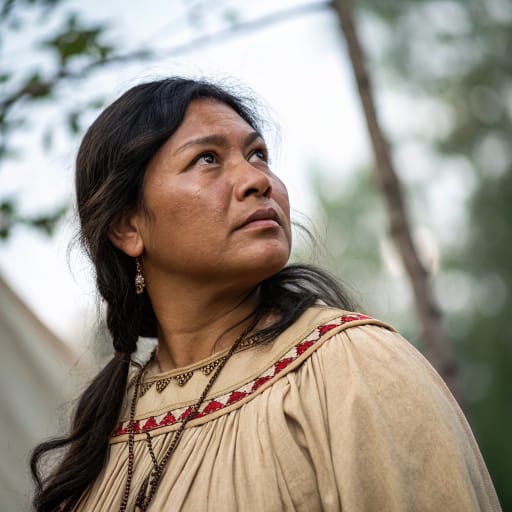
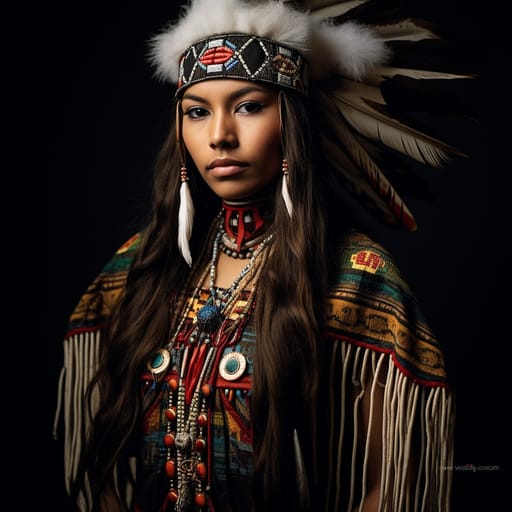
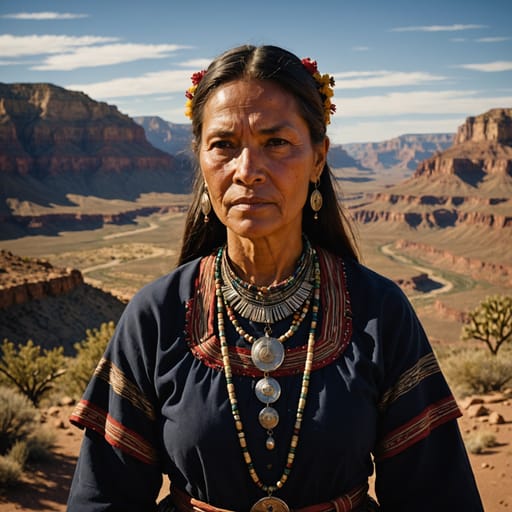
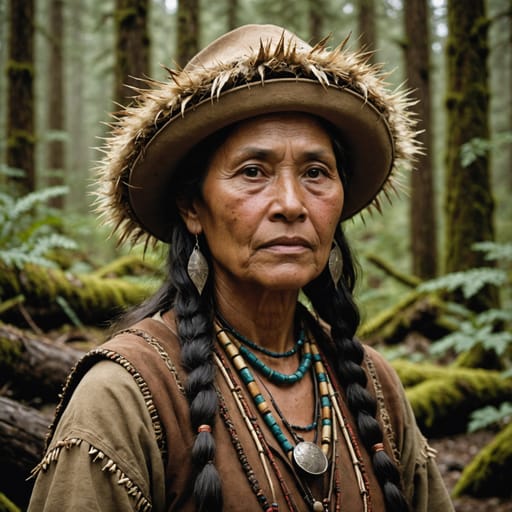
Typical Mosopelea Phenotypes
Reference for AI generation: hair, eyes, skin, facial structure, build
Mosopelea Body & Anatomy Reference
Per-feature anatomical profile for AI nude generation: Indigenous Northern American / Algonquian-Iroquoian phenotype
Mosopelea Boobs & Breasts
The typical Mosopelea bust is medium cup, moderate projection, in line with the wider Indigenous Northern American / Algonquian-Iroquoian pattern. Areolas usually fall in the 30-44mm range, with medium-brown areolar pigmentation against the copper-to-medium-brown skin tone. Compared with the smaller East Asian bust, Mosopelea breasts sit forward and are generally full and moderate projection. A faithful AI render of Mosopelea tits keeps that shape and areola size.
Mosopelea Ass & Hips
Butt shape among Mosopelea women: medium, moderate-to-full projection, over medium iliac crests. This follows Indigenous Northern American / Algonquian-Iroquoian ancestry and looks quite unlike the slim East Asian narrow-hip profile. An accurate Mosopelea ass in adult AI imagery keeps both the silhouette and the overall build (mesomorph, broader frame in northern Indigenous populations) instead of a generic average.
Mosopelea Vagina & Pussy
Vulvar anatomy among Mosopelea women: medium-brown labial pigmentation. Pubic hair tends to be straight medium-coarse texture, in the usual inverted-triangle pattern. Both follow Indigenous Northern American / Algonquian-Iroquoian pigmentation, which is why Mosopelea pussy renders should not fall back on a pale, sparse Western template.
Mosopelea Dicks & Penis
The Mosopelea cock profile, from Indigenous Northern American / Algonquian-Iroquoian anthropometric data: regional mean ~13cm erect; moderate girth; medium-brown shaft pigmentation. Pubic hair has a straight medium-coarse texture and forms the usual inverted-V pattern. Whether Mosopelea men are circumcised follows religious and cultural practice rather than phenotype.
Mosopelea Body, Curves & Build
Build and curves among Mosopelea women follow the Indigenous Northern American / Algonquian-Iroquoian pattern: mesomorph, broader frame in northern Indigenous populations, mean adult female BMI 25-28. Proportions matter as much as skin tone, so Mosopelea figures should keep their regional height and limb ratios.
Mosopelea Skin Tone & Hair Texture
The Mosopelea skin range is copper to medium-brown (Fitzpatrick III-V), and hair tends to be straight 1A, dark-brown to black, often thick and dense. That combination marks the Indigenous Northern American / Algonquian-Iroquoian phenotype, and skin tone is the trait AI generators most often get wrong for Mosopelea women.
Explore phenotype categories
Structured taxonomy with peer-reviewed scales · 22 anatomical categories
Erotic Poses & Sex Positions
From the pose catalog: 219 named positions with reference skeletons
Frequently asked questions about Mosopelea people
Where is the Mosopelea homeland?
The Mosopelea homeland is The middle Ohio Valley in present-day southern Ohio, then the lower Mississippi and the Yazoo River country in Mississippi and Louisiana. in North America.
What language do Mosopelea people speak?
Mosopelea people primarily speak Ofo, also called Ofogoula (Ohio Valley Siouan, Siouan-Catawban family), extinct in the early twentieth century..
What religion do Mosopelea people practice?
The predominant religion among Mosopelea people is Not documented in detail; Indigenous ceremonial practice, with descendants absorbed into the largely Catholic Tunica-Biloxi community..






Make your own Mosopelea images
Five a day, free, no credits to buy. The studio starts from this group's phenotype data, so you can set body type, pose and style and keep the traits accurate.
Start with Mosopelea