Help us get this right
Does this portrait look right for Yurok?
One tap. It takes a second and it is recorded.
1 says it looks right, 0 say it looks off.
Yurok Erotic
The lower Klamath River and the adjacent Pacific coast in Humboldt and Del Norte counties, northwestern California, United States.
Yurok (Algic, closest to Wiyot); English is now the everyday language, with Yurok taught for credit in local high schools and revived by second language speakers.
World renewal ceremonialism, practiced alongside the Indian Shaker Church and other Christian denominations.
No formal divisions; coastal villages and Klamath River villages are distinguished. Part of the Algic language family and of the northwestern California culture area shared with the Karuk, Hupa, Tolowa, and Wiyot.
About Yurok People
The Yurok call themselves Puelik-lah, the downriver people. The English name comes from their upriver neighbors: in Karuk, yuruk simply means downriver. Nearly everything about them follows from that geography. Yurok country is the last forty odd miles of the Klamath River in northwestern California, from the confluence at Weitchpec down to the mouth at Requa, plus a stretch of coast running north from Trinidad. This is redwood country, steep and wet, and the river is the road. Villages sat on the bank in houses split from redwood planks, with the men sleeping apart in the sweathouse. Canoes were burned and adzed out of single redwood logs, and the carvers gave each one a heart, kidneys, and lungs, because a canoe is a being and not a hull. The language is the real surprise. Yurok belongs to the Algic family, whose other members sit thousands of miles east across the Great Lakes and the Plains, and only Wiyot, spoken by neighbors around Humboldt Bay, shares that ancestry on this coast. The Karuk, Hupa, and Tolowa next door speak unrelated languages and share almost the same culture anyway, which tells you how much of this corner of California was built by contact rather than descent.
Before the twentieth century there was no Yurok tribe in the political sense: no chiefs, no council, just villages, families, and an unusually explicit body of civil law. Every injury, insult, and death carried a settled price, negotiated by go betweens and paid in dentalium shell, red woodpecker scalps, obsidian blades, and white deerskins. Wealth was individual and openly counted, and the doctors who held the most of it were usually women, trained through dreams and endurance. The great ceremonies are world renewal: the Jump Dance and the White Deerskin Dance, danced to set the world right and hold off famine, and the Brush Dance, held over a sick child, which is the one still most often performed. Gold on the Klamath after 1850 brought the usual sequence of killing, disease, and land taken. A reservation was created in 1855, abandoned after floods, attached to Hoopa in 1891, and only partitioned into a Yurok reservation of its own by act of Congress in 1988. The Yurok Tribe is now the largest in California by enrollment. In 2019 it declared the Klamath a legal person with rights, the first river in the United States to be granted that standing, and in 2024 the four lower Klamath dams came out, the largest dam removal ever attempted, ending a fight the tribe had carried since a 2002 fish kill left tens of thousands of salmon dead on the lower river.
Related ethnic groups
Groups that share Yurok's homeland, region, language, or religious tradition. These are likely candidates for comparative phenotype reference.
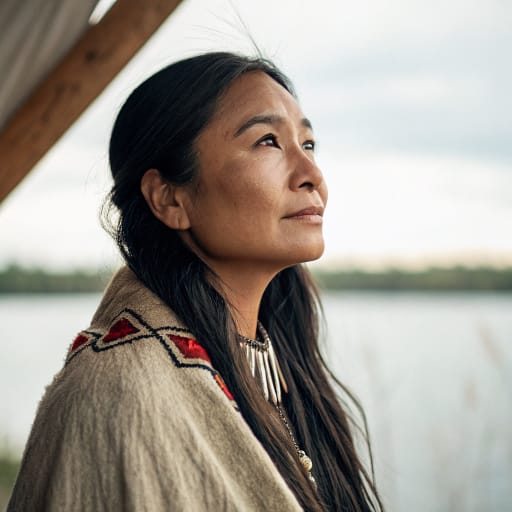
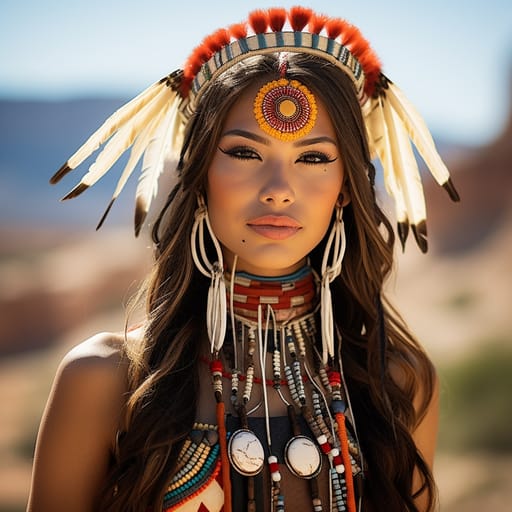
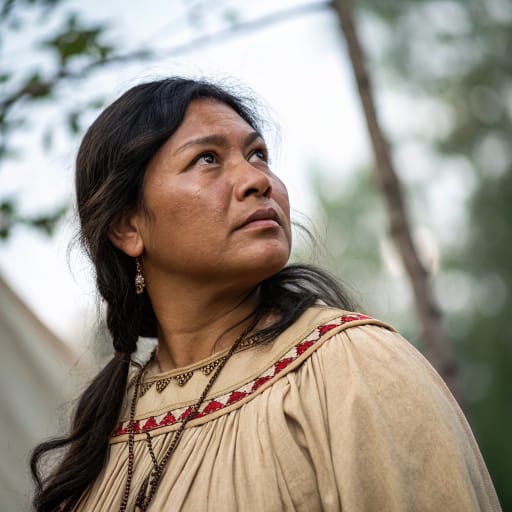
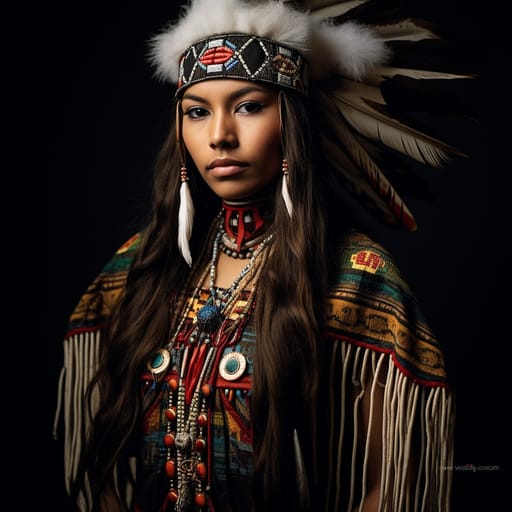
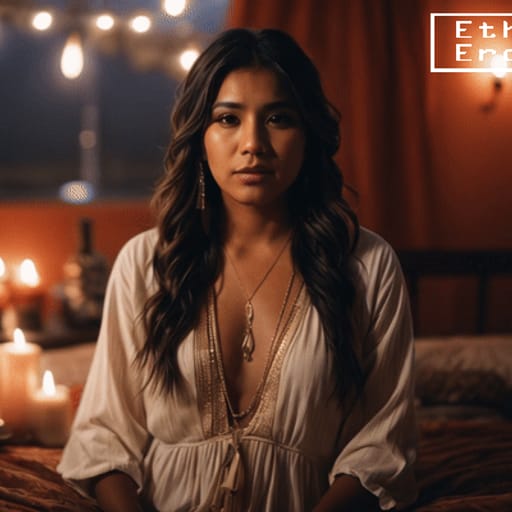
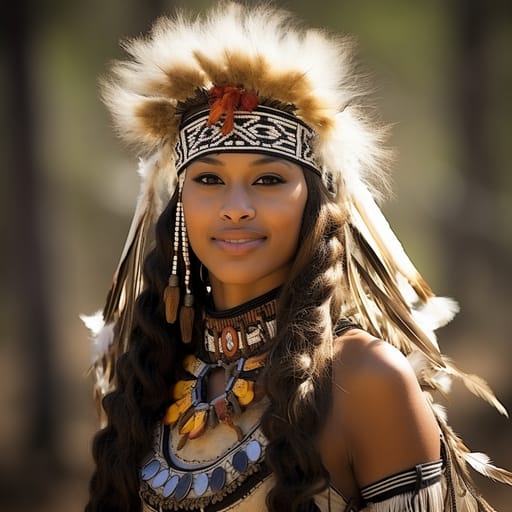
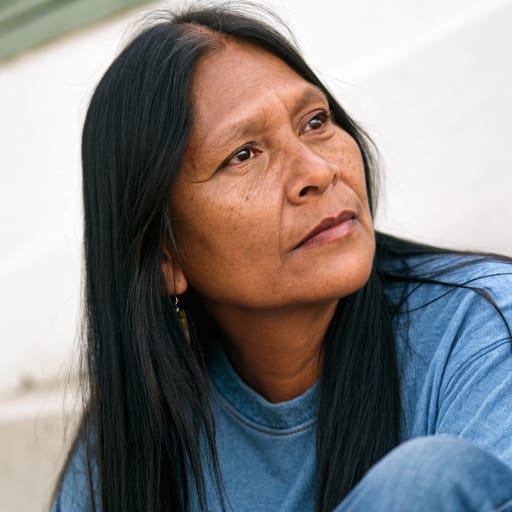
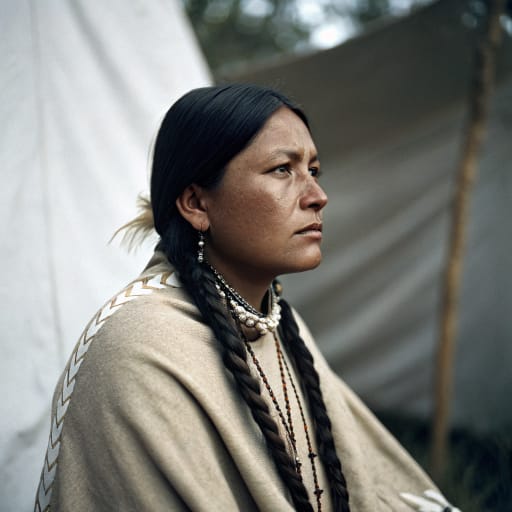
Typical Yurok Phenotypes
Reference for AI generation: hair, eyes, skin, facial structure, build
Yurok Body & Anatomy Reference
Anatomy by feature, Indigenous Northern American / Algonquian-Iroquoian phenotype
Yurok Boobs & Breasts
Yurok boobs follow the Indigenous Northern American / Algonquian-Iroquoian profile: medium cup, moderate projection. Areolar diameter is usually 30-44mm, and the coloring is medium-brown areolar pigmentation against the copper-to-medium-brown skin tone. Breast shape tracks body composition (mesomorph, broader frame in northern Indigenous populations, mean adult female BMI 25-28), so Yurok breasts tend to be full and moderate projection. Expect a forward-set shape, not the smaller East Asian bust.
Yurok Ass & Hips
Yurok ass and hip morphology presents as medium, moderate-to-full projection, distinctly different from the slim East Asian narrow-hip profile. The Yurok pelvic profile shows medium iliac crests, anchored in the Indigenous Northern American / Algonquian-Iroquoian skeletal pattern. Yurok butt shots in adult AI imagery should render the medium, moderate-to-full projection silhouette with the overall build (mesomorph, broader frame in northern Indigenous populations) and the fat distribution typical of the Indigenous Northern American / Algonquian-Iroquoian phenotype.
Yurok Vagina & Pussy
Yurok pussy anatomy typically shows medium-brown labial pigmentation. Pubic hair is usually straight medium-coarse texture. In AI-generated Yurok nudes, labial color should blend into the copper to medium-brown skin with a gradual transition, and the hair should keep its straight medium-coarse texture.
Yurok Dicks & Penis
Penis reference for Yurok men: regional mean ~13cm erect, moderate girth. Coloring: medium-brown shaft pigmentation. An accurate Yurok cock in AI imagery matches the surrounding copper to medium-brown skin rather than a generic porn default. Circumcision depends on religion and custom, not ancestry.
Yurok Body, Curves & Build
The Yurok figure is generally mesomorph, broader frame in northern Indigenous populations, with mean adult female BMI 25-28, characteristic of Indigenous Northern American / Algonquian-Iroquoian ancestry. AI image tools tend to flatten regional body types into a few stock shapes; here the Yurok build is kept as its own reference.
Yurok Skin Tone & Hair Texture
Skin: copper to medium-brown (Fitzpatrick III-V). Hair: straight 1A, dark-brown to black, often thick and dense. Both are typical of Indigenous Northern American / Algonquian-Iroquoian ancestry. The most common mistake in AI nudes of Yurok women is a body rendered lighter than the face.
Explore phenotype categories
Structured taxonomy with peer-reviewed scales · 22 anatomical categories
Erotic Poses & Sex Positions
From the pose catalog: 219 named positions with reference skeletons
Frequently asked questions about Yurok people
Where is the Yurok homeland?
The Yurok homeland is The lower Klamath River and the adjacent Pacific coast in Humboldt and Del Norte counties, northwestern California, United States. in North America.
What language do Yurok people speak?
Yurok people primarily speak Yurok (Algic, closest to Wiyot); English is now the everyday language, with Yurok taught for credit in local high schools and revived by second language speakers..
What religion do Yurok people practice?
The predominant religion among Yurok people is World renewal ceremonialism, practiced alongside the Indian Shaker Church and other Christian denominations..






Make your own Yurok images
Five a day, free, no credits to buy. The studio starts from this group's phenotype data, so you can set body type, pose and style and keep the traits accurate.
Start with Yurok