Help us get this right
Does this portrait look right for Calusa?
Nobody has judged this one yet. You would be the first.
Calusa Erotic
The southwest Florida coast, from Charlotte Harbor and Pine Island Sound south to the Ten Thousand Islands, with tributary reach across the southern peninsula (United States)
Calusa (unclassified; too sparsely attested to assign to a family)
Indigenous temple religion led by the chief and a head priest, with a recorded doctrine of three souls per person; Spanish Catholic missions failed entirely
Paramount chiefdom over the south Florida Glades peoples, with subordinate and tributary towns including Muspa and Tanpa; known archaeologically as the Caloosahatchee culture
About Calusa People
The Calusa ruled southwest Florida for centuries before European contact and were finished as a people by the 1760s, when the last few hundred sailed for Cuba alongside the departing Spanish. Scattered families in Cuba, and some absorbed into the emerging Seminole, may carry their descent, but the line is hard to trace. What made them remarkable is easy to state and hard to explain: they built one of the most powerful chiefdoms in North America without farming. No maize, no beans, no fields. The estuaries of Charlotte Harbor, Pine Island Sound and Estero Bay were productive enough on their own that mullet, pinfish and shellfish could sustain permanent towns, a hereditary nobility, real military power, and a paramount chief who took tribute from fifty or more towns across the southern peninsula.
They engineered their own ground. South Florida has almost no stone, so the Calusa built with shell: mounds, terraces, causeways, and canals cut through islands and marsh, some navigable for miles. Their capital, Calos, stood on Mound Key in Estero Bay, where archaeologists have identified engineered water courts, walled basins beside the king's house that appear to have held fish alive. Tools, weapons and ornaments were shell, bone and wood. At Key Marco, waterlogged muck preserved what normally rots away: painted masks, carved animal figures, and ceremonial objects with no equal anywhere else in the region.
Their language is a genuine blank. Barely a dozen words were ever written down, and nothing convincingly ties it to Muskogean or to any other family, so it stands unclassified. Spanish priests recorded a belief in three souls to a person, one of which stayed with the body, which meant the dead could be consulted at the grave. Ponce de Leon met their war canoes in 1513 and came back in 1521 to take the wound that killed him. Menendez de Aviles negotiated with the chief the Spanish called Carlos in 1566 and planted a Jesuit mission at the capital; it lasted about two years and produced two executed chiefs and no converts. The Calusa also grew wealthy on shipwreck salvage along the Keys, holding Spanish gold and Spanish captives. What finally broke them was not conquest but slave raids by Creek and Yamasee parties armed out of Carolina, with epidemic disease close behind.
Related ethnic groups
Groups that share Calusa's homeland, region, language, or religious tradition. These are likely candidates for comparative phenotype reference.
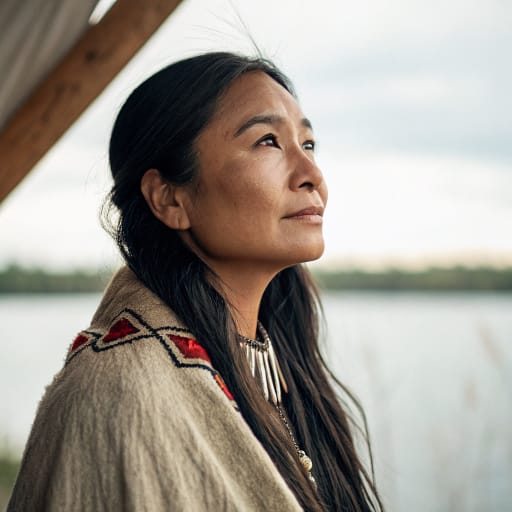
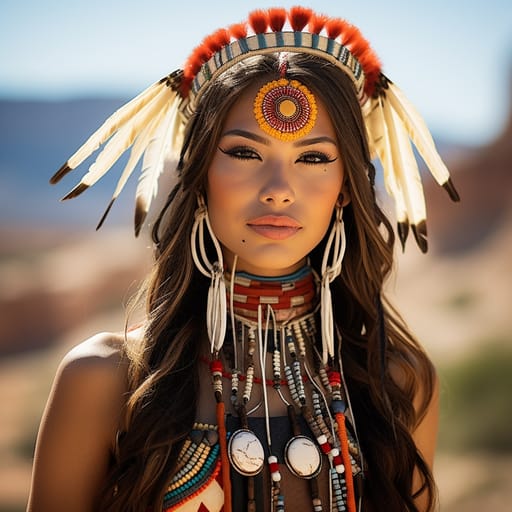
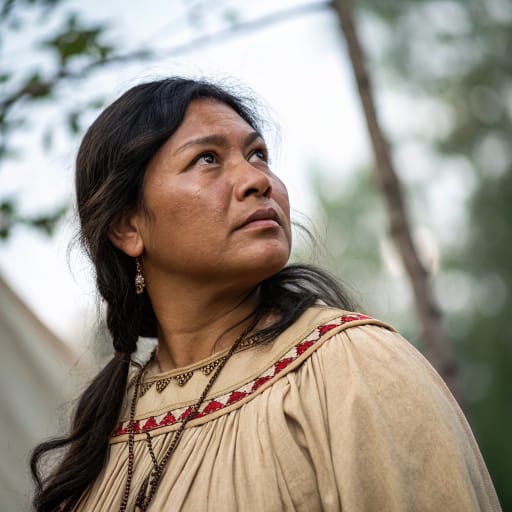
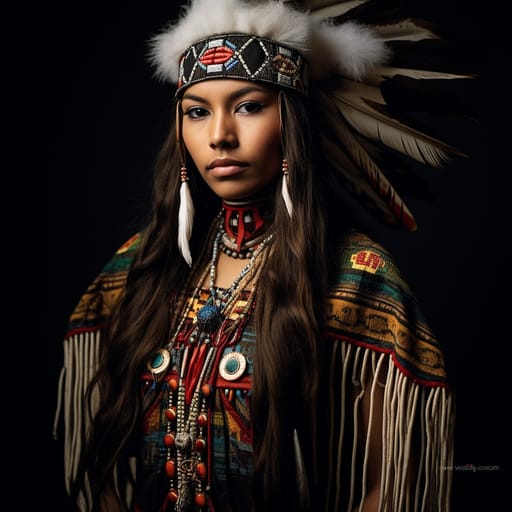
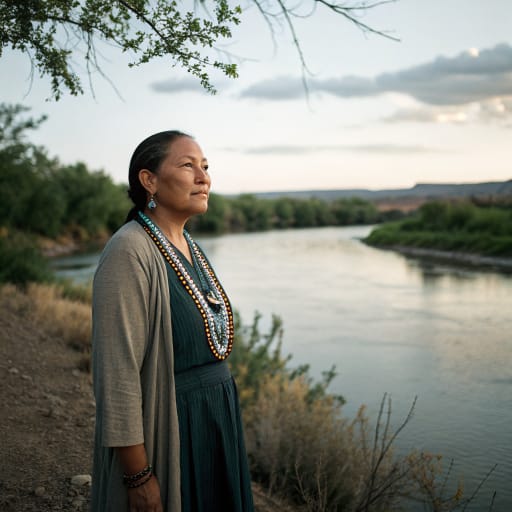
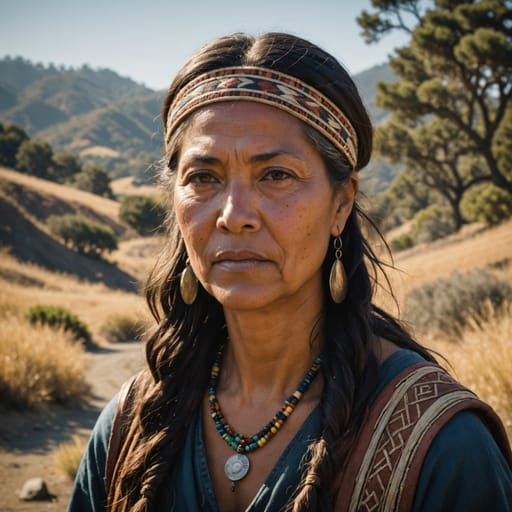
Typical Calusa Phenotypes
Reference for AI generation: hair, eyes, skin, facial structure, build
Calusa Body & Anatomy Reference
Indigenous Northern American / Algonquian-Iroquoian phenotype: anatomy reference for AI nude generation
Calusa Boobs & Breasts
The typical Calusa bust is medium cup, moderate projection, in line with the wider Indigenous Northern American / Algonquian-Iroquoian pattern. Areolas usually fall in the 30-44mm range, with medium-brown areolar pigmentation against the copper-to-medium-brown skin tone. Compared with the smaller East Asian bust, Calusa breasts sit forward and are generally full and moderate projection. A faithful AI render of Calusa tits keeps that shape and areola size.
Calusa Ass & Hips
Butt shape among Calusa women: medium, moderate-to-full projection, over medium iliac crests. This follows Indigenous Northern American / Algonquian-Iroquoian ancestry and looks quite unlike the slim East Asian narrow-hip profile. An accurate Calusa ass in adult AI imagery keeps both the silhouette and the overall build (mesomorph, broader frame in northern Indigenous populations) instead of a generic average.
Calusa Vagina & Pussy
Vulvar anatomy among Calusa women: medium-brown labial pigmentation. Pubic hair tends to be straight medium-coarse texture, in the usual inverted-triangle pattern. Both follow Indigenous Northern American / Algonquian-Iroquoian pigmentation, which is why Calusa pussy renders should not fall back on a pale, sparse Western template.
Calusa Dicks & Penis
The Calusa cock profile, from Indigenous Northern American / Algonquian-Iroquoian anthropometric data: regional mean ~13cm erect; moderate girth; medium-brown shaft pigmentation. Pubic hair has a straight medium-coarse texture and forms the usual inverted-V pattern. Whether Calusa men are circumcised follows religious and cultural practice rather than phenotype.
Calusa Body, Curves & Build
Build and curves among Calusa women follow the Indigenous Northern American / Algonquian-Iroquoian pattern: mesomorph, broader frame in northern Indigenous populations, mean adult female BMI 25-28. Proportions matter as much as skin tone, so Calusa figures should keep their regional height and limb ratios.
Calusa Skin Tone & Hair Texture
The Calusa skin range is copper to medium-brown (Fitzpatrick III-V), and hair tends to be straight 1A, dark-brown to black, often thick and dense. That combination marks the Indigenous Northern American / Algonquian-Iroquoian phenotype, and skin tone is the trait AI generators most often get wrong for Calusa women.
Explore phenotype categories
Structured taxonomy with peer-reviewed scales · 22 anatomical categories
Erotic Poses & Sex Positions
From the pose catalog: 219 named positions with reference skeletons
Frequently asked questions about Calusa people
Where is the Calusa homeland?
The Calusa homeland is The southwest Florida coast, from Charlotte Harbor and Pine Island Sound south to the Ten Thousand Islands, with tributary reach across the southern peninsula (United States) in North America.
What language do Calusa people speak?
Calusa people primarily speak Calusa (unclassified; too sparsely attested to assign to a family).
What religion do Calusa people practice?
The predominant religion among Calusa people is Indigenous temple religion led by the chief and a head priest, with a recorded doctrine of three souls per person; Spanish Catholic missions failed entirely.






Make your own Calusa images
Five a day, free, no credits to buy. The studio starts from this group's phenotype data, so you can set body type, pose and style and keep the traits accurate.
Start with Calusa