Help us get this right
Does this portrait look right for Mbunda?
Nobody has judged this one yet. You would be the first.
Mbunda Erotic
South-eastern Angola (Moxico and Cuando provinces) and western Zambia (Western Province, historic Barotseland, especially Kaoma, Lukulu and Kalabo districts)
Mbunda, also called Chimbunda (Bantu, Niger-Congo; Chokwe-Luchazi group); Lozi widely spoken in Zambia, Portuguese in Angola
Mainly Christian (Catholic and Protestant), with ancestor veneration, divination and traditional healing still practiced
Bantu people related to the Luvale, Luchazi, Chokwe and Nkangala; counted in Angola among the broader Ngangela (Ganguela) peoples
About Mbunda People
The Mbunda are a people of the Angola and Zambia borderlands whose identity is rooted in a kingship. They trace their descent to the Mbunda Kingdom, ruled by a monarch called the Mwene Mbunda. During the Bantu migrations, a long journey south brought them from the north into what is now south-eastern Angola. Their heartland is still there, in a belt of river valleys and dry woodland that runs from the Lunguevungu River in Moxico down to Cuando Province. A large share of Mbunda, though, live across the border in western Zambia, in the old Lozi kingdom of Barotseland.
They won that second homeland through alliance. In the early nineteenth century, Mbunda groups moving east were taken in by the Lozi king Mulambwa. Mbunda fighters and diviners became part of the Lozi state. More people came in later waves. One followed the Portuguese campaigns of the early twentieth century that ended Mbunda independence in Angola. Another came when Angola's independence war and the long civil war after it emptied villages along the frontier. Today Mbunda communities are well settled in Zambia's Western Province, especially around Kaoma, Lukulu and Kalabo.
Their language, Mbunda or Chimbunda, is a Bantu language in the Chokwe-Luchazi group, a close relative of Luchazi, Luvale and Chokwe. In Zambia many Mbunda also speak Lozi, the common language of the Western Province, and in Angola many speak Portuguese. Christianity, both Catholic and Protestant, is the majority faith. It sits alongside older practices that never went away: care for the ancestors, respect for diviners and herbalists, and the rites that turn boys into men.
The best known of those rites is mukanda, the circumcision and initiation camp. Boys stay apart in the bush for weeks or months, learning what adult life requires, and come back as men. The public face of the camp is the makishi: masked dancers in tight knitted fiber suits and painted masks who stand for ancestral spirits and appear at key moments of the process. The Mbunda share this tradition with the Luvale, Chokwe and Luchazi, and UNESCO has recognized Zambia's Makishi masquerade as intangible cultural heritage. In the villages, cassava farming still sets the rhythm of the year, and an annual Mbunda ceremony in Kaoma District brings scattered families together in public.
Related ethnic groups
Groups that share Mbunda's homeland, region, language, or religious tradition. These are likely candidates for comparative phenotype reference.
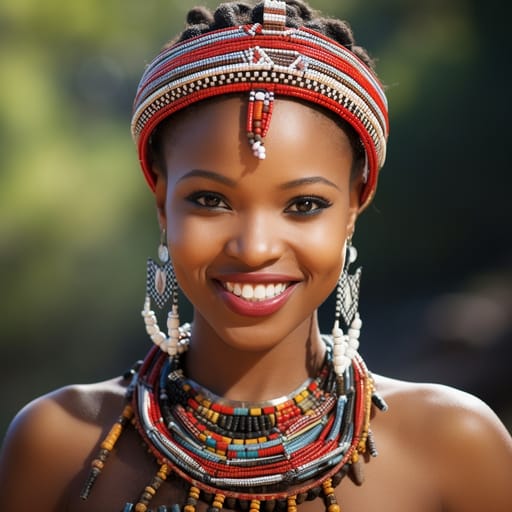
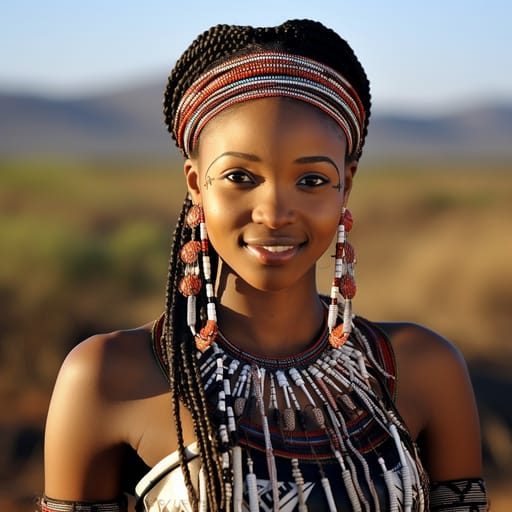
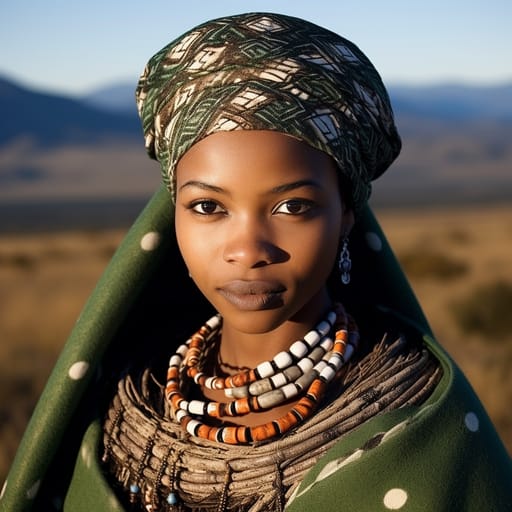
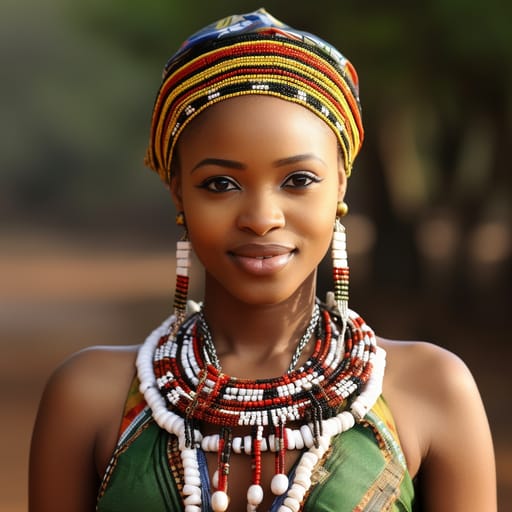
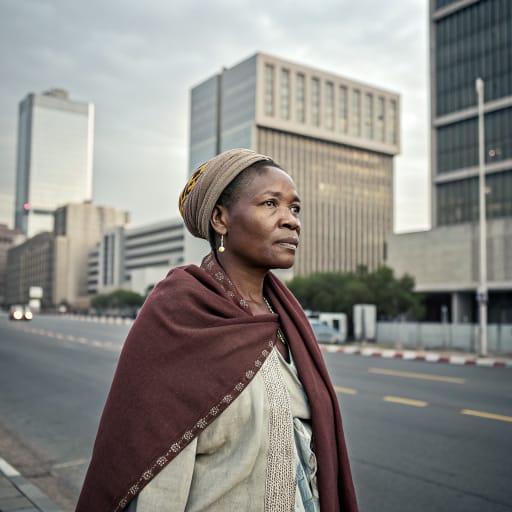
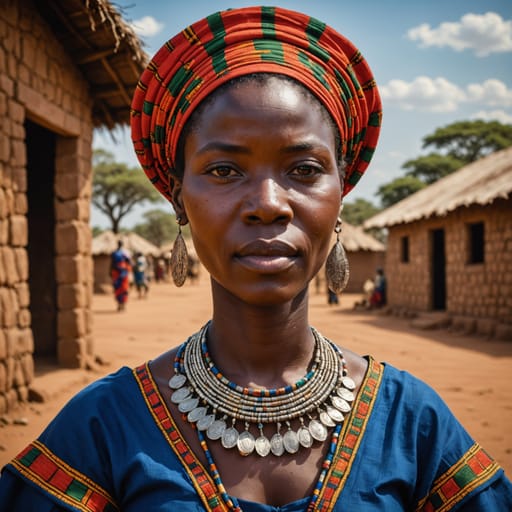
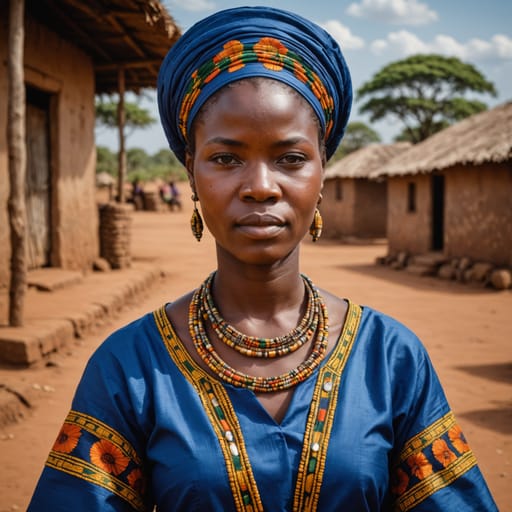
Typical Mbunda Phenotypes
Reference for AI generation: hair, eyes, skin, facial structure, build
Mbunda Body & Anatomy Reference
Anatomy by feature, Bantu / Khoisan Southern African phenotype
Mbunda Boobs & Breasts
The typical Mbunda bust is medium cup, full but moderate projection, in line with the wider Bantu / Khoisan Southern African pattern. Areolas usually fall in the 30-44mm range, with medium-brown to deep-brown areolar pigmentation. Compared with the heavier West African bust, Mbunda breasts sit forward and are generally moderately full; less projecting than West African norm. A faithful AI render of Mbunda tits keeps that shape and areola size.
Mbunda Ass & Hips
Butt shape among Mbunda women: the distinctive Khoisan-influenced steatopygic profile in some sub-populations (San, Khoekhoe); broader gluteal projection in Bantu-speaking groups, over wide iliac crests with notable lordosis in Khoisan-descended sub-populations. This follows Bantu / Khoisan Southern African ancestry and looks quite unlike the slim Cushitic East African profile. An accurate Mbunda ass in adult AI imagery keeps both the silhouette and the overall build (mesomorph; Khoisan-descended sub-populations show distinctive steatopygic fat deposition) instead of a generic average.
Mbunda Vagina & Pussy
Vulvar anatomy among Mbunda women: deep-brown labial pigmentation; the elongated labia minora documented in some Khoisan-descended populations. Pubic hair tends to be tightly-coiled coarse texture, in the usual inverted-triangle pattern. Both follow Bantu / Khoisan Southern African pigmentation, which is why Mbunda pussy renders should not fall back on a pale, sparse Western template.
Mbunda Dicks & Penis
The Mbunda cock profile, from Bantu / Khoisan Southern African anthropometric data: regional mean ~14cm erect; moderate-to-above-average girth; deep-brown shaft pigmentation. Pubic hair has a tightly-coiled coarse texture and forms the usual inverted-V pattern. Whether Mbunda men are circumcised follows religious and cultural practice rather than phenotype.
Mbunda Body, Curves & Build
Build and curves among Mbunda women follow the Bantu / Khoisan Southern African pattern: mesomorph; Khoisan-descended sub-populations show distinctive steatopygic fat deposition, mean adult female BMI 24-28. Proportions matter as much as skin tone, so Mbunda figures should keep their regional height and limb ratios.
Mbunda Skin Tone & Hair Texture
The Mbunda skin range is medium-brown to deep-brown (Fitzpatrick V-VI); lighter in Khoisan-descended populations, and hair tends to be tightly-coiled 4A-4C; the distinctive 'peppercorn' tight-spiral texture in Khoisan-descended populations. That combination marks the Bantu / Khoisan Southern African phenotype, and skin tone is the trait AI generators most often get wrong for Mbunda women.
Explore phenotype categories
Structured taxonomy with peer-reviewed scales · 22 anatomical categories
Erotic Poses & Sex Positions
From the pose catalog: 219 named positions with reference skeletons
Frequently asked questions about Mbunda people
Where is the Mbunda homeland?
The Mbunda homeland is South-eastern Angola (Moxico and Cuando provinces) and western Zambia (Western Province, historic Barotseland, especially Kaoma, Lukulu and Kalabo districts) in Southern Africa.
What language do Mbunda people speak?
Mbunda people primarily speak Mbunda, also called Chimbunda (Bantu, Niger-Congo; Chokwe-Luchazi group); Lozi widely spoken in Zambia, Portuguese in Angola.
What religion do Mbunda people practice?
The predominant religion among Mbunda people is Mainly Christian (Catholic and Protestant), with ancestor veneration, divination and traditional healing still practiced.






Make your own Mbunda images
Five a day, free, no credits to buy. The studio starts from this group's phenotype data, so you can set body type, pose and style and keep the traits accurate.
Start with Mbunda