- Home/
- World/
- Southern Asia/
- Khorasani Kurds
Khorasani Kurds Erotic
Northeastern Iran, mainly North Khorasan and Razavi Khorasan provinces around Quchan, Shirvan, Faruj, Bojnord and Esfarayen, with small related communities in Turkmenistan
Kurmanji, or Northern Kurdish (Indo-European, Northwestern Iranian), with widespread bilingualism in Persian
Twelver Shia Islam
A branch of the Kurmanji-speaking Kurds; historic tribal confederations include the Zafaranlu of Quchan and the Shadlu of Bojnord
About Khorasani Kurds People
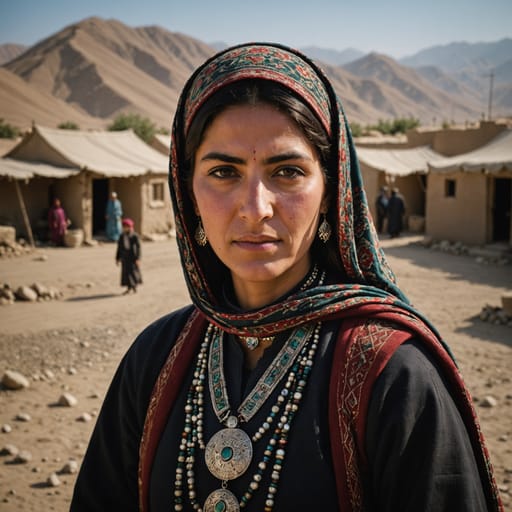
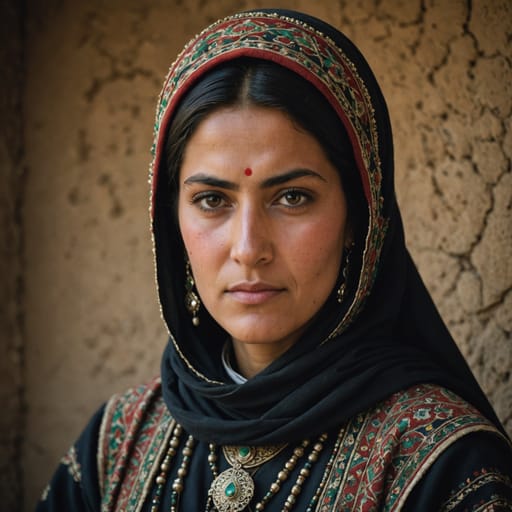
The Kurds of Khorasan are there because a border needed guarding. Mostly under the Safavid shah Abbas I, around the turn of the seventeenth century, Kurdish tribes were moved from the western edge of the empire to its far northeast. They were settled in the valleys between Mashhad and the Turkmen steppe to hold the frontier against Uzbek and Turkmen raids. Four centuries later their descendants still live in the towns and villages around Quchan, Shirvan, Faruj, Bojnord and Esfarayen, more than a thousand kilometers from the mountains most people picture when they hear the word Kurd. They speak Kurmanji, the Northern Kurdish of Turkey and Syria. Most of Iran's Kurdish west speaks Sorani or Southern Kurdish instead. Long separation has given Khorasani Kurmanji its own accent and a heavy layer of Persian and Turkic vocabulary, and most speakers switch easily into Persian. Religion is the other break with Kurmanji speakers to the west. Where the Kurds of Anatolia are largely Sunni, Khorasani Kurds are Twelver Shia, and the shrine of Imam Reza in Mashhad, the region's great pilgrimage site, is close at hand.
For most of their history the frontier Kurds were organized by tribe. The Zafaranlu confederation dominated Quchan and the Shadlu held Bojnord. Their hereditary khans ran those districts as near-independent lordships into the early twentieth century, when the centralizing Pahlavi state reined them in. The region's tribal politics left one famous mark on Iranian history: in 1747 Nader Shah was assassinated at his camp near Quchan while marching against rebellious Kurds. Some families later crossed north, and part of Turkmenistan's small Kurdish population traces back to them. Herding flocks between summer and winter pastures has largely given way to farming and town work, though weddings still bring out bright layered dresses and long circle dances. The tradition that travels furthest is music. Kurdish bakhshis, the dotar-playing bards of northern Khorasan, perform epics and love songs in Kurmanji as well as Turkic and Persian. Their art is part of the regional tradition UNESCO recognized in 2010 as the music of the bakhshis of Khorasan.
Related ethnic groups
Groups that share Khorasani Kurds's homeland, region, language, or religious tradition — likely candidates for comparative phenotype reference.
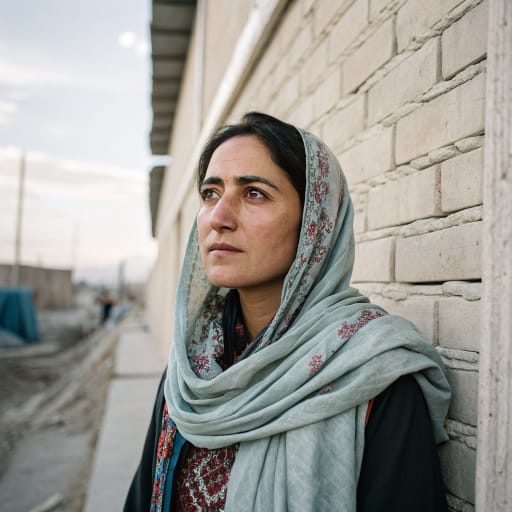
Typical Khorasani Kurds Phenotypes
Reference for AI generation — hair, eyes, skin, facial structure, build
Khorasani Kurds Body & Anatomy Reference
Per-feature anatomical profile for AI nude generation — Indo-Aryan / Dravidian South Asian phenotype
Khorasani Kurds Boobs & Breasts
Khorasani Kurds tits and boobs run medium-to-large cup, moderate-to-full projection — the classic Indo-Aryan / Dravidian South Asian bust profile. Khorasani Kurds nipples and areolas show medium-brown to dark-brown areolar pigmentation against the wheatish-to-brown skin tone, with areolar diameter typically in the 32-46mm range and forward-set positioning rather than the the smaller East Asian bust profile. Khorasani Kurds breasts trend full and soft, generally fuller than the East Asian norm, a function of the endomorph-to-mesomorph with fuller hip deposition body habitus and the mean adult female BMI 22-25. For anatomically-accurate AI-generated Khorasani Kurds nudes the render preserves: medium-to-large cup, moderate-to-full projection shape, 32-46mm areolas with medium-brown to dark-brown pigmentation, and the torso proportions of the Indo-Aryan / Dravidian South Asian phenotype.
Khorasani Kurds Ass & Hips
Khorasani Kurds ass and hip morphology presents as medium-to-full, moderate-to-high projection, classic curvy hip profile — distinctly different from the slim hip profile of East Asian women. The Khorasani Kurds pelvic profile shows medium-to-wide iliac crests, full gluteal-femoral fat distribution, anchored in the Indo-Aryan / Dravidian South Asian skeletal pattern. Khorasani Kurds butt shots in adult AI imagery should render the medium-to-full, moderate-to-high projection, classic curvy hip profile silhouette with the endomorph-to-mesomorph with fuller hip deposition build and the gluteal-femoral fat distribution typical of the Indo-Aryan / Dravidian South Asian phenotype rather than defaulting to a globally-averaged "ethnic" butt that generic AI generators produce. The hip-to-waist ratio characteristic of Khorasani Kurds women is one of the identifying features of the Indo-Aryan / Dravidian South Asian regional phenotype.
Khorasani Kurds Vagina & Pussy
Khorasani Kurds pussy and vulvar anatomy presents medium-brown to dark-brown labial pigmentation, fuller labia minora projection — consistent with the Indo-Aryan / Dravidian South Asian phenotype's pigmentation pattern. Khorasani Kurds pubic hair is typically straight-to-wavy coarse texture, dense distribution, distributed in the inverted-triangle pattern with regional-typical density. AI-generated Khorasani Kurds nude imagery should preserve the medium-brown to dark-brown labial pigmentation and the straight-to-wavy coarse texture hair texture rather than defaulting to a Western-European pink-and-sparse template. For anatomically-accurate Khorasani Kurds pussy renders the labial pigmentation and coloration should match the surrounding wheatish to brown skin tone of the Indo-Aryan / Dravidian South Asian phenotype, with continuous gradient rather than an abrupt color transition.
Khorasani Kurds Dicks & Penis
Khorasani Kurds dick and penile anatomy in adult AI generation should anchor on the regional reference data: regional mean ~13cm erect, moderate girth, and medium-brown shaft pigmentation. The Khorasani Kurds cock profile reflects the Indo-Aryan / Dravidian South Asian ancestral population's anthropometric measurements rather than a globally-averaged Western-pornography default. For anatomically-accurate Khorasani Kurds nude male imagery the shaft pigmentation should track the surrounding wheatish to brown skin tone, the glans-to-shaft pigmentation transition should be continuous, and the pubic hair pattern should match straight-to-wavy coarse texture texture distributed in the typical inverted-V escutcheon. Circumcision status in Khorasani Kurds populations varies by religious-cultural tradition rather than ancestral phenotype.
Khorasani Kurds Body, Curves & Build
Khorasani Kurds body type and overall build presents as endomorph-to-mesomorph with fuller hip deposition, with mean adult female BMI 22-25 — the characteristic Indo-Aryan / Dravidian South Asian habitus. Khorasani Kurds curves and proportions in adult AI imagery should preserve the regional skeletal frame (height, shoulder-to-hip ratio, limb proportions) rather than scaling to a Western-European mesomorph default. The Khorasani Kurds nude female form, when rendered with anatomical fidelity, shows the height range, frame width, and adipose distribution pattern typical of the Indo-Aryan / Dravidian South Asian phenotype. Generic AI image generators tend to collapse regional body types into a few default shapes; the EthnicErotic phenotype-anchored approach preserves the Khorasani Kurds build as its own reference category.
Khorasani Kurds Skin Tone & Hair Texture
Khorasani Kurds skin tone falls in the wheatish to brown (Fitzpatrick III-V) band — the surface signal most often miscalibrated by generic AI nude generators trained on Western-photographic datasets. Khorasani Kurds hair texture is typically straight-to-wavy 1A-2B, dense, dark-brown to black, characteristic of the Indo-Aryan / Dravidian South Asian phenotype. For anatomically-accurate Khorasani Kurds nude renders the skin should hold the Fitzpatrick band consistently across body surface rather than showing the lighter-than-face body shading that AI generators default to. Khorasani Kurds hair pigmentation and texture on body, pubic, and head should match across the figure rather than mixing textures (a common AI artefact).
Explore phenotype categories
Structured taxonomy with peer-reviewed scales · 22 anatomical categories
Erotic Poses & Sex Positions
From the pose catalog — 219 named positions with reference skeletons
Frequently asked questions about Khorasani Kurds people
Where is the Khorasani Kurds homeland?
The Khorasani Kurds homeland is Northeastern Iran, mainly North Khorasan and Razavi Khorasan provinces around Quchan, Shirvan, Faruj, Bojnord and Esfarayen, with small related communities in Turkmenistan in Southern Asia.
What language do Khorasani Kurds people speak?
Khorasani Kurds people primarily speak Kurmanji, or Northern Kurdish (Indo-European, Northwestern Iranian), with widespread bilingualism in Persian.
What religion do Khorasani Kurds people practice?
The predominant religion among Khorasani Kurds people is Twelver Shia Islam.

What does a typical Khorasani Kurds woman look like?
Skin tones typically range from light olive to medium, with dark brown or black hair and mostly dark eyes, though lighter eyes occur. Everyday dress is largely modern Iranian clothing, with headscarves standard for women in public.
Make your own Khorasani Kurds images
Five a day, free, no credits to buy. The studio starts from this group's phenotype data, so you can set body type, pose and style and keep the traits accurate.
Start with Khorasani Kurds