Help us get this right
Does this portrait look right for Kokna?
Nobody has judged this one yet. You would be the first.
Kokna Erotic
Hill and forest country of the northern Western Ghats: Nashik, Dhule, Nandurbar and Palghar districts in Maharashtra; the Dangs, Valsad, Navsari and Surat districts in Gujarat; and Dadra and Nagar Haveli, India
Kokni, also called Kukna (Indo-Aryan, close to Marathi); most also speak Marathi or Gujarati
Hindu, with strong local practice: the grain goddess Kansari, the tiger deity Waghdev, village shrines and bhagat ritual specialists
Also recorded as Kokni and Kukna; organized into exogamous clans; one of the Adivasi peoples of the northern Western Ghats, alongside the Warli, Bhil and Mahadev Koli
About Kokna People
The Kokna carry their origin story in their name. Tradition holds that their ancestors came up from the Konkan, the coastal strip below the Western Ghats, and settled the forested hills to the north, where Maharashtra and Gujarat now meet. That hill belt is still home: the upland talukas of Nashik, Dhule and Nandurbar, the Dangs and the districts of southern Gujarat around it, and the former Portuguese enclave of Dadra and Nagar Haveli. Indian law lists them as a Scheduled Tribe under several spellings, Kokna, Kokni and Kukna, which shows how many outsiders have tried to write the name down.
They are farmers before anything else. Rice, finger millet and other hill grains grow in thin soil that depends entirely on the monsoon, and the cycle of sowing, transplanting and harvest sets the pace of the year. Society is organized into exogamous clans, so a husband or wife always comes from outside one's own lineage. Their speech, usually called Kokni, is an Indo-Aryan language close to Marathi. Most Kokna switch easily into Marathi or Gujarati, depending on which side of the state line they live on. The Warli, Bhil and Mahadev Koli are close neighbors, and these communities share many of the same deities, festivals and farming practices.
Religion is Hindu in name and local in practice. Households honor Kansari, the goddess who embodies the grain, and Waghdev, the tiger god, is kept at village shrines. Bhagats are ritual specialists who handle illness, troublesome spirits and the proper offerings, and they remain important figures in village life. The major Hindu festivals are observed, but the rites tied to the harvest and to the hills often carry more weight.
The Kokna tradition outsiders most often see is the pavri dance. The pavri is a long wind instrument made from a dried gourd and bamboo pipes, and its steady drone carries across a valley. Dancers link arms or hold one another at the waist and follow the player in a long, winding line, and skilled troupes build human pyramids partway through. It began as a village celebration and is now a regular feature of tribal cultural festivals in both Maharashtra and Gujarat.
Related ethnic groups
Groups that share Kokna's homeland, region, language, or religious tradition. These are likely candidates for comparative phenotype reference.
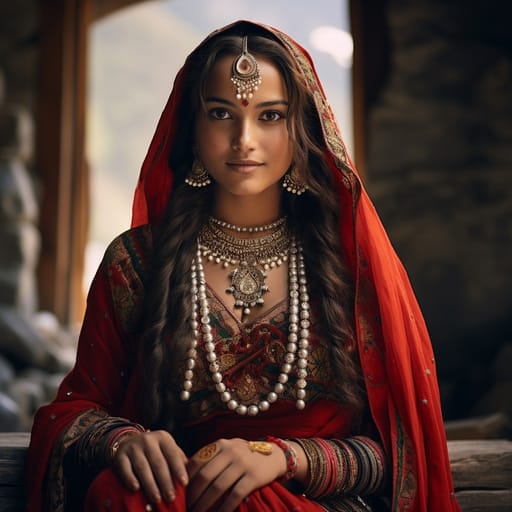
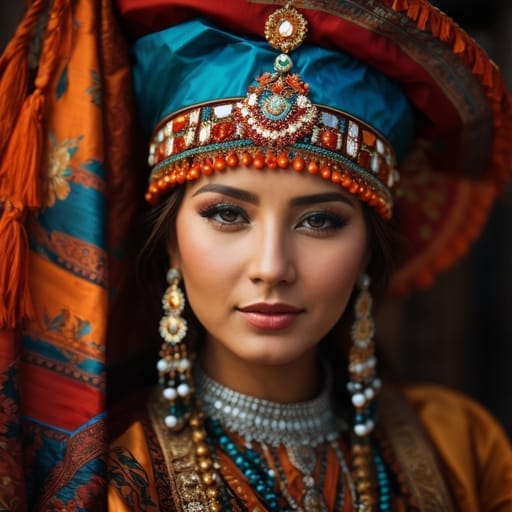
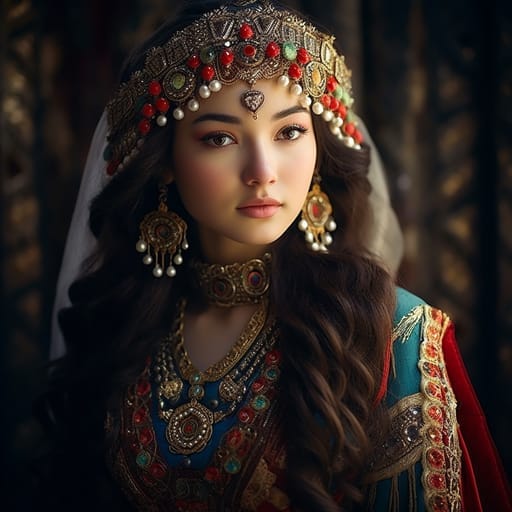
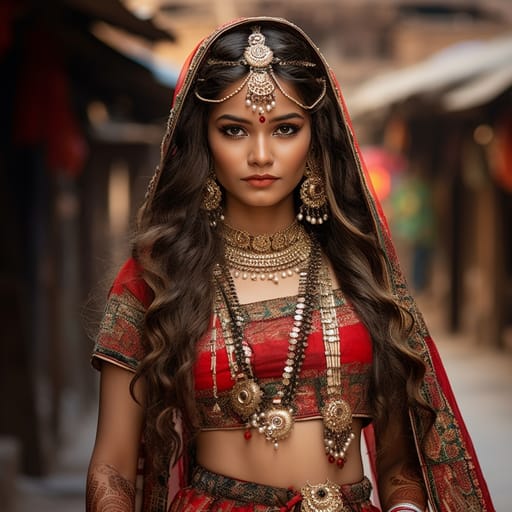
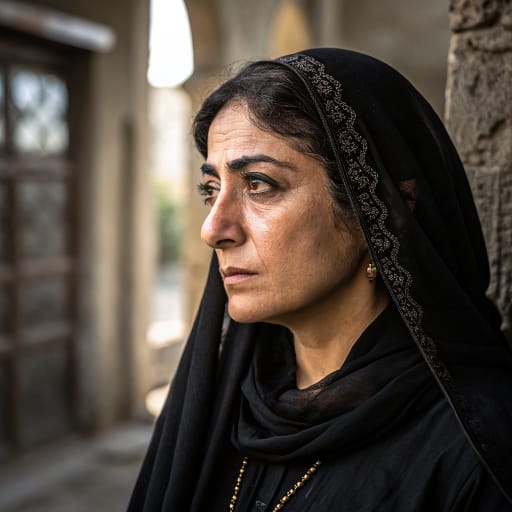
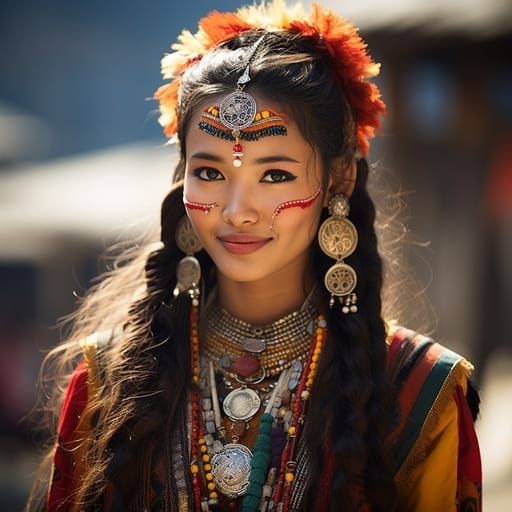
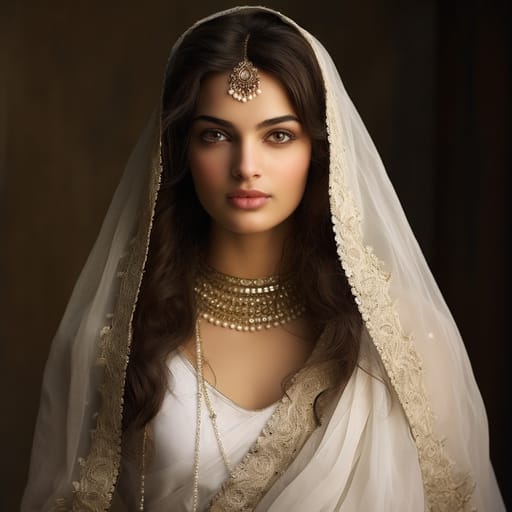
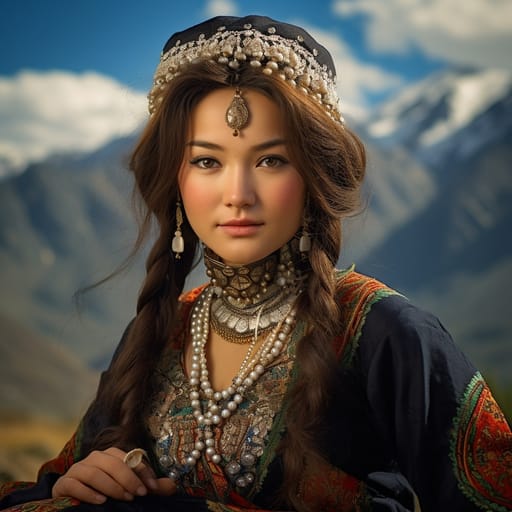
Typical Kokna Phenotypes
Reference for AI generation: hair, eyes, skin, facial structure, build
Kokna Body & Anatomy Reference
Anatomy by feature, Indo-Aryan / Dravidian South Asian phenotype
Kokna Boobs & Breasts
Kokna boobs follow the Indo-Aryan / Dravidian South Asian profile: medium-to-large cup, moderate-to-full projection. Areolar diameter is usually 32-46mm, and the coloring is medium-brown to dark-brown areolar pigmentation against the wheatish-to-brown skin tone. Breast shape tracks body composition (endomorph-to-mesomorph with fuller hip deposition, mean adult female BMI 22-25), so Kokna breasts tend to be full and soft, generally fuller than the East Asian norm. Expect a forward-set shape, not the smaller East Asian bust profile.
Kokna Ass & Hips
Kokna ass and hip morphology presents as medium-to-full, moderate-to-high projection, classic curvy hip profile, distinctly different from the slim hip profile of East Asian women. The Kokna pelvic profile shows medium-to-wide iliac crests, full gluteal-femoral fat distribution, anchored in the Indo-Aryan / Dravidian South Asian skeletal pattern. Kokna butt shots in adult AI imagery should render the medium-to-full, moderate-to-high projection, classic curvy hip profile silhouette with the overall build (endomorph-to-mesomorph with fuller hip deposition) and the fat distribution typical of the Indo-Aryan / Dravidian South Asian phenotype.
Kokna Vagina & Pussy
Kokna pussy anatomy typically shows medium-brown to dark-brown labial pigmentation, fuller labia minora projection. Pubic hair is usually straight-to-wavy coarse texture, dense distribution. In AI-generated Kokna nudes, labial color should blend into the wheatish to brown skin with a gradual transition, and the hair should keep its straight-to-wavy coarse texture.
Kokna Dicks & Penis
Penis reference for Kokna men: regional mean ~13cm erect, moderate girth. Coloring: medium-brown shaft pigmentation. An accurate Kokna cock in AI imagery matches the surrounding wheatish to brown skin rather than a generic porn default. Circumcision depends on religion and custom, not ancestry.
Kokna Body, Curves & Build
The Kokna figure is generally endomorph-to-mesomorph with fuller hip deposition, with mean adult female BMI 22-25, characteristic of Indo-Aryan / Dravidian South Asian ancestry. AI image tools tend to flatten regional body types into a few stock shapes; here the Kokna build is kept as its own reference.
Kokna Skin Tone & Hair Texture
Skin: wheatish to brown (Fitzpatrick III-V). Hair: straight-to-wavy 1A-2B, dense, dark-brown to black. Both are typical of Indo-Aryan / Dravidian South Asian ancestry. The most common mistake in AI nudes of Kokna women is a body rendered lighter than the face.
Explore phenotype categories
Structured taxonomy with peer-reviewed scales · 22 anatomical categories
Erotic Poses & Sex Positions
From the pose catalog: 219 named positions with reference skeletons
Frequently asked questions about Kokna people
Where is the Kokna homeland?
The Kokna homeland is Hill and forest country of the northern Western Ghats: Nashik, Dhule, Nandurbar and Palghar districts in Maharashtra; the Dangs, Valsad, Navsari and Surat districts in Gujarat; and Dadra and Nagar Haveli, India in Southern Asia.
What language do Kokna people speak?
Kokna people primarily speak Kokni, also called Kukna (Indo-Aryan, close to Marathi); most also speak Marathi or Gujarati.
What religion do Kokna people practice?
The predominant religion among Kokna people is Hindu, with strong local practice: the grain goddess Kansari, the tiger deity Waghdev, village shrines and bhagat ritual specialists.






Make your own Kokna images
Five a day, free, no credits to buy. The studio starts from this group's phenotype data, so you can set body type, pose and style and keep the traits accurate.
Start with Kokna