No portrait yet
Khishigten Erotic
Hexigten Banner, Chifeng, eastern Inner Mongolia, China
Mongolian, local speech grouped with the Baarin dialects of Juu Uda (Mongolic); Mandarin Chinese widely used
Tibetan Buddhism (Gelug), alongside ovoo worship and older folk practice
Southern (Inner) Mongols; one of the historic Juu Uda banner groups alongside the Baarin, Ongniud and Jaruud
About Khishigten People
The Khishigten carry a name that goes back to the Mongol Empire. The keshig was the household guard of Genghis Khan and the khans after him: young men from noble families who guarded the khan's tent, served as his cooks, quiver bearers and doorkeepers, and were later sent out to govern. Nobody can say whether a given Khishigten family descends from that guard. Today the name marks a stretch of country in eastern Inner Mongolia and the Mongols who belong to it. That country is Hexigten Banner, in the city of Chifeng, where the southern end of the Greater Khingan range meets the edge of the Mongolian plateau. It is high, open ground: grassland, sand hills, forest on the upper slopes, and Dalai Nuur, a wide saline lake. Its weathered granite stone forests won the area a place on UNESCO's list of Global Geoparks. The Xar Moron River starts inside the banner, and the valley below was the Khitan heartland a thousand years ago. Herding still defines the northern pastures, while much of the south has long been farmland.
Khishigten speak Mongolian, and linguists usually group their speech with that of their old Juu Uda neighbors, the Baarin, Ongniud and Jaruud. Under the Qing dynasty they formed a single banner of Juu Uda League. The banner system fixed each group's territory, its grazing boundaries and its hereditary ruling prince. Chinese farmers moved north into the region from the eighteenth century onward. Han residents now outnumber Mongols in the banner, and Mandarin is the language of town life. Religion follows the wider Inner Mongolian pattern. Tibetan Buddhism of the Gelug school took hold among the southern Mongols in the seventeenth century, was badly damaged in the twentieth, and has been partly rebuilt. Alongside it runs an older practice centered on the ovoo, a stone cairn on a hilltop or pass. In summer, families gather there to add stones, walk around it clockwise, and leave offerings of milk, liquor and blue khadag scarves. The day often turns into a local naadam with wrestling, horse racing and archery. Apart from their land, their dialect and their banner, little sets the Khishigten apart from other Inner Mongols. What stands out is the name, a title once worn by the khan's guards that ended up on the map.
Related ethnic groups
Groups that share Khishigten's homeland, region, language, or religious tradition. These are likely candidates for comparative phenotype reference.
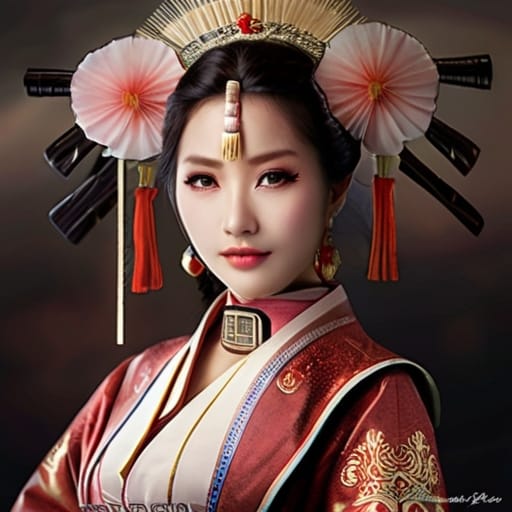
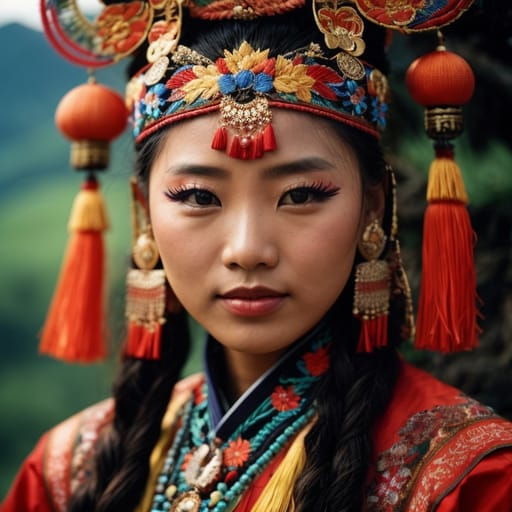
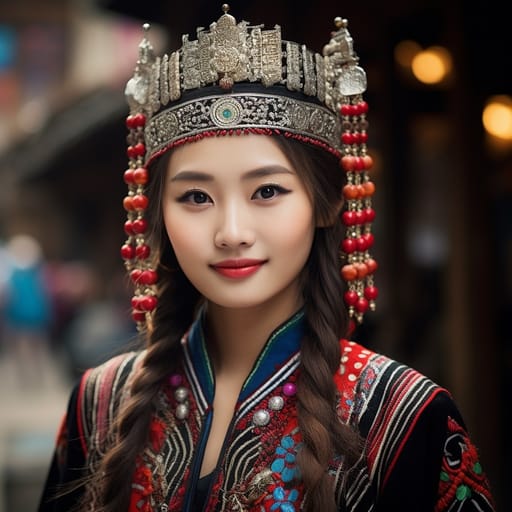
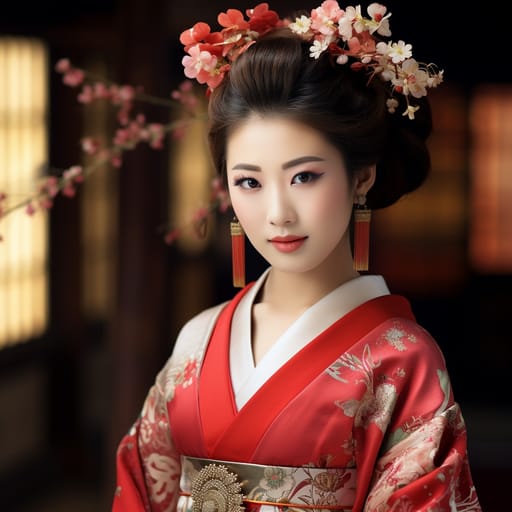
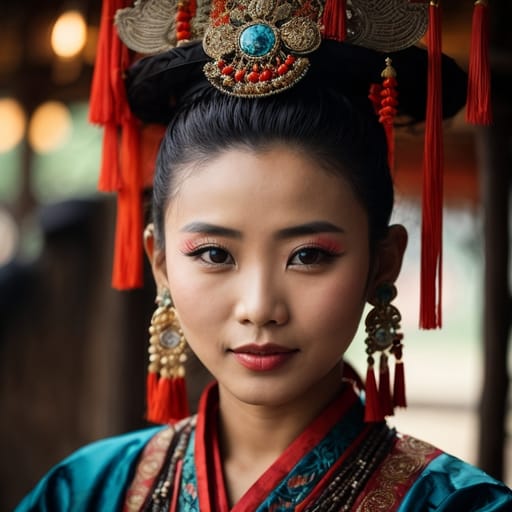
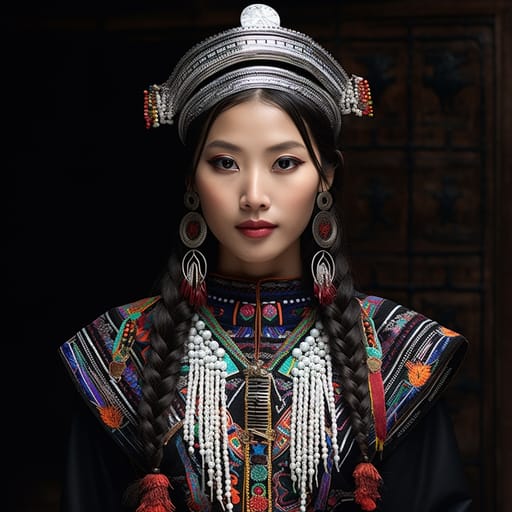
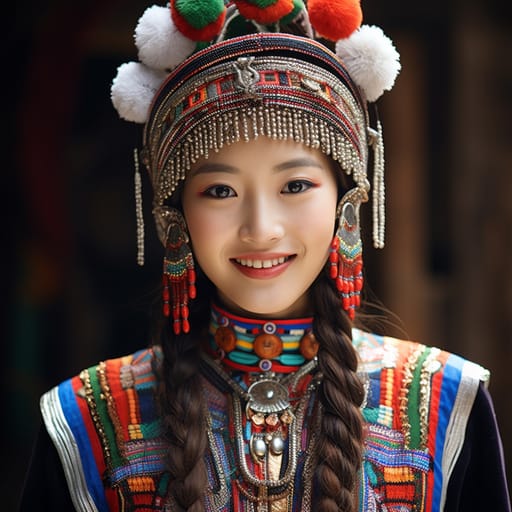
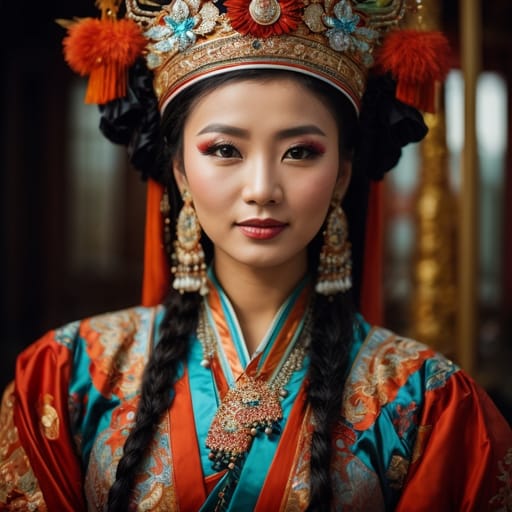
Typical Khishigten Phenotypes
Reference for AI generation: hair, eyes, skin, facial structure, build
Khishigten Body & Anatomy Reference
Per-feature anatomical profile for AI nude generation: East Asian Sinitic / Mongoloid phenotype
Khishigten Boobs & Breasts
Khishigten boobs follow the East Asian Sinitic / Mongoloid profile: small-to-medium cup, modest projection. Areolar diameter is usually 26-36mm, and the coloring is light-pink to medium-brown areolar pigmentation against the light-to-medium skin tone. Breast shape tracks body composition (ectomorph-to-mesomorph, lean frame, mean adult female BMI 20-23), so Khishigten breasts tend to be firm and modestly projecting; smaller cup size than the South Asian or Western Asian average. Expect a forward-set shape, not the fuller South Asian or Levantine bust profile.
Khishigten Ass & Hips
Khishigten ass and hip morphology presents as small-to-medium, modest projection, narrower hip profile, distinctly different from the fuller projected glutes of the West African or Polynesian phenotype. The Khishigten pelvic profile shows narrower iliac crests, less gluteal-femoral fat deposition, anchored in the East Asian Sinitic / Mongoloid skeletal pattern. Khishigten butt shots in adult AI imagery should render the small-to-medium, modest projection, narrower hip profile silhouette with the overall build (ectomorph-to-mesomorph, lean frame) and the fat distribution typical of the East Asian Sinitic / Mongoloid phenotype.
Khishigten Vagina & Pussy
Khishigten pussy anatomy typically shows light-pink to medium-brown labial pigmentation, smaller labia minora. Pubic hair is usually straight fine texture, sparser distribution than the South Asian norm. In AI-generated Khishigten nudes, labial color should blend into the light to medium skin with a gradual transition, and the hair should keep its straight fine texture.
Khishigten Dicks & Penis
Penis reference for Khishigten men: regional mean ~11-12cm erect, moderate girth. Coloring: light-brown shaft pigmentation. An accurate Khishigten cock in AI imagery matches the surrounding light to medium skin rather than a generic porn default. Circumcision depends on religion and custom, not ancestry.
Khishigten Body, Curves & Build
The Khishigten figure is generally ectomorph-to-mesomorph, lean frame, with mean adult female BMI 20-23, characteristic of East Asian Sinitic / Mongoloid ancestry. AI image tools tend to flatten regional body types into a few stock shapes; here the Khishigten build is kept as its own reference.
Khishigten Skin Tone & Hair Texture
Skin: light to medium (Fitzpatrick II-IV). Hair: straight 1A, fine-to-medium, predominantly black. Both are typical of East Asian Sinitic / Mongoloid ancestry. The most common mistake in AI nudes of Khishigten women is a body rendered lighter than the face.
Explore phenotype categories
Structured taxonomy with peer-reviewed scales · 22 anatomical categories
Erotic Poses & Sex Positions
From the pose catalog: 219 named positions with reference skeletons
Frequently asked questions about Khishigten people
Where is the Khishigten homeland?
The Khishigten homeland is Hexigten Banner, Chifeng, eastern Inner Mongolia, China in East Asia.
What language do Khishigten people speak?
Khishigten people primarily speak Mongolian, local speech grouped with the Baarin dialects of Juu Uda (Mongolic); Mandarin Chinese widely used.
What religion do Khishigten people practice?
The predominant religion among Khishigten people is Tibetan Buddhism (Gelug), alongside ovoo worship and older folk practice.






Make your own Khishigten images
Five a day, free, no credits to buy. The studio starts from this group's phenotype data, so you can set body type, pose and style and keep the traits accurate.
Start with Khishigten