Help us get this right
Does this portrait look right for Hoklo?
Nobody has judged this one yet. You would be the first.
Hoklo Erotic
Southern Fujian around Quanzhou, Zhangzhou and Xiamen, China; majority population of Taiwan; large communities in Singapore, Malaysia, the Philippines, Indonesia and elsewhere in Southeast Asia
Hokkien, a Southern Min variety (Min branch of Sinitic, Sino-Tibetan); Mandarin, Malay, Filipino and English also widely spoken in Taiwan and the diaspora
Chinese folk religion blending Buddhism, Taoism and ancestor veneration, with Mazu and Qingshui Zushi prominent; Christian minorities, notably Presbyterian in Taiwan and Catholic in the Philippines
Quanzhou, Zhangzhou and Xiamen (Amoy) lineages; Taiwanese Hoklo; Singapore, Penang and Medan Hokkien; Philippine Lan-nang; part of the Min-speaking Han Chinese, related to the Teochew
About Hoklo People
The Hoklo are the people of Hokkien, the Southern Min speech of the southeastern Fujian coast, and of the families who carried it to ports across the South China Sea. Their home ground around Quanzhou, Zhangzhou and Xiamen is hilly, short on farmland and full of harbors, so the sea has shaped their course for a thousand years. Under the Song and Yuan dynasties Quanzhou was among the busiest ports on earth, known to Arab and European visitors as Zayton. Settlers from this coast became the majority in Taiwan. Over several centuries, traders and laborers built Hokkien communities in Manila, Penang, Singapore and Medan. In the Philippines, many Chinese of this background call themselves Lan-nang, meaning our people. Hokkien is a Chinese language, but in practice it is not a dialect of Mandarin: a Beijing speaker cannot follow it. Many words also have two pronunciations, a literary one for formal vocabulary and a colloquial one for daily talk. In Taiwan, decades of Mandarin-only schooling under the Kuomintang pushed Hokkien out of classrooms. Since democratization it has come back to broadcasting, politics and pop music as a badge of Taiwanese identity.
Religion is practiced more than declared. Most households keep an altar with ancestor tablets, and temples freely mix Buddhist, Taoist and local deities. Mazu, the sea goddess who watches over sailors, draws huge processions in Taiwan. Qingshui Zushi, a Song dynasty monk venerated in Anxi, has temples from Fujian to Penang. People often settle questions put to the gods by dropping a pair of crescent moon blocks and reading how they fall. In Singapore and Malaysia, Hokkien families honor the Jade Emperor's birthday on the ninth day of the lunar new year with tall stalks of sugarcane. The custom recalls ancestors who escaped raiders by hiding in a cane field. The material culture is easy to spot: temple ridges that sweep up into swallowtails, dragons and figures built from cut porcelain shards, and the red brick houses of the Quanzhou countryside. Quanzhou's Nanyin, a slow and exacting chamber music, is counted among the oldest living musical traditions in China. The region's glove puppet theater crossed to Taiwan and became a television staple. Even surnames carry the accent: Tan, Lim and Chua are the Hokkien readings of the names Mandarin speakers know as Chen, Lin and Cai.
Related ethnic groups
Groups that share Hoklo's homeland, region, language, or religious tradition. These are likely candidates for comparative phenotype reference.
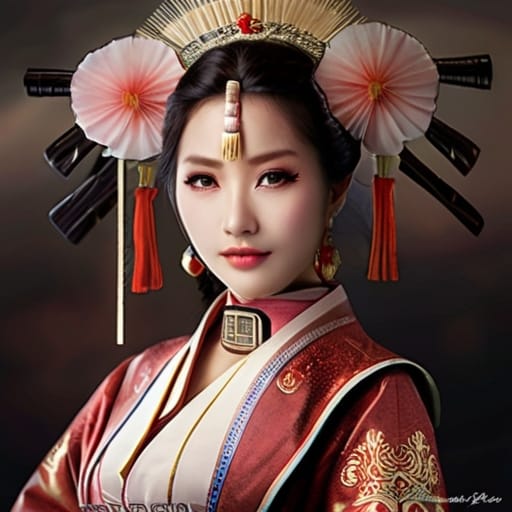
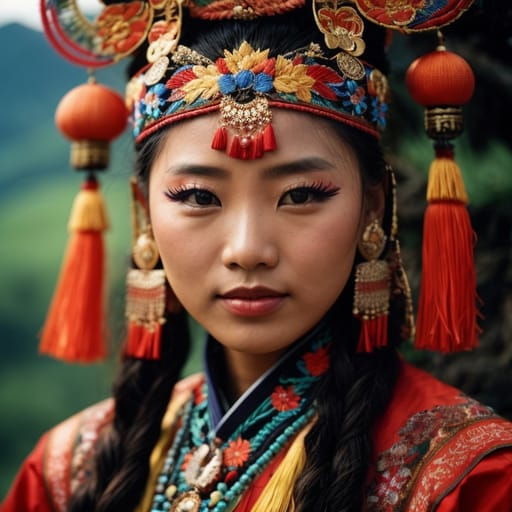
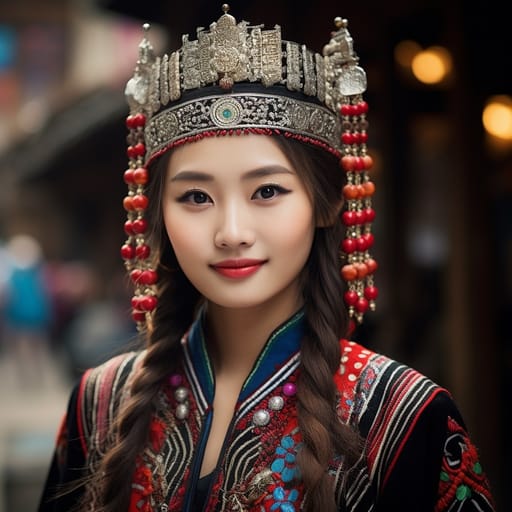
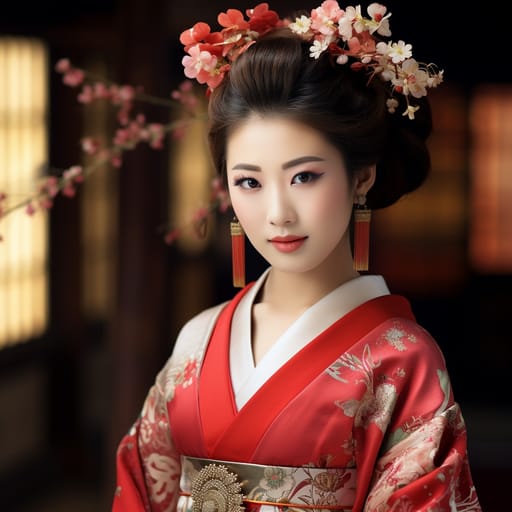
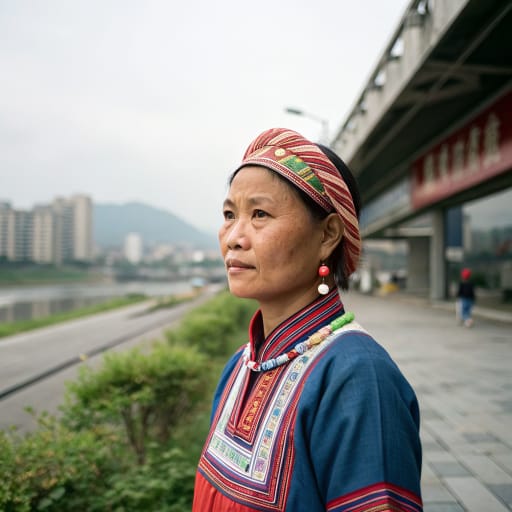
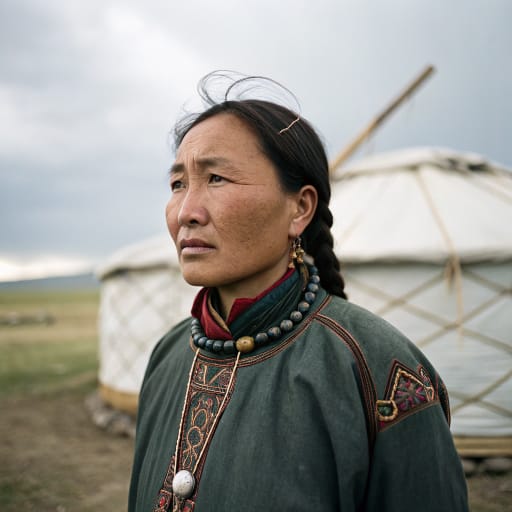
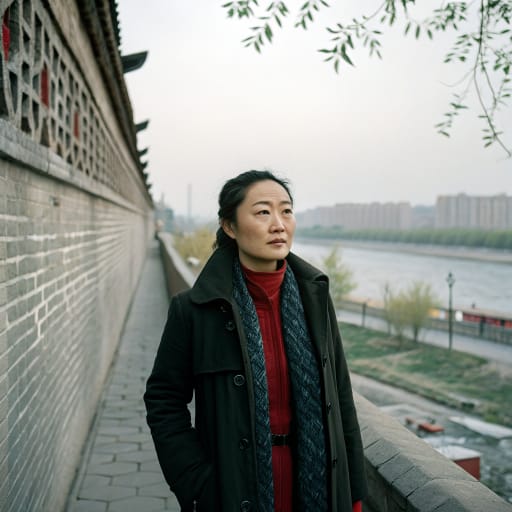
Typical Hoklo Phenotypes
Reference for AI generation: hair, eyes, skin, facial structure, build
Hoklo Body & Anatomy Reference
Anatomy by feature, East Asian Sinitic / Mongoloid phenotype
Hoklo Boobs & Breasts
Bust reference for Hoklo women: small-to-medium cup, modest projection, which is typical of East Asian Sinitic / Mongoloid ancestry. Areolas measure about 26-36mm across, with light-pink to medium-brown pigmentation. Body type (ectomorph-to-mesomorph, lean frame) shapes the bust as well, so Hoklo tits are usually firm and modestly projecting; smaller cup size than the South Asian or Western Asian average. In AI imagery, keep the forward-set shape rather than drifting toward the fuller South Asian or Levantine bust profile.
Hoklo Ass & Hips
The Hoklo ass is typically small-to-medium, modest projection, narrower hip profile, which sets it apart from the fuller projected glutes of the West African or Polynesian phenotype. Underneath, the pelvis shows narrower iliac crests, less gluteal-femoral fat deposition, part of the East Asian Sinitic / Mongoloid skeletal pattern. For Hoklo butt pics and AI renders, match that silhouette and the overall build (ectomorph-to-mesomorph, lean frame).
Hoklo Vagina & Pussy
Hoklo pussy and vulvar anatomy presents light-pink to medium-brown labial pigmentation, smaller labia minora, consistent with the East Asian Sinitic / Mongoloid phenotype's pigmentation pattern. Hoklo pubic hair is typically straight fine texture, sparser distribution than the South Asian norm, in the inverted-triangle pattern. For anatomically accurate Hoklo pussy renders the labial coloration should match the surrounding light to medium skin tone with a continuous gradient, and the hair should keep its straight fine texture.
Hoklo Dicks & Penis
Hoklo dicks follow the East Asian Sinitic / Mongoloid reference data: regional mean ~11-12cm erect; moderate girth; light-brown shaft pigmentation. Shaft color should track the light to medium skin tone with a smooth change toward the glans, and Hoklo pubic hair keeps its straight fine texture.
Hoklo Body, Curves & Build
Hoklo body type and overall build presents as ectomorph-to-mesomorph, lean frame, with mean adult female BMI 20-23: the characteristic East Asian Sinitic / Mongoloid habitus. Hoklo curves and proportions should keep the regional skeletal frame (height, shoulder-to-hip ratio, limb proportions) rather than a generic mesomorph default.
Hoklo Skin Tone & Hair Texture
Hoklo skin sits in the light to medium (Fitzpatrick II-IV) band. Hair is typically straight 1A, fine-to-medium, predominantly black, in keeping with the East Asian Sinitic / Mongoloid phenotype. In nude renders the skin should stay one even tone from face to body, and body, pubic and head hair should match.
Explore phenotype categories
Structured taxonomy with peer-reviewed scales · 22 anatomical categories
Erotic Poses & Sex Positions
From the pose catalog: 219 named positions with reference skeletons
Frequently asked questions about Hoklo people
Where is the Hoklo homeland?
The Hoklo homeland is Southern Fujian around Quanzhou, Zhangzhou and Xiamen, China; majority population of Taiwan; large communities in Singapore, Malaysia, the Philippines, Indonesia and elsewhere in Southeast Asia in East Asia.
What language do Hoklo people speak?
Hoklo people primarily speak Hokkien, a Southern Min variety (Min branch of Sinitic, Sino-Tibetan); Mandarin, Malay, Filipino and English also widely spoken in Taiwan and the diaspora.
What religion do Hoklo people practice?
The predominant religion among Hoklo people is Chinese folk religion blending Buddhism, Taoism and ancestor veneration, with Mazu and Qingshui Zushi prominent; Christian minorities, notably Presbyterian in Taiwan and Catholic in the Philippines.






Make your own Hoklo images
Five a day, free, no credits to buy. The studio starts from this group's phenotype data, so you can set body type, pose and style and keep the traits accurate.
Start with Hoklo