Help us get this right
Does this portrait look right for Kam?
Nobody has judged this one yet. You would be the first.
Kam Erotic
The hill country where eastern Guizhou, western Hunan and northern Guangxi meet in southern China, with small communities in Tuyên Quang Province, Vietnam.
Kam, also called Dong (Kra-Dai, Kam-Sui branch), with Northern and Southern dialects; Chinese is widely spoken as a second language.
Folk religion built on ancestor veneration, nature spirits and the grandmother goddess Sa Sui, with some Buddhist and Taoist influence.
Northern and Southern Kam, divided by dialect and by how much Han influence each absorbed; part of the wider Kam-Sui peoples with the Sui, Maonan and Mulam.
About Kam People
Ask what marks a Kam village and the answer is usually architectural: a drum tower rising over the rooftops in stacked, flaring eaves, and a covered bridge spanning the river below. Both are built of fir, traditionally joined without nails, and both are social buildings first. The drum tower is where elders settle disputes, guests are received and people sit around the fire pit on winter evenings. The Kam, called Dong in official Chinese usage and Gaeml in their own language, number more than three million and live in the hill country where Guizhou, Hunan and Guangxi meet, with small pockets across the border in northern Vietnam. Their language belongs to the Kam-Sui branch of the Kra-Dai family. That makes the Sui, Maonan and Mulam close linguistic cousins and the Zhuang and Thai more distant ones, while the neighboring Miao and Han speak unrelated languages. Kam is heavily tonal, and song is where it does its most celebrated work. The kgal laox, or Grand Song, is polyphonic choral singing performed without a conductor or instruments, with passages that imitate birdsong and the drone of cicadas. UNESCO inscribed it as intangible heritage in 2009. For centuries song carried history, moral teaching and courtship in a language with no script of its own until a Latin alphabet was devised in the 1950s.
Villages and clans are the working units of Kam society. Clusters of villages once bound themselves into alliances, known in Chinese as kuan, sworn to shared customary law and mutual defense. Religion is local and practical: ancestor veneration, spirits of place, and above all Sa Sui, the grandmother goddess whose shrines stand at the heart of many southern villages and who is honored at festivals. Wet rice sets the calendar. In Congjiang County, fish and ducks are raised in the same flooded paddies as glutinous rice, a system the FAO recognizes as globally important agricultural heritage. Fish and pork cured sour in wooden tubs for months or years are a household point of pride. The sharpest internal divide runs between north and south. Northern Kam counties such as Tianzhu and Xinhuang took on far more Han influence in housing, dress and vocabulary. The southern counties, among them Liping, Rongjiang, Congjiang, Sanjiang and Tongdao, kept the drum towers, the choirs and the hand-dyed indigo cloth beaten to a metallic sheen. Roads and tourism now reach showcase villages like Zhaoxing, and many younger Kam spend long stretches working in coastal cities. That leaves the songs and the carpentry resting on whoever stays or comes home.
Related ethnic groups
Groups that share Kam's homeland, region, language, or religious tradition. These are likely candidates for comparative phenotype reference.
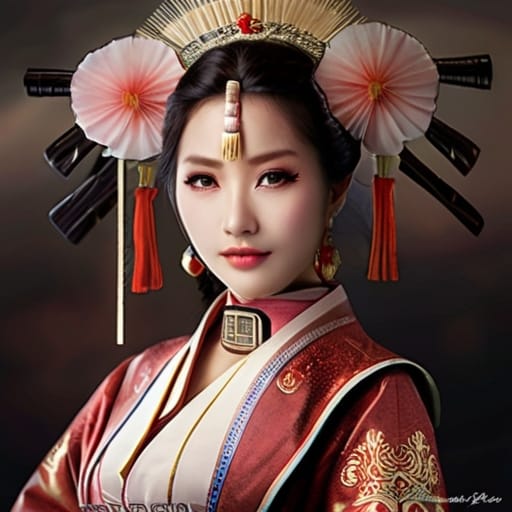
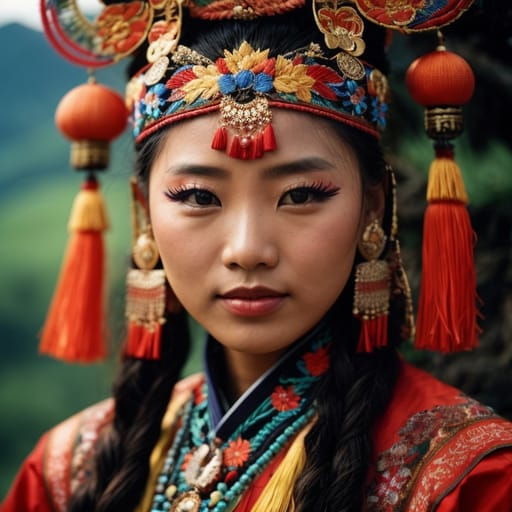
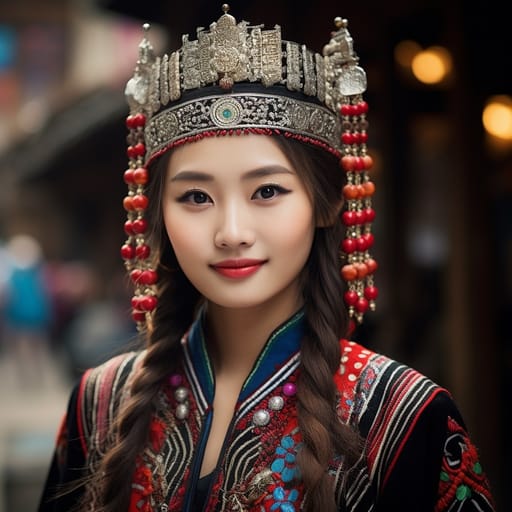
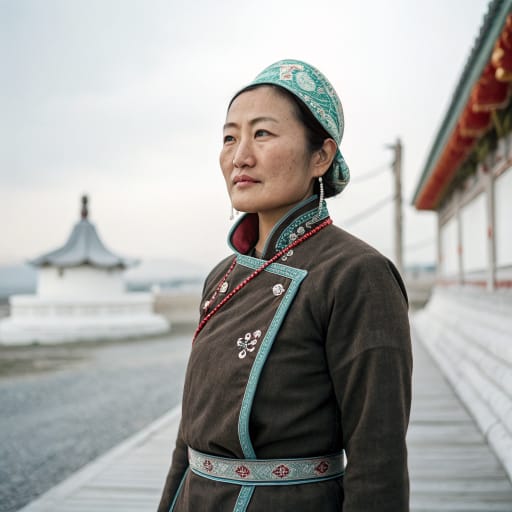
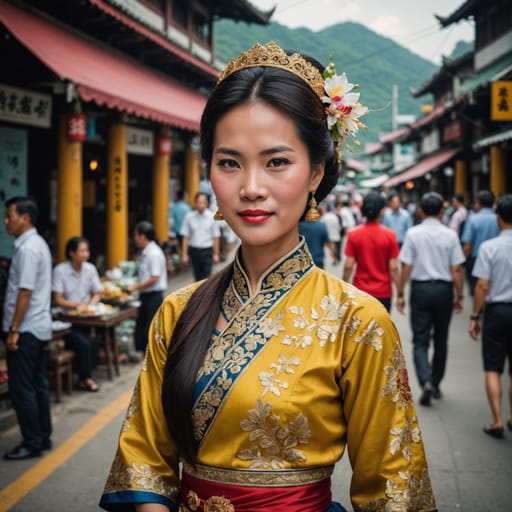
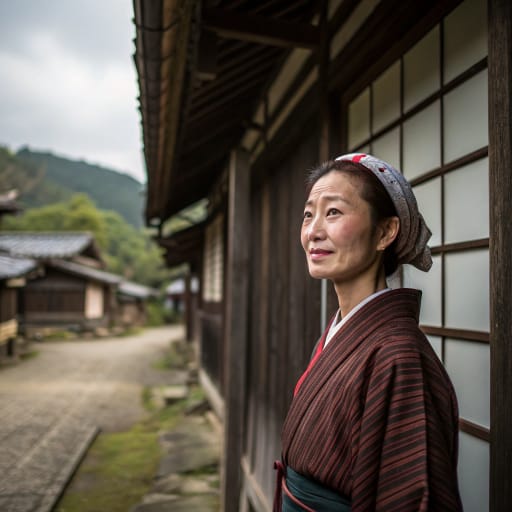
Typical Kam Phenotypes
Reference for AI generation: hair, eyes, skin, facial structure, build
Kam Body & Anatomy Reference
Anatomy by feature, East Asian Sinitic / Mongoloid phenotype
Kam Boobs & Breasts
Bust reference for Kam women: small-to-medium cup, modest projection, which is typical of East Asian Sinitic / Mongoloid ancestry. Areolas measure about 26-36mm across, with light-pink to medium-brown pigmentation. Body type (ectomorph-to-mesomorph, lean frame) shapes the bust as well, so Kam tits are usually firm and modestly projecting; smaller cup size than the South Asian or Western Asian average. In AI imagery, keep the forward-set shape rather than drifting toward the fuller South Asian or Levantine bust profile.
Kam Ass & Hips
The Kam ass is typically small-to-medium, modest projection, narrower hip profile, which sets it apart from the fuller projected glutes of the West African or Polynesian phenotype. Underneath, the pelvis shows narrower iliac crests, less gluteal-femoral fat deposition, part of the East Asian Sinitic / Mongoloid skeletal pattern. For Kam butt pics and AI renders, match that silhouette and the overall build (ectomorph-to-mesomorph, lean frame).
Kam Vagina & Pussy
Kam pussy and vulvar anatomy presents light-pink to medium-brown labial pigmentation, smaller labia minora, consistent with the East Asian Sinitic / Mongoloid phenotype's pigmentation pattern. Kam pubic hair is typically straight fine texture, sparser distribution than the South Asian norm, in the inverted-triangle pattern. For anatomically accurate Kam pussy renders the labial coloration should match the surrounding light to medium skin tone with a continuous gradient, and the hair should keep its straight fine texture.
Kam Dicks & Penis
Kam dicks follow the East Asian Sinitic / Mongoloid reference data: regional mean ~11-12cm erect; moderate girth; light-brown shaft pigmentation. Shaft color should track the light to medium skin tone with a smooth change toward the glans, and Kam pubic hair keeps its straight fine texture.
Kam Body, Curves & Build
Kam body type and overall build presents as ectomorph-to-mesomorph, lean frame, with mean adult female BMI 20-23: the characteristic East Asian Sinitic / Mongoloid habitus. Kam curves and proportions should keep the regional skeletal frame (height, shoulder-to-hip ratio, limb proportions) rather than a generic mesomorph default.
Kam Skin Tone & Hair Texture
Kam skin sits in the light to medium (Fitzpatrick II-IV) band. Hair is typically straight 1A, fine-to-medium, predominantly black, in keeping with the East Asian Sinitic / Mongoloid phenotype. In nude renders the skin should stay one even tone from face to body, and body, pubic and head hair should match.
Explore phenotype categories
Structured taxonomy with peer-reviewed scales · 22 anatomical categories
Erotic Poses & Sex Positions
From the pose catalog: 219 named positions with reference skeletons
Frequently asked questions about Kam people
Where is the Kam homeland?
The Kam homeland is The hill country where eastern Guizhou, western Hunan and northern Guangxi meet in southern China, with small communities in Tuyên Quang Province, Vietnam. in East Asia.
What language do Kam people speak?
Kam people primarily speak Kam, also called Dong (Kra-Dai, Kam-Sui branch), with Northern and Southern dialects; Chinese is widely spoken as a second language..
What religion do Kam people practice?
The predominant religion among Kam people is Folk religion built on ancestor veneration, nature spirits and the grandmother goddess Sa Sui, with some Buddhist and Taoist influence..






Make your own Kam images
Five a day, free, no credits to buy. The studio starts from this group's phenotype data, so you can set body type, pose and style and keep the traits accurate.
Start with Kam