Help us get this right
Does this portrait look right for Hakka?
Nobody has judged this one yet. You would be the first.
Hakka Erotic
Hill country where Guangdong, Fujian and Jiangxi meet in southern China, plus Guangxi, Sichuan, Hong Kong and Taiwan, with a large diaspora in Southeast Asia and beyond
Hakka (Sino-Tibetan, Sinitic branch), closest to Gan; Meixian is the mainland reference dialect, Sixian and Hailu are prominent in Taiwan
Ancestor veneration and Chinese folk religion blended with Buddhism and Taoism; a notable Protestant Christian minority dating to 19th-century missions
A subgroup of the Han Chinese; major regional communities in eastern Guangdong (Meizhou), western Fujian, southern Jiangxi, Taiwan and Hong Kong, plus large overseas communities in Southeast Asia
About Hakka People
The Hakka carry their history in their name. The characters mean guest families, a label once pinned on latecomers to southern China who settled wherever older populations had not, which usually meant steep hill country with thin soil. They are Han Chinese, yet they have long stood apart from their Cantonese, Hokkien and Teochew neighbors through their own language, a fierce attachment to lineage, and a shared story of being on the move. Their heartland is the rugged border zone where Guangdong, Fujian and Jiangxi meet, and Meizhou in eastern Guangdong is often called the Hakka capital. Clan genealogies trace ancestors to the plains of northern China and describe waves of flight south during wars and dynastic collapses. Historians debate how literally to read those records, and many argue that a distinct Hakka identity took firm shape later, under the Ming and Qing, through friction with neighbors in those hills. The language is Sinitic, closest to Gan in Jiangxi and not mutually intelligible with Cantonese or Mandarin. Meixian speech is the usual reference dialect on the mainland, while Taiwan, where Hakka is legally a national language, keeps its own varieties such as Sixian and Hailu.
Land hunger kept them moving. Hakka settlers crossed to Taiwan and into what became Hong Kong's New Territories, then went overseas to the gold fields of western Borneo, the tin mines of Bangka and Malaya, and as far as Mauritius, the Caribbean and the tanneries of Kolkata. At home, rivalry with Cantonese-speaking locals erupted into the Punti-Hakka clan wars of the 1850s and 1860s. In the same era, Hong Xiuquan, leader of the Taiping Rebellion, drew his first followers largely from fellow Hakka in Guangxi. Hill life shaped the customs. In western Fujian, clans built tulou, massive round or square earthen fortresses that sheltered hundreds of relatives behind a single gate, and a group of them is now a UNESCO World Heritage site. Hakka women traditionally did not bind their feet and did heavy field work, a point of pride and a clear mark of difference from neighboring communities. Religious life centers on ancestors, honored in lineage halls and carefully kept genealogies, and blends with folk worship of local gods, Buddhism and Taoism. Nineteenth-century Protestant missions also left Christianity unusually visible among some Hakka communities. The kitchen leans salty, preserved and filling: salt-baked chicken, stuffed tofu, pork belly with preserved mustard greens, and lei cha, a tea pounded with herbs, nuts and grains.
Related ethnic groups
Groups that share Hakka's homeland, region, language, or religious tradition. These are likely candidates for comparative phenotype reference.
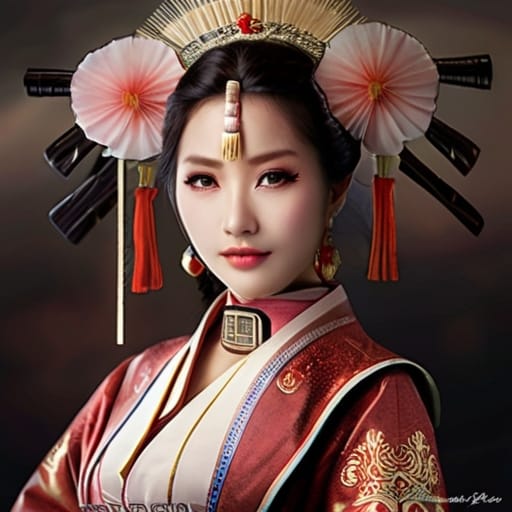
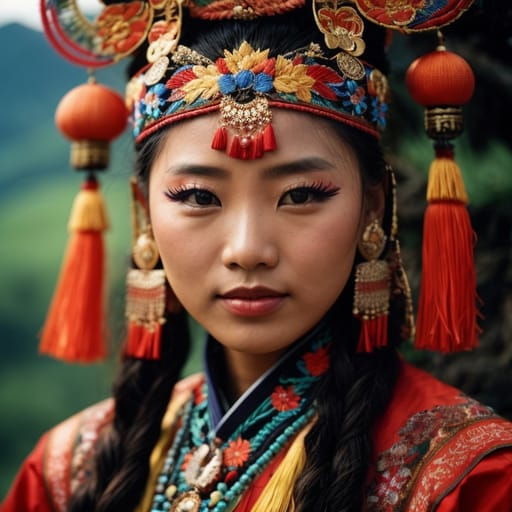
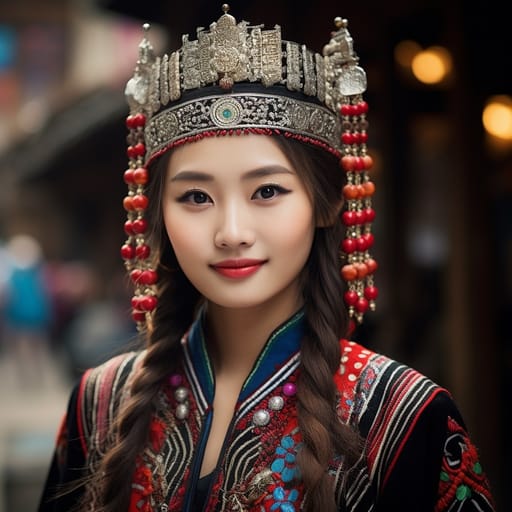
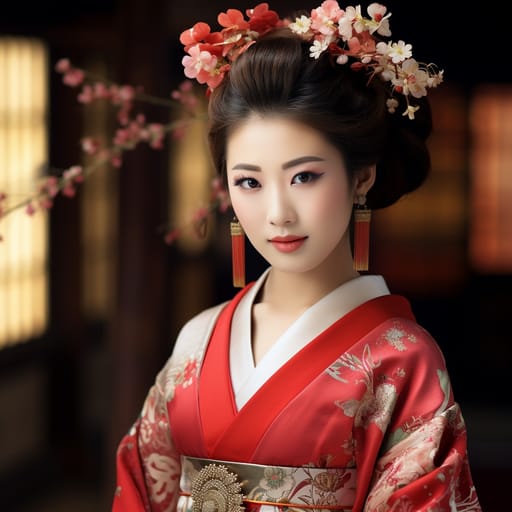
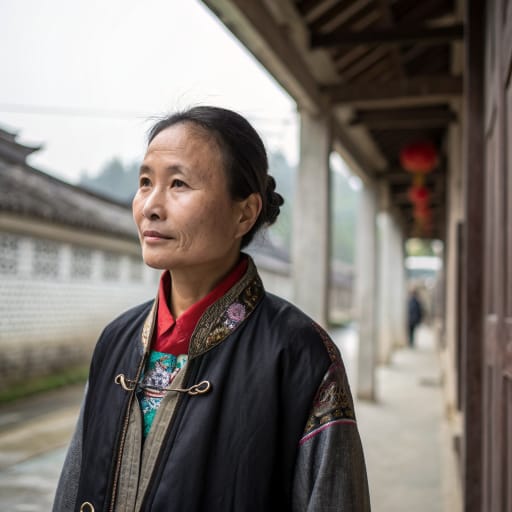
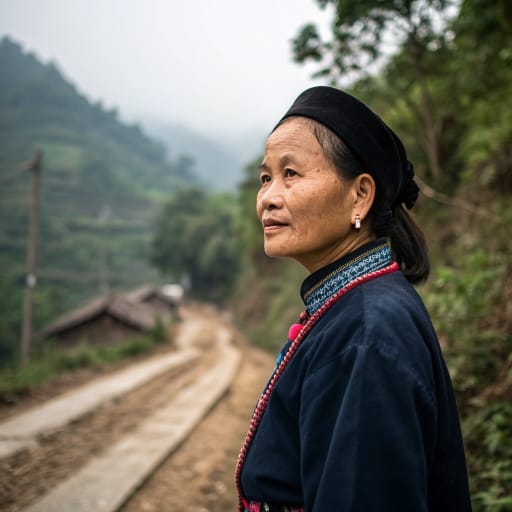
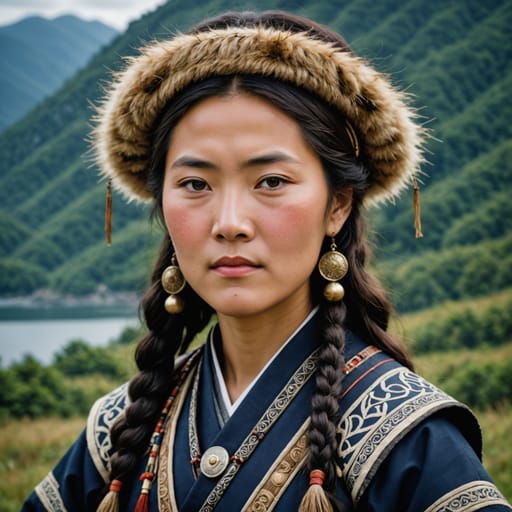
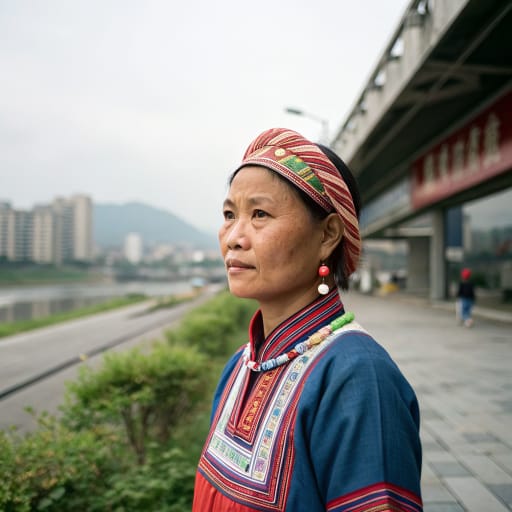
Typical Hakka Phenotypes
Reference for AI generation: hair, eyes, skin, facial structure, build
Hakka Body & Anatomy Reference
East Asian Sinitic / Mongoloid phenotype: anatomy reference for AI nude generation
Hakka Boobs & Breasts
Hakka tits and boobs run small-to-medium cup, modest projection, the classic East Asian Sinitic / Mongoloid bust profile. Hakka nipples and areolas show light-pink to medium-brown areolar pigmentation against the light-to-medium skin tone, with areolar diameter typically in the 26-36mm range and forward-set positioning rather than the fuller South Asian or Levantine bust profile. Hakka breasts trend firm and modestly projecting; smaller cup size than the South Asian or Western Asian average, a function of the ectomorph-to-mesomorph, lean frame body habitus and the mean adult female BMI 20-23. For anatomically accurate AI-generated Hakka nudes the render preserves the small-to-medium cup, modest projection shape, 26-36mm areolas with light-pink to medium-brown pigmentation, and the torso proportions of the East Asian Sinitic / Mongoloid phenotype.
Hakka Ass & Hips
Hakka hips and butt usually read as small-to-medium, modest projection, narrower hip profile. The skeletal base is narrower iliac crests, less gluteal-femoral fat deposition, the East Asian Sinitic / Mongoloid pattern. Set against the fuller projected glutes of the West African or Polynesian phenotype, the difference is easy to see, and the hip-to-waist ratio is often what identifies Hakka women in photos.
Hakka Vagina & Pussy
Expect light-pink to medium-brown labial pigmentation, smaller labia minora on Hakka women, in keeping with East Asian Sinitic / Mongoloid ancestry. The pubic hair is straight fine texture, sparser distribution than the South Asian norm. Coloring should run evenly from the light to medium skin of the thighs to the labia, and Hakka nude imagery should keep the hair's straight fine texture.
Hakka Dicks & Penis
Hakka dick and penile anatomy in adult AI generation should anchor on the regional reference data: regional mean ~11-12cm erect, moderate girth, and light-brown shaft pigmentation. The Hakka cock profile reflects the East Asian Sinitic / Mongoloid population's anthropometric measurements. The shaft pigmentation should track the surrounding light to medium skin tone, and the pubic hair should keep its straight fine texture in the typical inverted-V escutcheon.
Hakka Body, Curves & Build
Hakka body type: ectomorph-to-mesomorph, lean frame, with mean adult female BMI 20-23. This is the typical East Asian Sinitic / Mongoloid build. Height range, shoulder-to-hip ratio and fat distribution all follow from it, which is what an accurate Hakka nude body should show.
Hakka Skin Tone & Hair Texture
Hakka skin tone falls in the light to medium (Fitzpatrick II-IV) band, the surface signal most often miscalibrated by generic AI nude generators. Hakka hair texture is typically straight 1A, fine-to-medium, predominantly black, characteristic of the East Asian Sinitic / Mongoloid phenotype. In Hakka nude renders the skin should hold that band consistently across the body.
Explore phenotype categories
Structured taxonomy with peer-reviewed scales · 22 anatomical categories
Erotic Poses & Sex Positions
From the pose catalog: 219 named positions with reference skeletons
Frequently asked questions about Hakka people
Where is the Hakka homeland?
The Hakka homeland is Hill country where Guangdong, Fujian and Jiangxi meet in southern China, plus Guangxi, Sichuan, Hong Kong and Taiwan, with a large diaspora in Southeast Asia and beyond in East Asia.
What language do Hakka people speak?
Hakka people primarily speak Hakka (Sino-Tibetan, Sinitic branch), closest to Gan; Meixian is the mainland reference dialect, Sixian and Hailu are prominent in Taiwan.
What religion do Hakka people practice?
The predominant religion among Hakka people is Ancestor veneration and Chinese folk religion blended with Buddhism and Taoism; a notable Protestant Christian minority dating to 19th-century missions.






Make your own Hakka images
Five a day, free, no credits to buy. The studio starts from this group's phenotype data, so you can set body type, pose and style and keep the traits accurate.
Start with Hakka