Help us get this right
Does this portrait look right for Chesapeake?
Nobody has judged this one yet. You would be the first.
Chesapeake Erotic
South Hampton Roads, Virginia, United States: the Elizabeth and Lynnhaven river country of present-day Norfolk, Virginia Beach, Chesapeake and Portsmouth
A barely recorded coastal dialect (Eastern Algonquian, Algonquian), related to Powhatan and Carolina Algonquian
Traditional Eastern Algonquian religion; specifics for the Chesapeake were not recorded
Eastern Algonquian people of coastal Virginia, independent of the Powhatan paramount chiefdom until destroyed around 1607
About Chesapeake People
The Chesapeake were an Algonquian-speaking people who lived on the south shore of the lower Chesapeake Bay, in what is now South Hampton Roads, Virginia, until the Powhatan paramount chief Wahunsenacawh destroyed them around 1607. Their name outlived them and now belongs to the bay and to a Virginia city. In their own time, politics set them apart more than culture did. They spoke a language related to their neighbors' and worked the same shellfish beds and cornfields, but they stayed outside the Powhatan chiefdom that was taking in most of the tidewater towns around them.
Their towns sat along the Elizabeth and Lynnhaven rivers, in low country of marsh, pine woods and sandy necks that open onto both the bay and the Atlantic. Little was written down about the Chesapeake themselves. What exists suggests they lived much like other coastal Algonquians: they planted maize, beans and squash, fished, gathered oysters and clams, and hunted deer, all organized around towns led by hereditary chiefs. The English wrote their name as Chesepiooc and similar spellings, and it marks a principal town on the maps the Roanoke colonists made of the region.
They met the English early. In the winter of 1585 to 1586, a party from Ralph Lane's Roanoke expedition traveled north and lived among them for months. The reports they brought back praised the deep harbor and good land. Those reports shaped what came next: the 1587 colonists under John White were bound for the Chesapeake Bay, not Roanoke Island, until their pilot left them at Roanoke and refused to go farther. Those settlers became the Lost Colony.
The Chesapeake were wiped out by a Native power, not a European one. The Jamestown colonist William Strachey wrote that Powhatan's priests warned him a nation would rise from the Chesapeake Bay and end his empire, and that Powhatan answered the prophecy by destroying the Chesapeake. Some historians, most notably David Beers Quinn, have argued that surviving Roanoke colonists were living with the Chesapeake and died in the same attack. They point to English accounts in which Powhatan claimed a part in those deaths. No one has proved it, and the question still hangs over both peoples. Today the Chesapeake name covers the largest estuary in the United States and a city built over part of their old country.
Related ethnic groups
Groups that share Chesapeake's homeland, region, language, or religious tradition. These are likely candidates for comparative phenotype reference.
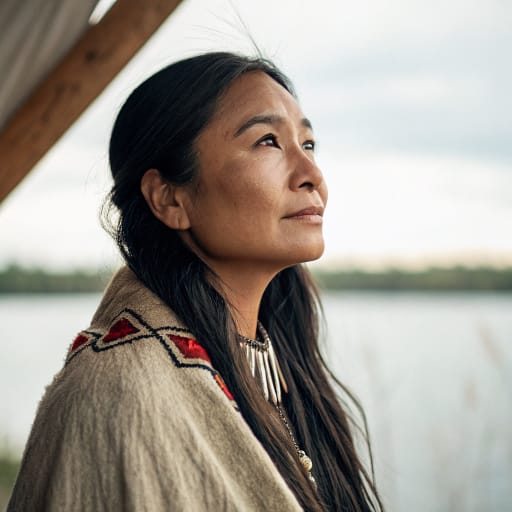
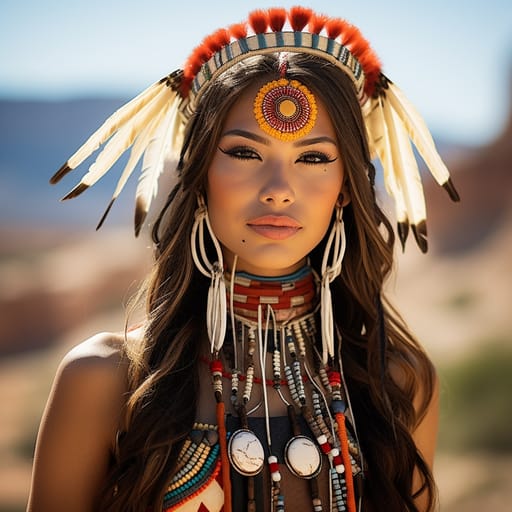
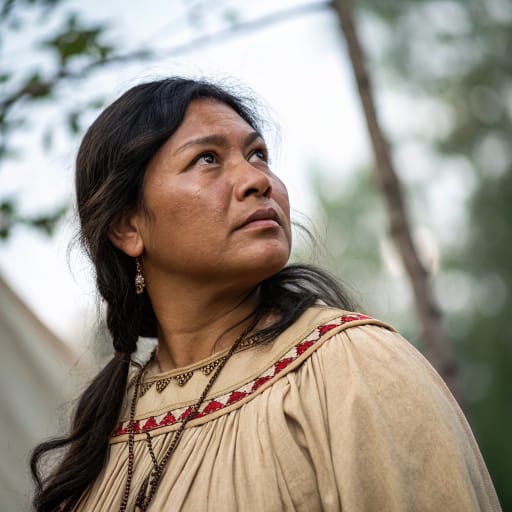
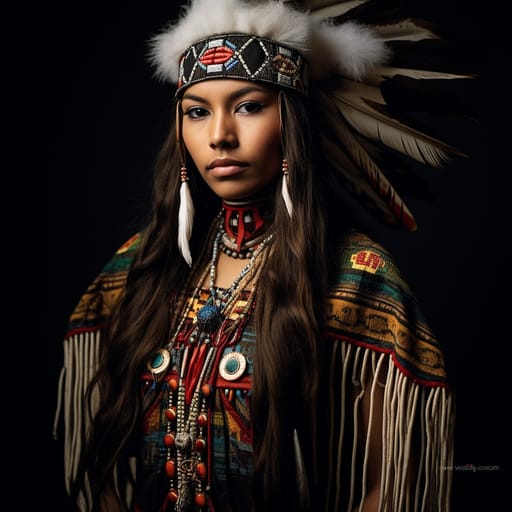
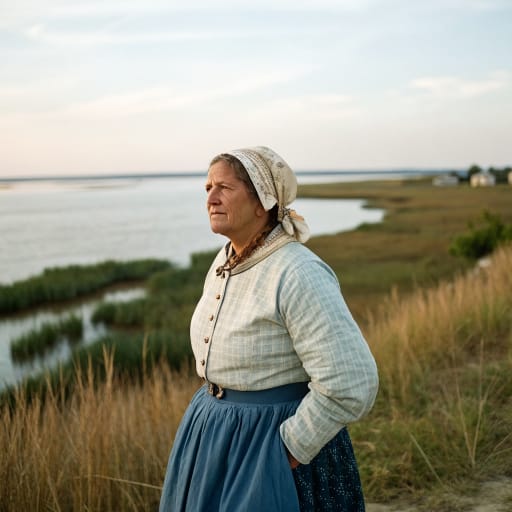
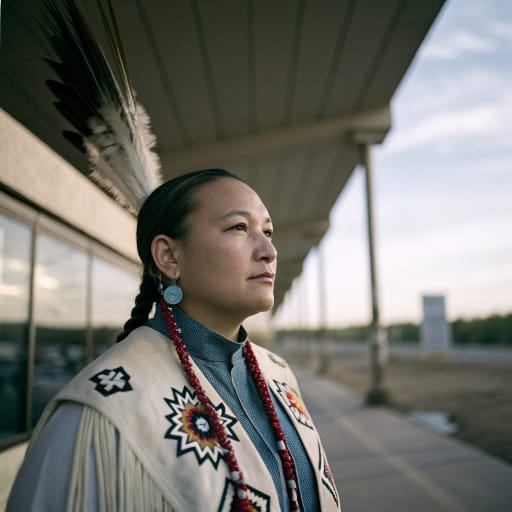
Typical Chesapeake Phenotypes
Reference for AI generation: hair, eyes, skin, facial structure, build
Chesapeake Body & Anatomy Reference
Indigenous Northern American / Algonquian-Iroquoian phenotype: anatomy reference for AI nude generation
Chesapeake Boobs & Breasts
Chesapeake boobs follow the Indigenous Northern American / Algonquian-Iroquoian profile: medium cup, moderate projection. Areolar diameter is usually 30-44mm, and the coloring is medium-brown areolar pigmentation against the copper-to-medium-brown skin tone. Breast shape tracks body composition (mesomorph, broader frame in northern Indigenous populations, mean adult female BMI 25-28), so Chesapeake breasts tend to be full and moderate projection. Expect a forward-set shape, not the smaller East Asian bust.
Chesapeake Ass & Hips
Chesapeake ass and hip morphology presents as medium, moderate-to-full projection, distinctly different from the slim East Asian narrow-hip profile. The Chesapeake pelvic profile shows medium iliac crests, anchored in the Indigenous Northern American / Algonquian-Iroquoian skeletal pattern. Chesapeake butt shots in adult AI imagery should render the medium, moderate-to-full projection silhouette with the overall build (mesomorph, broader frame in northern Indigenous populations) and the fat distribution typical of the Indigenous Northern American / Algonquian-Iroquoian phenotype.
Chesapeake Vagina & Pussy
Chesapeake pussy anatomy typically shows medium-brown labial pigmentation. Pubic hair is usually straight medium-coarse texture. In AI-generated Chesapeake nudes, labial color should blend into the copper to medium-brown skin with a gradual transition, and the hair should keep its straight medium-coarse texture.
Chesapeake Dicks & Penis
Penis reference for Chesapeake men: regional mean ~13cm erect, moderate girth. Coloring: medium-brown shaft pigmentation. An accurate Chesapeake cock in AI imagery matches the surrounding copper to medium-brown skin rather than a generic porn default. Circumcision depends on religion and custom, not ancestry.
Chesapeake Body, Curves & Build
The Chesapeake figure is generally mesomorph, broader frame in northern Indigenous populations, with mean adult female BMI 25-28, characteristic of Indigenous Northern American / Algonquian-Iroquoian ancestry. AI image tools tend to flatten regional body types into a few stock shapes; here the Chesapeake build is kept as its own reference.
Chesapeake Skin Tone & Hair Texture
Skin: copper to medium-brown (Fitzpatrick III-V). Hair: straight 1A, dark-brown to black, often thick and dense. Both are typical of Indigenous Northern American / Algonquian-Iroquoian ancestry. The most common mistake in AI nudes of Chesapeake women is a body rendered lighter than the face.
Explore phenotype categories
Structured taxonomy with peer-reviewed scales · 22 anatomical categories
Erotic Poses & Sex Positions
From the pose catalog: 219 named positions with reference skeletons
Frequently asked questions about Chesapeake people
Where is the Chesapeake homeland?
The Chesapeake homeland is South Hampton Roads, Virginia, United States: the Elizabeth and Lynnhaven river country of present-day Norfolk, Virginia Beach, Chesapeake and Portsmouth in North America.
What language do Chesapeake people speak?
Chesapeake people primarily speak A barely recorded coastal dialect (Eastern Algonquian, Algonquian), related to Powhatan and Carolina Algonquian.
What religion do Chesapeake people practice?
The predominant religion among Chesapeake people is Traditional Eastern Algonquian religion; specifics for the Chesapeake were not recorded.






Make your own Chesapeake images
Five a day, free, no credits to buy. The studio starts from this group's phenotype data, so you can set body type, pose and style and keep the traits accurate.
Start with Chesapeake