No portrait yet
Naskapi Erotic
Northeastern Quebec, Canada, principally Kawawachikamach near Schefferville, with related Innu communities in interior Labrador
Naskapi (Algonquian, within the Cree-Innu dialect continuum), written in syllabics; English and French widely used
Anglican Christianity, alongside persisting hunting belief and practice
Innu; closely tied to the Montagnais Innu and to the Mushuau Innu of Natuashish, Labrador, within the wider Cree-Innu-Naskapi family
About Naskapi People
Naskapi is a name someone else handed them. It comes out of Innu speech, its meaning is disputed and was probably never flattering, and traders and southern neighbors applied it to the bands who lived furthest into the interior, past the last decent stands of spruce, out where the barrens start. Those bands call themselves Innu, as do their relatives across the rest of the Quebec-Labrador peninsula. The Naskapi Nation of Kawawachikamach kept the outsider's word mostly because a century of paperwork had already fixed it to them. What actually set them apart was caribou. Their year moved with the George River herd across a country of rock, lichen, black spruce and lake that supports very little else in quantity. They hunted it, ate it, wore it, slept under hides of it, and cut their tools from its bone. When the herd shifted its migration route in the early twentieth century, people at Fort Chimo and Fort McKenzie starved.
The most remarkable thing they made was clothing. Naskapi men of the eighteenth and nineteenth centuries wore caribou-hide coats painted in red and yellow with fine parallel lines, double curves and lattice fields, laid down by women using antler and bone tools and paint bound with fish roe. The surviving coats sit mostly in museums now, and nothing else in the subarctic looks like them. They were hunting garments, made to please the animal and its master, Papakassik, who decides what a hunter is permitted to take. So was scapulimancy: a caribou shoulder blade scraped clean, held over coals until it scorched and cracked, the burn pattern read as a map of where to go. Anthropologists spent decades arguing over whether randomizing the search that way was, in practice, sound strategy. Anglican missionaries reached the northern bands through Fort Chimo, which is why the Naskapi are largely Anglican while the Innu to the south are Catholic, one of the sharper lines between two peoples who otherwise speak dialects of a single language. The twentieth century moved them repeatedly, ending in the 1950s at the iron mining town of Schefferville, whose mine shut in 1982. They signed the Northeastern Quebec Agreement in 1978 and built their own village a short way up the road. About a thousand people live at Kawawachikamach today, running their own school and police force, and still speaking Naskapi, written in syllabics and passed on to children at a rate few other Indigenous languages in Canada match.
Related ethnic groups
Groups that share Naskapi's homeland, region, language, or religious tradition. These are likely candidates for comparative phenotype reference.
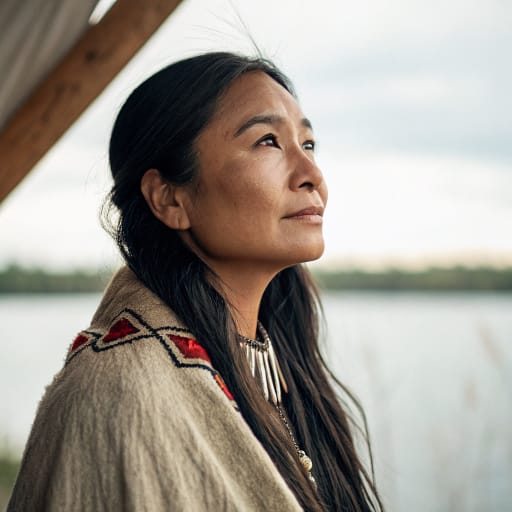
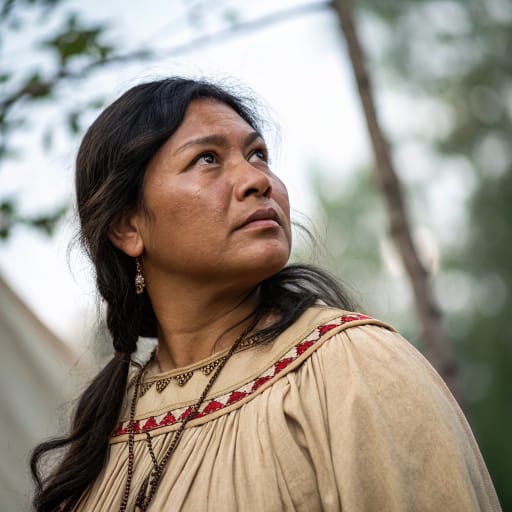
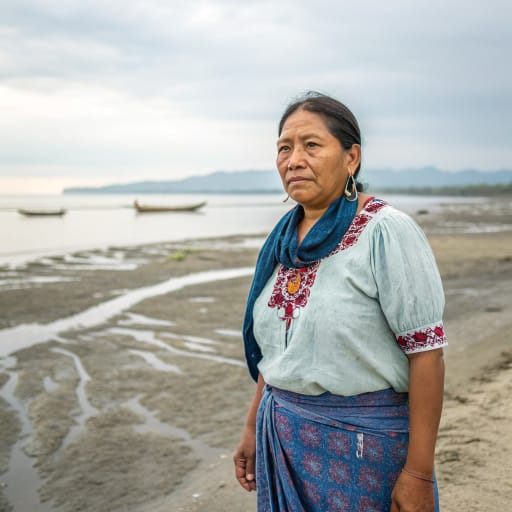
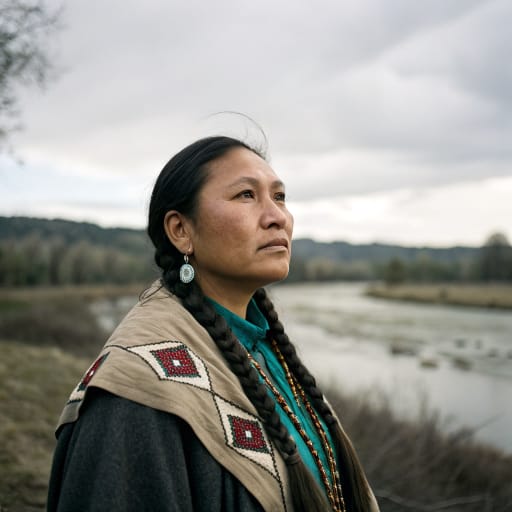
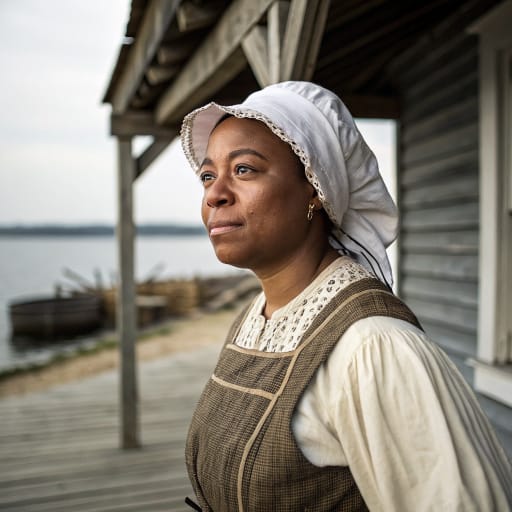
Typical Naskapi Phenotypes
Reference for AI generation: hair, eyes, skin, facial structure, build
Naskapi Body & Anatomy Reference
Anatomy by feature, Indigenous Northern American / Algonquian-Iroquoian phenotype
Naskapi Boobs & Breasts
The typical Naskapi bust is medium cup, moderate projection, in line with the wider Indigenous Northern American / Algonquian-Iroquoian pattern. Areolas usually fall in the 30-44mm range, with medium-brown areolar pigmentation against the copper-to-medium-brown skin tone. Compared with the smaller East Asian bust, Naskapi breasts sit forward and are generally full and moderate projection. A faithful AI render of Naskapi tits keeps that shape and areola size.
Naskapi Ass & Hips
Butt shape among Naskapi women: medium, moderate-to-full projection, over medium iliac crests. This follows Indigenous Northern American / Algonquian-Iroquoian ancestry and looks quite unlike the slim East Asian narrow-hip profile. An accurate Naskapi ass in adult AI imagery keeps both the silhouette and the overall build (mesomorph, broader frame in northern Indigenous populations) instead of a generic average.
Naskapi Vagina & Pussy
Vulvar anatomy among Naskapi women: medium-brown labial pigmentation. Pubic hair tends to be straight medium-coarse texture, in the usual inverted-triangle pattern. Both follow Indigenous Northern American / Algonquian-Iroquoian pigmentation, which is why Naskapi pussy renders should not fall back on a pale, sparse Western template.
Naskapi Dicks & Penis
The Naskapi cock profile, from Indigenous Northern American / Algonquian-Iroquoian anthropometric data: regional mean ~13cm erect; moderate girth; medium-brown shaft pigmentation. Pubic hair has a straight medium-coarse texture and forms the usual inverted-V pattern. Whether Naskapi men are circumcised follows religious and cultural practice rather than phenotype.
Naskapi Body, Curves & Build
Build and curves among Naskapi women follow the Indigenous Northern American / Algonquian-Iroquoian pattern: mesomorph, broader frame in northern Indigenous populations, mean adult female BMI 25-28. Proportions matter as much as skin tone, so Naskapi figures should keep their regional height and limb ratios.
Naskapi Skin Tone & Hair Texture
The Naskapi skin range is copper to medium-brown (Fitzpatrick III-V), and hair tends to be straight 1A, dark-brown to black, often thick and dense. That combination marks the Indigenous Northern American / Algonquian-Iroquoian phenotype, and skin tone is the trait AI generators most often get wrong for Naskapi women.
Explore phenotype categories
Structured taxonomy with peer-reviewed scales · 22 anatomical categories
Erotic Poses & Sex Positions
From the pose catalog: 219 named positions with reference skeletons
Frequently asked questions about Naskapi people
Where is the Naskapi homeland?
The Naskapi homeland is Northeastern Quebec, Canada, principally Kawawachikamach near Schefferville, with related Innu communities in interior Labrador in North America.
What language do Naskapi people speak?
Naskapi people primarily speak Naskapi (Algonquian, within the Cree-Innu dialect continuum), written in syllabics; English and French widely used.
What religion do Naskapi people practice?
The predominant religion among Naskapi people is Anglican Christianity, alongside persisting hunting belief and practice.






Make your own Naskapi images
Five a day, free, no credits to buy. The studio starts from this group's phenotype data, so you can set body type, pose and style and keep the traits accurate.
Start with Naskapi