No portrait yet
Wampanoag Erotic
Southeastern Massachusetts and eastern Rhode Island, United States: Cape Cod, Martha's Vineyard, Nantucket and the Narragansett Bay shore
Wôpanâak (Massachusett), Eastern Algonquian branch of the Algic family, revived since 1993; English in daily use
Christianity, mainly Baptist and Congregational since the 17th-century praying towns, alongside traditional Wampanoag spiritual practice
Bands include Mashpee, Aquinnah (Gay Head), Herring Pond, Pocasset, Assonet and Chappaquiddick; historically Pokanoket and Patuxet; part of the Eastern Algonquian peoples of southern New England with the Massachusett, Narragansett and Nauset
About Wampanoag People
The Wampanoag are the people whose country became Plymouth Colony, and they are still on it. The name means something close to people of the dawn, and the geography agrees: their homeland is the eastern edge of the continent, southeastern Massachusetts from the Narragansett Bay shore across Cape Cod to Martha's Vineyard and Nantucket. Most Wampanoag today belong to the two federally recognized tribes, Mashpee on the Cape and Aquinnah at the western tip of the Vineyard, or to smaller bands such as Herring Pond, Pocasset and Assonet that sit close to the old village sites. They are shellfishermen, teachers, lawyers and tribal officials working the same estuaries their ancestors farmed and fished.
Their language, Wôpanâak, is Eastern Algonquian, a close cousin of Narragansett and Pequot and a distant relative of Ojibwe and Cree. It has an unusual paper trail. In 1663 the missionary John Eliot and his Native translators printed the first Bible produced in the Americas in it, and for generations literate Wampanoag wrote deeds, petitions and letters in their own tongue. Daily speech went silent in the nineteenth century. In 1993 a Mashpee woman, Jessie Little Doe Baird, began rebuilding the grammar from those documents, and the Wôpanâak Language Reclamation Project has since raised children as first-language speakers, the first time a Native American language has been brought back with no living speakers to learn from.
The history everyone half-knows is sharper up close. An epidemic emptied whole coastal villages between 1616 and 1619, before the Mayflower arrived, which is why the sachem Ousamequin, called Massasoit, chose alliance with the newcomers in 1621. His son Metacom, King Philip to the English, led the war of 1675 and 1676 that killed a larger share of the population, English and Native, than any later American war. He died at Mount Hope in what is now Bristol, Rhode Island, and many survivors were sold into slavery in the Caribbean. The Vineyard communities, converted early and shielded by water, largely sat the war out, one reason Aquinnah endured. Later generations shipped out on Nantucket and New Bedford whalers and married into African American and Cape Verdean families, a heritage many Wampanoag families carry today.
Christianity arrived with the praying towns and never fully displaced older practice. Mashpee's Old Indian Meeting House has stood since 1684, and the tribe's powwow has run each summer for more than a century. On Aquinnah, children get Cranberry Day off school each October to pick the wild bogs with their families. And since 1970, Wampanoag and other New England Natives have gathered on Cole's Hill in Plymouth each Thanksgiving for a National Day of Mourning.
Related ethnic groups
Groups that share Wampanoag's homeland, region, language, or religious tradition. These are likely candidates for comparative phenotype reference.
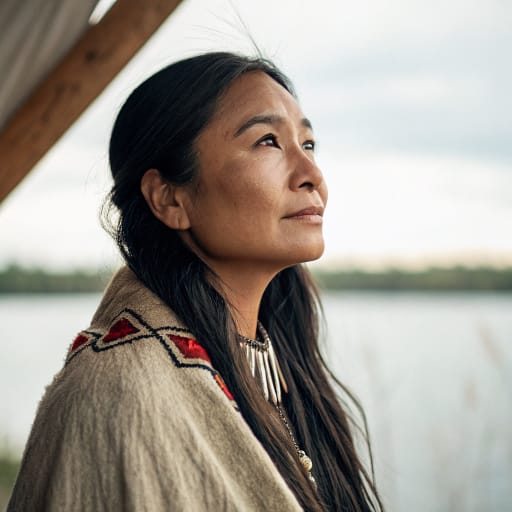
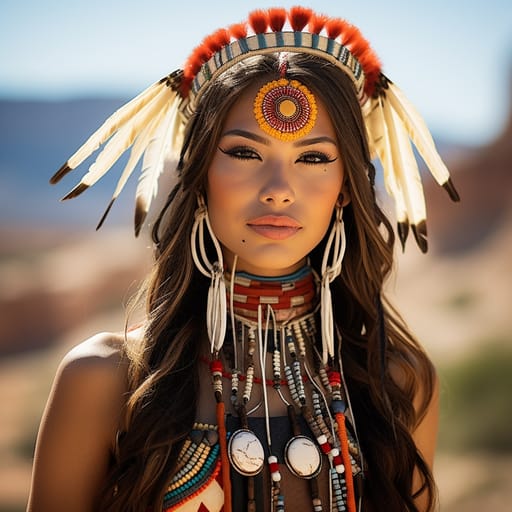
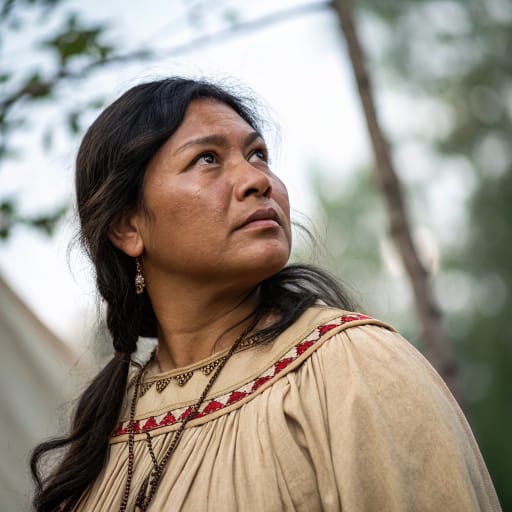
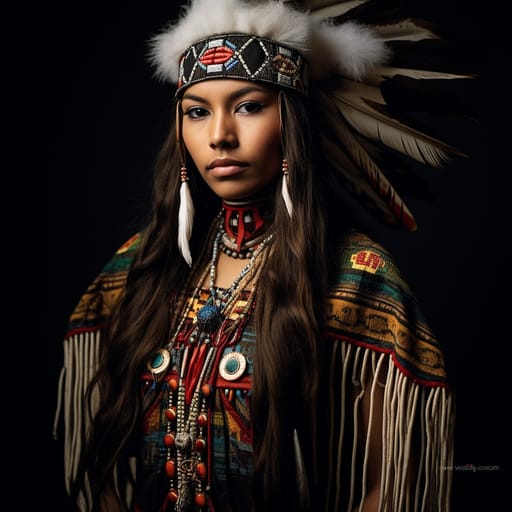

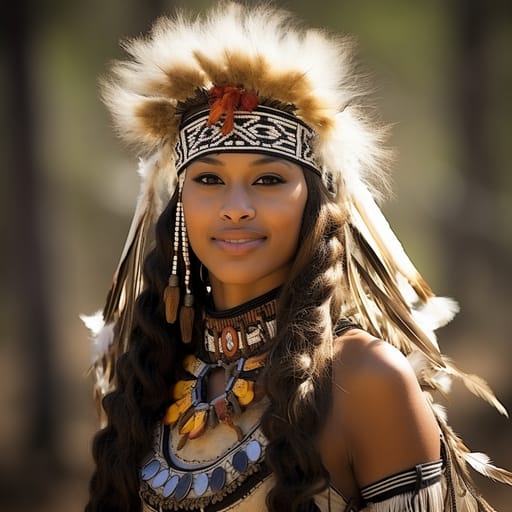
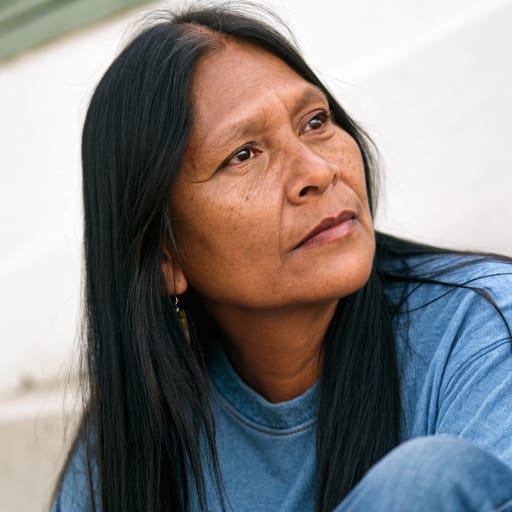
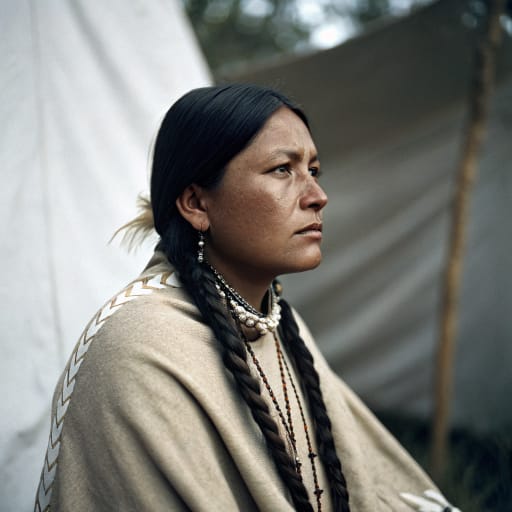
Typical Wampanoag Phenotypes
Reference for AI generation: hair, eyes, skin, facial structure, build
Wampanoag Body & Anatomy Reference
Indigenous Northern American / Algonquian-Iroquoian phenotype: anatomy reference for AI nude generation
Wampanoag Boobs & Breasts
Bust reference for Wampanoag women: medium cup, moderate projection, which is typical of Indigenous Northern American / Algonquian-Iroquoian ancestry. Areolas measure about 30-44mm across, with medium-brown pigmentation. Body type (mesomorph, broader frame in northern Indigenous populations) shapes the bust as well, so Wampanoag tits are usually full and moderate projection. In AI imagery, keep the forward-set shape rather than drifting toward the smaller East Asian bust.
Wampanoag Ass & Hips
The Wampanoag ass is typically medium, moderate-to-full projection, which sets it apart from the slim East Asian narrow-hip profile. Underneath, the pelvis shows medium iliac crests, part of the Indigenous Northern American / Algonquian-Iroquoian skeletal pattern. For Wampanoag butt pics and AI renders, match that silhouette and the overall build (mesomorph, broader frame in northern Indigenous populations).
Wampanoag Vagina & Pussy
Wampanoag pussy and vulvar anatomy presents medium-brown labial pigmentation, consistent with the Indigenous Northern American / Algonquian-Iroquoian phenotype's pigmentation pattern. Wampanoag pubic hair is typically straight medium-coarse texture, in the inverted-triangle pattern. For anatomically accurate Wampanoag pussy renders the labial coloration should match the surrounding copper to medium-brown skin tone with a continuous gradient, and the hair should keep its straight medium-coarse texture.
Wampanoag Dicks & Penis
Wampanoag dicks follow the Indigenous Northern American / Algonquian-Iroquoian reference data: regional mean ~13cm erect; moderate girth; medium-brown shaft pigmentation. Shaft color should track the copper to medium-brown skin tone with a smooth change toward the glans, and Wampanoag pubic hair keeps its straight medium-coarse texture.
Wampanoag Body, Curves & Build
Wampanoag body type and overall build presents as mesomorph, broader frame in northern Indigenous populations, with mean adult female BMI 25-28: the characteristic Indigenous Northern American / Algonquian-Iroquoian habitus. Wampanoag curves and proportions should keep the regional skeletal frame (height, shoulder-to-hip ratio, limb proportions) rather than a generic mesomorph default.
Wampanoag Skin Tone & Hair Texture
Wampanoag skin sits in the copper to medium-brown (Fitzpatrick III-V) band. Hair is typically straight 1A, dark-brown to black, often thick and dense, in keeping with the Indigenous Northern American / Algonquian-Iroquoian phenotype. In nude renders the skin should stay one even tone from face to body, and body, pubic and head hair should match.
Explore phenotype categories
Structured taxonomy with peer-reviewed scales · 22 anatomical categories
Erotic Poses & Sex Positions
From the pose catalog: 219 named positions with reference skeletons
Frequently asked questions about Wampanoag people
Where is the Wampanoag homeland?
The Wampanoag homeland is Southeastern Massachusetts and eastern Rhode Island, United States: Cape Cod, Martha's Vineyard, Nantucket and the Narragansett Bay shore in North America.
What language do Wampanoag people speak?
Wampanoag people primarily speak Wôpanâak (Massachusett), Eastern Algonquian branch of the Algic family, revived since 1993; English in daily use.
What religion do Wampanoag people practice?
The predominant religion among Wampanoag people is Christianity, mainly Baptist and Congregational since the 17th-century praying towns, alongside traditional Wampanoag spiritual practice.






Make your own Wampanoag images
Five a day, free, no credits to buy. The studio starts from this group's phenotype data, so you can set body type, pose and style and keep the traits accurate.
Start with Wampanoag