No portrait yet
Alabama Erotic
Historically the upper Alabama River in central Alabama; today the Alabama-Coushatta reservation near Livingston, Polk County, Texas, with a related community at Wetumka, Oklahoma
Alabama, or Albaamo innaaɬiilka (Muskogean), closely related to Koasati; English
Predominantly Presbyterian Christianity, alongside Green Corn ceremonial practice
Alabama-Coushatta Tribe of Texas; Alabama-Quassarte Tribal Town, Oklahoma; historically a town of the Creek Confederacy
About Alabama People
The Alabama gave their name to a river and then to a state, which is an odd sort of monument for a people who have not lived there in more than two hundred years. Their homeland was the upper Alabama River, near the fork where the Coosa and the Tallapoosa run together in what is now central Alabama. They called themselves Albaamaha. They were counted among the towns of the confederacy the English lumped together as Creeks, but they held their own councils and spoke their own language, and they were never simply Muscogee.
That language is still spoken, which for a Southeastern people is close to remarkable. Alabama and Koasati, the tongue of the neighboring Coushatta, form a tight pair inside the Muskogean family, distinct from Muscogee and from Choctaw, and close enough to each other that speakers can follow a conversation with some work. History eventually pushed the two peoples into one community anyway. The Alabama sided with the French, who built Fort Toulouse near their towns in 1717, and when France gave up the interior in 1763 the alliance became a liability. Families began moving west, into Louisiana, then across the Sabine into the pine woods and swamp country of East Texas. Some who stayed east were removed to Indian Territory with the Creeks and survive there as the Alabama-Quassarte Tribal Town in Oklahoma.
The Texas branch received a small land grant in Polk County in 1854, in the Big Thicket, and the Coushatta settled with them. That reservation is the center of Alabama life today. Congress terminated the tribe's federal status in 1954 and restored it in 1987, a thirty-three year gap that people on the reservation still measure things against. More recently the tribe has run a gaming hall the state of Texas spent years in court trying to close.
Two things travel with the Alabama wherever they have gone. One is basketry: longleaf pine needle work coiled into tight, resinous bowls and animal shapes, a craft associated with them more than with any of their neighbors. The other is the Green Corn observance and the social dances that go with it, held through summer and now open, in part, to visitors. Clan membership descends through the mother. Most people are Presbyterian, a legacy of nineteenth century missionaries, and see no conflict in that.
Related ethnic groups
Groups that share Alabama's homeland, region, language, or religious tradition. These are likely candidates for comparative phenotype reference.
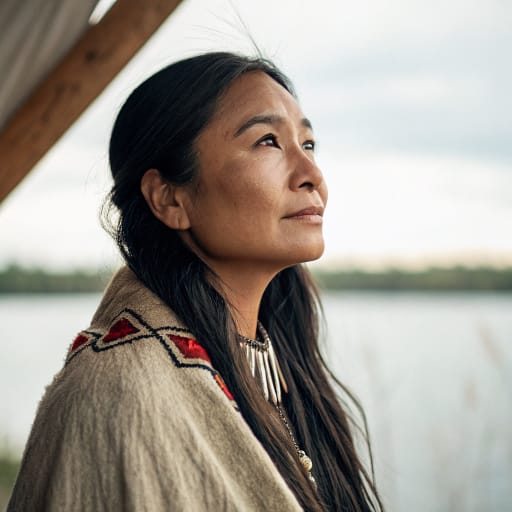
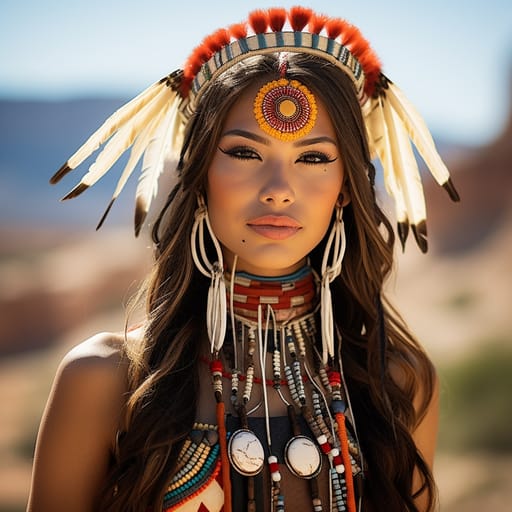
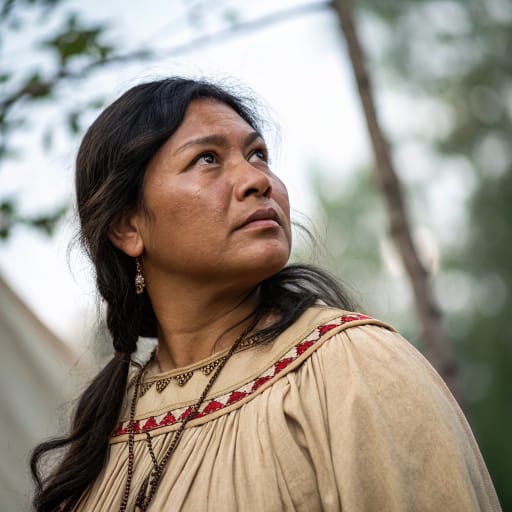
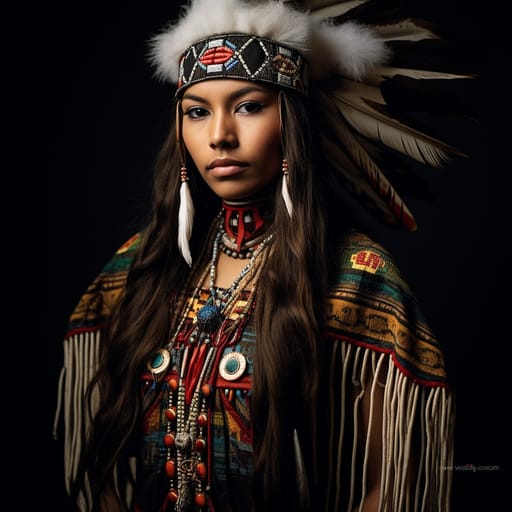
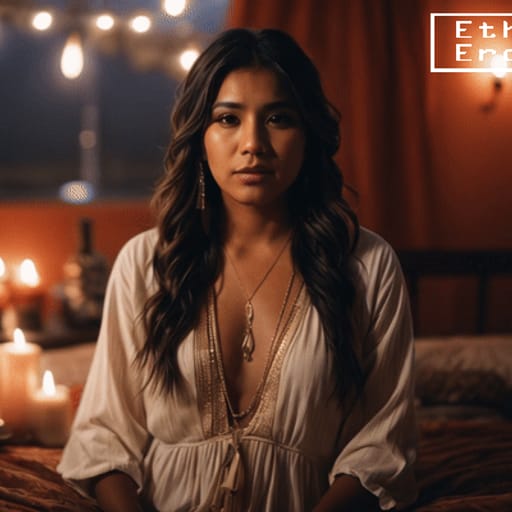
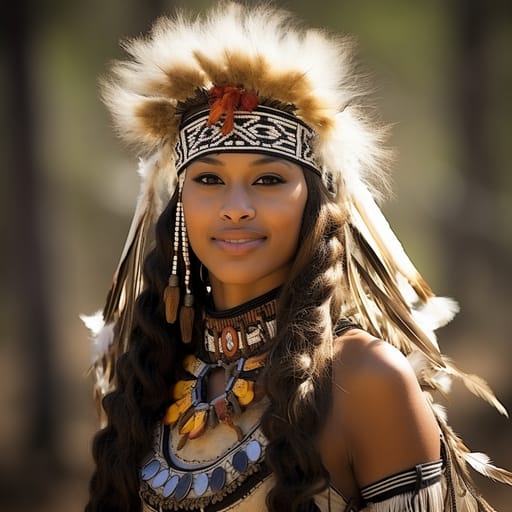
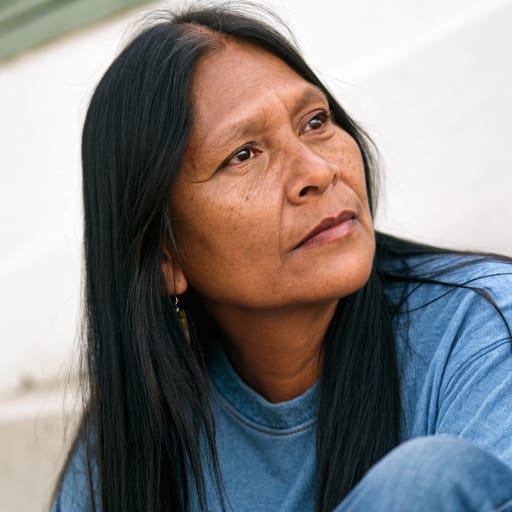
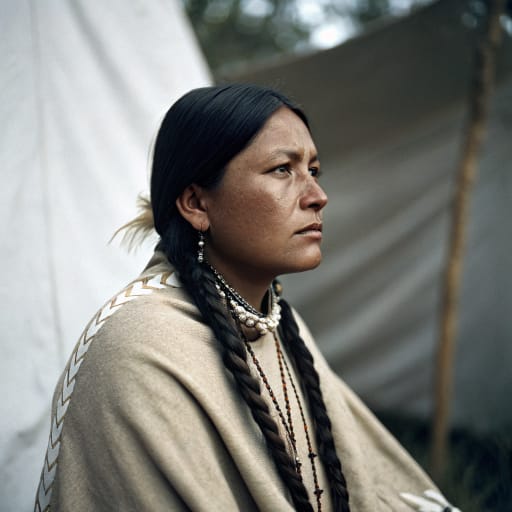
Typical Alabama Phenotypes
Reference for AI generation: hair, eyes, skin, facial structure, build
Alabama Body & Anatomy Reference
Anatomy by feature, Indigenous Northern American / Algonquian-Iroquoian phenotype
Alabama Boobs & Breasts
Bust reference for Alabama women: medium cup, moderate projection, which is typical of Indigenous Northern American / Algonquian-Iroquoian ancestry. Areolas measure about 30-44mm across, with medium-brown pigmentation. Body type (mesomorph, broader frame in northern Indigenous populations) shapes the bust as well, so Alabama tits are usually full and moderate projection. In AI imagery, keep the forward-set shape rather than drifting toward the smaller East Asian bust.
Alabama Ass & Hips
The Alabama ass is typically medium, moderate-to-full projection, which sets it apart from the slim East Asian narrow-hip profile. Underneath, the pelvis shows medium iliac crests, part of the Indigenous Northern American / Algonquian-Iroquoian skeletal pattern. For Alabama butt pics and AI renders, match that silhouette and the overall build (mesomorph, broader frame in northern Indigenous populations).
Alabama Vagina & Pussy
Alabama pussy and vulvar anatomy presents medium-brown labial pigmentation, consistent with the Indigenous Northern American / Algonquian-Iroquoian phenotype's pigmentation pattern. Alabama pubic hair is typically straight medium-coarse texture, in the inverted-triangle pattern. For anatomically accurate Alabama pussy renders the labial coloration should match the surrounding copper to medium-brown skin tone with a continuous gradient, and the hair should keep its straight medium-coarse texture.
Alabama Dicks & Penis
Alabama dicks follow the Indigenous Northern American / Algonquian-Iroquoian reference data: regional mean ~13cm erect; moderate girth; medium-brown shaft pigmentation. Shaft color should track the copper to medium-brown skin tone with a smooth change toward the glans, and Alabama pubic hair keeps its straight medium-coarse texture.
Alabama Body, Curves & Build
Alabama body type and overall build presents as mesomorph, broader frame in northern Indigenous populations, with mean adult female BMI 25-28: the characteristic Indigenous Northern American / Algonquian-Iroquoian habitus. Alabama curves and proportions should keep the regional skeletal frame (height, shoulder-to-hip ratio, limb proportions) rather than a generic mesomorph default.
Alabama Skin Tone & Hair Texture
Alabama skin sits in the copper to medium-brown (Fitzpatrick III-V) band. Hair is typically straight 1A, dark-brown to black, often thick and dense, in keeping with the Indigenous Northern American / Algonquian-Iroquoian phenotype. In nude renders the skin should stay one even tone from face to body, and body, pubic and head hair should match.
Explore phenotype categories
Structured taxonomy with peer-reviewed scales · 22 anatomical categories
Erotic Poses & Sex Positions
From the pose catalog: 219 named positions with reference skeletons
Frequently asked questions about Alabama people
Where is the Alabama homeland?
The Alabama homeland is Historically the upper Alabama River in central Alabama; today the Alabama-Coushatta reservation near Livingston, Polk County, Texas, with a related community at Wetumka, Oklahoma in North America.
What language do Alabama people speak?
Alabama people primarily speak Alabama, or Albaamo innaaɬiilka (Muskogean), closely related to Koasati; English.
What religion do Alabama people practice?
The predominant religion among Alabama people is Predominantly Presbyterian Christianity, alongside Green Corn ceremonial practice.






Make your own Alabama images
Five a day, free, no credits to buy. The studio starts from this group's phenotype data, so you can set body type, pose and style and keep the traits accurate.
Start with Alabama