No portrait yet
Zacatecos Erotic
High plateau of north-central Mexico: most of present-day Zacatecas and northeastern Durango, Mexico
Zacateco (extinct and unclassified; known from few recorded words, possibly Uto-Aztecan)
Indigenous beliefs, poorly documented; converted to Catholicism through Franciscan missions in the colonial era
One of the Chichimeca nations, with the Guachichiles, Guamares and Pames; bordered by Tepehuanes to the west and Caxcanes to the south
About Zacatecos People
The Zacatecos were a Chichimeca people who lived on the high, dry plateau that is now the Mexican state of Zacatecas and the northeastern part of Durango. They were there before the Spanish arrived and into the early colonial period. War, mission life and intermarriage then absorbed them into the population of northern Mexico, where many of their descendants still live. Their name comes from Nahuatl. It is built on zacatl, grass, and usually means something like the people of the grass country. Outsiders gave them that name, and today it belongs to a state, its capital and everyone born there, nearly all of whom have never heard a word of the original language.
They lived in small bands that moved with the seasons, mostly by hunting and gathering: deer and rabbit, mesquite pods, and the fruit and pads of the prickly pear. The Aztecs lumped them together with the other northern nomads as Chichimecas, a word with the sense of wild or uncivilized, and Spanish writers adopted the term wholesale. Only a handful of words and place names survive from their language. It remains unclassified, though some have suggested a link to the Uto-Aztecan family, which includes the Tepehuan spoken to their west. Spanish writers described their warfare in detail and their beliefs hardly at all, so their religious life is mostly lost.
Everything changed in 1546, when a Spanish party found silver at the foot of the Cerro de la Bufa, deep in Zacateco territory. A mining boomtown rose within a few years, and a road to Mexico City followed, carrying silver south and supplies, livestock and settlers north. The Zacatecos and their Guachichil neighbors answered by raiding the wagon trains and ranches. By around 1550 the frontier had become the Chichimeca War, a forty-year fight between archers and armored Spanish cavalry that the colonial government could not win by force. It ended in the 1590s with what historians call peace by purchase. The Crown sent food, cloth and tools to bands that agreed to settle, sent Franciscan missionaries to live among them, and planted colonies of Tlaxcalan allies from central Mexico next to them as neighbors and examples.
The settlement worked, and it ended the Zacatecos as a separate people. Within a few generations of mission life, epidemics and intermarriage, the language fell silent and the bands disappeared from the record as distinct nations. What they left behind is quieter than a ruin: a place name, a frontier war that shaped how Mexico's north was settled, and ancestry carried by many families in Zacatecas, Durango and the country's big cities.
Related ethnic groups
Groups that share Zacatecos's homeland, region, language, or religious tradition. These are likely candidates for comparative phenotype reference.
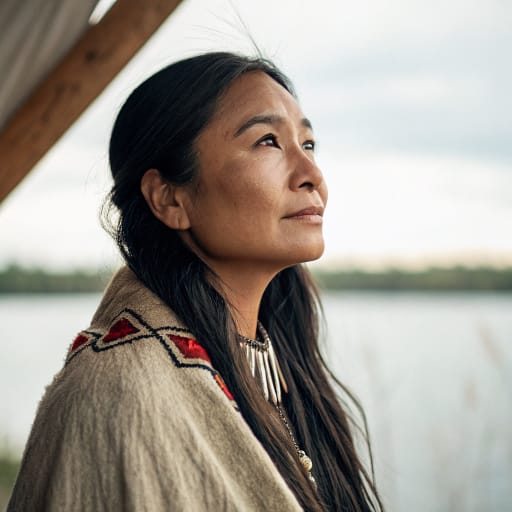
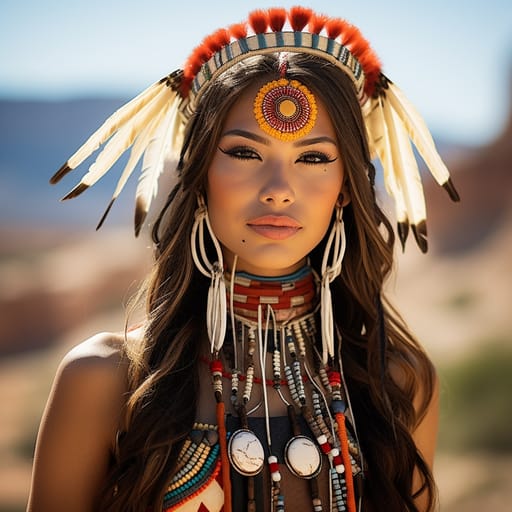
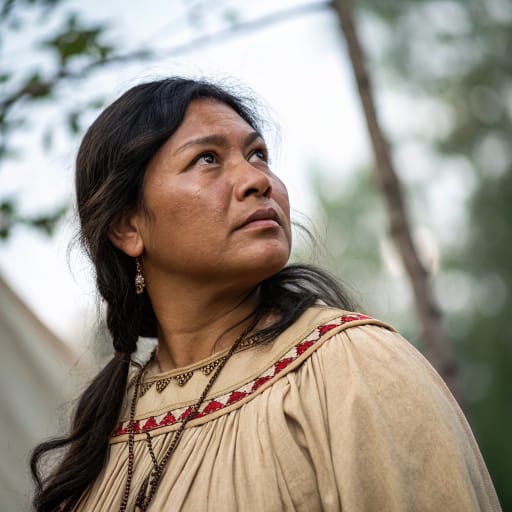
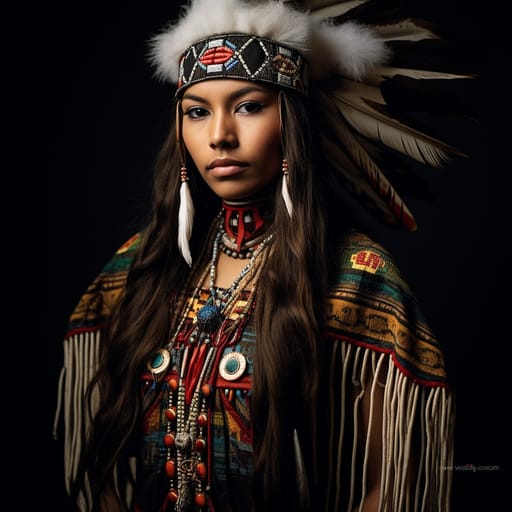
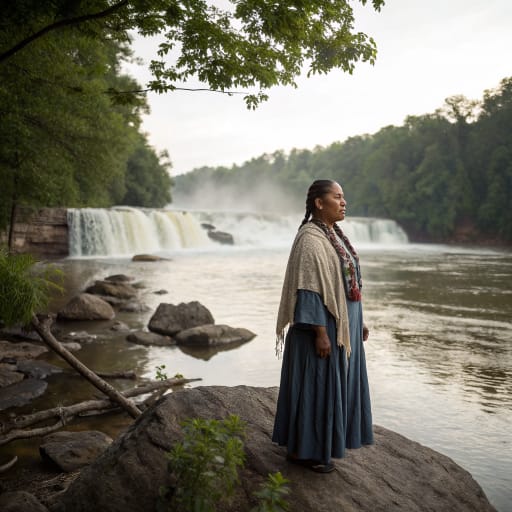
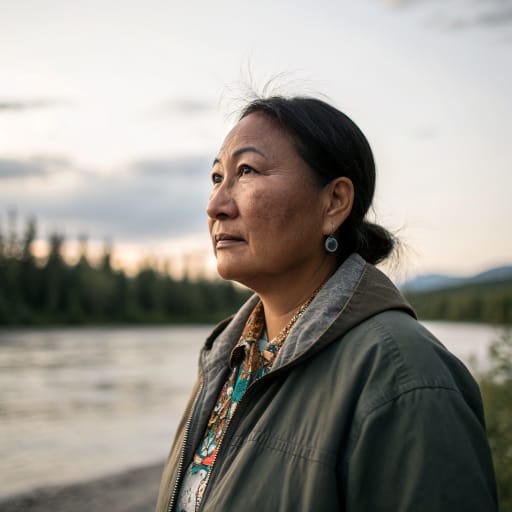
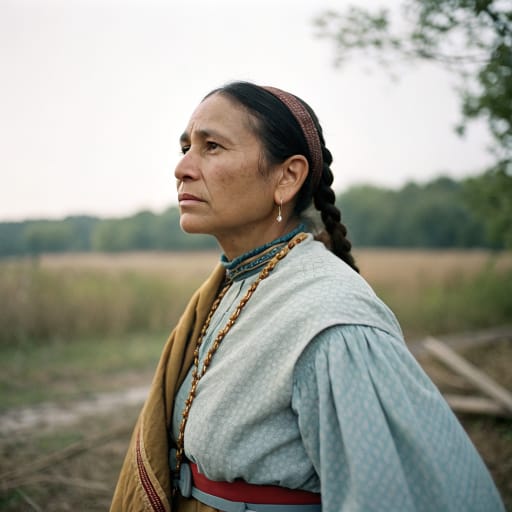
Typical Zacatecos Phenotypes
Reference for AI generation: hair, eyes, skin, facial structure, build
Zacatecos Body & Anatomy Reference
Indigenous Northern American / Algonquian-Iroquoian phenotype: anatomy reference for AI nude generation
Zacatecos Boobs & Breasts
The typical Zacatecos bust is medium cup, moderate projection, in line with the wider Indigenous Northern American / Algonquian-Iroquoian pattern. Areolas usually fall in the 30-44mm range, with medium-brown areolar pigmentation against the copper-to-medium-brown skin tone. Compared with the smaller East Asian bust, Zacatecos breasts sit forward and are generally full and moderate projection. A faithful AI render of Zacatecos tits keeps that shape and areola size.
Zacatecos Ass & Hips
Butt shape among Zacatecos women: medium, moderate-to-full projection, over medium iliac crests. This follows Indigenous Northern American / Algonquian-Iroquoian ancestry and looks quite unlike the slim East Asian narrow-hip profile. An accurate Zacatecos ass in adult AI imagery keeps both the silhouette and the overall build (mesomorph, broader frame in northern Indigenous populations) instead of a generic average.
Zacatecos Vagina & Pussy
Vulvar anatomy among Zacatecos women: medium-brown labial pigmentation. Pubic hair tends to be straight medium-coarse texture, in the usual inverted-triangle pattern. Both follow Indigenous Northern American / Algonquian-Iroquoian pigmentation, which is why Zacatecos pussy renders should not fall back on a pale, sparse Western template.
Zacatecos Dicks & Penis
The Zacatecos cock profile, from Indigenous Northern American / Algonquian-Iroquoian anthropometric data: regional mean ~13cm erect; moderate girth; medium-brown shaft pigmentation. Pubic hair has a straight medium-coarse texture and forms the usual inverted-V pattern. Whether Zacatecos men are circumcised follows religious and cultural practice rather than phenotype.
Zacatecos Body, Curves & Build
Build and curves among Zacatecos women follow the Indigenous Northern American / Algonquian-Iroquoian pattern: mesomorph, broader frame in northern Indigenous populations, mean adult female BMI 25-28. Proportions matter as much as skin tone, so Zacatecos figures should keep their regional height and limb ratios.
Zacatecos Skin Tone & Hair Texture
The Zacatecos skin range is copper to medium-brown (Fitzpatrick III-V), and hair tends to be straight 1A, dark-brown to black, often thick and dense. That combination marks the Indigenous Northern American / Algonquian-Iroquoian phenotype, and skin tone is the trait AI generators most often get wrong for Zacatecos women.
Explore phenotype categories
Structured taxonomy with peer-reviewed scales · 22 anatomical categories
Erotic Poses & Sex Positions
From the pose catalog: 219 named positions with reference skeletons
Frequently asked questions about Zacatecos people
Where is the Zacatecos homeland?
The Zacatecos homeland is High plateau of north-central Mexico: most of present-day Zacatecas and northeastern Durango, Mexico in North America.
What language do Zacatecos people speak?
Zacatecos people primarily speak Zacateco (extinct and unclassified; known from few recorded words, possibly Uto-Aztecan).
What religion do Zacatecos people practice?
The predominant religion among Zacatecos people is Indigenous beliefs, poorly documented; converted to Catholicism through Franciscan missions in the colonial era.






Make your own Zacatecos images
Five a day, free, no credits to buy. The studio starts from this group's phenotype data, so you can set body type, pose and style and keep the traits accurate.
Start with Zacatecos