Help us get this right
Does this portrait look right for Mascouten?
Nobody has judged this one yet. You would be the first.
Mascouten Erotic
Prairie and river country of what is now southern Michigan, northern Indiana, Illinois and southeastern Wisconsin, United States
Mascouten, a Central Algonquian speech (Algic) reported by French observers as all but identical to Kickapoo; almost nothing of it was recorded before it ceased to be spoken separately
Traditional Algonquian belief centered on manitous, vision and fasting; Jesuit mission contact from 1670 with little lasting conversion
Central Algonquian, closely tied to the Kickapoo and grouped with the Sauk, Meskwaki and Kickapoo cluster; descendants absorbed into the Kickapoo and Potawatomi
About Mascouten People
The Mascouten were an Algonquian people of the southern Great Lakes prairies, first named in French records in the early 1600s and gone as a separate nation by the early 1800s, when the last of them had merged into the Kickapoo and, in smaller numbers, the Potawatomi and the Meskwaki. Their name comes from an Algonquian word for open prairie, and that is the thing to hold onto: they belonged to the grass, to the seam where the eastern woodlands break up into the tallgrass country of Illinois and Indiana. The French misheard the root, which also carries the sense of fire, and wrote them into the record as the Nation du Feu, the Fire Nation. The mistranslation outlived them. They farmed corn, beans and squash in the river bottoms and left those fields seasonally to hunt bison out on the prairie, a double economy that set them between the woodland villagers to the east and the plains hunters to the west. Their speech was Central Algonquian and, by the account of nearly every Frenchman who heard both, close enough to Kickapoo to be the same language; almost none of it was written down before it stopped being spoken. Religious life ran on manitous, powers met in dream and fasting rather than through any standing priesthood, and the mission Claude Allouez opened among them in 1670 left little behind.
The seventeenth century pushed them hard. Iroquois war parties drove them west of Lake Michigan in the 1640s and 1650s, and by 1670 they were living in a palisaded town on the upper Fox River in Wisconsin, sharing its walls with Miami and Kickapoo neighbors. They drifted back south toward the Wabash over the following decades. In the winter of 1712 an allied war party struck a Mascouten hunting camp on the St. Joseph River; the survivors made for Detroit, where Mascouten and Meskwaki together were besieged and cut to pieces, the opening act of a twenty year French war known as the Fox Wars. The Mascouten fought beside the Meskwaki, then, when the wind changed in the late 1720s, against them, and came out of it thinned and scattered. After that they appear in the records less and less often, and always closer to the Kickapoo, until the two names stop being two names. Nobody exterminated the Mascouten and nobody recorded the moment they ended; they were absorbed, the way small nations under pressure usually are. Their descendants are in the Kickapoo communities of Kansas, Oklahoma and Coahuila today, carrying an ancestry that no longer has a separate name attached to it.
Related ethnic groups
Groups that share Mascouten's homeland, region, language, or religious tradition. These are likely candidates for comparative phenotype reference.
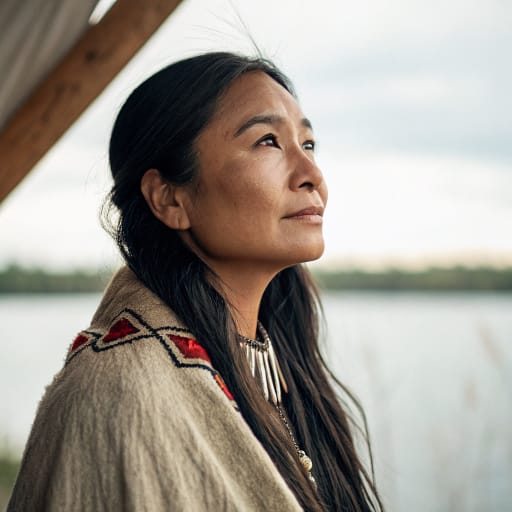
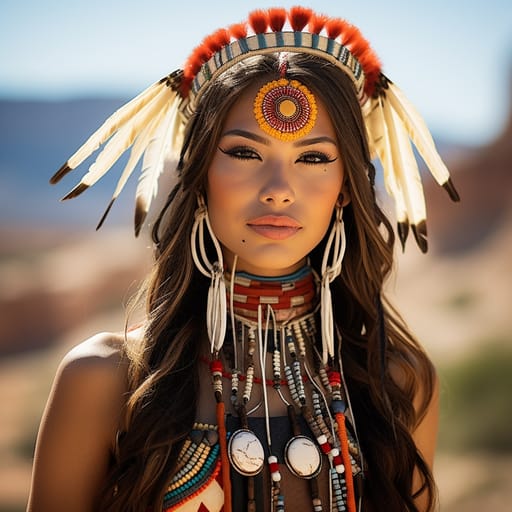
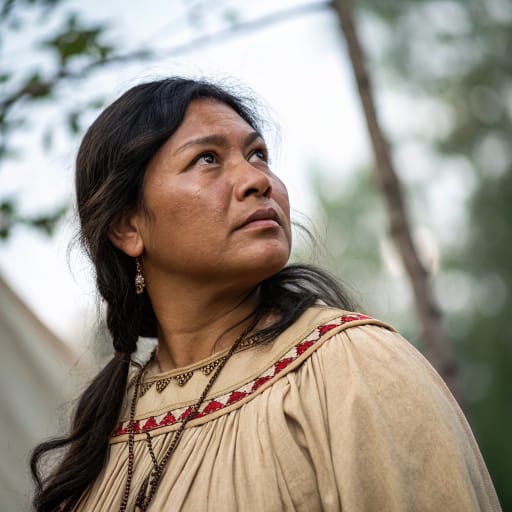
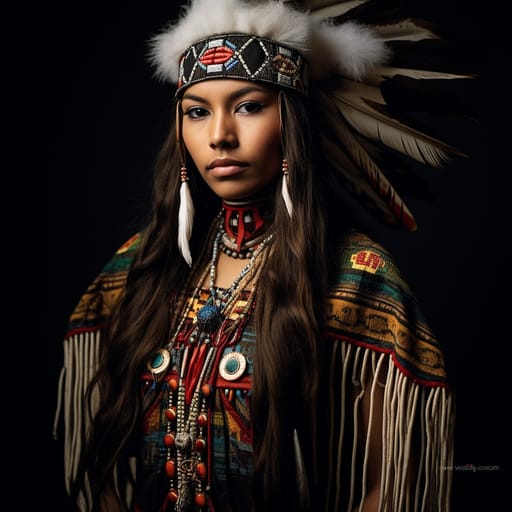
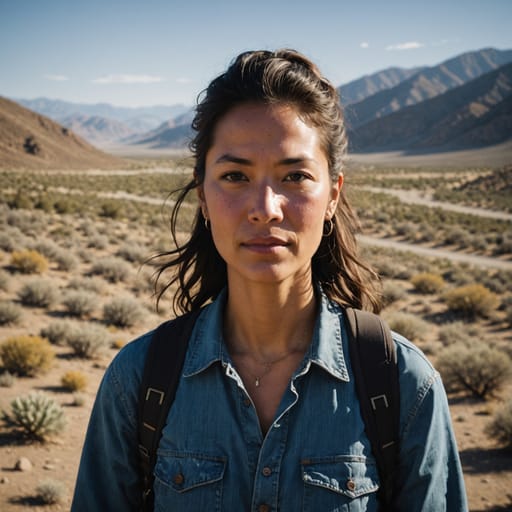
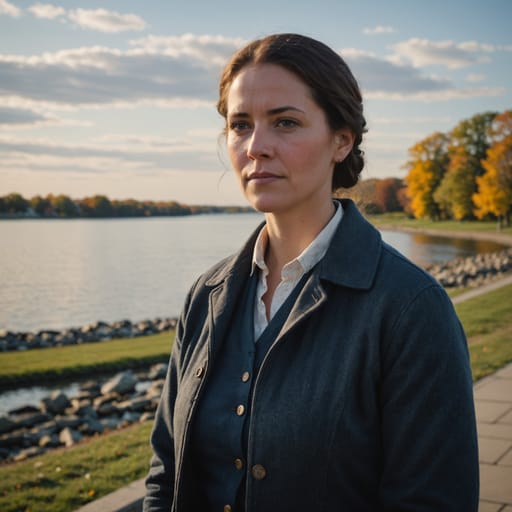
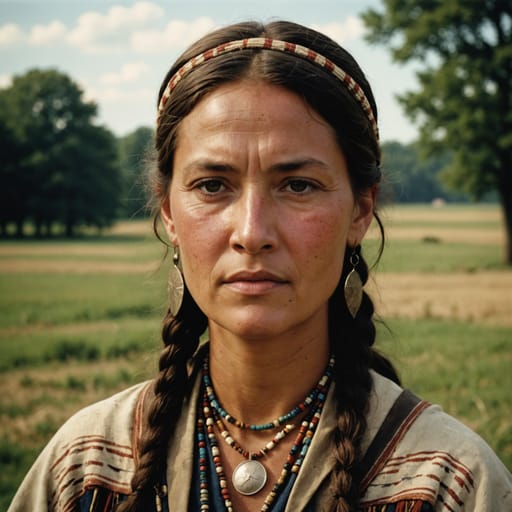
Typical Mascouten Phenotypes
Reference for AI generation: hair, eyes, skin, facial structure, build
Mascouten Body & Anatomy Reference
Anatomy by feature, Indigenous Northern American / Algonquian-Iroquoian phenotype
Mascouten Boobs & Breasts
Bust reference for Mascouten women: medium cup, moderate projection, which is typical of Indigenous Northern American / Algonquian-Iroquoian ancestry. Areolas measure about 30-44mm across, with medium-brown pigmentation. Body type (mesomorph, broader frame in northern Indigenous populations) shapes the bust as well, so Mascouten tits are usually full and moderate projection. In AI imagery, keep the forward-set shape rather than drifting toward the smaller East Asian bust.
Mascouten Ass & Hips
The Mascouten ass is typically medium, moderate-to-full projection, which sets it apart from the slim East Asian narrow-hip profile. Underneath, the pelvis shows medium iliac crests, part of the Indigenous Northern American / Algonquian-Iroquoian skeletal pattern. For Mascouten butt pics and AI renders, match that silhouette and the overall build (mesomorph, broader frame in northern Indigenous populations).
Mascouten Vagina & Pussy
Mascouten pussy and vulvar anatomy presents medium-brown labial pigmentation, consistent with the Indigenous Northern American / Algonquian-Iroquoian phenotype's pigmentation pattern. Mascouten pubic hair is typically straight medium-coarse texture, in the inverted-triangle pattern. For anatomically accurate Mascouten pussy renders the labial coloration should match the surrounding copper to medium-brown skin tone with a continuous gradient, and the hair should keep its straight medium-coarse texture.
Mascouten Dicks & Penis
Mascouten dicks follow the Indigenous Northern American / Algonquian-Iroquoian reference data: regional mean ~13cm erect; moderate girth; medium-brown shaft pigmentation. Shaft color should track the copper to medium-brown skin tone with a smooth change toward the glans, and Mascouten pubic hair keeps its straight medium-coarse texture.
Mascouten Body, Curves & Build
Mascouten body type and overall build presents as mesomorph, broader frame in northern Indigenous populations, with mean adult female BMI 25-28: the characteristic Indigenous Northern American / Algonquian-Iroquoian habitus. Mascouten curves and proportions should keep the regional skeletal frame (height, shoulder-to-hip ratio, limb proportions) rather than a generic mesomorph default.
Mascouten Skin Tone & Hair Texture
Mascouten skin sits in the copper to medium-brown (Fitzpatrick III-V) band. Hair is typically straight 1A, dark-brown to black, often thick and dense, in keeping with the Indigenous Northern American / Algonquian-Iroquoian phenotype. In nude renders the skin should stay one even tone from face to body, and body, pubic and head hair should match.
Explore phenotype categories
Structured taxonomy with peer-reviewed scales · 22 anatomical categories
Erotic Poses & Sex Positions
From the pose catalog: 219 named positions with reference skeletons
Frequently asked questions about Mascouten people
Where is the Mascouten homeland?
The Mascouten homeland is Prairie and river country of what is now southern Michigan, northern Indiana, Illinois and southeastern Wisconsin, United States in North America.
What language do Mascouten people speak?
Mascouten people primarily speak Mascouten, a Central Algonquian speech (Algic) reported by French observers as all but identical to Kickapoo; almost nothing of it was recorded before it ceased to be spoken separately.
What religion do Mascouten people practice?
The predominant religion among Mascouten people is Traditional Algonquian belief centered on manitous, vision and fasting; Jesuit mission contact from 1670 with little lasting conversion.






Make your own Mascouten images
Five a day, free, no credits to buy. The studio starts from this group's phenotype data, so you can set body type, pose and style and keep the traits accurate.
Start with Mascouten