No portrait yet
Wea Erotic
Middle Wabash River valley in present-day west-central Indiana, United States; later removed to Missouri, eastern Kansas and northeastern Oklahoma
Wea dialect of Miami-Illinois (Algonquian), shared with the Miami, Piankashaw, Peoria and Kaskaskia; now being revived
Traditional Algonquian beliefs centered on manitous and seasonal ceremony; later partial conversion to Christianity through Catholic and Protestant missions
A Miami-speaking division closely tied to the Miami and Piankashaw; confederated in 1854 with the Peoria, Kaskaskia and Piankashaw, now part of the Peoria Tribe of Indians of Oklahoma
About Wea People
The Wea were an Algonquian people who held the middle Wabash River valley, in present-day west-central Indiana, through the eighteenth century, before treaties and removal carried them west to Missouri, Kansas and finally Oklahoma, where their descendants are citizens of the Peoria Tribe of Indians of Oklahoma. Their own name, Waayaahtanwa, is usually glossed as people of the whirlpool, and the French rendered it Ouiatenon. They spoke a dialect of Miami-Illinois close enough to Miami proper that outsiders often counted them as a Miami band. Still, they kept their own chiefs, signed their own treaties, and French, British and American officials all dealt with them as a nation in their own right. Like their relatives, they planted corn, beans and squash around summer villages and scattered to hunting camps in the cold months. In 1717 the French built Fort Ouiatenon beside their towns, near present-day Lafayette. It was the first fortified European post in what became Indiana, and it grew into a fur-trade crossroads with Kickapoo and Mascouten villages nearby. When Pontiac's War reached the Wabash in 1763, local warriors took the small British garrison prisoner without bloodshed.
The American era was far rougher. In 1791 Kentucky volunteers under Charles Scott and then James Wilkinson burned the Wea towns and cut down their standing corn, and a run of land cessions followed. Treaties in 1809 and 1818 stripped away most of their Indiana land. Within a generation most Wea had crossed the Mississippi, first into Missouri and then onto a reserve in eastern Kansas, where Wea Creek still carries their name. Disease and repeated moves cut their numbers hard. In 1854 they joined the Piankashaw, Peoria and Kaskaskia, who also spoke Miami-Illinois, in a single confederated tribe that moved to Indian Territory in the late 1860s. That merged nation outlasted federal termination in the 1950s and regained recognition in 1978. The Wea are gone as a separate nation but not as a line of descent: Peoria citizens still trace Wea ancestry. Miami-Illinois had no fluent speakers left by the 1960s, but Miami and Peoria language programs are teaching it again from old records. Near Lafayette the name still marks a township and a creek, and a replica blockhouse close to the original fort site hosts the Feast of the Hunters' Moon every fall.
Related ethnic groups
Groups that share Wea's homeland, region, language, or religious tradition. These are likely candidates for comparative phenotype reference.
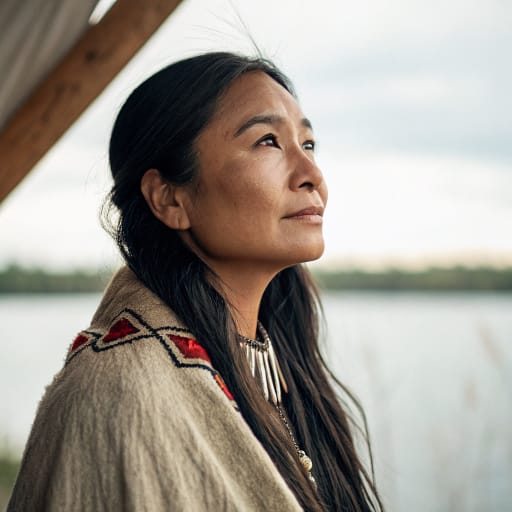
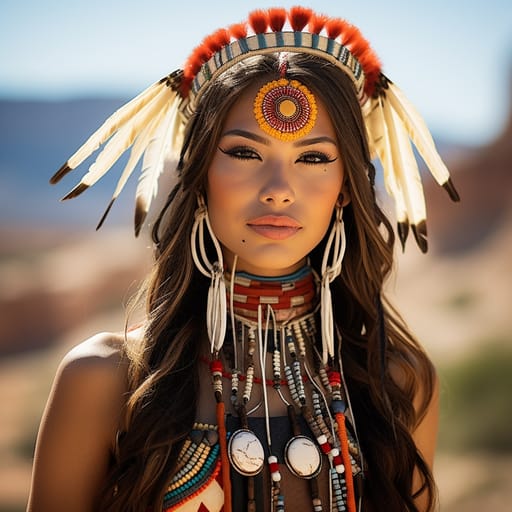
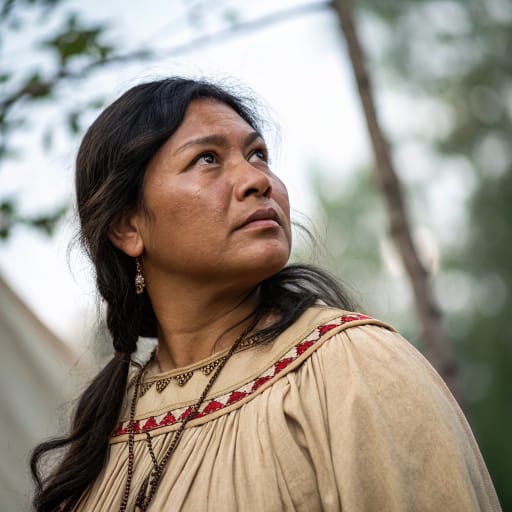
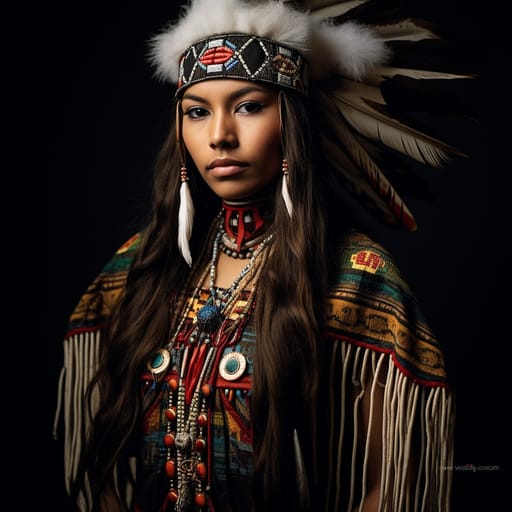

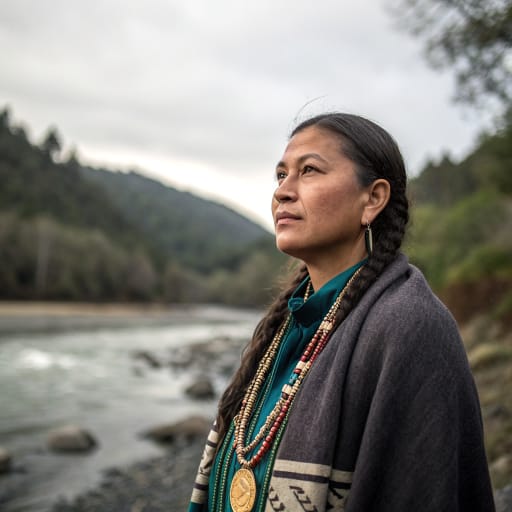
Typical Wea Phenotypes
Reference for AI generation: hair, eyes, skin, facial structure, build
Wea Body & Anatomy Reference
Indigenous Northern American / Algonquian-Iroquoian phenotype: anatomy reference for AI nude generation
Wea Boobs & Breasts
Bust reference for Wea women: medium cup, moderate projection, which is typical of Indigenous Northern American / Algonquian-Iroquoian ancestry. Areolas measure about 30-44mm across, with medium-brown pigmentation. Body type (mesomorph, broader frame in northern Indigenous populations) shapes the bust as well, so Wea tits are usually full and moderate projection. In AI imagery, keep the forward-set shape rather than drifting toward the smaller East Asian bust.
Wea Ass & Hips
The Wea ass is typically medium, moderate-to-full projection, which sets it apart from the slim East Asian narrow-hip profile. Underneath, the pelvis shows medium iliac crests, part of the Indigenous Northern American / Algonquian-Iroquoian skeletal pattern. For Wea butt pics and AI renders, match that silhouette and the overall build (mesomorph, broader frame in northern Indigenous populations).
Wea Vagina & Pussy
Wea pussy and vulvar anatomy presents medium-brown labial pigmentation, consistent with the Indigenous Northern American / Algonquian-Iroquoian phenotype's pigmentation pattern. Wea pubic hair is typically straight medium-coarse texture, in the inverted-triangle pattern. For anatomically accurate Wea pussy renders the labial coloration should match the surrounding copper to medium-brown skin tone with a continuous gradient, and the hair should keep its straight medium-coarse texture.
Wea Dicks & Penis
Wea dicks follow the Indigenous Northern American / Algonquian-Iroquoian reference data: regional mean ~13cm erect; moderate girth; medium-brown shaft pigmentation. Shaft color should track the copper to medium-brown skin tone with a smooth change toward the glans, and Wea pubic hair keeps its straight medium-coarse texture.
Wea Body, Curves & Build
Wea body type and overall build presents as mesomorph, broader frame in northern Indigenous populations, with mean adult female BMI 25-28: the characteristic Indigenous Northern American / Algonquian-Iroquoian habitus. Wea curves and proportions should keep the regional skeletal frame (height, shoulder-to-hip ratio, limb proportions) rather than a generic mesomorph default.
Wea Skin Tone & Hair Texture
Wea skin sits in the copper to medium-brown (Fitzpatrick III-V) band. Hair is typically straight 1A, dark-brown to black, often thick and dense, in keeping with the Indigenous Northern American / Algonquian-Iroquoian phenotype. In nude renders the skin should stay one even tone from face to body, and body, pubic and head hair should match.
Explore phenotype categories
Structured taxonomy with peer-reviewed scales · 22 anatomical categories
Erotic Poses & Sex Positions
From the pose catalog: 219 named positions with reference skeletons
Frequently asked questions about Wea people
Where is the Wea homeland?
The Wea homeland is Middle Wabash River valley in present-day west-central Indiana, United States; later removed to Missouri, eastern Kansas and northeastern Oklahoma in North America.
What language do Wea people speak?
Wea people primarily speak Wea dialect of Miami-Illinois (Algonquian), shared with the Miami, Piankashaw, Peoria and Kaskaskia; now being revived.
What religion do Wea people practice?
The predominant religion among Wea people is Traditional Algonquian beliefs centered on manitous and seasonal ceremony; later partial conversion to Christianity through Catholic and Protestant missions.






Make your own Wea images
Five a day, free, no credits to buy. The studio starts from this group's phenotype data, so you can set body type, pose and style and keep the traits accurate.
Start with Wea