Help us get this right
Does this portrait look right for Karuk?
Nobody has judged this one yet. You would be the first.
Karuk Erotic
The middle Klamath River canyon, Siskiyou and Humboldt counties, far northern California, United States
Karuk (language isolate, sometimes assigned to the unproven Hokan grouping); English
Indigenous World Renewal tradition, still actively practiced; Christian affiliation in some families
No formal branches. Historically organized as autonomous river villages including Katimiin, Panamniik, Ameekyaaraam and Inaam; culturally grouped with the Yurok and Hupa in northwestern California
About Karuk People
The Karuk named themselves for a direction. Káruk means upriver, and the neighboring Yurok take their name from yúruk, downriver: both are Karuk words, both answers to the same question about who lives where along one river. The older word the Karuk use for themselves is simpler, áraar, a person. Their country is the middle Klamath in far northern California, a steep timbered canyon running roughly from Bluff Creek up past Happy Camp, where the river does most of the organizing and villages sat on the flats at creek mouths. Katimiin, at the confluence with the Salmon River, is the center of the world and still the ceremonial center. The Karuk language is an isolate with no proven relatives, which puts it in odd company: Yurok downstream is Algic, a distant cousin of Algonquian, and Hupa on the Trinity is Athabaskan, related to Navajo. Three unrelated languages, one shared way of living. All three reckoned wealth in dentalium shell, obsidian blades and white deerskins, settled offenses by negotiated payment rather than punishment, and kept the same round of world renewal ceremonies: the Jump Dance, the Deerskin Dance, the Brush Dance. The Karuk word for what those ceremonies accomplish is pikyav, to fix it. The tribe now uses that word for its restoration and education work, which is not a coincidence.
Two things set the Karuk apart from the standard account of a California tribe. They are among the most stubborn fire practitioners in North America, burning the understory on a deliberate cycle to keep tanoak bearing clean acorns, hazel throwing the straight shoots basketweaving needs, and beargrass coming back white and pliable, and they have spent decades pressing federal agencies to concede that a century of fire suppression was an error. They also still fish with dip nets from rock platforms at Ishi Pishi Falls, the last place in California where that is done. The gold rush reached them in 1850 and took nearly everything. The treaties California negotiated the following year were never ratified, so the Karuk received no reservation, and their holdings today are scattered parcels around Happy Camp, Orleans and Yreka. Federal recognition came in 1979. The long campaign was over the river: four hydroelectric dams that blocked several hundred miles of spawning habitat and left warm, sick water below them, and a 2002 fish kill that stranded tens of thousands of adult salmon in the lower Klamath. Working with the Yurok, Hupa and Klamath tribes, they got the dams out in 2024, and the fish went back up. Fluent speakers are very few, and the language work is urgent.
Related ethnic groups
Groups that share Karuk's homeland, region, language, or religious tradition. These are likely candidates for comparative phenotype reference.
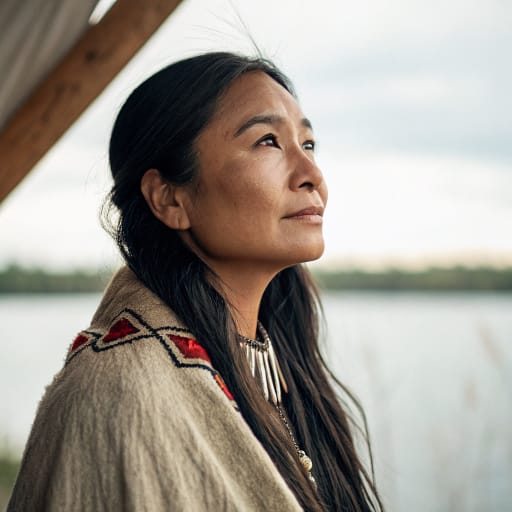
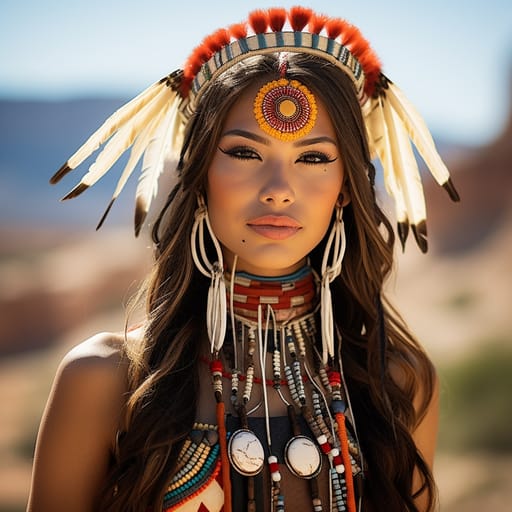
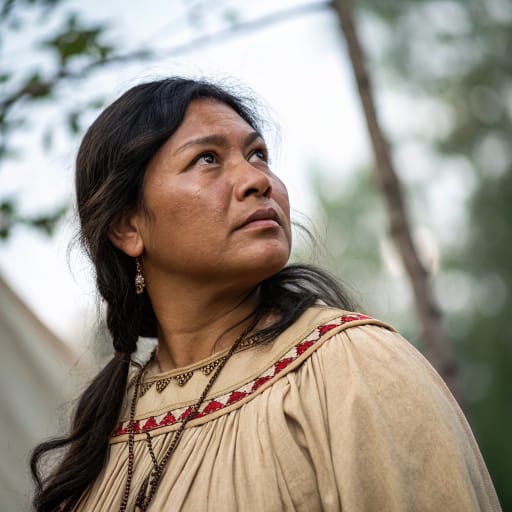
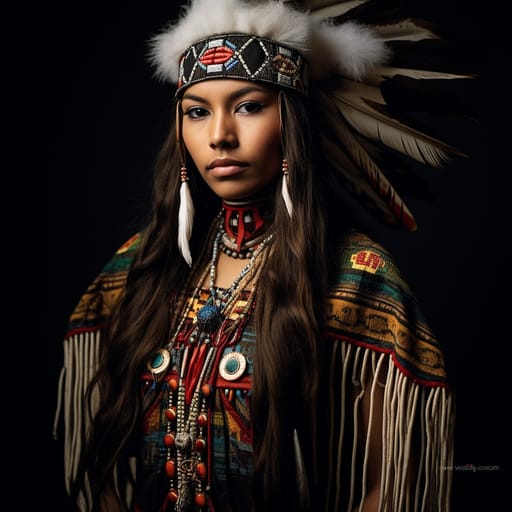
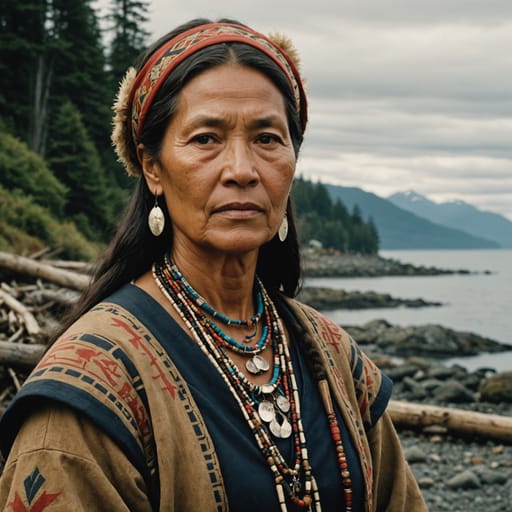
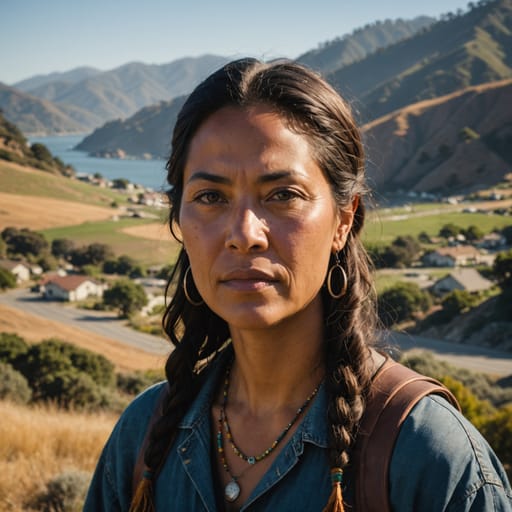
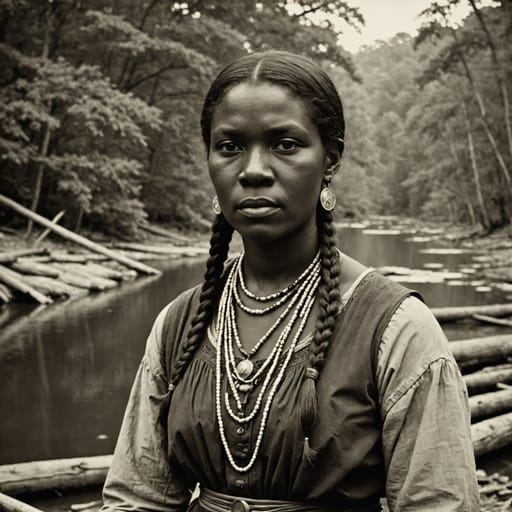
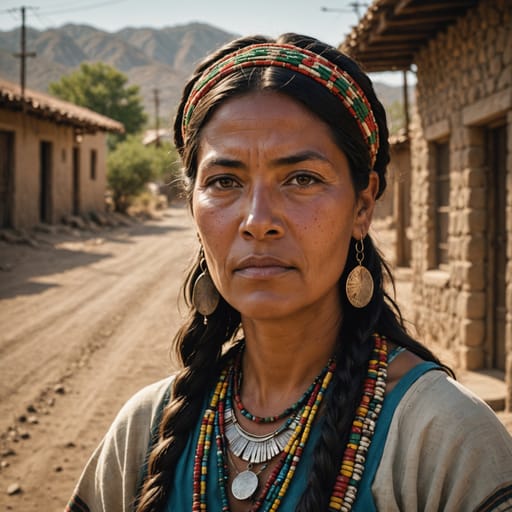
Typical Karuk Phenotypes
Reference for AI generation: hair, eyes, skin, facial structure, build
Karuk Body & Anatomy Reference
Anatomy by feature, Indigenous Northern American / Algonquian-Iroquoian phenotype
Karuk Boobs & Breasts
Karuk boobs follow the Indigenous Northern American / Algonquian-Iroquoian profile: medium cup, moderate projection. Areolar diameter is usually 30-44mm, and the coloring is medium-brown areolar pigmentation against the copper-to-medium-brown skin tone. Breast shape tracks body composition (mesomorph, broader frame in northern Indigenous populations, mean adult female BMI 25-28), so Karuk breasts tend to be full and moderate projection. Expect a forward-set shape, not the smaller East Asian bust.
Karuk Ass & Hips
Karuk ass and hip morphology presents as medium, moderate-to-full projection, distinctly different from the slim East Asian narrow-hip profile. The Karuk pelvic profile shows medium iliac crests, anchored in the Indigenous Northern American / Algonquian-Iroquoian skeletal pattern. Karuk butt shots in adult AI imagery should render the medium, moderate-to-full projection silhouette with the overall build (mesomorph, broader frame in northern Indigenous populations) and the fat distribution typical of the Indigenous Northern American / Algonquian-Iroquoian phenotype.
Karuk Vagina & Pussy
Karuk pussy anatomy typically shows medium-brown labial pigmentation. Pubic hair is usually straight medium-coarse texture. In AI-generated Karuk nudes, labial color should blend into the copper to medium-brown skin with a gradual transition, and the hair should keep its straight medium-coarse texture.
Karuk Dicks & Penis
Penis reference for Karuk men: regional mean ~13cm erect, moderate girth. Coloring: medium-brown shaft pigmentation. An accurate Karuk cock in AI imagery matches the surrounding copper to medium-brown skin rather than a generic porn default. Circumcision depends on religion and custom, not ancestry.
Karuk Body, Curves & Build
The Karuk figure is generally mesomorph, broader frame in northern Indigenous populations, with mean adult female BMI 25-28, characteristic of Indigenous Northern American / Algonquian-Iroquoian ancestry. AI image tools tend to flatten regional body types into a few stock shapes; here the Karuk build is kept as its own reference.
Karuk Skin Tone & Hair Texture
Skin: copper to medium-brown (Fitzpatrick III-V). Hair: straight 1A, dark-brown to black, often thick and dense. Both are typical of Indigenous Northern American / Algonquian-Iroquoian ancestry. The most common mistake in AI nudes of Karuk women is a body rendered lighter than the face.
Explore phenotype categories
Structured taxonomy with peer-reviewed scales · 22 anatomical categories
Erotic Poses & Sex Positions
From the pose catalog: 219 named positions with reference skeletons
Frequently asked questions about Karuk people
Where is the Karuk homeland?
The Karuk homeland is The middle Klamath River canyon, Siskiyou and Humboldt counties, far northern California, United States in North America.
What language do Karuk people speak?
Karuk people primarily speak Karuk (language isolate, sometimes assigned to the unproven Hokan grouping); English.
What religion do Karuk people practice?
The predominant religion among Karuk people is Indigenous World Renewal tradition, still actively practiced; Christian affiliation in some families.






Make your own Karuk images
Five a day, free, no credits to buy. The studio starts from this group's phenotype data, so you can set body type, pose and style and keep the traits accurate.
Start with Karuk