No portrait yet
Vanyume Erotic
Along the Mojave River in the Mojave Desert, from around present-day Victorville downstream past Barstow toward Soda Lake, San Bernardino County, California, United States.
Vanyume, a desert dialect of Serrano (Takic branch, Uto-Aztecan); extinct and barely documented.
Traditional Serrano religion: clan ceremonies, hereditary ritual leaders, mourning rites. Survivors were baptized Catholic at Missions San Gabriel and San Fernando.
Desert branch of the Serrano, among the Takic peoples of Southern California; independent village communities tied by clan and marriage to the mountain Serrano.
About Vanyume People
The Vanyume were the desert branch of the Serrano, a small Native Californian people who lived along the Mojave River in what is now San Bernardino County until the early nineteenth century, when mission recruitment, disease and frontier violence emptied their villages. They did not survive as a separate community, but their descendants are counted among the Serrano today, including families at the San Manuel reservation. The name comes from their Mohave neighbors. The Franciscan traveler Francisco Garcés, who walked through their country in 1776, wrote it as Beñemé, and scholars now often say simply Desert Serrano.
Their world was a river that barely behaves like one. The Mojave runs north and east out of the San Bernardino Mountains into open desert, traveling underground for most of its length and surfacing only where bedrock forces it up: the narrows at present-day Victorville, stretches near Barstow, Afton Canyon. Then it dies in the dry lakes around Soda Lake. Vanyume villages sat at the wet places, rarely more than a hundred people each. They gathered mesquite and screwbean pods, seeds and pinyon nuts, hunted rabbits, tortoise and bighorn sheep, and got acorns from kin upstream in the mountains. Garcés noted blankets of rabbit and otter skin and snares made of wild hemp, and recorded that one village welcomed him by scattering acorns and shell beads over him.
The welcome made sense. The river was the one watered corridor between the Colorado and the coast, and the Mohave trade trail ran straight along it, carrying shell beads inland and Mohave travelers to the ocean. The Vanyume lived as hosts on that road. Alfred Kroeber, working from Mohave memory a century later, reported that they stayed on good terms with the Mohave and Chemehuevi even while the mountain Serrano counted both as enemies. Their speech was a dialect of Serrano, a Takic language of the Uto-Aztecan family, closest to Kitanemuk and kin to Cahuilla and Tongva, bordered on the desert side by Numic and Yuman languages. It was never recorded at length. Mission registers show marriages and clan ties running up into the mountain villages, which suggests the same Serrano order of clans, hereditary leaders and mourning ceremonies.
The end came fast. From the 1790s into the 1820s river people were baptized at Missions San Gabriel and San Fernando. A Spanish military column pushed down the river in 1819 in pursuit of the Mohave, and its chaplain, Joaquín Nuez, listed the villages by name as he passed. By the 1830s, when Old Spanish Trail caravans followed the same route, those villages were largely deserted. Kroeber counted the Vanyume extinct. Later work in the mission records, notably David Earle's, has traced the survivors into Serrano families that are very much alive.
Related ethnic groups
Groups that share Vanyume's homeland, region, language, or religious tradition. These are likely candidates for comparative phenotype reference.
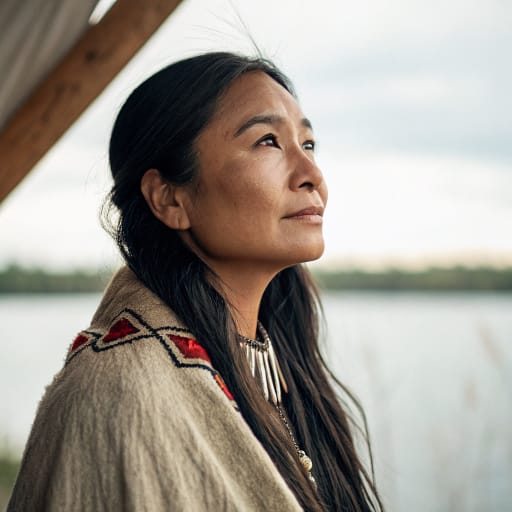
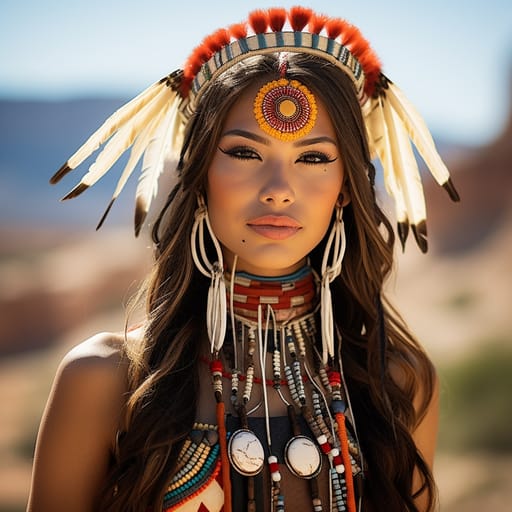
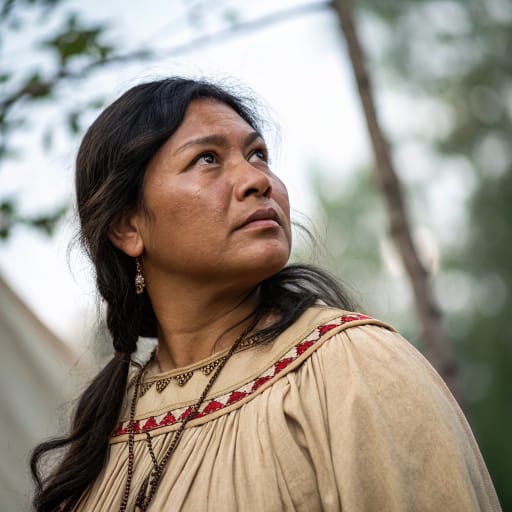
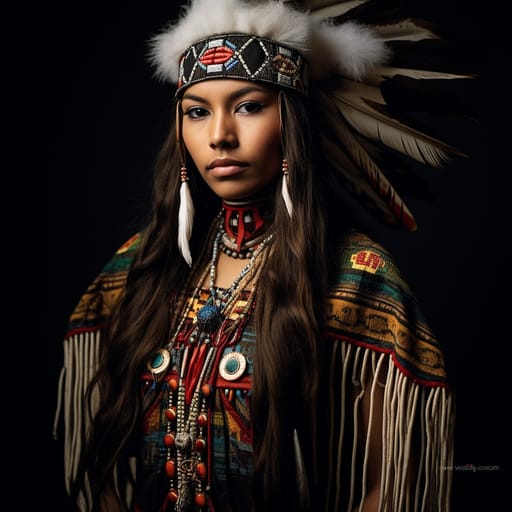
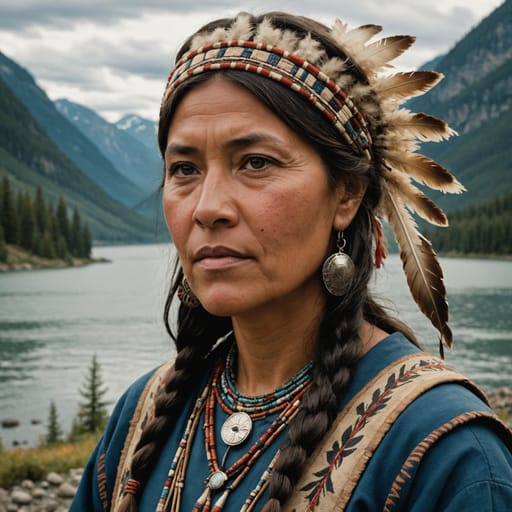
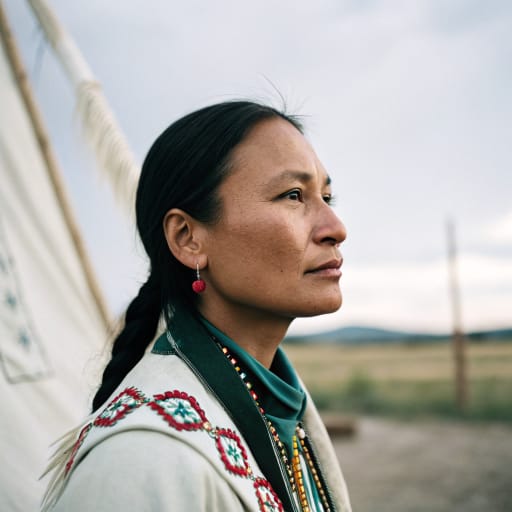
Typical Vanyume Phenotypes
Reference for AI generation: hair, eyes, skin, facial structure, build
Vanyume Body & Anatomy Reference
Indigenous Northern American / Algonquian-Iroquoian phenotype: anatomy reference for AI nude generation
Vanyume Boobs & Breasts
The typical Vanyume bust is medium cup, moderate projection, in line with the wider Indigenous Northern American / Algonquian-Iroquoian pattern. Areolas usually fall in the 30-44mm range, with medium-brown areolar pigmentation against the copper-to-medium-brown skin tone. Compared with the smaller East Asian bust, Vanyume breasts sit forward and are generally full and moderate projection. A faithful AI render of Vanyume tits keeps that shape and areola size.
Vanyume Ass & Hips
Butt shape among Vanyume women: medium, moderate-to-full projection, over medium iliac crests. This follows Indigenous Northern American / Algonquian-Iroquoian ancestry and looks quite unlike the slim East Asian narrow-hip profile. An accurate Vanyume ass in adult AI imagery keeps both the silhouette and the overall build (mesomorph, broader frame in northern Indigenous populations) instead of a generic average.
Vanyume Vagina & Pussy
Vulvar anatomy among Vanyume women: medium-brown labial pigmentation. Pubic hair tends to be straight medium-coarse texture, in the usual inverted-triangle pattern. Both follow Indigenous Northern American / Algonquian-Iroquoian pigmentation, which is why Vanyume pussy renders should not fall back on a pale, sparse Western template.
Vanyume Dicks & Penis
The Vanyume cock profile, from Indigenous Northern American / Algonquian-Iroquoian anthropometric data: regional mean ~13cm erect; moderate girth; medium-brown shaft pigmentation. Pubic hair has a straight medium-coarse texture and forms the usual inverted-V pattern. Whether Vanyume men are circumcised follows religious and cultural practice rather than phenotype.
Vanyume Body, Curves & Build
Build and curves among Vanyume women follow the Indigenous Northern American / Algonquian-Iroquoian pattern: mesomorph, broader frame in northern Indigenous populations, mean adult female BMI 25-28. Proportions matter as much as skin tone, so Vanyume figures should keep their regional height and limb ratios.
Vanyume Skin Tone & Hair Texture
The Vanyume skin range is copper to medium-brown (Fitzpatrick III-V), and hair tends to be straight 1A, dark-brown to black, often thick and dense. That combination marks the Indigenous Northern American / Algonquian-Iroquoian phenotype, and skin tone is the trait AI generators most often get wrong for Vanyume women.
Explore phenotype categories
Structured taxonomy with peer-reviewed scales · 22 anatomical categories
Erotic Poses & Sex Positions
From the pose catalog: 219 named positions with reference skeletons
Frequently asked questions about Vanyume people
Where is the Vanyume homeland?
The Vanyume homeland is Along the Mojave River in the Mojave Desert, from around present-day Victorville downstream past Barstow toward Soda Lake, San Bernardino County, California, United States. in North America.
What language do Vanyume people speak?
Vanyume people primarily speak Vanyume, a desert dialect of Serrano (Takic branch, Uto-Aztecan); extinct and barely documented..
What religion do Vanyume people practice?
The predominant religion among Vanyume people is Traditional Serrano religion: clan ceremonies, hereditary ritual leaders, mourning rites. Survivors were baptized Catholic at Missions San Gabriel and San Fernando..






Make your own Vanyume images
Five a day, free, no credits to buy. The studio starts from this group's phenotype data, so you can set body type, pose and style and keep the traits accurate.
Start with Vanyume