No portrait yet
Tlingit Erotic
Southeast Alaska panhandle from Yakutat Bay through the Alexander Archipelago, United States; Inland Tlingit communities around Teslin, Atlin and Carcross in Yukon and northern British Columbia, Canada
Tlingit (Na-Dene); English
Mostly Christian, chiefly Russian Orthodox and Presbyterian, with clan ceremony and memorial potlatch (koo.éex') still practiced
Raven and Eagle (Wolf) moieties divided into matrilineal clans such as Kiks.ádi, Kaagwaantaan and L'uknax.ádi; regional kwáans including Sitka, Chilkat, Yakutat and Taku; Coastal and Inland Tlingit
About Tlingit People
The Tlingit call themselves Lingít, People of the Tides, and the name says where they stand: on the islands and fjord shores of the Alaska panhandle, where rainforest drops straight into salt water and the sea does most of the feeding. Their country runs from Yakutat Bay south through the Alexander Archipelago to the edge of Haida and Tsimshian territory, and a smaller Inland Tlingit population lives over the coastal mountains around Teslin and Atlin in the Yukon and northern British Columbia. The Tlingit language belongs to the Na-Dene family, a distant cousin of the interior Athabaskan languages, and sounds like nothing near it: tonal, thick with ejective and uvular consonants, and now carried by a small aging group of first-language speakers and a determined cohort of adult learners.
What makes a Tlingit a Tlingit is the clan. Society is matrilineal and split into two halves, Raven and Eagle (called Wolf in some communities), and you belong to your mother's clan for life. Each clan owns crests, names, songs and stories, collectively called at.óow, and using another clan's crest without permission is still a serious matter. Traditionally you married into the opposite half, and the opposite half buries your dead: at a memorial koo.éex', or potlatch, the host clan feeds and pays the other side for the grief work it carried out. That reciprocity is the engine of the whole system, and it still runs in community halls in Juneau and Hoonah. Chilkat and Ravenstail robes woven from mountain goat wool and cedar bark, and formline carving on poles, hats and bentwood boxes, are the visible face of this ownership, not decoration.
The historical record is one of pushing back. Warriors in wooden slat armor fought Russian forces at Sitka in 1802 and 1804, and the Kiks.ádi clan's withdrawal from the fort is still commemorated. After the 1867 sale of Alaska the US Navy shelled the village of Angoon in 1882, an act the Navy formally apologized for only in 2024. Out of that came organization: the Alaska Native Brotherhood, founded in Sitka in 1912, was one of the earliest Native civil rights bodies in the United States, and Tlingit activist Elizabeth Peratrovich's testimony pushed through the 1945 Alaska Anti-Discrimination Act, nearly two decades before the federal one. Religion followed the same pattern of selective adoption. Many Tlingit became Russian Orthodox in the late 1800s, partly because the Orthodox church tolerated the language when Presbyterian missions did not, and both churches still stand in Sitka and Hoonah. Eulachon oil, herring eggs on hemlock branches and dried salmon on the table say which world came first.
Related ethnic groups
Groups that share Tlingit's homeland, region, language, or religious tradition. These are likely candidates for comparative phenotype reference.
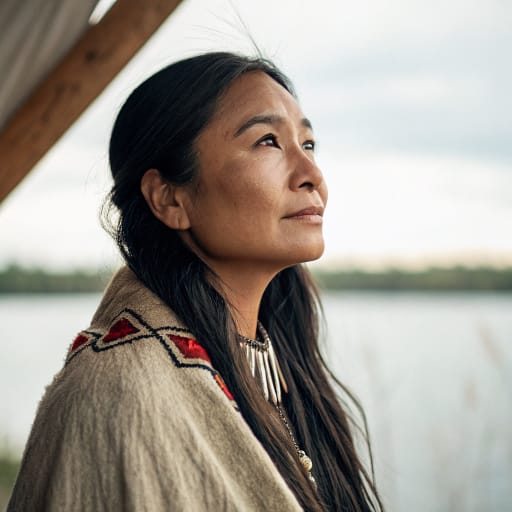
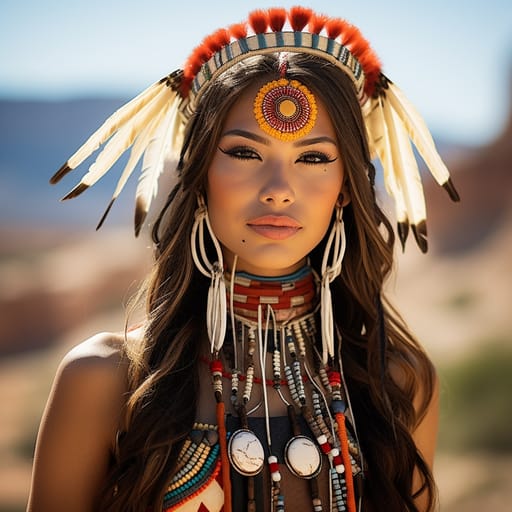
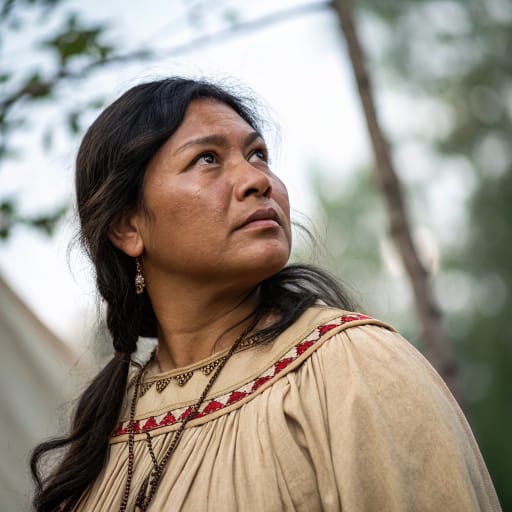
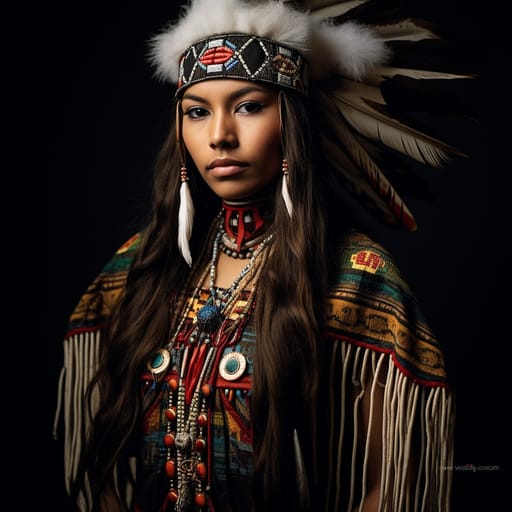

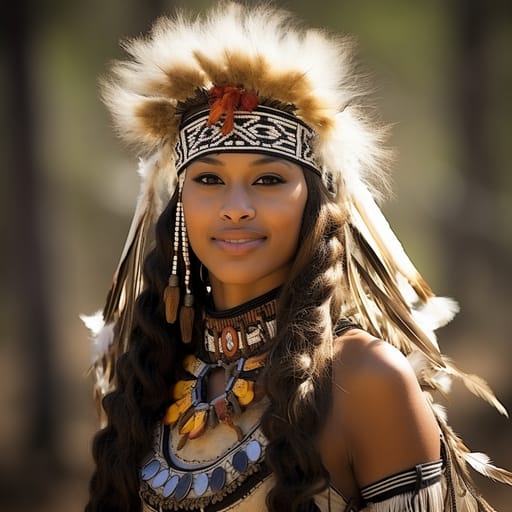
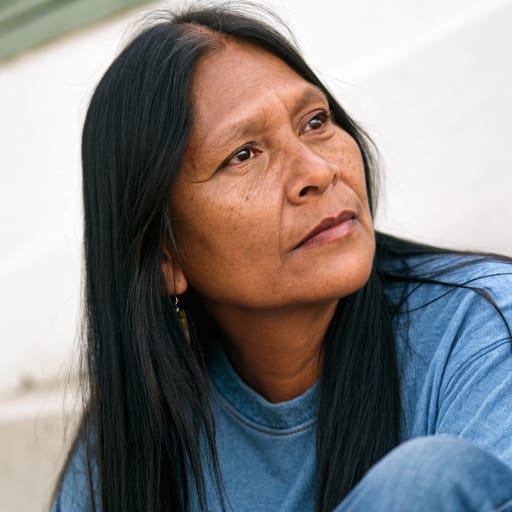
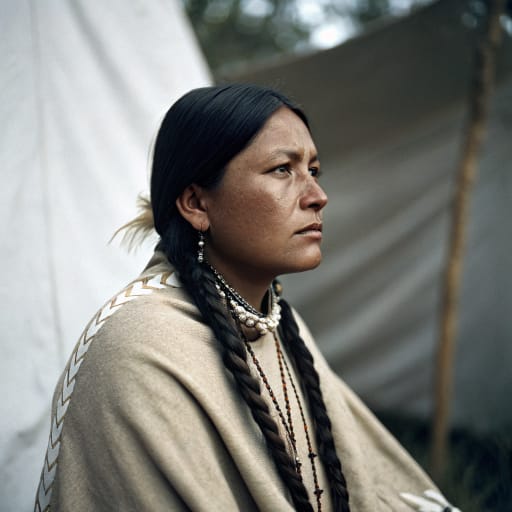
Typical Tlingit Phenotypes
Reference for AI generation: hair, eyes, skin, facial structure, build
Tlingit Body & Anatomy Reference
Anatomy by feature, Indigenous Northern American / Algonquian-Iroquoian phenotype
Tlingit Boobs & Breasts
The typical Tlingit bust is medium cup, moderate projection, in line with the wider Indigenous Northern American / Algonquian-Iroquoian pattern. Areolas usually fall in the 30-44mm range, with medium-brown areolar pigmentation against the copper-to-medium-brown skin tone. Compared with the smaller East Asian bust, Tlingit breasts sit forward and are generally full and moderate projection. A faithful AI render of Tlingit tits keeps that shape and areola size.
Tlingit Ass & Hips
Butt shape among Tlingit women: medium, moderate-to-full projection, over medium iliac crests. This follows Indigenous Northern American / Algonquian-Iroquoian ancestry and looks quite unlike the slim East Asian narrow-hip profile. An accurate Tlingit ass in adult AI imagery keeps both the silhouette and the overall build (mesomorph, broader frame in northern Indigenous populations) instead of a generic average.
Tlingit Vagina & Pussy
Vulvar anatomy among Tlingit women: medium-brown labial pigmentation. Pubic hair tends to be straight medium-coarse texture, in the usual inverted-triangle pattern. Both follow Indigenous Northern American / Algonquian-Iroquoian pigmentation, which is why Tlingit pussy renders should not fall back on a pale, sparse Western template.
Tlingit Dicks & Penis
The Tlingit cock profile, from Indigenous Northern American / Algonquian-Iroquoian anthropometric data: regional mean ~13cm erect; moderate girth; medium-brown shaft pigmentation. Pubic hair has a straight medium-coarse texture and forms the usual inverted-V pattern. Whether Tlingit men are circumcised follows religious and cultural practice rather than phenotype.
Tlingit Body, Curves & Build
Build and curves among Tlingit women follow the Indigenous Northern American / Algonquian-Iroquoian pattern: mesomorph, broader frame in northern Indigenous populations, mean adult female BMI 25-28. Proportions matter as much as skin tone, so Tlingit figures should keep their regional height and limb ratios.
Tlingit Skin Tone & Hair Texture
The Tlingit skin range is copper to medium-brown (Fitzpatrick III-V), and hair tends to be straight 1A, dark-brown to black, often thick and dense. That combination marks the Indigenous Northern American / Algonquian-Iroquoian phenotype, and skin tone is the trait AI generators most often get wrong for Tlingit women.
Explore phenotype categories
Structured taxonomy with peer-reviewed scales · 22 anatomical categories
Erotic Poses & Sex Positions
From the pose catalog: 219 named positions with reference skeletons
Frequently asked questions about Tlingit people
Where is the Tlingit homeland?
The Tlingit homeland is Southeast Alaska panhandle from Yakutat Bay through the Alexander Archipelago, United States; Inland Tlingit communities around Teslin, Atlin and Carcross in Yukon and northern British Columbia, Canada in North America.
What language do Tlingit people speak?
Tlingit people primarily speak Tlingit (Na-Dene); English.
What religion do Tlingit people practice?
The predominant religion among Tlingit people is Mostly Christian, chiefly Russian Orthodox and Presbyterian, with clan ceremony and memorial potlatch (koo.éex') still practiced.






Make your own Tlingit images
Five a day, free, no credits to buy. The studio starts from this group's phenotype data, so you can set body type, pose and style and keep the traits accurate.
Start with Tlingit