Help us get this right
Does this portrait look right for Susquehannock?
Nobody has judged this one yet. You would be the first.
Susquehannock Erotic
The Susquehanna River valley and the head of Chesapeake Bay, in present-day Pennsylvania, Maryland and southern New York, United States.
Susquehannock (Northern Iroquoian, Iroquoian family), extinct; known from roughly a hundred recorded words
Indigenous Iroquoian ceremonial practice, thinly documented; part of the Conestoga remnant had Christian contact in the eighteenth century
Northern Iroquoian, close kin to the Haudenosaunee nations and the Wendat; called Minqua by the Dutch and Swedes, Andaste by the French, and Conestoga in their final generations
About Susquehannock People
The Susquehannock were an Iroquoian-speaking nation of the Susquehanna River valley, in what is now central and southern Pennsylvania and the head of the Chesapeake Bay, and they were finished as an independent people before the seventeenth century closed. The last of them, called Conestoga by then, were murdered in Lancaster County in December 1763. Their descendants are inside the Haudenosaunee nations today, chiefly Seneca and Oneida, which absorbed Susquehannock captives and refugees in the 1670s and 1680s.
We know them by four names and not one of them is their own. Susquehannock is what the English picked up from Algonquian-speaking neighbors. The Dutch and Swedes on the Delaware called them Minqua, the French called them Andaste, and Pennsylvania named the survivors for the creek they settled on. Their language was northern Iroquoian, a cousin of Mohawk and Wendat, and it survives in about a hundred words a Swedish chaplain at New Sweden wrote down in the 1640s. That is close to the whole record.
They built big and they built together. Where neighboring nations spread across a landscape, the Susquehannock repeatedly gathered nearly their whole population into one palisaded town of longhouses on a terrace above the river, lived there a generation or two, then moved and built again. It made them formidable and it made them a single target. It also made them the middlemen every colony wanted, since they sat astride the routes between the interior beaver country and the trading posts on the Delaware and the Chesapeake, and for fifty years they played Dutch, Swedish, English and Maryland interests against one another with considerable skill. When a large Iroquois force came against their fort in 1663 they threw it back from walls with European-style bastions and, by several accounts, cannon.
Disease did what the Seneca could not. Epidemics hollowed out the towns through the 1660s and 1670s, and in 1675 Maryland, their ally of twenty years, turned on them: Maryland and Virginia militia besieged them at a fort on the Potomac and killed five chiefs who had come out under a flag of truce. The raids that answered it helped ignite Bacon's Rebellion. The nation came apart. Some went north into Iroquois towns, some drifted back up the Susquehanna under Pennsylvania protection and lived quietly at Conestoga Town for two more generations, selling baskets and brooms to their neighbors. In December 1763 a mob from Paxtang killed six of them at home, then rode into Lancaster two weeks later and killed the remaining fourteen in the workhouse where magistrates had put them for safekeeping. No one was tried. Benjamin Franklin's pamphlet about it is the angriest thing he ever published.
Related ethnic groups
Groups that share Susquehannock's homeland, region, language, or religious tradition. These are likely candidates for comparative phenotype reference.
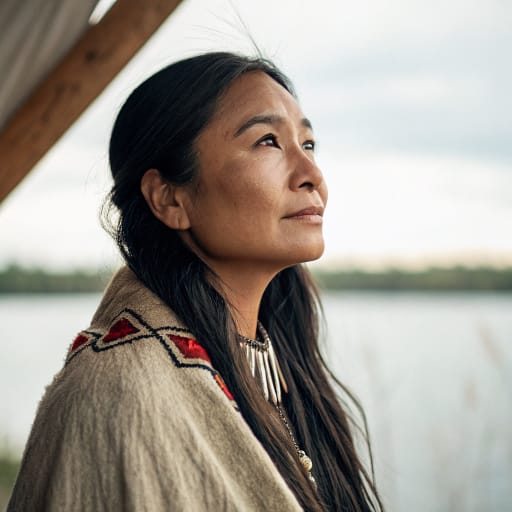
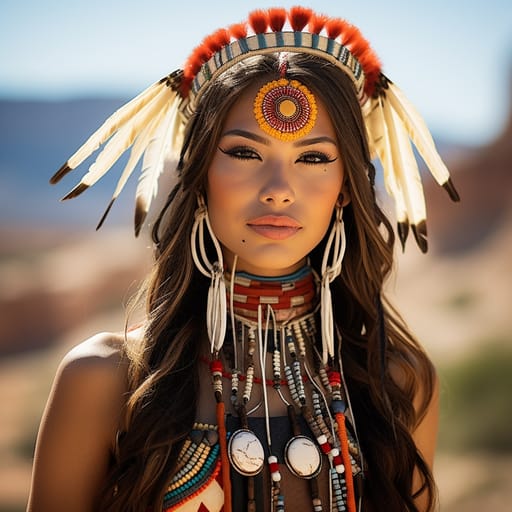
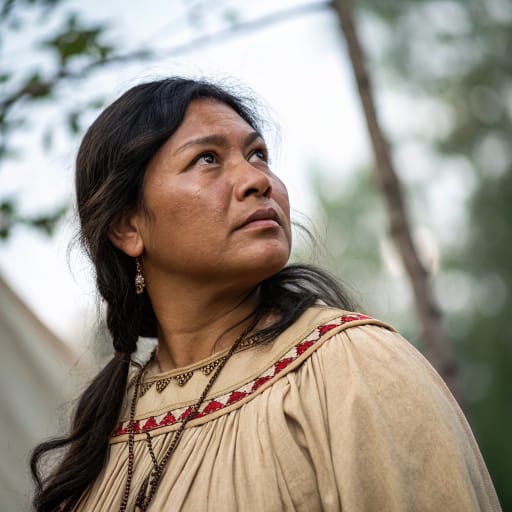
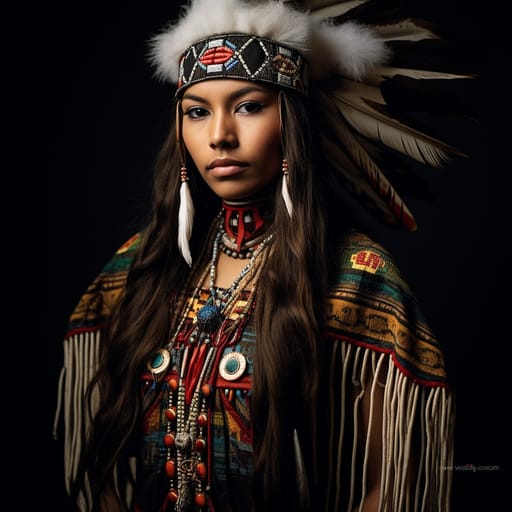
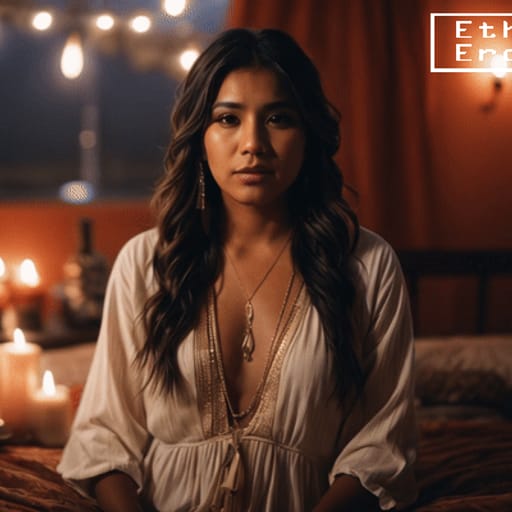
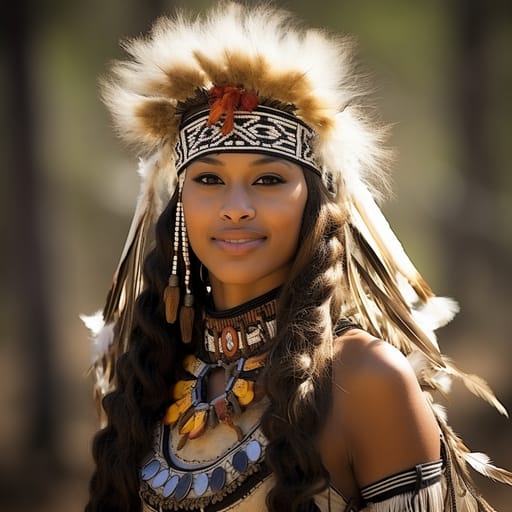
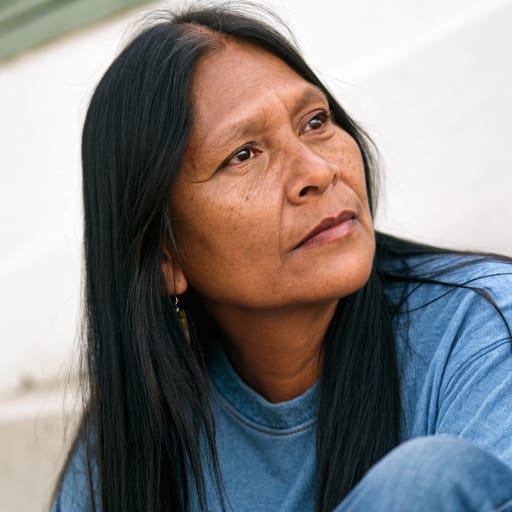
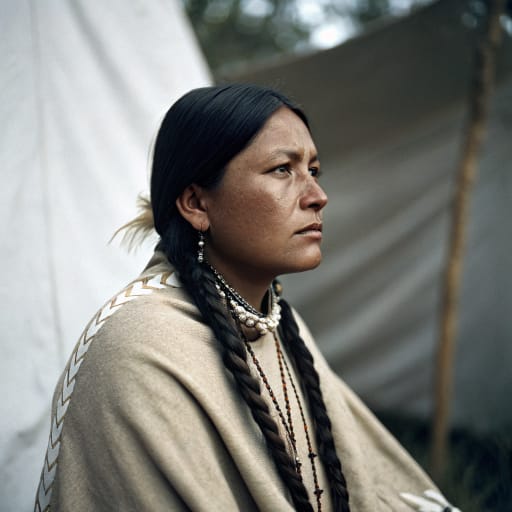
Typical Susquehannock Phenotypes
Reference for AI generation: hair, eyes, skin, facial structure, build
Susquehannock Body & Anatomy Reference
Indigenous Northern American / Algonquian-Iroquoian phenotype: anatomy reference for AI nude generation
Susquehannock Boobs & Breasts
Susquehannock tits and boobs run medium cup, moderate projection, the classic Indigenous Northern American / Algonquian-Iroquoian bust profile. Susquehannock nipples and areolas show medium-brown areolar pigmentation against the copper-to-medium-brown skin tone, with areolar diameter typically in the 30-44mm range and forward-set positioning rather than the smaller East Asian bust. Susquehannock breasts trend full and moderate projection, a function of the mesomorph, broader frame in northern Indigenous populations body habitus and the mean adult female BMI 25-28. For anatomically accurate AI-generated Susquehannock nudes the render preserves the medium cup, moderate projection shape, 30-44mm areolas with medium-brown pigmentation, and the torso proportions of the Indigenous Northern American / Algonquian-Iroquoian phenotype.
Susquehannock Ass & Hips
Susquehannock hips and butt usually read as medium, moderate-to-full projection. The skeletal base is medium iliac crests, the Indigenous Northern American / Algonquian-Iroquoian pattern. Set against the slim East Asian narrow-hip profile, the difference is easy to see, and the hip-to-waist ratio is often what identifies Susquehannock women in photos.
Susquehannock Vagina & Pussy
Expect medium-brown labial pigmentation on Susquehannock women, in keeping with Indigenous Northern American / Algonquian-Iroquoian ancestry. The pubic hair is straight medium-coarse texture. Coloring should run evenly from the copper to medium-brown skin of the thighs to the labia, and Susquehannock nude imagery should keep the hair's straight medium-coarse texture.
Susquehannock Dicks & Penis
Susquehannock dick and penile anatomy in adult AI generation should anchor on the regional reference data: regional mean ~13cm erect, moderate girth, and medium-brown shaft pigmentation. The Susquehannock cock profile reflects the Indigenous Northern American / Algonquian-Iroquoian population's anthropometric measurements. The shaft pigmentation should track the surrounding copper to medium-brown skin tone, and the pubic hair should keep its straight medium-coarse texture in the typical inverted-V escutcheon.
Susquehannock Body, Curves & Build
Susquehannock body type: mesomorph, broader frame in northern Indigenous populations, with mean adult female BMI 25-28. This is the typical Indigenous Northern American / Algonquian-Iroquoian build. Height range, shoulder-to-hip ratio and fat distribution all follow from it, which is what an accurate Susquehannock nude body should show.
Susquehannock Skin Tone & Hair Texture
Susquehannock skin tone falls in the copper to medium-brown (Fitzpatrick III-V) band, the surface signal most often miscalibrated by generic AI nude generators. Susquehannock hair texture is typically straight 1A, dark-brown to black, often thick and dense, characteristic of the Indigenous Northern American / Algonquian-Iroquoian phenotype. In Susquehannock nude renders the skin should hold that band consistently across the body.
Explore phenotype categories
Structured taxonomy with peer-reviewed scales · 22 anatomical categories
Erotic Poses & Sex Positions
From the pose catalog: 219 named positions with reference skeletons
Frequently asked questions about Susquehannock people
Where is the Susquehannock homeland?
The Susquehannock homeland is The Susquehanna River valley and the head of Chesapeake Bay, in present-day Pennsylvania, Maryland and southern New York, United States. in North America.
What language do Susquehannock people speak?
Susquehannock people primarily speak Susquehannock (Northern Iroquoian, Iroquoian family), extinct; known from roughly a hundred recorded words.
What religion do Susquehannock people practice?
The predominant religion among Susquehannock people is Indigenous Iroquoian ceremonial practice, thinly documented; part of the Conestoga remnant had Christian contact in the eighteenth century.






Make your own Susquehannock images
Five a day, free, no credits to buy. The studio starts from this group's phenotype data, so you can set body type, pose and style and keep the traits accurate.
Start with Susquehannock