No portrait yet
Saulteaux Erotic
Manitoba, Saskatchewan and western Ontario, with communities in Alberta; historically from Sault Ste. Marie westward to the northern plains, Canada
Saulteaux, the western dialect of Ojibwe (Algonquian); English widely spoken
Midewiwin and Anishinaabe ceremonial practice, including the Sun Dance or Rain Dance on the plains; Anglican and Catholic Christianity, often held alongside the older practice
A western branch of the Ojibwe within the wider Anishinaabe peoples, split broadly between woodland Saulteaux and Plains Ojibwe
About Saulteaux People
The Saulteaux are known by a French nickname and call themselves something else, and the distance between the two names holds most of their history. Traders at the rapids between Lake Superior and Lake Huron called the Anishinaabe living there Saulteurs, people of the falls. Through the eighteenth and nineteenth centuries those families moved west with the fur trade, out of the Great Lakes, into the lake country north of Winnipeg and on across the aspen parkland of Saskatchewan. They call themselves Nakawe. They are not a separate nation from the Ojibwe but its western reach, and the move west quietly divided how they lived without dividing who they were: some stayed with fish, trapping and wild rice at the boreal edge, while others took horses and bison and became a plains people, allied with Cree and Assiniboine in the trading network known as the Iron Confederacy.
Their language, Saulteaux, is the western dialect of Ojibwe, and it is one of the more durable Indigenous languages on the prairies: still spoken at home in some communities, written in roman letters and in syllabics both. Ceremony has held on with similar stubbornness. The Midewiwin, the medicine society, works through graded initiation and birch bark scrolls scored with figures that cue songs a person is meant to already half know. On the plains, the Sun Dance, which Saskatchewan Saulteaux usually call the Rain Dance, went on through the decades when Canadian law made such gatherings illegal. Anglican and Catholic missions arrived early and left congregations that are still there; for many families Christianity sits alongside the older practice rather than replacing it.
Two dates anchor the political record. In 1817 Peguis, a chief whose band had come west from the Sault, signed with Lord Selkirk on the Red River and kept the settlers there alive through their worst years. In 1871 Saulteaux leaders put their marks on Treaty 1 at Lower Fort Garry, the first of the numbered treaties, and what followed was the reserve system, the pass system and the residential schools, none of which the treaty texts had promised. Descent still runs through the doodem, the clan a person inherits from their father, which sets who counts as kin well outside one's own community. And Saulteaux women turned curling floral beadwork into a signature so recognizable that museums still identify pieces by it alone.
Related ethnic groups
Groups that share Saulteaux's homeland, region, language, or religious tradition. These are likely candidates for comparative phenotype reference.
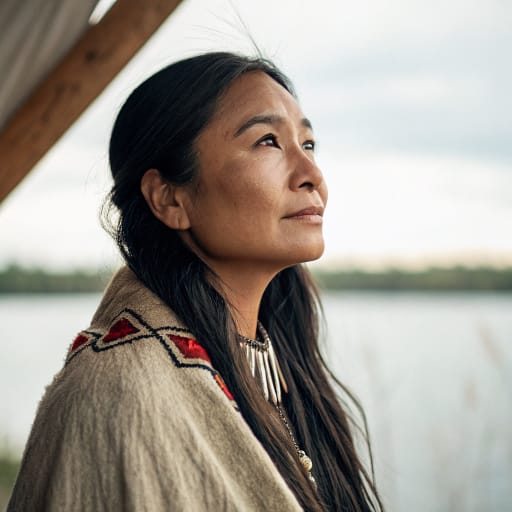
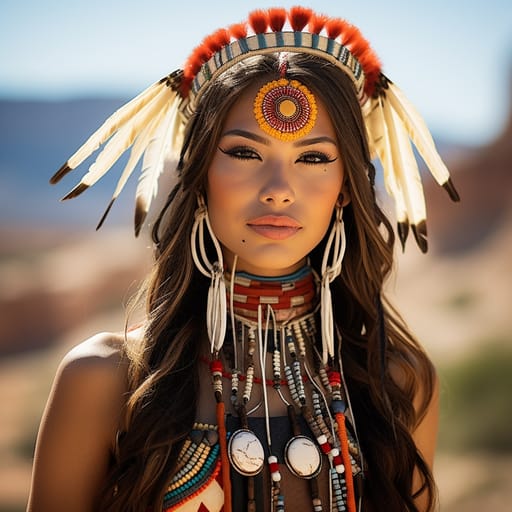
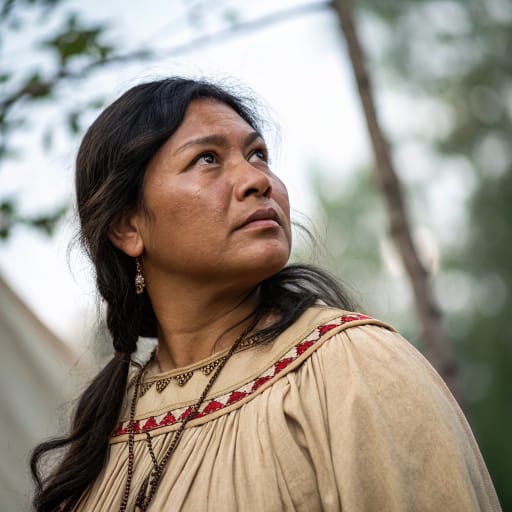
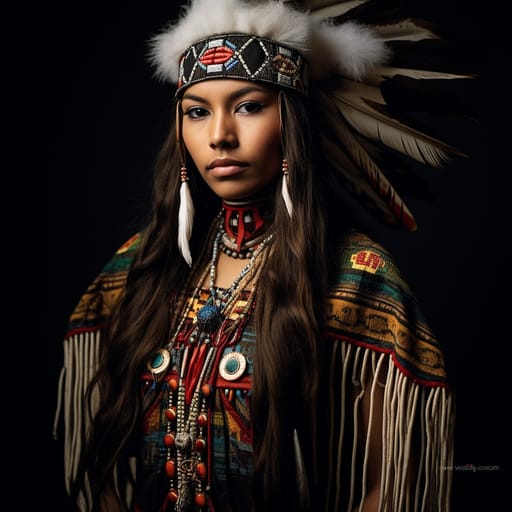
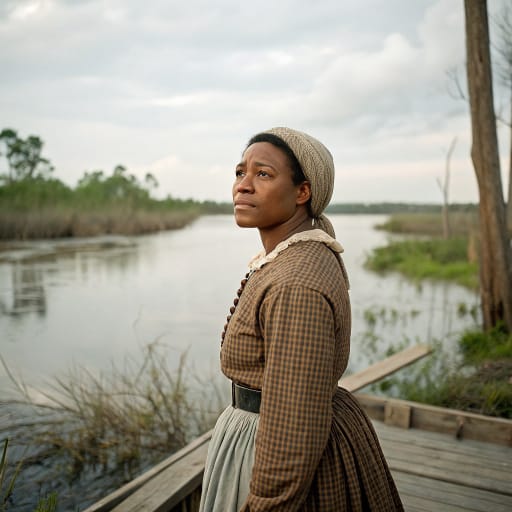
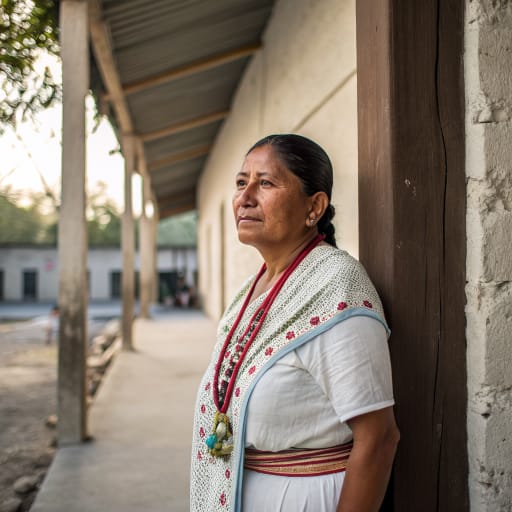
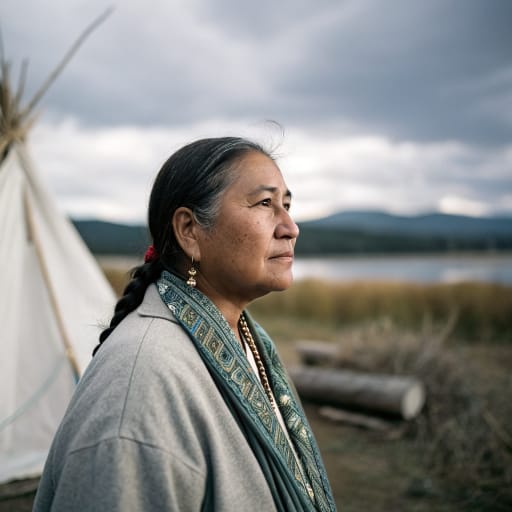
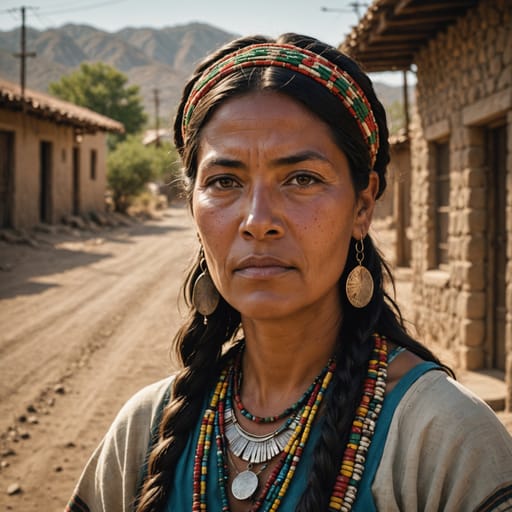
Typical Saulteaux Phenotypes
Reference for AI generation: hair, eyes, skin, facial structure, build
Saulteaux Body & Anatomy Reference
Indigenous Northern American / Algonquian-Iroquoian phenotype: anatomy reference for AI nude generation
Saulteaux Boobs & Breasts
Saulteaux tits and boobs run medium cup, moderate projection, the classic Indigenous Northern American / Algonquian-Iroquoian bust profile. Saulteaux nipples and areolas show medium-brown areolar pigmentation against the copper-to-medium-brown skin tone, with areolar diameter typically in the 30-44mm range and forward-set positioning rather than the smaller East Asian bust. Saulteaux breasts trend full and moderate projection, a function of the mesomorph, broader frame in northern Indigenous populations body habitus and the mean adult female BMI 25-28. For anatomically accurate AI-generated Saulteaux nudes the render preserves the medium cup, moderate projection shape, 30-44mm areolas with medium-brown pigmentation, and the torso proportions of the Indigenous Northern American / Algonquian-Iroquoian phenotype.
Saulteaux Ass & Hips
Saulteaux hips and butt usually read as medium, moderate-to-full projection. The skeletal base is medium iliac crests, the Indigenous Northern American / Algonquian-Iroquoian pattern. Set against the slim East Asian narrow-hip profile, the difference is easy to see, and the hip-to-waist ratio is often what identifies Saulteaux women in photos.
Saulteaux Vagina & Pussy
Expect medium-brown labial pigmentation on Saulteaux women, in keeping with Indigenous Northern American / Algonquian-Iroquoian ancestry. The pubic hair is straight medium-coarse texture. Coloring should run evenly from the copper to medium-brown skin of the thighs to the labia, and Saulteaux nude imagery should keep the hair's straight medium-coarse texture.
Saulteaux Dicks & Penis
Saulteaux dick and penile anatomy in adult AI generation should anchor on the regional reference data: regional mean ~13cm erect, moderate girth, and medium-brown shaft pigmentation. The Saulteaux cock profile reflects the Indigenous Northern American / Algonquian-Iroquoian population's anthropometric measurements. The shaft pigmentation should track the surrounding copper to medium-brown skin tone, and the pubic hair should keep its straight medium-coarse texture in the typical inverted-V escutcheon.
Saulteaux Body, Curves & Build
Saulteaux body type: mesomorph, broader frame in northern Indigenous populations, with mean adult female BMI 25-28. This is the typical Indigenous Northern American / Algonquian-Iroquoian build. Height range, shoulder-to-hip ratio and fat distribution all follow from it, which is what an accurate Saulteaux nude body should show.
Saulteaux Skin Tone & Hair Texture
Saulteaux skin tone falls in the copper to medium-brown (Fitzpatrick III-V) band, the surface signal most often miscalibrated by generic AI nude generators. Saulteaux hair texture is typically straight 1A, dark-brown to black, often thick and dense, characteristic of the Indigenous Northern American / Algonquian-Iroquoian phenotype. In Saulteaux nude renders the skin should hold that band consistently across the body.
Explore phenotype categories
Structured taxonomy with peer-reviewed scales · 22 anatomical categories
Erotic Poses & Sex Positions
From the pose catalog: 219 named positions with reference skeletons
Frequently asked questions about Saulteaux people
Where is the Saulteaux homeland?
The Saulteaux homeland is Manitoba, Saskatchewan and western Ontario, with communities in Alberta; historically from Sault Ste. Marie westward to the northern plains, Canada in North America.
What language do Saulteaux people speak?
Saulteaux people primarily speak Saulteaux, the western dialect of Ojibwe (Algonquian); English widely spoken.
What religion do Saulteaux people practice?
The predominant religion among Saulteaux people is Midewiwin and Anishinaabe ceremonial practice, including the Sun Dance or Rain Dance on the plains; Anglican and Catholic Christianity, often held alongside the older practice.






Make your own Saulteaux images
Five a day, free, no credits to buy. The studio starts from this group's phenotype data, so you can set body type, pose and style and keep the traits accurate.
Start with Saulteaux