No portrait yet
Pocomtuc Erotic
The middle Connecticut River valley of western Massachusetts, centered on present-day Deerfield, with reach into northern Connecticut and the southern edges of Vermont and New Hampshire.
Pocomtuc, an extinct Eastern Algonquian language of the Southern New England continuum (Algic), close to Nipmuck; possibly the language recorded by French missionaries as Loup.
Traditional Algonquian belief centered on manitou; descendants later absorbed into the Catholic Abenaki mission community at Odanak.
Eastern Algonquian. A cluster of allied valley communities including the Norwottuck, Agawam, Woronoco and Nonotuck; survivors merged into the Schaghticoke and the Abenaki of Odanak.
About Pocomtuc People
The Pocomtuc were an Algonquian people of the middle Connecticut River valley, in what is now western Massachusetts and the northern rim of Connecticut, and they ceased to exist as an independent nation within about a decade of 1675. Survivors went north and west and were taken in elsewhere: the Abenaki mission community at Odanak in Quebec, the mixed refugee settlement at Schaghticoke on the Hudson, Mohawk towns further west. They took their name from Pocumtuck, their principal fortified town on the bluff at present-day Deerfield, and at contact they were the strongest presence in the valley. What made them a people rather than a scatter of villages was the river. The Connecticut's floodplain meadows hold some of the best growing soil in the Northeast, and the Pocomtuc farmed them hard: maize, beans, squash, in fields that English arrivals recognized at once as the reason to be there. In spring they moved to Peskeompskut, the falls at what is now Turners Falls, where shad and salmon ran thick enough to feed the whole valley and where several nations fished alongside one another.
Their speech belonged to the Southern New England Algonquian continuum, close to Nipmuck, and it is gone; a French missionary vocabulary of a language the priests called Loup may preserve some of it, though the attribution is still argued. Religion, as far as the record allows, followed the regional pattern: manitou, power residing in particular beings and places rather than only overhead, approached through specialists, and readable in the land itself. That last part is not abstract. The ridge running south from Deerfield is, in Pocomtuc telling, the carcass of a giant beaver that terrorized a lake filling the valley until Hobomock killed it with a blow to the neck, and Mount Sugarloaf is the head. Two events ended them. In 1664 a Mohawk army destroyed the fort at Pocumtuck in reprisal for the killing of an ambassador, and the nation never regained its footing. Then came King Philip's War: the ambush at Bloody Brook in 1675, and in May 1676 the dawn attack on the fishing camp at Peskeompskut, where English soldiers killed a large number of noncombatants. The people scattered. Some came back in 1704 with the French and Abenaki party that burned Deerfield, to a homeland that was no longer theirs to hold.
Related ethnic groups
Groups that share Pocomtuc's homeland, region, language, or religious tradition. These are likely candidates for comparative phenotype reference.
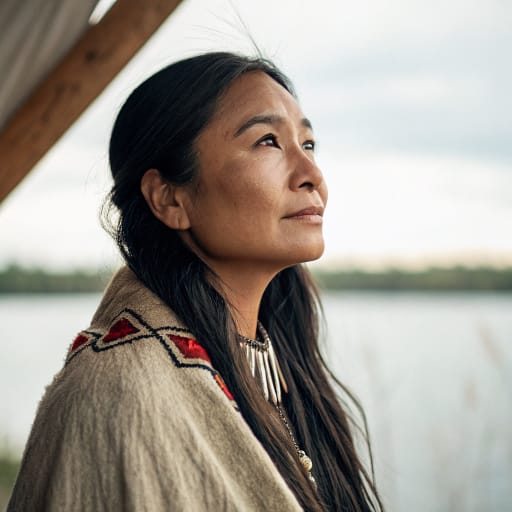
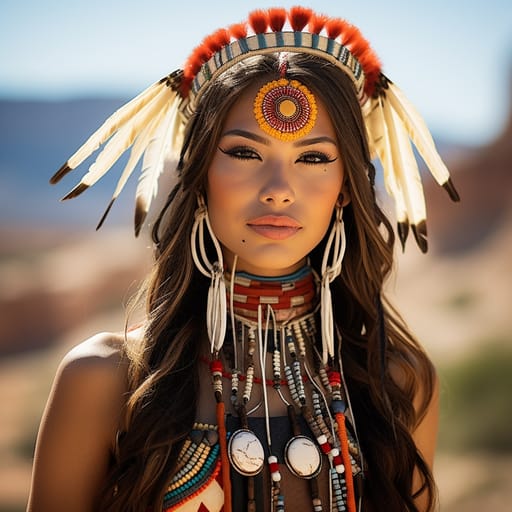
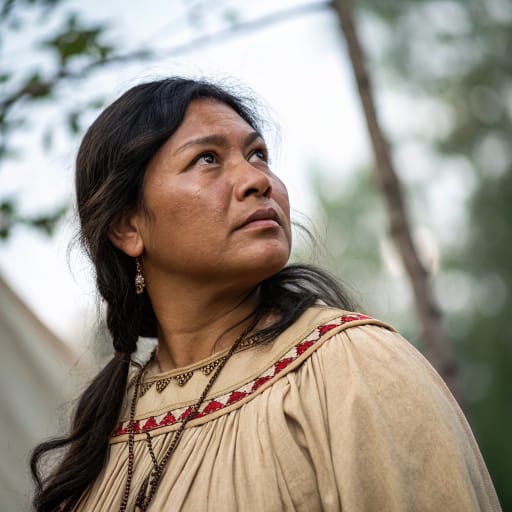
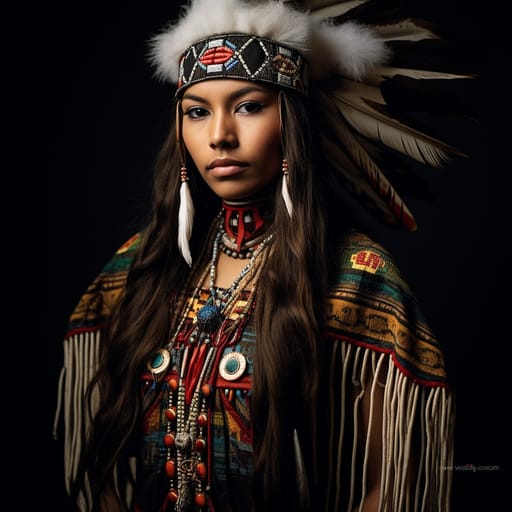
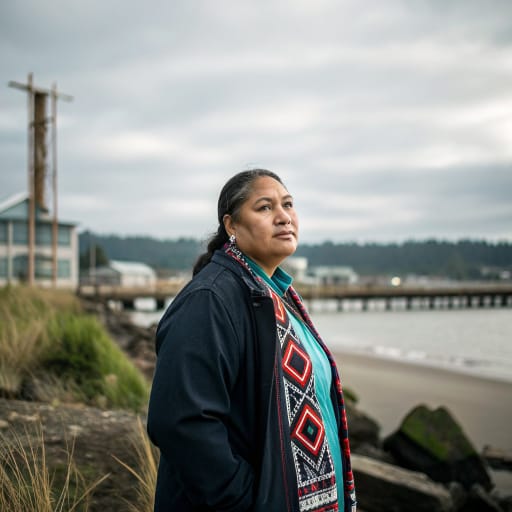
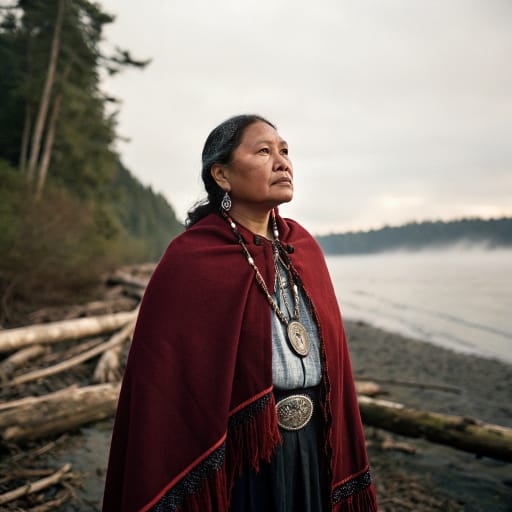
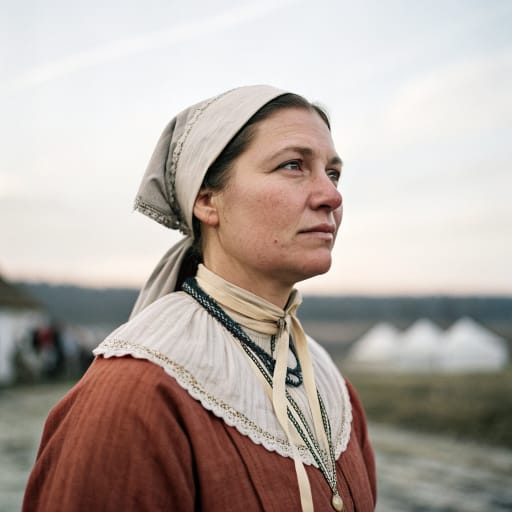
Typical Pocomtuc Phenotypes
Reference for AI generation: hair, eyes, skin, facial structure, build
Pocomtuc Body & Anatomy Reference
Anatomy by feature, Indigenous Northern American / Algonquian-Iroquoian phenotype
Pocomtuc Boobs & Breasts
Pocomtuc tits and boobs run medium cup, moderate projection, the classic Indigenous Northern American / Algonquian-Iroquoian bust profile. Pocomtuc nipples and areolas show medium-brown areolar pigmentation against the copper-to-medium-brown skin tone, with areolar diameter typically in the 30-44mm range and forward-set positioning rather than the smaller East Asian bust. Pocomtuc breasts trend full and moderate projection, a function of the mesomorph, broader frame in northern Indigenous populations body habitus and the mean adult female BMI 25-28. For anatomically accurate AI-generated Pocomtuc nudes the render preserves the medium cup, moderate projection shape, 30-44mm areolas with medium-brown pigmentation, and the torso proportions of the Indigenous Northern American / Algonquian-Iroquoian phenotype.
Pocomtuc Ass & Hips
Pocomtuc hips and butt usually read as medium, moderate-to-full projection. The skeletal base is medium iliac crests, the Indigenous Northern American / Algonquian-Iroquoian pattern. Set against the slim East Asian narrow-hip profile, the difference is easy to see, and the hip-to-waist ratio is often what identifies Pocomtuc women in photos.
Pocomtuc Vagina & Pussy
Expect medium-brown labial pigmentation on Pocomtuc women, in keeping with Indigenous Northern American / Algonquian-Iroquoian ancestry. The pubic hair is straight medium-coarse texture. Coloring should run evenly from the copper to medium-brown skin of the thighs to the labia, and Pocomtuc nude imagery should keep the hair's straight medium-coarse texture.
Pocomtuc Dicks & Penis
Pocomtuc dick and penile anatomy in adult AI generation should anchor on the regional reference data: regional mean ~13cm erect, moderate girth, and medium-brown shaft pigmentation. The Pocomtuc cock profile reflects the Indigenous Northern American / Algonquian-Iroquoian population's anthropometric measurements. The shaft pigmentation should track the surrounding copper to medium-brown skin tone, and the pubic hair should keep its straight medium-coarse texture in the typical inverted-V escutcheon.
Pocomtuc Body, Curves & Build
Pocomtuc body type: mesomorph, broader frame in northern Indigenous populations, with mean adult female BMI 25-28. This is the typical Indigenous Northern American / Algonquian-Iroquoian build. Height range, shoulder-to-hip ratio and fat distribution all follow from it, which is what an accurate Pocomtuc nude body should show.
Pocomtuc Skin Tone & Hair Texture
Pocomtuc skin tone falls in the copper to medium-brown (Fitzpatrick III-V) band, the surface signal most often miscalibrated by generic AI nude generators. Pocomtuc hair texture is typically straight 1A, dark-brown to black, often thick and dense, characteristic of the Indigenous Northern American / Algonquian-Iroquoian phenotype. In Pocomtuc nude renders the skin should hold that band consistently across the body.
Explore phenotype categories
Structured taxonomy with peer-reviewed scales · 22 anatomical categories
Erotic Poses & Sex Positions
From the pose catalog: 219 named positions with reference skeletons
Frequently asked questions about Pocomtuc people
Where is the Pocomtuc homeland?
The Pocomtuc homeland is The middle Connecticut River valley of western Massachusetts, centered on present-day Deerfield, with reach into northern Connecticut and the southern edges of Vermont and New Hampshire. in North America.
What language do Pocomtuc people speak?
Pocomtuc people primarily speak Pocomtuc, an extinct Eastern Algonquian language of the Southern New England continuum (Algic), close to Nipmuck; possibly the language recorded by French missionaries as Loup..
What religion do Pocomtuc people practice?
The predominant religion among Pocomtuc people is Traditional Algonquian belief centered on manitou; descendants later absorbed into the Catholic Abenaki mission community at Odanak..






Make your own Pocomtuc images
Five a day, free, no credits to buy. The studio starts from this group's phenotype data, so you can set body type, pose and style and keep the traits accurate.
Start with Pocomtuc