No portrait yet
Paspahegh Erotic
North bank of the James River around the mouth of the Chickahominy River, including Jamestown Island, in present-day James City and Charles City counties, Virginia, United States
Powhatan, also called Virginia Algonquian (Algonquian, Eastern Algonquian branch)
Traditional Powhatan religion, with priests, temples and the feared deity Okeus
One of the tribute-paying districts of the Powhatan paramount chiefdom (Tsenacommacah), part of the Virginia Algonquian peoples of the Tidewater
About Paspahegh People
The Paspahegh were a Virginia Algonquian people who farmed and fished along the north bank of the James River, around the mouth of the Chickahominy, until English colonists broke them apart between 1607 and 1611. Their survivors are thought to have joined neighboring Powhatan communities, and no group today carries the name. Their size and power did not set them apart in the historical record. Their location did: the marshy island where the English built Jamestown lay inside Paspahegh territory.
Before that, they were one of the smaller districts within Tsenacommacah, the Tidewater domain ruled by the paramount chief Wahunsenacawh, whom the English called Powhatan. John Smith counted roughly forty fighting men among them. They spoke Powhatan, an Eastern Algonquian language used across the chiefdom, and they followed its religion. Priests kept temples, guarded the remains of chiefs and worked to appease Okeus, a feared deity. Their local leader, a weroance, answered to Powhatan and sent tribute upward in goods such as corn and deerskins. Towns were clusters of bent-sapling houses covered in bark or reed mats, set among fields of corn, beans and squash.
Relations with the newcomers turned bad within weeks of the 1607 landing, and the Paspahegh became the colony's nearest and most persistent opponents. Their weroance, Wowinchopunck, was a match for Smith himself. By Smith's own account, the two once fought hand to hand and fell into the river, and the chief was taken to Jamestown in chains before he escaped. The breaking point came in August 1610, during the First Anglo-Powhatan War. On the orders of Governor De La Warr, George Percy led a raid on the main Paspahegh town. His men killed a number of its people, burned its houses and cornfields, and seized the weroance's wife and children. The children were thrown into the river and shot, and their mother was killed soon after. Wowinchopunck died in a skirmish near Jamestown early the next year, and after that the Paspahegh disappear from English records as a distinct people.
Much of what remains is in the ground. Excavations near the mouth of the Chickahominy in the late 1980s and early 1990s uncovered the post outlines of a town widely identified as Paspahegh. It is a rare physical record of a Powhatan town from the period of first contact. Percy's own account of the 1610 raid survives too, and historians often point to it as an early marker of the violence that would drive Virginia's expansion.
Related ethnic groups
Groups that share Paspahegh's homeland, region, language, or religious tradition. These are likely candidates for comparative phenotype reference.
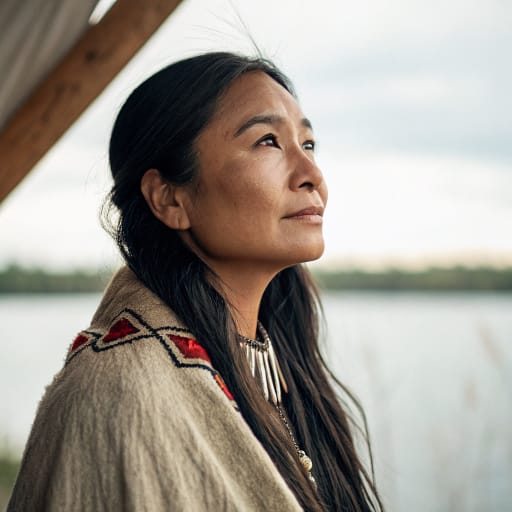
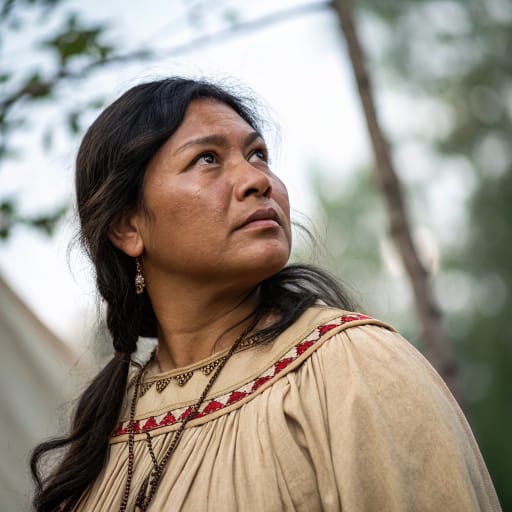
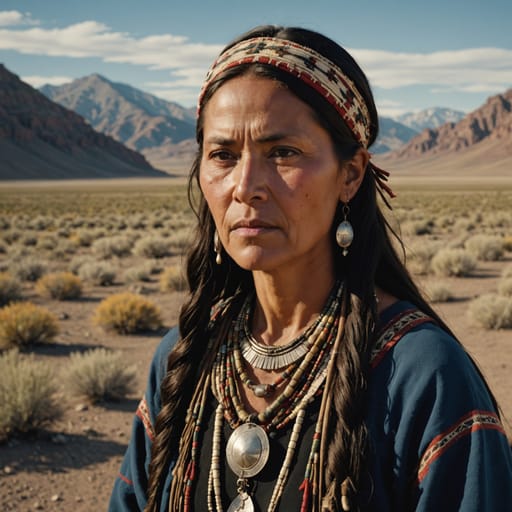
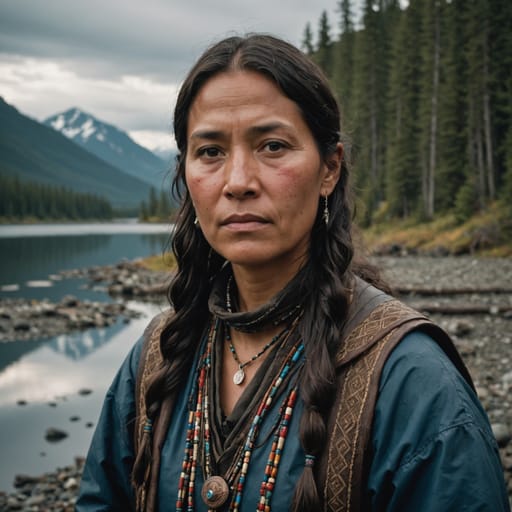
Typical Paspahegh Phenotypes
Reference for AI generation: hair, eyes, skin, facial structure, build
Paspahegh Body & Anatomy Reference
Per-feature anatomical profile for AI nude generation: Indigenous Northern American / Algonquian-Iroquoian phenotype
Paspahegh Boobs & Breasts
Bust reference for Paspahegh women: medium cup, moderate projection, which is typical of Indigenous Northern American / Algonquian-Iroquoian ancestry. Areolas measure about 30-44mm across, with medium-brown pigmentation. Body type (mesomorph, broader frame in northern Indigenous populations) shapes the bust as well, so Paspahegh tits are usually full and moderate projection. In AI imagery, keep the forward-set shape rather than drifting toward the smaller East Asian bust.
Paspahegh Ass & Hips
The Paspahegh ass is typically medium, moderate-to-full projection, which sets it apart from the slim East Asian narrow-hip profile. Underneath, the pelvis shows medium iliac crests, part of the Indigenous Northern American / Algonquian-Iroquoian skeletal pattern. For Paspahegh butt pics and AI renders, match that silhouette and the overall build (mesomorph, broader frame in northern Indigenous populations).
Paspahegh Vagina & Pussy
Paspahegh pussy and vulvar anatomy presents medium-brown labial pigmentation, consistent with the Indigenous Northern American / Algonquian-Iroquoian phenotype's pigmentation pattern. Paspahegh pubic hair is typically straight medium-coarse texture, in the inverted-triangle pattern. For anatomically accurate Paspahegh pussy renders the labial coloration should match the surrounding copper to medium-brown skin tone with a continuous gradient, and the hair should keep its straight medium-coarse texture.
Paspahegh Dicks & Penis
Paspahegh dicks follow the Indigenous Northern American / Algonquian-Iroquoian reference data: regional mean ~13cm erect; moderate girth; medium-brown shaft pigmentation. Shaft color should track the copper to medium-brown skin tone with a smooth change toward the glans, and Paspahegh pubic hair keeps its straight medium-coarse texture.
Paspahegh Body, Curves & Build
Paspahegh body type and overall build presents as mesomorph, broader frame in northern Indigenous populations, with mean adult female BMI 25-28: the characteristic Indigenous Northern American / Algonquian-Iroquoian habitus. Paspahegh curves and proportions should keep the regional skeletal frame (height, shoulder-to-hip ratio, limb proportions) rather than a generic mesomorph default.
Paspahegh Skin Tone & Hair Texture
Paspahegh skin sits in the copper to medium-brown (Fitzpatrick III-V) band. Hair is typically straight 1A, dark-brown to black, often thick and dense, in keeping with the Indigenous Northern American / Algonquian-Iroquoian phenotype. In nude renders the skin should stay one even tone from face to body, and body, pubic and head hair should match.
Explore phenotype categories
Structured taxonomy with peer-reviewed scales · 22 anatomical categories
Erotic Poses & Sex Positions
From the pose catalog: 219 named positions with reference skeletons
Frequently asked questions about Paspahegh people
Where is the Paspahegh homeland?
The Paspahegh homeland is North bank of the James River around the mouth of the Chickahominy River, including Jamestown Island, in present-day James City and Charles City counties, Virginia, United States in North America.
What language do Paspahegh people speak?
Paspahegh people primarily speak Powhatan, also called Virginia Algonquian (Algonquian, Eastern Algonquian branch).
What religion do Paspahegh people practice?
The predominant religion among Paspahegh people is Traditional Powhatan religion, with priests, temples and the feared deity Okeus.






Make your own Paspahegh images
Five a day, free, no credits to buy. The studio starts from this group's phenotype data, so you can set body type, pose and style and keep the traits accurate.
Start with Paspahegh