No portrait yet
Okiek Erotic
Highland forests of Kenya, chiefly the Mau Forest complex and Mount Elgon, with the related Akie communities in northern Tanzania
Okiek (Kalenjin, Southern Nilotic); many also speak Kipsigis, Nandi, Maasai or Swahili, and some groups have shifted to Maasai
Largely Christian, with older Kalenjin-related beliefs and forest ceremonial sites still important to many
Kalenjin branch of the Southern Nilotic peoples; local groups include the Kaplelach and Kipchornwonek of the Mau, the Chepkitale Okiek of Mount Elgon, and the related Akie of Tanzania
About Okiek People
The Okiek are known less by a line on a map than by how they live with a forest. For generations they lived in the high, wet woodlands of Kenya, above all the Mau Forest and the slopes of Mount Elgon. They hunted, and more than anything they gathered honey. Their cattle-herding neighbors called them Dorobo, from a Maasai term for people who own no cattle. The name stayed in colonial records long after the Okiek made plain that they found it demeaning. Their own account is simpler: they were in these forests first. Many regard them as the oldest continuous inhabitants of the highlands.
They speak Okiek, a Kalenjin language of the Southern Nilotic branch. That puts them close in language to the Nandi and Kipsigis, who farm below the forest edge. Long contact has made speaking two languages normal. Some Okiek communities near Maasai country speak Maasai as easily as their own language. The Akie of northern Tanzania, whose language is close kin to Okiek, have largely been moving over to it. Local groups carry lineage and place names, among them the Kaplelach and Kipchornwonek of the Mau and the Chepkitale community on Mount Elgon.
Honey organized the older Okiek world. Men carve log hives and hang them high in trees, and they know which trees flower at which altitude through the year. Lineages traditionally held land in long strips running up the mountainside, so each could follow the bloom from lower forest to higher. Honey was food, a trade good, the base of a fermented drink served at gatherings, and part of bridewealth. Hunting with dogs, traps and bows supplied meat and skins, and hyrax pelts once made warm cloaks for cold highland nights. Initiation has long been the defining passage for young Okiek. It involves a period of seclusion and a large body of songs, many of them performed by women. Most Okiek are now Christian, but forest sites tied to ceremony and ancestors still matter, which is part of why losing access to the forest cuts so deep.
The twentieth century pushed them out of the forest again and again. Colonial authorities declared the forests Crown land, and a land commission in the 1930s proposed that the Okiek be absorbed into neighboring peoples. Independent Kenya carried on with evictions in the name of conservation, while logging and settlement cleared large parts of the Mau. In 2017 the African Court on Human and Peoples' Rights ruled that Kenya had violated Okiek rights to land, culture and religion, and a 2022 judgment ordered reparations. Kenya has been slow to act on it, and evictions have continued. Many Okiek today farm, keep livestock and send their children to school, while still insisting that the forest is theirs.
Related ethnic groups
Groups that share Okiek's homeland, region, language, or religious tradition. These are likely candidates for comparative phenotype reference.
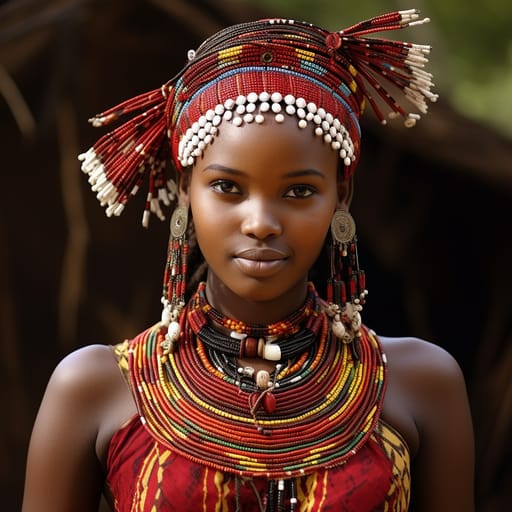
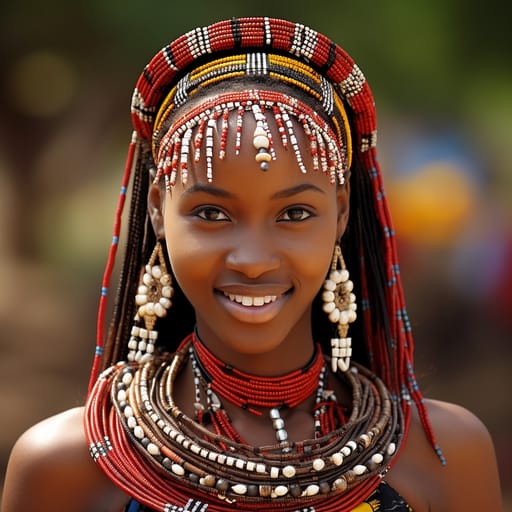
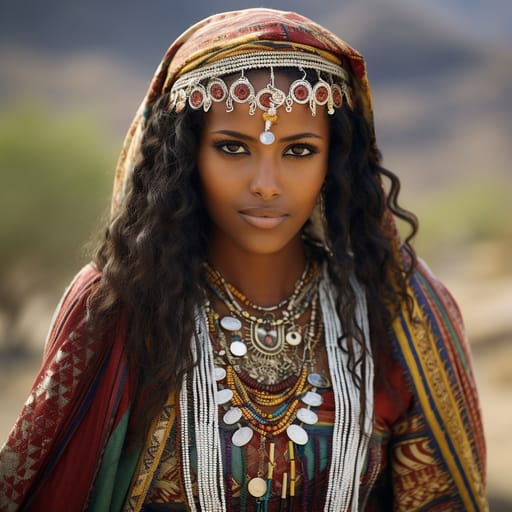
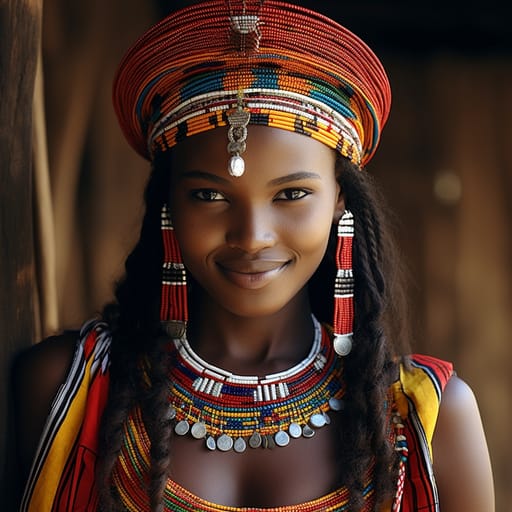
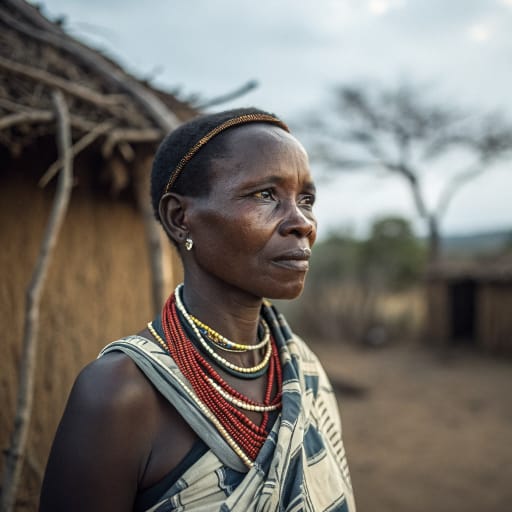
Typical Okiek Phenotypes
Reference for AI generation: hair, eyes, skin, facial structure, build
Okiek Body & Anatomy Reference
Cushitic / Nilo-Cushitic East African phenotype: anatomy reference for AI nude generation
Okiek Boobs & Breasts
The typical Okiek bust is small-to-medium-cup, high-set, conical, in line with the wider Cushitic / Nilo-Cushitic East African pattern. Areolas usually fall in the 28-38mm range, with moderate-to-high areolar pigmentation against the brown-to-deep-brown skin tone. Compared with the lateral spread of the West African phenotype, Okiek breasts sit forward and are generally firmer and less projecting than the African-American or West African norm. A faithful AI render of Okiek tits keeps that shape and areola size.
Okiek Ass & Hips
Butt shape among Okiek women: small-to-medium, high-set, rounded, over narrow-to-medium iliac crests, longer torso-to-leg ratio. This follows Cushitic / Nilo-Cushitic East African ancestry and looks quite unlike the wide-set heavy-projection West African or African-American norm. An accurate Okiek ass in adult AI imagery keeps both the silhouette and the overall build (lean ectomorph-to-mesomorph) instead of a generic average.
Okiek Vagina & Pussy
Vulvar anatomy among Okiek women: brown-to-deep-brown labial pigmentation, narrow-to-medium labia minora projection. Pubic hair tends to be tightly-coiled coarse texture, densely distributed, in the usual inverted-triangle pattern. Both follow Cushitic / Nilo-Cushitic East African pigmentation, which is why Okiek pussy renders should not fall back on a pale, sparse Western template.
Okiek Dicks & Penis
The Okiek cock profile, from Cushitic / Nilo-Cushitic East African anthropometric data: regional mean ~13.5cm erect; moderate girth, ~12cm circumference; deeper-pigmented than the West African norm. Pubic hair has a tightly-coiled coarse texture and forms the usual inverted-V pattern. Whether Okiek men are circumcised follows religious and cultural practice rather than phenotype.
Okiek Body, Curves & Build
Build and curves among Okiek women follow the Cushitic / Nilo-Cushitic East African pattern: lean ectomorph-to-mesomorph, mean adult female BMI 19-22. Proportions matter as much as skin tone, so Okiek figures should keep their regional height and limb ratios.
Okiek Skin Tone & Hair Texture
The Okiek skin range is brown to deep brown (Fitzpatrick V-VI), and hair tends to be tight 4A-4C coil, often worn natural or in braided/twisted protective styles. That combination marks the Cushitic / Nilo-Cushitic East African phenotype, and skin tone is the trait AI generators most often get wrong for Okiek women.
Explore phenotype categories
Structured taxonomy with peer-reviewed scales · 22 anatomical categories
Erotic Poses & Sex Positions
From the pose catalog: 219 named positions with reference skeletons
Frequently asked questions about Okiek people
Where is the Okiek homeland?
The Okiek homeland is Highland forests of Kenya, chiefly the Mau Forest complex and Mount Elgon, with the related Akie communities in northern Tanzania in Eastern Africa.
What language do Okiek people speak?
Okiek people primarily speak Okiek (Kalenjin, Southern Nilotic); many also speak Kipsigis, Nandi, Maasai or Swahili, and some groups have shifted to Maasai.
What religion do Okiek people practice?
The predominant religion among Okiek people is Largely Christian, with older Kalenjin-related beliefs and forest ceremonial sites still important to many.






Make your own Okiek images
Five a day, free, no credits to buy. The studio starts from this group's phenotype data, so you can set body type, pose and style and keep the traits accurate.
Start with Okiek