- Home/
- World/
- Eastern Africa/
- Matengo
Matengo Erotic
Matengo Highlands around Mbinga, Ruvuma Region, southern Tanzania, above the eastern shore of Lake Nyasa
Matengo, or Kimatengo (Bantu, Niger-Congo); Swahili widely used as a second language
Predominantly Roman Catholic, with smaller communities of other faiths
Bantu people of southern Tanzania, closely related to the neighboring Mpoto and Manda; linguistically part of the Manda group (Guthrie N10)
About Matengo People
Among the peoples of southern Tanzania, the Matengo are the ones most closely tied to a single landscape. They are a Bantu-speaking farming people of the Matengo Highlands in Ruvuma Region. It is steep, rainy country, all ridges and narrow valleys, rising above the eastern shore of Lake Nyasa, with the town of Mbinga at its center. Who they are is bound up with that land and with the unusual way they learned to farm it.
That method is ngolo, usually called the Matengo pit system. On slopes that would lose their topsoil to ordinary hoeing, farmers cut grass and weeds, lay them out in a square grid, and heap soil from the middle of each square over the top. The finished field looks like a hillside waffle: rows of pits boxed in by ridges. The buried plants rot into fertilizer, and the pits catch rainwater and silt before they can wash downhill. Beans and maize take turns in the same field from one season to the next. Researchers have studied ngolo for decades as a working example of homegrown soil conservation, and Matengo farmers still build it by hand.
The highlands were partly a refuge. In the nineteenth century the Ngoni, descendants of Nguni migrants from southern Africa, settled around Songea and raided the surrounding country, and many Matengo pulled back into the mountains. Crowding onto steep ground helped push farming toward intensive methods like ngolo. Colonial rule brought other pressures: German and later British administration, and a steady stream of men leaving to work on plantations far from home. Arabica coffee took hold on the upper slopes during the twentieth century. Mbinga is still one of Tanzania's major coffee districts, and each season's prices shape household budgets.
The Matengo language, Kimatengo, belongs to a small group of related Bantu languages on the Tanzanian side of Lake Nyasa. Its closest relatives are Mpoto, spoken by lakeshore neighbors, and Manda. Swahili is the language of school, trade and government, and most people switch between the two without thinking about it. Religious life is strongly Catholic. Benedictine missionaries arrived early in the colonial period, and today the Diocese of Mbinga runs a dense network of parishes, schools and health centers across the highlands. In these hills the church is as familiar a sight as the pitted fields.
Related ethnic groups
Groups that share Matengo's homeland, region, language, or religious tradition — likely candidates for comparative phenotype reference.
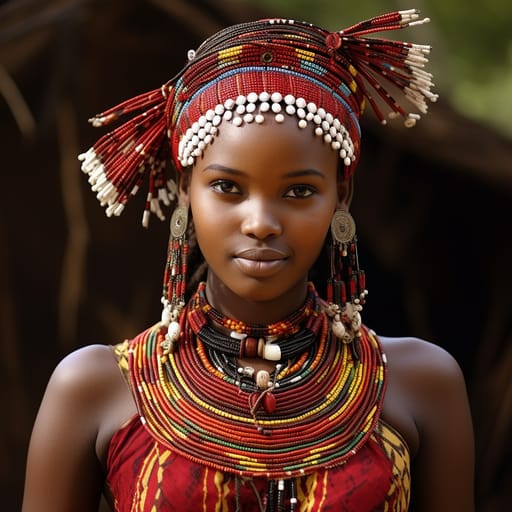
Typical Matengo Phenotypes
Reference for AI generation — hair, eyes, skin, facial structure, build
Matengo Body & Anatomy Reference
Per-feature anatomical profile for AI nude generation — Cushitic / Nilo-Cushitic East African phenotype
Matengo Boobs & Breasts
Matengo tits and boobs run small-to-medium-cup, high-set, conical — the classic Cushitic / Nilo-Cushitic East African bust profile. Matengo nipples and areolas show moderate-to-high areolar pigmentation against the brown-to-deep-brown skin tone, with areolar diameter typically in the 28-38mm range and forward-set positioning rather than the lateral spread of the West African phenotype. Matengo breasts trend firmer and less projecting than the African-American or West African norm, a function of the lean ectomorph-to-mesomorph body habitus and the mean adult female BMI 19-22. For anatomically-accurate AI-generated Matengo nudes the render preserves: small-to-medium-cup, high-set, conical shape, 28-38mm areolas with moderate-to-high pigmentation, and the torso proportions of the Cushitic / Nilo-Cushitic East African phenotype.
Matengo Ass & Hips
Matengo ass and hip morphology presents as small-to-medium, high-set, rounded — distinctly different from the wide-set heavy-projection West African or African-American norm. The Matengo pelvic profile shows narrow-to-medium iliac crests, longer torso-to-leg ratio, anchored in the Cushitic / Nilo-Cushitic East African skeletal pattern. Matengo butt shots in adult AI imagery should render the small-to-medium, high-set, rounded silhouette with the lean ectomorph-to-mesomorph build and the gluteal-femoral fat distribution typical of the Cushitic / Nilo-Cushitic East African phenotype rather than defaulting to a globally-averaged "ethnic" butt that generic AI generators produce. The hip-to-waist ratio characteristic of Matengo women is one of the identifying features of the Cushitic / Nilo-Cushitic East African regional phenotype.
Matengo Vagina & Pussy
Matengo pussy and vulvar anatomy presents brown-to-deep-brown labial pigmentation, narrow-to-medium labia minora projection — consistent with the Cushitic / Nilo-Cushitic East African phenotype's pigmentation pattern. Matengo pubic hair is typically tightly-coiled coarse texture, densely distributed, distributed in the inverted-triangle pattern with regional-typical density. AI-generated Matengo nude imagery should preserve the brown-to-deep-brown labial pigmentation and the tightly-coiled coarse texture hair texture rather than defaulting to a Western-European pink-and-sparse template. For anatomically-accurate Matengo pussy renders the labial pigmentation and coloration should match the surrounding brown to deep brown skin tone of the Cushitic / Nilo-Cushitic East African phenotype, with continuous gradient rather than an abrupt color transition.
Matengo Dicks & Penis
Matengo dick and penile anatomy in adult AI generation should anchor on the regional reference data: regional mean ~13.5cm erect, moderate girth, ~12cm circumference, and deeper-pigmented than the West African norm. The Matengo cock profile reflects the Cushitic / Nilo-Cushitic East African ancestral population's anthropometric measurements rather than a globally-averaged Western-pornography default. For anatomically-accurate Matengo nude male imagery the shaft pigmentation should track the surrounding brown to deep brown skin tone, the glans-to-shaft pigmentation transition should be continuous, and the pubic hair pattern should match tightly-coiled coarse texture texture distributed in the typical inverted-V escutcheon. Circumcision status in Matengo populations varies by religious-cultural tradition rather than ancestral phenotype.
Matengo Body, Curves & Build
Matengo body type and overall build presents as lean ectomorph-to-mesomorph, with mean adult female BMI 19-22 — the characteristic Cushitic / Nilo-Cushitic East African habitus. Matengo curves and proportions in adult AI imagery should preserve the regional skeletal frame (height, shoulder-to-hip ratio, limb proportions) rather than scaling to a Western-European mesomorph default. The Matengo nude female form, when rendered with anatomical fidelity, shows the height range, frame width, and adipose distribution pattern typical of the Cushitic / Nilo-Cushitic East African phenotype. Generic AI image generators tend to collapse regional body types into a few default shapes; the EthnicErotic phenotype-anchored approach preserves the Matengo build as its own reference category.
Matengo Skin Tone & Hair Texture
Matengo skin tone falls in the brown to deep brown (Fitzpatrick V-VI) band — the surface signal most often miscalibrated by generic AI nude generators trained on Western-photographic datasets. Matengo hair texture is typically tight 4A-4C coil, often worn natural or in braided/twisted protective styles, characteristic of the Cushitic / Nilo-Cushitic East African phenotype. For anatomically-accurate Matengo nude renders the skin should hold the Fitzpatrick band consistently across body surface rather than showing the lighter-than-face body shading that AI generators default to. Matengo hair pigmentation and texture on body, pubic, and head should match across the figure rather than mixing textures (a common AI artefact).
Explore phenotype categories
Structured taxonomy with peer-reviewed scales · 22 anatomical categories
Erotic Poses & Sex Positions
From the pose catalog — 219 named positions with reference skeletons
Frequently asked questions about Matengo people
Where is the Matengo homeland?
The Matengo homeland is Matengo Highlands around Mbinga, Ruvuma Region, southern Tanzania, above the eastern shore of Lake Nyasa in Eastern Africa.
What language do Matengo people speak?
Matengo people primarily speak Matengo, or Kimatengo (Bantu, Niger-Congo); Swahili widely used as a second language.
What religion do Matengo people practice?
The predominant religion among Matengo people is Predominantly Roman Catholic, with smaller communities of other faiths.

What does a typical Matengo woman look like?
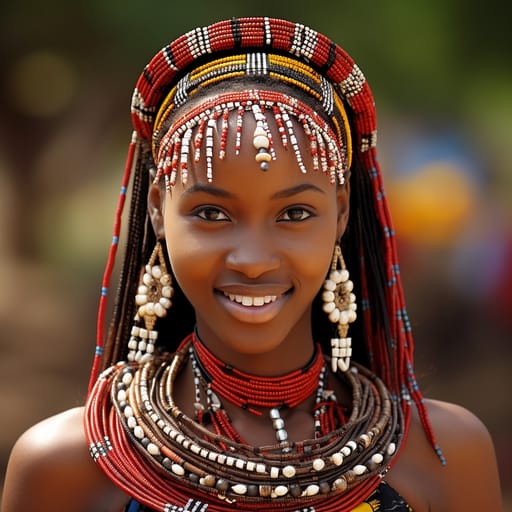
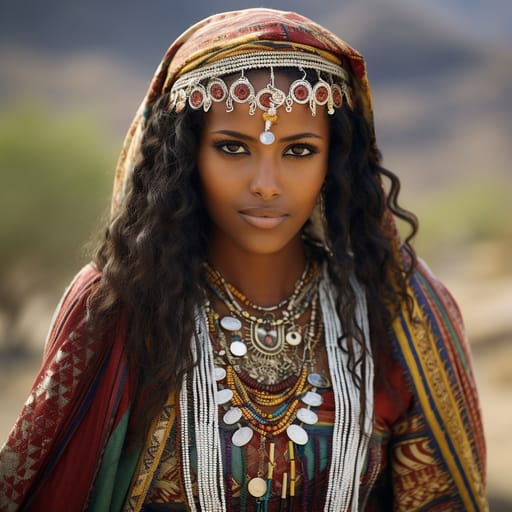
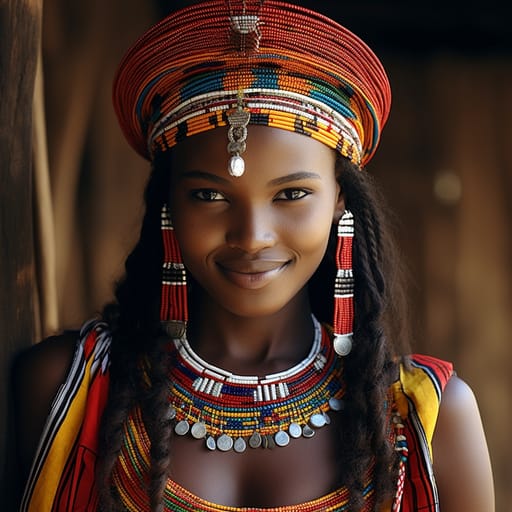
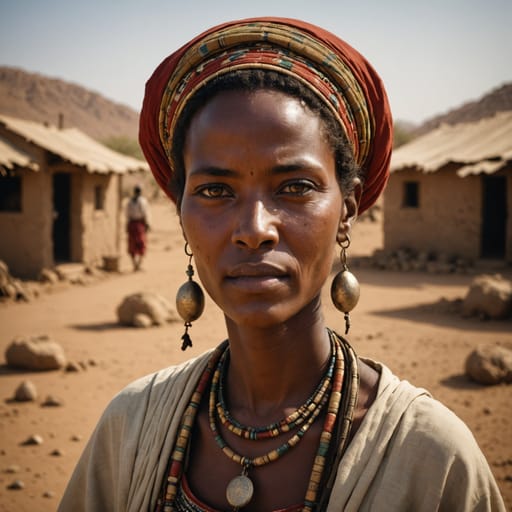
In appearance, the Matengo resemble the other Bantu-speaking peoples of southern Tanzania, with brown to dark brown skin and tightly coiled black hair. Everyday dress in the highlands is practical farm and town clothing, and women often wear kanga or kitenge wraps and headscarves.
Make your own Matengo images
Five a day, free, no credits to buy. The studio starts from this group's phenotype data, so you can set body type, pose and style and keep the traits accurate.
Start with Matengo