Help us get this right
Does this portrait look right for Lokoya?
One tap. It takes a second and it is recorded.
1 says it looks right, 0 say it looks off.
Lokoya Erotic
Hill villages between Juba and Torit, South Sudan, including Liria, Lokiliri, Ngangala, Langabu, Ngulere and Lowoi, across the Central and Eastern Equatoria boundary; many now live in Juba.
Lokoya, also called Oxoriok (Eastern Nilotic, Lotuko cluster, Nilo-Saharan); Bari, Otuho and Juba Arabic are common second languages.
Christianity, mainly Catholic and Episcopal, alongside traditional religion centered on hereditary rainmakers.
Part of the Lotuko cluster of Eastern Nilotic peoples, with the Lotuko, Lopit, Dongotono and Lango of South Sudan; broadly split between western villages around Liria and eastern villages around Lowoi.
About Lokoya People
The Lokoya are a hill people of the country between Juba and Torit in South Sudan, and the road connecting those two towns runs straight through their territory. Their villages, among them Liria, Lokiliri, Ngangala, Langabu and Ngulere, with Lowoi out toward Torit, sit on or against rocky outcrops that rise from the plain, sites chosen for defense long before there was a road. They call themselves Oxoriok, and older travel accounts know them as Ellyria, a rendering of Liria. They number in the tens of thousands, and published estimates disagree by a factor of two or more.
Their language belongs to the Lotuko cluster of Eastern Nilotic, which makes it a close relative of Otuho, Lopit and Dongotono and a more distant cousin of Maasai, Teso and Bari. The western Lokoya around Liria have lived beside the Bari for generations and show it in borrowed words, intermarriage and shared rain ritual, while the eastern villages lean toward the Lotuko. Most people also get by in Juba Arabic.
What organizes a Lokoya village is the monyomiji, the generation of men in their prime who collectively hold responsibility for defense, discipline and public decisions. They do not hold it forever. Every decade or two a younger generation pushes them out in a formal handover, and the retired men become elders with advice to give but no power to enforce it. Alongside the monyomiji stands the rainmaker, a hereditary figure expected to deliver the rains that sorghum, millet and groundnuts depend on. The relationship is tense by design. A rainmaker whose season fails gets blamed, fined, threatened or driven out, and the anthropologist Simon Simonse built a whole theory of kingship on such confrontations in Lokoya country and among its neighbors. Cattle and goats matter most as bridewealth and standing.
Outsiders arrived early because of the location. Samuel Baker forced his way through the Ellyria pass in 1863, racing a party of Khartoum ivory traders, and left an unflattering portrait of the local chief, Legge. The ivory and slave trade out of Gondokoro bled the area for decades, then came colonial administration and missions that made most Lokoya at least nominally Christian without displacing rain ritual. During the second Sudanese civil war Liria was a garrison on a contested road, and many families fled to Juba or across the borders to Uganda and Kenya. Insecurity on the same road after 2013 repeated the pattern. A large share of Lokoya life now happens in Juba, but the hill villages remain the places where generations are handed over and where rain is still somebody's job.
Related ethnic groups
Groups that share Lokoya's homeland, region, language, or religious tradition. These are likely candidates for comparative phenotype reference.
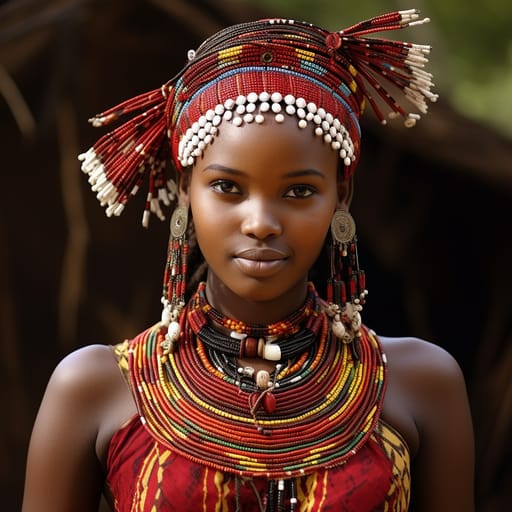
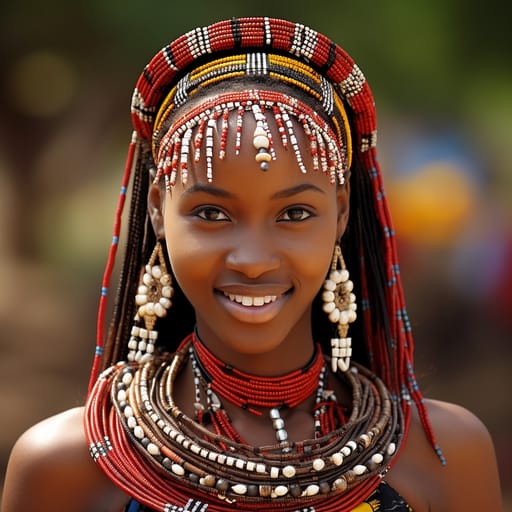
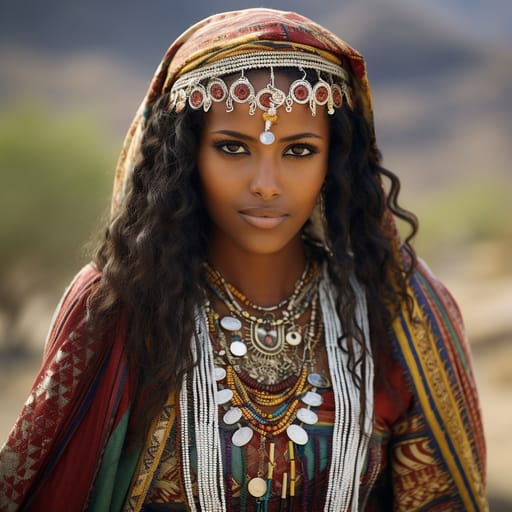
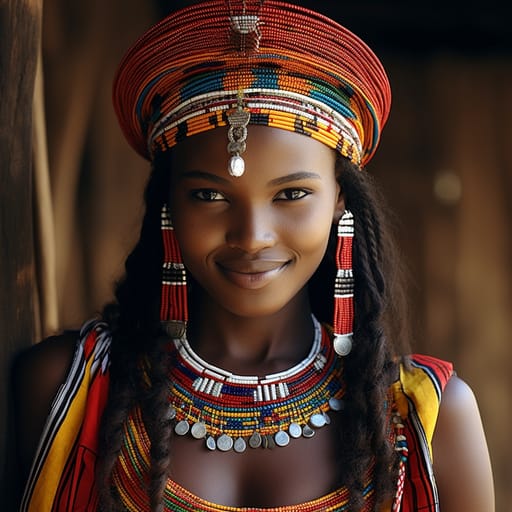
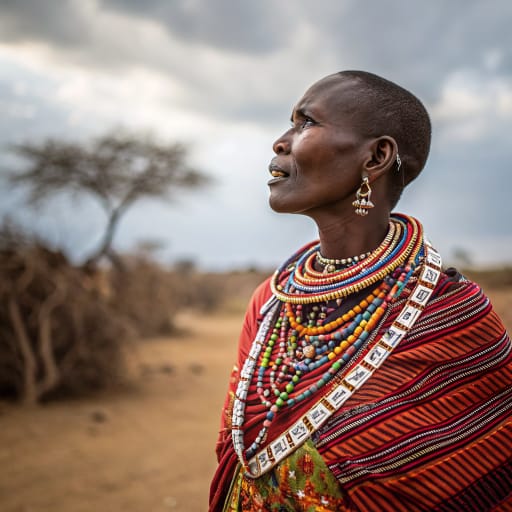
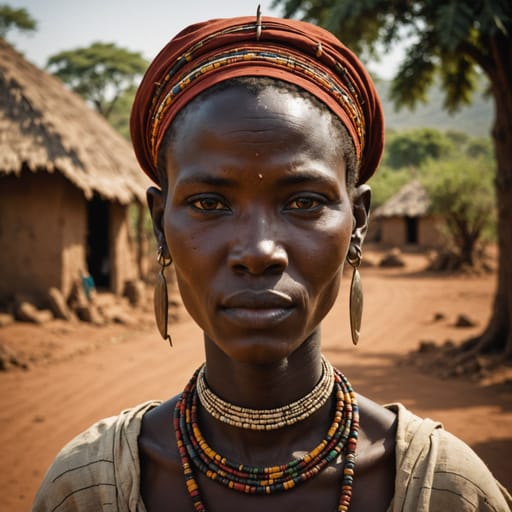
Typical Lokoya Phenotypes
Reference for AI generation: hair, eyes, skin, facial structure, build
Lokoya Body & Anatomy Reference
Cushitic / Nilo-Cushitic East African phenotype: anatomy reference for AI nude generation
Lokoya Boobs & Breasts
Bust reference for Lokoya women: small-to-medium-cup, high-set, conical, which is typical of Cushitic / Nilo-Cushitic East African ancestry. Areolas measure about 28-38mm across, with moderate-to-high pigmentation. Body type (lean ectomorph-to-mesomorph) shapes the bust as well, so Lokoya tits are usually firmer and less projecting than the African-American or West African norm. In AI imagery, keep the forward-set shape rather than drifting toward the lateral spread of the West African phenotype.
Lokoya Ass & Hips
The Lokoya ass is typically small-to-medium, high-set, rounded, which sets it apart from the wide-set heavy-projection West African or African-American norm. Underneath, the pelvis shows narrow-to-medium iliac crests, longer torso-to-leg ratio, part of the Cushitic / Nilo-Cushitic East African skeletal pattern. For Lokoya butt pics and AI renders, match that silhouette and the overall build (lean ectomorph-to-mesomorph).
Lokoya Vagina & Pussy
Lokoya pussy and vulvar anatomy presents brown-to-deep-brown labial pigmentation, narrow-to-medium labia minora projection, consistent with the Cushitic / Nilo-Cushitic East African phenotype's pigmentation pattern. Lokoya pubic hair is typically tightly-coiled coarse texture, densely distributed, in the inverted-triangle pattern. For anatomically accurate Lokoya pussy renders the labial coloration should match the surrounding brown to deep brown skin tone with a continuous gradient, and the hair should keep its tightly-coiled coarse texture.
Lokoya Dicks & Penis
Lokoya dicks follow the Cushitic / Nilo-Cushitic East African reference data: regional mean ~13.5cm erect; moderate girth, ~12cm circumference; deeper-pigmented than the West African norm. Shaft color should track the brown to deep brown skin tone with a smooth change toward the glans, and Lokoya pubic hair keeps its tightly-coiled coarse texture.
Lokoya Body, Curves & Build
Lokoya body type and overall build presents as lean ectomorph-to-mesomorph, with mean adult female BMI 19-22: the characteristic Cushitic / Nilo-Cushitic East African habitus. Lokoya curves and proportions should keep the regional skeletal frame (height, shoulder-to-hip ratio, limb proportions) rather than a generic mesomorph default.
Lokoya Skin Tone & Hair Texture
Lokoya skin sits in the brown to deep brown (Fitzpatrick V-VI) band. Hair is typically tight 4A-4C coil, often worn natural or in braided/twisted protective styles, in keeping with the Cushitic / Nilo-Cushitic East African phenotype. In nude renders the skin should stay one even tone from face to body, and body, pubic and head hair should match.
Explore phenotype categories
Structured taxonomy with peer-reviewed scales · 22 anatomical categories
Erotic Poses & Sex Positions
From the pose catalog: 219 named positions with reference skeletons
Frequently asked questions about Lokoya people
Where is the Lokoya homeland?
The Lokoya homeland is Hill villages between Juba and Torit, South Sudan, including Liria, Lokiliri, Ngangala, Langabu, Ngulere and Lowoi, across the Central and Eastern Equatoria boundary; many now live in Juba. in Eastern Africa.
What language do Lokoya people speak?
Lokoya people primarily speak Lokoya, also called Oxoriok (Eastern Nilotic, Lotuko cluster, Nilo-Saharan); Bari, Otuho and Juba Arabic are common second languages..
What religion do Lokoya people practice?
The predominant religion among Lokoya people is Christianity, mainly Catholic and Episcopal, alongside traditional religion centered on hereditary rainmakers..






Make your own Lokoya images
Five a day, free, no credits to buy. The studio starts from this group's phenotype data, so you can set body type, pose and style and keep the traits accurate.
Start with Lokoya