No portrait yet
Nyoro Erotic
Bunyoro, the districts around Hoima, Masindi, Kikuube and Buliisa east of Lake Albert, western Uganda
Runyoro, written and taught with Rutooro as one standard (Bantu, Niger-Congo)
Christian majority, Catholic and Anglican, with a Muslim minority; mbandwa spirit mediumship persists alongside
Babiito royal clan and the older Bachwezi traditions; historic Bairu and Bahuma division; part of the interlacustrine Bantu grouping, closest to the Tooro
About Nyoro People
The Nyoro, who call themselves Banyoro, are the people of Bunyoro, a kingdom on the plateau east of Lake Albert in western Uganda. What identifies them first is not geography but a court. Bunyoro-Kitara is one of the older continuous kingships in the African Great Lakes, ruled by the Babiito dynasty since roughly the sixteenth century and headed by an Omukama whose office survived abolition and came back. Banyoro also reckon their history through what preceded the Babiito: the half-remembered Bachwezi rulers of Kitara, who left behind earthworks, cattle traditions and a spirit cult that outlived them.
Runyoro is an interlacustrine Bantu language, close enough to Rutooro that the two are printed and taught as a single standard, and broadly intelligible with the Runyankore and Rukiga spoken further south. Anyone spending time in Bunyoro learns the empaako early. Alongside a personal name and a clan name, every Munyoro carries one of about a dozen praise names, Amooti, Abwooli, Akiiki, Adyeri and the rest, and it is the empaako rather than the given name that people use to greet one another. Okaali belongs to the king alone. UNESCO listed the practice as heritage in need of urgent safeguarding, which tells you it is thinning among younger and urban speakers.
Most Banyoro are Christian, with Catholic and Anglican both well represented and a Muslim minority, though mbandwa spirit mediumship has not vanished so much as gone quiet and domestic. Society historically distinguished Bairu cultivators from Bahuma cattle keepers, a difference colonial administrators hardened into something more rigid than it had been. On the lake shore at Kibiro, salt has been drawn from saline springs in the same gardens for close to a thousand years, worked mainly by women, one of the few industries anywhere with that kind of documented continuity in a single place.
The nineteenth century ended badly. Omukama Kabalega fought the British for most of a decade with a standing army, the abarusura, and was captured in 1899 and exiled to the Seychelles. Bunyoro lost territory in the settlement that followed, and the counties of Buyaga and Bugangaizi went to Buganda. Banyoro spent sixty years calling them the Lost Counties and voted them back in a 1964 referendum. Obote abolished the kingdoms in 1967, and they returned as cultural institutions in 1993. The live argument now is oil: the Albertine fields lie under Bunyoro, and the questions are about land, compensation and who counts as local.
Related ethnic groups
Groups that share Nyoro's homeland, region, language, or religious tradition. These are likely candidates for comparative phenotype reference.
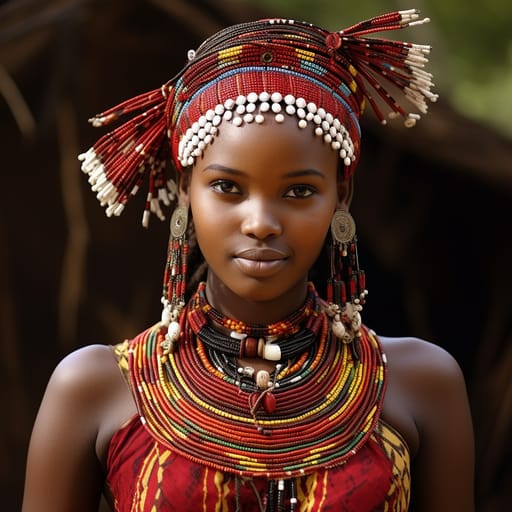
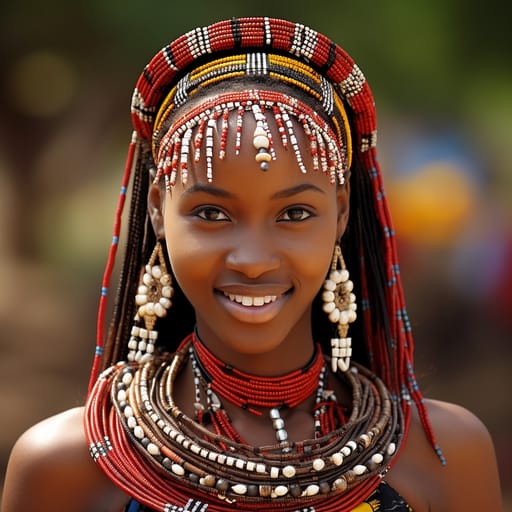
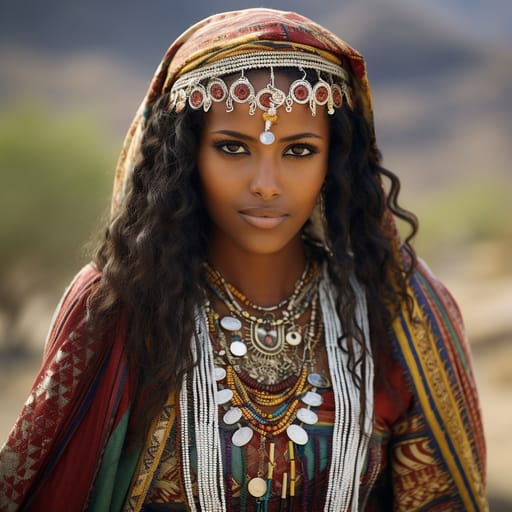
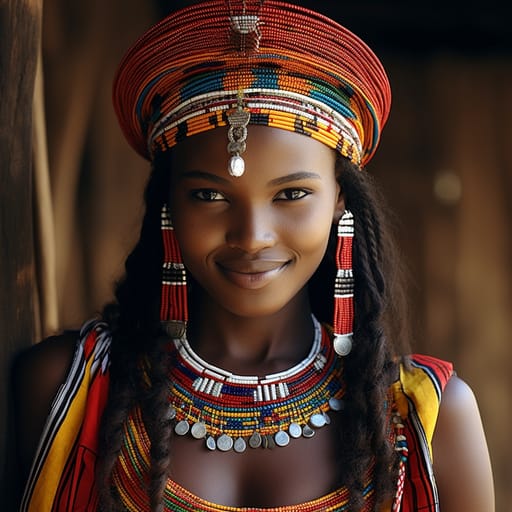
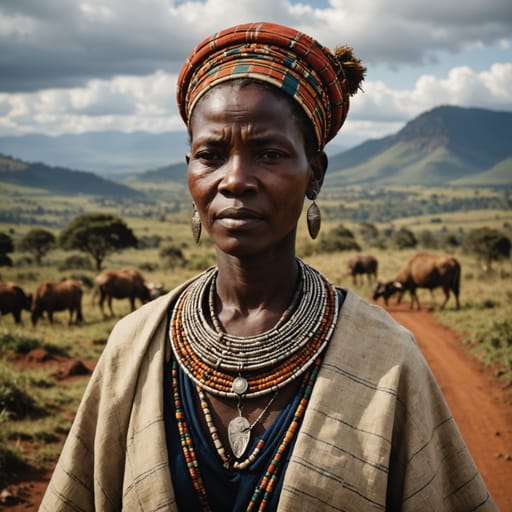
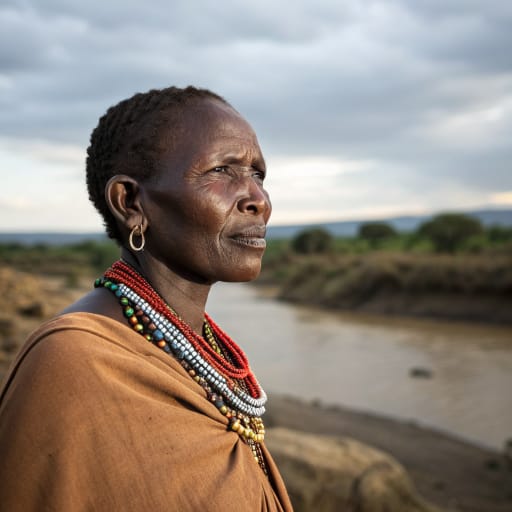
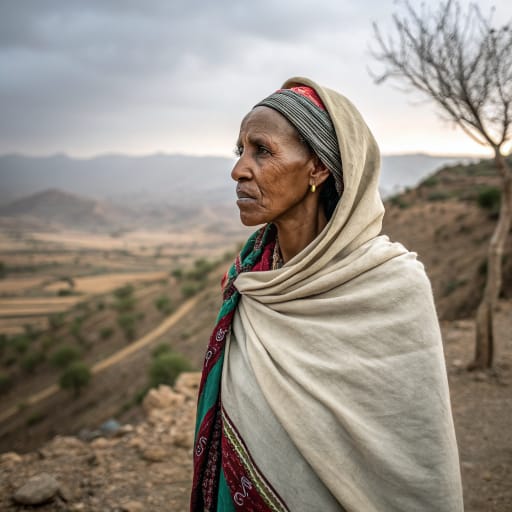
Typical Nyoro Phenotypes
Reference for AI generation: hair, eyes, skin, facial structure, build
Nyoro Body & Anatomy Reference
Per-feature anatomical profile for AI nude generation: Cushitic / Nilo-Cushitic East African phenotype
Nyoro Boobs & Breasts
The typical Nyoro bust is small-to-medium-cup, high-set, conical, in line with the wider Cushitic / Nilo-Cushitic East African pattern. Areolas usually fall in the 28-38mm range, with moderate-to-high areolar pigmentation against the brown-to-deep-brown skin tone. Compared with the lateral spread of the West African phenotype, Nyoro breasts sit forward and are generally firmer and less projecting than the African-American or West African norm. A faithful AI render of Nyoro tits keeps that shape and areola size.
Nyoro Ass & Hips
Butt shape among Nyoro women: small-to-medium, high-set, rounded, over narrow-to-medium iliac crests, longer torso-to-leg ratio. This follows Cushitic / Nilo-Cushitic East African ancestry and looks quite unlike the wide-set heavy-projection West African or African-American norm. An accurate Nyoro ass in adult AI imagery keeps both the silhouette and the overall build (lean ectomorph-to-mesomorph) instead of a generic average.
Nyoro Vagina & Pussy
Vulvar anatomy among Nyoro women: brown-to-deep-brown labial pigmentation, narrow-to-medium labia minora projection. Pubic hair tends to be tightly-coiled coarse texture, densely distributed, in the usual inverted-triangle pattern. Both follow Cushitic / Nilo-Cushitic East African pigmentation, which is why Nyoro pussy renders should not fall back on a pale, sparse Western template.
Nyoro Dicks & Penis
The Nyoro cock profile, from Cushitic / Nilo-Cushitic East African anthropometric data: regional mean ~13.5cm erect; moderate girth, ~12cm circumference; deeper-pigmented than the West African norm. Pubic hair has a tightly-coiled coarse texture and forms the usual inverted-V pattern. Whether Nyoro men are circumcised follows religious and cultural practice rather than phenotype.
Nyoro Body, Curves & Build
Build and curves among Nyoro women follow the Cushitic / Nilo-Cushitic East African pattern: lean ectomorph-to-mesomorph, mean adult female BMI 19-22. Proportions matter as much as skin tone, so Nyoro figures should keep their regional height and limb ratios.
Nyoro Skin Tone & Hair Texture
The Nyoro skin range is brown to deep brown (Fitzpatrick V-VI), and hair tends to be tight 4A-4C coil, often worn natural or in braided/twisted protective styles. That combination marks the Cushitic / Nilo-Cushitic East African phenotype, and skin tone is the trait AI generators most often get wrong for Nyoro women.
Explore phenotype categories
Structured taxonomy with peer-reviewed scales · 22 anatomical categories
Erotic Poses & Sex Positions
From the pose catalog: 219 named positions with reference skeletons
Frequently asked questions about Nyoro people
Where is the Nyoro homeland?
The Nyoro homeland is Bunyoro, the districts around Hoima, Masindi, Kikuube and Buliisa east of Lake Albert, western Uganda in Eastern Africa.
What language do Nyoro people speak?
Nyoro people primarily speak Runyoro, written and taught with Rutooro as one standard (Bantu, Niger-Congo).
What religion do Nyoro people practice?
The predominant religion among Nyoro people is Christian majority, Catholic and Anglican, with a Muslim minority; mbandwa spirit mediumship persists alongside.






Make your own Nyoro images
Five a day, free, no credits to buy. The studio starts from this group's phenotype data, so you can set body type, pose and style and keep the traits accurate.
Start with Nyoro