No portrait yet
Opo Erotic
Lowlands of western Ethiopia, chiefly Gambela Region, and the adjoining border area of South Sudan
Opuuo, also written Opo or Shita (Koman)
One of the Koman-speaking peoples, alongside the Komo, Kwama and Uduk
About Opo People
The Opo are one of the least documented peoples of the lowlands where western Ethiopia meets South Sudan. What sets them apart is not a kingdom or a famous ritual. It is a language. Their speech, Opuuo, belongs to the Koman family, a small cluster of languages found only in this borderland. It is not closely related to the Nilotic languages of the Anuak and Nuer, who dominate the surrounding plains. Outsiders have written the name many ways: Opo, Opuuo, Shita, Ciita. So many spellings for so few people shows how rarely anyone has written about them at all.
Linguists have long struggled to place the Koman languages. Older classifications put them into the sprawling Nilo-Saharan grouping, and one proposal links them to Gumuz, spoken farther north. Many specialists now treat Koman as a small family of its own, with any deeper links unproven. Its other living members are Komo, Kwama and Uduk. Gule, once spoken in Sudan, has died out. None of these languages is large, and all are spoken in an area where knowing a neighbor's language is normal.
Their small numbers have a history. Through the nineteenth and early twentieth centuries the borderlands between Ethiopia and Sudan were a raiding frontier. Highland states and slave traders working out of the Nile valley both took captives from scattered lowland communities, and Koman-speaking peoples were among those caught between them. Later decades brought the long Sudanese civil wars, waves of refugees crossing into Gambela, and government resettlement programs on the Ethiopian side. Any community this size feels those pressures hard.
Outside observers have never recorded much detail about Opo daily life, and it would be dishonest to fill that gap with customs borrowed from better-known neighbors. What is clear is that they are a rural people of the Gambela lowlands. They share hot, seasonally flooded country with the Komo, the Anuak and, more and more, the Nuer. Above all, what keeps them a distinct people is the language they have held onto. In a region where larger groups set the terms on land and politics, keeping Opuuo alive is what keeps the Opo on the map.
Related ethnic groups
Groups that share Opo's homeland, region, language, or religious tradition. These are likely candidates for comparative phenotype reference.
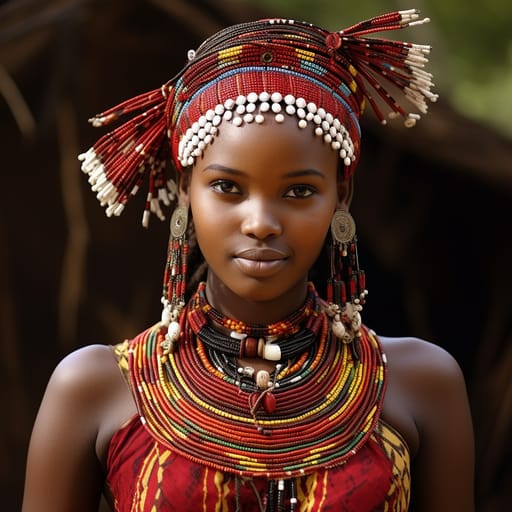
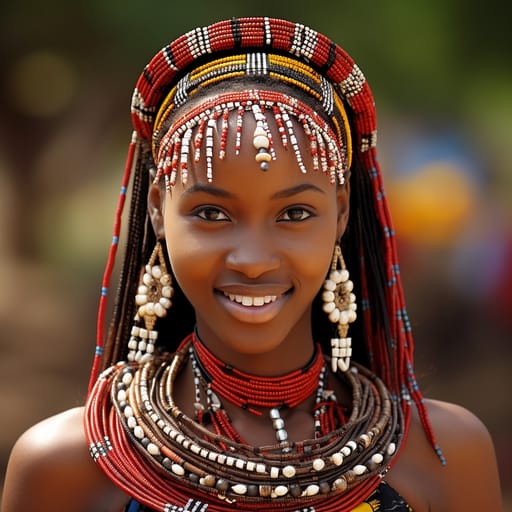
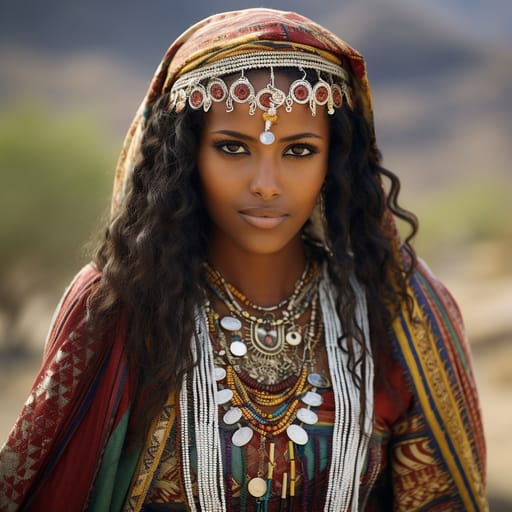
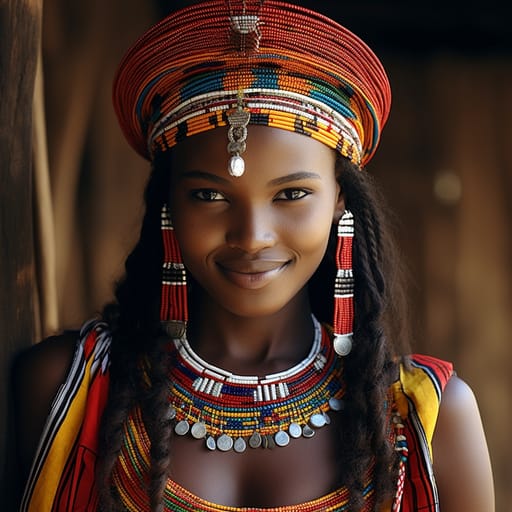
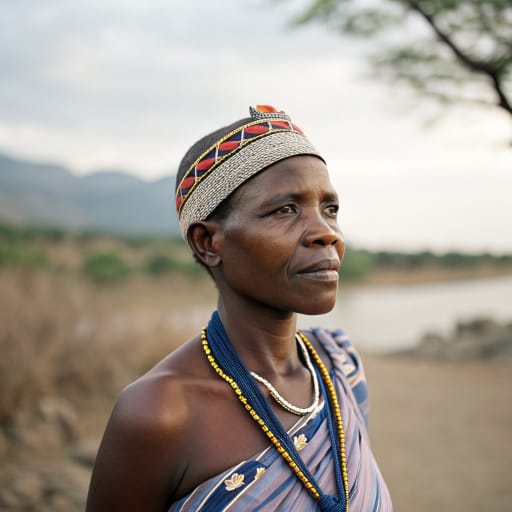
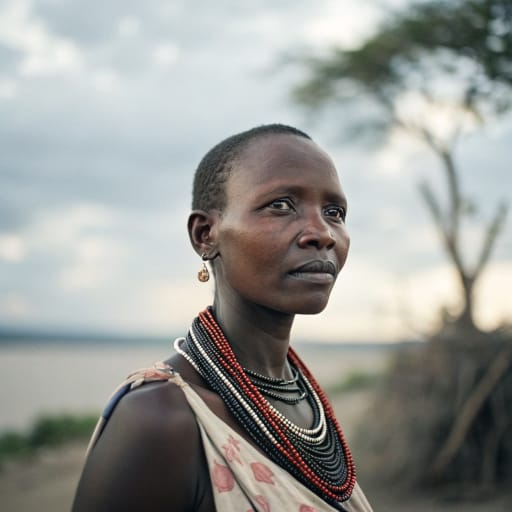
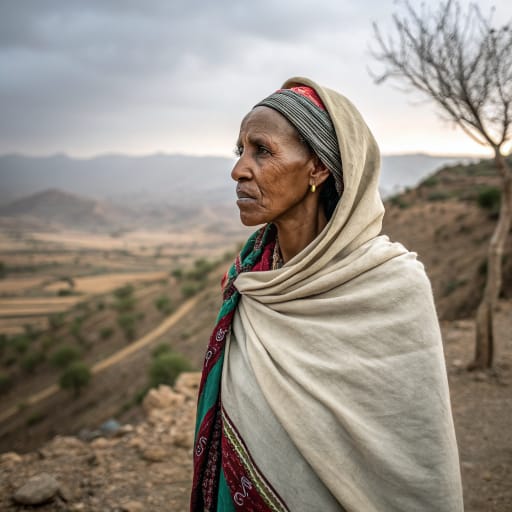
Typical Opo Phenotypes
Reference for AI generation: hair, eyes, skin, facial structure, build
Opo Body & Anatomy Reference
Anatomy by feature, Cushitic / Nilo-Cushitic East African phenotype
Opo Boobs & Breasts
Opo tits and boobs run small-to-medium-cup, high-set, conical, the classic Cushitic / Nilo-Cushitic East African bust profile. Opo nipples and areolas show moderate-to-high areolar pigmentation against the brown-to-deep-brown skin tone, with areolar diameter typically in the 28-38mm range and forward-set positioning rather than the lateral spread of the West African phenotype. Opo breasts trend firmer and less projecting than the African-American or West African norm, a function of the lean ectomorph-to-mesomorph body habitus and the mean adult female BMI 19-22. For anatomically accurate AI-generated Opo nudes the render preserves the small-to-medium-cup, high-set, conical shape, 28-38mm areolas with moderate-to-high pigmentation, and the torso proportions of the Cushitic / Nilo-Cushitic East African phenotype.
Opo Ass & Hips
Opo hips and butt usually read as small-to-medium, high-set, rounded. The skeletal base is narrow-to-medium iliac crests, longer torso-to-leg ratio, the Cushitic / Nilo-Cushitic East African pattern. Set against the wide-set heavy-projection West African or African-American norm, the difference is easy to see, and the hip-to-waist ratio is often what identifies Opo women in photos.
Opo Vagina & Pussy
Expect brown-to-deep-brown labial pigmentation, narrow-to-medium labia minora projection on Opo women, in keeping with Cushitic / Nilo-Cushitic East African ancestry. The pubic hair is tightly-coiled coarse texture, densely distributed. Coloring should run evenly from the brown to deep brown skin of the thighs to the labia, and Opo nude imagery should keep the hair's tightly-coiled coarse texture.
Opo Dicks & Penis
Opo dick and penile anatomy in adult AI generation should anchor on the regional reference data: regional mean ~13.5cm erect, moderate girth, ~12cm circumference, and deeper-pigmented than the West African norm. The Opo cock profile reflects the Cushitic / Nilo-Cushitic East African population's anthropometric measurements. The shaft pigmentation should track the surrounding brown to deep brown skin tone, and the pubic hair should keep its tightly-coiled coarse texture in the typical inverted-V escutcheon.
Opo Body, Curves & Build
Opo body type: lean ectomorph-to-mesomorph, with mean adult female BMI 19-22. This is the typical Cushitic / Nilo-Cushitic East African build. Height range, shoulder-to-hip ratio and fat distribution all follow from it, which is what an accurate Opo nude body should show.
Opo Skin Tone & Hair Texture
Opo skin tone falls in the brown to deep brown (Fitzpatrick V-VI) band, the surface signal most often miscalibrated by generic AI nude generators. Opo hair texture is typically tight 4A-4C coil, often worn natural or in braided/twisted protective styles, characteristic of the Cushitic / Nilo-Cushitic East African phenotype. In Opo nude renders the skin should hold that band consistently across the body.
Explore phenotype categories
Structured taxonomy with peer-reviewed scales · 22 anatomical categories
Erotic Poses & Sex Positions
From the pose catalog: 219 named positions with reference skeletons
Frequently asked questions about Opo people
Where is the Opo homeland?
The Opo homeland is Lowlands of western Ethiopia, chiefly Gambela Region, and the adjoining border area of South Sudan in Eastern Africa.
What language do Opo people speak?
Opo people primarily speak Opuuo, also written Opo or Shita (Koman).






Make your own Opo images
Five a day, free, no credits to buy. The studio starts from this group's phenotype data, so you can set body type, pose and style and keep the traits accurate.
Start with Opo