Help us get this right
Does this portrait look right for Mbeere?
Nobody has judged this one yet. You would be the first.
Mbeere Erotic
Lower, semi-arid southeastern slopes of Mount Kenya down to the Tana River: Mbeere North and Mbeere South in Embu County, Kenya, around Siakago, Kiritiri and Ishiara.
Kimbeere, usually treated as a dialect of Kiembu (Bantu, Niger-Congo; central Kenya cluster with Kikuyu, Kamba and Meru). Swahili and English widely used.
Predominantly Christian (Anglican, Catholic, Pentecostal); older belief in Ngai and consultation of diviner-healers persist alongside.
Central Kenya Bantu peoples, closest to the Embu; related to Kikuyu, Meru, Tharaka and Kamba. Internally organized by patrilineal clans grouped in two moieties, with Thathi and Nyangi generation classes.
About Mbeere People
The Mbeere are the people of the dry side of Mount Kenya. Their country begins where the mountain's green southeastern slopes give out and the land drops, hot and thorny, toward the Tana River, in what is now the lower, larger part of Embu County. That position defines them. Their closest kin, the Embu, farm tea and coffee in the rain uphill. The Mbeere got the lowlands: thin soils, unreliable seasons, and a farming tradition built around crops that forgive drought, such as millet, sorghum, cowpeas, green grams and pigeon peas, backed by goats, cattle and log beehives hung in trees. Oral tradition holds that the two were once a single people who parted after a conflict, and the languages bear that out. Kimbeere and Kiembu are close enough that linguists usually treat them as one language, part of the central Kenyan Bantu cluster that also includes Kikuyu, Kamba and Meru. The 2019 census counted a little under 200,000 Mbeere.
Older Mbeere society ran without chiefs. Authority sat with councils of elders, with patrilineal clans, and with two alternating generation classes, Thathi and Nyangi, whose work was largely ritual. Clans mattered most where land was concerned, and they came roaring back in the 1960s and 1970s, when the Kenyan government converted communal land to individual title. Descent groups that had been loosely organized suddenly compiled genealogies, swore oaths and argued their claims before adjudication committees, an episode the anthropologist Jack Glazier documented in detail. Administrative borders have moved around them too. Colonial officers folded the Mbeere into Embu District, a separate Mbeere District existed from 1996, and the 2010 constitution merged the two again, so the split of seats and budgets between uphill and downhill remains the live question in county politics.
Most Mbeere today are Christian. Anglican and Catholic missions came in the colonial period and Pentecostal churches have multiplied since, though diviner-healers still have clients and Ngai, the god tied to the mountain, has not been wholly displaced. The main towns are Siakago, Kiritiri and Ishiara. Two things have reshaped the economy. The Seven Forks hydroelectric dams on the Tana, long a mainstay of Kenya's power supply, flooded riverside farmland, and the Kiambere project in the 1980s displaced thousands of people. And muguka, a cheap, leafy variety of khat, has become the cash crop that millet never was. Mbeere farms grow much of the national supply, which is why a 2024 attempt by coastal counties to ban the leaf was felt here as a direct threat to school fees and household income.
Related ethnic groups
Groups that share Mbeere's homeland, region, language, or religious tradition. These are likely candidates for comparative phenotype reference.
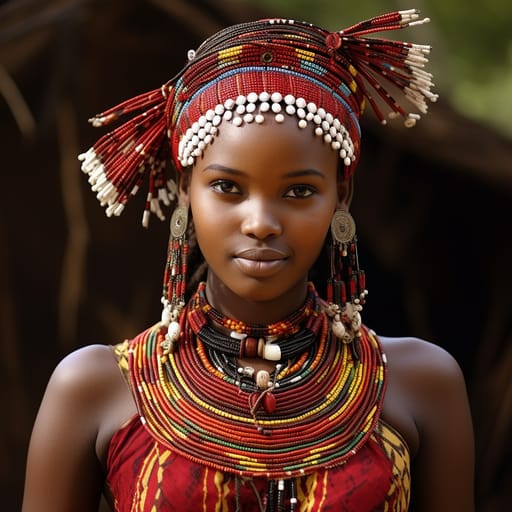
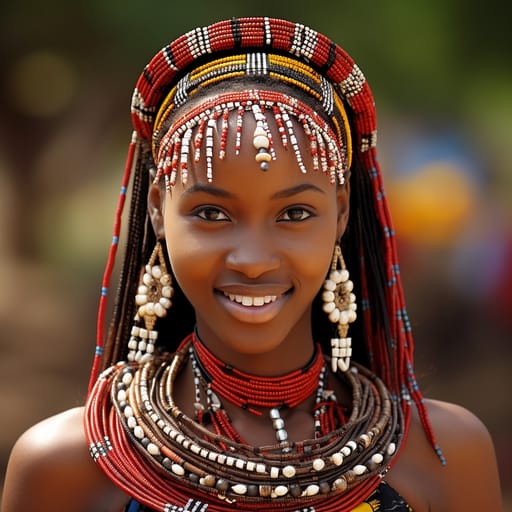
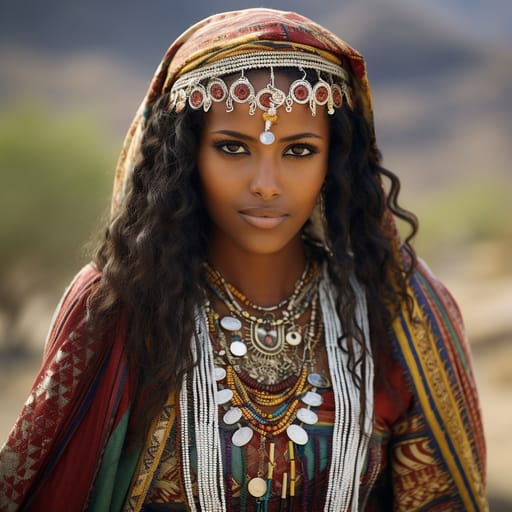
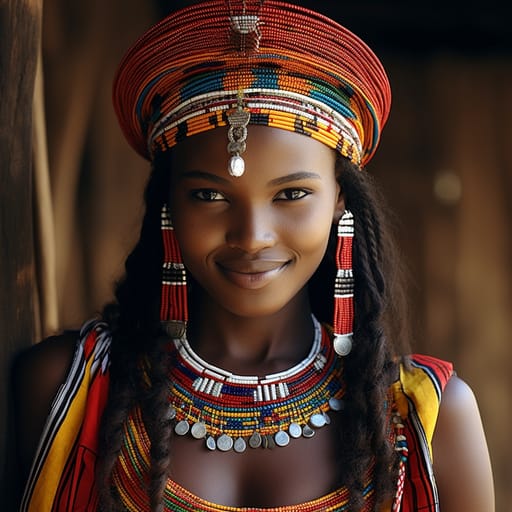
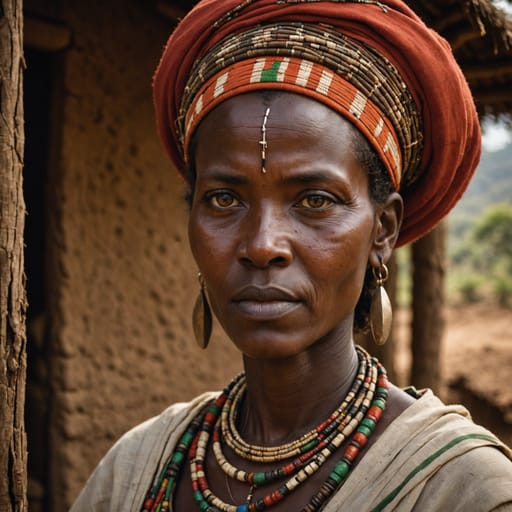
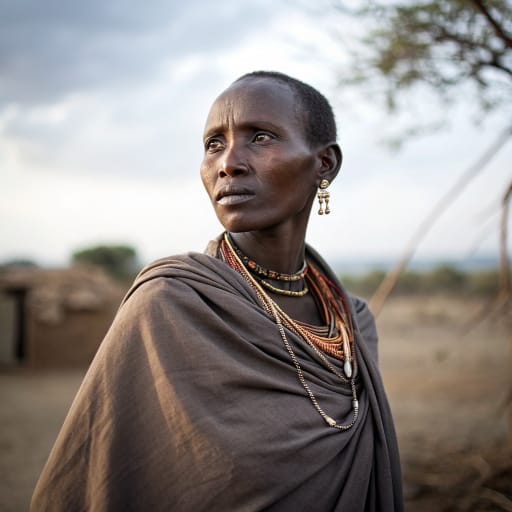
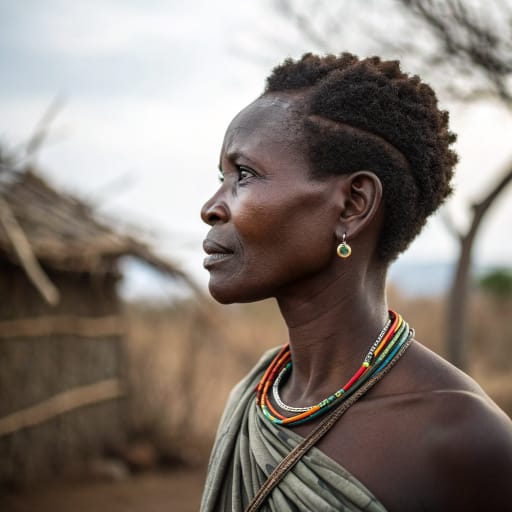
Typical Mbeere Phenotypes
Reference for AI generation: hair, eyes, skin, facial structure, build
Mbeere Body & Anatomy Reference
Cushitic / Nilo-Cushitic East African phenotype: anatomy reference for AI nude generation
Mbeere Boobs & Breasts
Mbeere boobs follow the Cushitic / Nilo-Cushitic East African profile: small-to-medium-cup, high-set, conical. Areolar diameter is usually 28-38mm, and the coloring is moderate-to-high areolar pigmentation against the brown-to-deep-brown skin tone. Breast shape tracks body composition (lean ectomorph-to-mesomorph, mean adult female BMI 19-22), so Mbeere breasts tend to be firmer and less projecting than the African-American or West African norm. Expect a forward-set shape, not the lateral spread of the West African phenotype.
Mbeere Ass & Hips
Mbeere ass and hip morphology presents as small-to-medium, high-set, rounded, distinctly different from the wide-set heavy-projection West African or African-American norm. The Mbeere pelvic profile shows narrow-to-medium iliac crests, longer torso-to-leg ratio, anchored in the Cushitic / Nilo-Cushitic East African skeletal pattern. Mbeere butt shots in adult AI imagery should render the small-to-medium, high-set, rounded silhouette with the overall build (lean ectomorph-to-mesomorph) and the fat distribution typical of the Cushitic / Nilo-Cushitic East African phenotype.
Mbeere Vagina & Pussy
Mbeere pussy anatomy typically shows brown-to-deep-brown labial pigmentation, narrow-to-medium labia minora projection. Pubic hair is usually tightly-coiled coarse texture, densely distributed. In AI-generated Mbeere nudes, labial color should blend into the brown to deep brown skin with a gradual transition, and the hair should keep its tightly-coiled coarse texture.
Mbeere Dicks & Penis
Penis reference for Mbeere men: regional mean ~13.5cm erect, moderate girth, ~12cm circumference. Coloring: deeper-pigmented than the West African norm. An accurate Mbeere cock in AI imagery matches the surrounding brown to deep brown skin rather than a generic porn default. Circumcision depends on religion and custom, not ancestry.
Mbeere Body, Curves & Build
The Mbeere figure is generally lean ectomorph-to-mesomorph, with mean adult female BMI 19-22, characteristic of Cushitic / Nilo-Cushitic East African ancestry. AI image tools tend to flatten regional body types into a few stock shapes; here the Mbeere build is kept as its own reference.
Mbeere Skin Tone & Hair Texture
Skin: brown to deep brown (Fitzpatrick V-VI). Hair: tight 4A-4C coil, often worn natural or in braided/twisted protective styles. Both are typical of Cushitic / Nilo-Cushitic East African ancestry. The most common mistake in AI nudes of Mbeere women is a body rendered lighter than the face.
Explore phenotype categories
Structured taxonomy with peer-reviewed scales · 22 anatomical categories
Erotic Poses & Sex Positions
From the pose catalog: 219 named positions with reference skeletons
Frequently asked questions about Mbeere people
Where is the Mbeere homeland?
The Mbeere homeland is Lower, semi-arid southeastern slopes of Mount Kenya down to the Tana River: Mbeere North and Mbeere South in Embu County, Kenya, around Siakago, Kiritiri and Ishiara. in Eastern Africa.
What language do Mbeere people speak?
Mbeere people primarily speak Kimbeere, usually treated as a dialect of Kiembu (Bantu, Niger-Congo; central Kenya cluster with Kikuyu, Kamba and Meru). Swahili and English widely used..
What religion do Mbeere people practice?
The predominant religion among Mbeere people is Predominantly Christian (Anglican, Catholic, Pentecostal); older belief in Ngai and consultation of diviner-healers persist alongside..






Make your own Mbeere images
Five a day, free, no credits to buy. The studio starts from this group's phenotype data, so you can set body type, pose and style and keep the traits accurate.
Start with Mbeere