No portrait yet
Kwavi Erotic
Central and eastern Tanzania, mainly the Morogoro, Tanga, Pwani and Dodoma regions; historically the plains around Kilimanjaro in northern Tanzania and southern Kenya.
Maa, Parakuyo dialect (Nilotic, Eastern branch); Swahili widely spoken as a second language (Bantu)
Traditional Maa religion centered on Enkai and ritual specialists, alongside growing Christianity.
Maa-speaking peoples; usually identified with the Parakuyo (Baraguyu), and historically one of the Iloikop groups, along with the Laikipiak and Uasin Gishu.
About Kwavi People
The Kwavi speak Maa and share the Maasai's cattle economy and age-set system, but they have long been seen as a separate people. The name reached English through Swahili traders and missionaries. In 1854 Johann Ludwig Krapf published a vocabulary of what he called the language of the Wakuafi, a nation of the interior. Today the name usually means the people who call themselves Ilparakuyo, also known as Baraguyu. They are herders spread across central and eastern Tanzania, from the Tanga hinterland and the coastal plain to the Morogoro lowlands and the drier country toward Dodoma.
Their story turns on a break in the nineteenth century. The Maasai grouped several Maa-speaking communities together as Iloikop, among them the Kwavi, the Laikipiak and the Uasin Gishu. Over decades of fighting for cattle and pasture, the pastoral Maasai sections defeated them one by one. The victors absorbed some survivors. Others took refuge among farming communities around Kilimanjaro, and others kept their herds and pushed south, far beyond Maasai country. That move south is why Parakuyo homesteads now sit among Bantu-speaking farmers, and why most Parakuyo also speak Swahili.
Cattle still decide what counts as a good life. Bridewealth, alliances between families and personal standing are all counted in livestock. Boys pass through circumcision into the warrior grade, and later become elders who settle disputes and lead rituals. Religious life centers on Enkai, the Maa word for God, and on ritual specialists whom people consult about age-set ceremonies, drought and misfortune. Christianity has made steady gains, often practiced alongside the older rites rather than replacing them.
Today the main pressure is land. Villagization in the 1970s, spreading farms and protected areas have all cut into seasonal grazing routes, and fights with farming neighbors in Morogoro and elsewhere have at times turned deadly. More Parakuyo households now grow maize next to their herds, send their children to school and work in towns. They still keep the shuka, the beadwork and the cycle of age-sets. They survived defeat by moving on, and now they are running out of places to go.
Related ethnic groups
Groups that share Kwavi's homeland, region, language, or religious tradition. These are likely candidates for comparative phenotype reference.
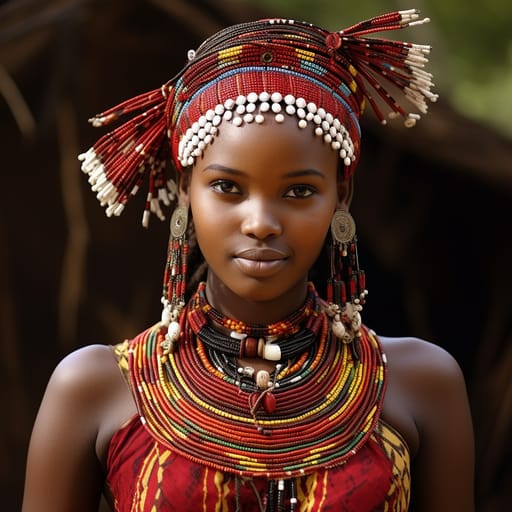
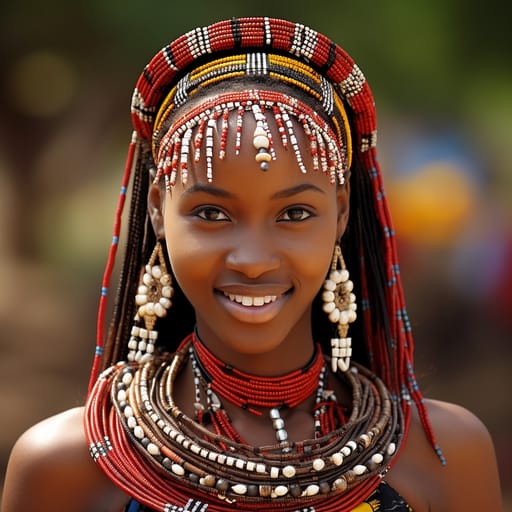
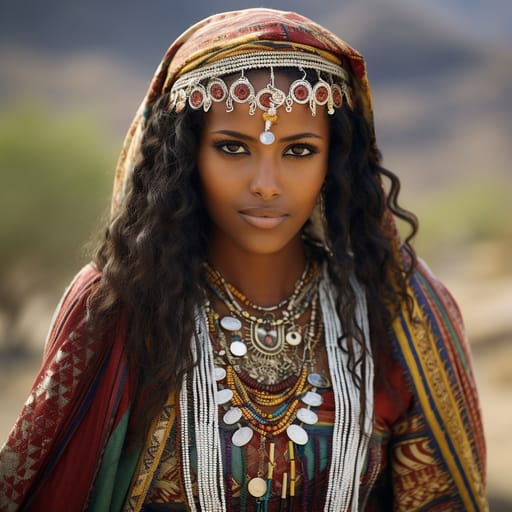
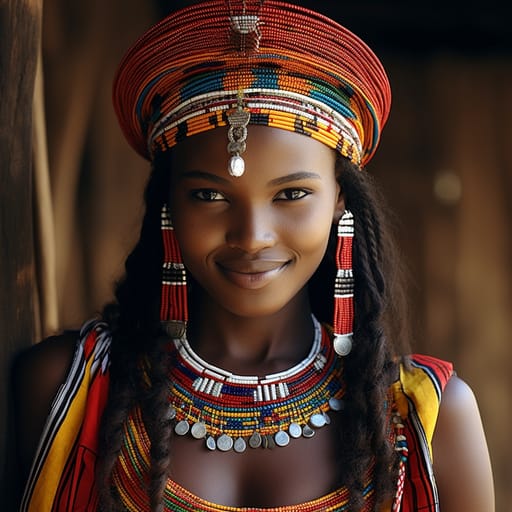
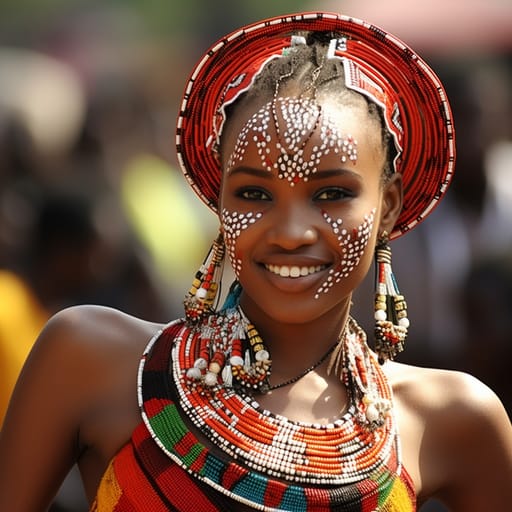
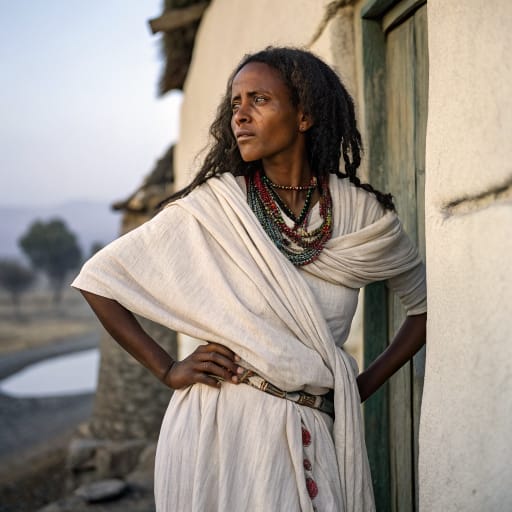
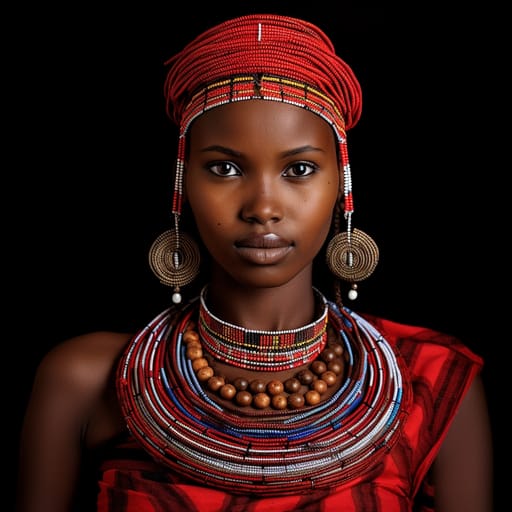
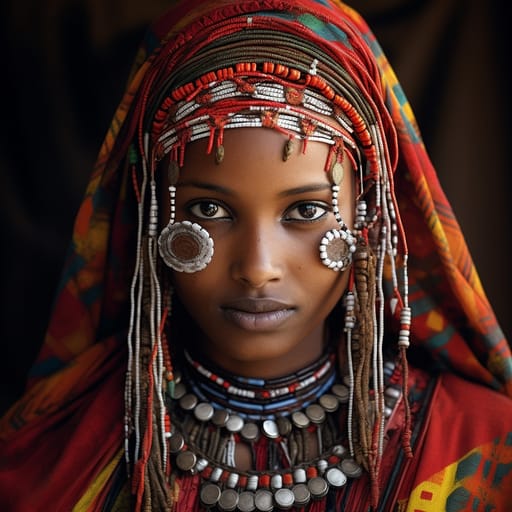
Typical Kwavi Phenotypes
Reference for AI generation: hair, eyes, skin, facial structure, build
Kwavi Body & Anatomy Reference
Per-feature anatomical profile for AI nude generation: Cushitic / Nilo-Cushitic East African phenotype
Kwavi Boobs & Breasts
Kwavi tits and boobs run small-to-medium-cup, high-set, conical, the classic Cushitic / Nilo-Cushitic East African bust profile. Kwavi nipples and areolas show moderate-to-high areolar pigmentation against the brown-to-deep-brown skin tone, with areolar diameter typically in the 28-38mm range and forward-set positioning rather than the lateral spread of the West African phenotype. Kwavi breasts trend firmer and less projecting than the African-American or West African norm, a function of the lean ectomorph-to-mesomorph body habitus and the mean adult female BMI 19-22. For anatomically accurate AI-generated Kwavi nudes the render preserves the small-to-medium-cup, high-set, conical shape, 28-38mm areolas with moderate-to-high pigmentation, and the torso proportions of the Cushitic / Nilo-Cushitic East African phenotype.
Kwavi Ass & Hips
Kwavi hips and butt usually read as small-to-medium, high-set, rounded. The skeletal base is narrow-to-medium iliac crests, longer torso-to-leg ratio, the Cushitic / Nilo-Cushitic East African pattern. Set against the wide-set heavy-projection West African or African-American norm, the difference is easy to see, and the hip-to-waist ratio is often what identifies Kwavi women in photos.
Kwavi Vagina & Pussy
Expect brown-to-deep-brown labial pigmentation, narrow-to-medium labia minora projection on Kwavi women, in keeping with Cushitic / Nilo-Cushitic East African ancestry. The pubic hair is tightly-coiled coarse texture, densely distributed. Coloring should run evenly from the brown to deep brown skin of the thighs to the labia, and Kwavi nude imagery should keep the hair's tightly-coiled coarse texture.
Kwavi Dicks & Penis
Kwavi dick and penile anatomy in adult AI generation should anchor on the regional reference data: regional mean ~13.5cm erect, moderate girth, ~12cm circumference, and deeper-pigmented than the West African norm. The Kwavi cock profile reflects the Cushitic / Nilo-Cushitic East African population's anthropometric measurements. The shaft pigmentation should track the surrounding brown to deep brown skin tone, and the pubic hair should keep its tightly-coiled coarse texture in the typical inverted-V escutcheon.
Kwavi Body, Curves & Build
Kwavi body type: lean ectomorph-to-mesomorph, with mean adult female BMI 19-22. This is the typical Cushitic / Nilo-Cushitic East African build. Height range, shoulder-to-hip ratio and fat distribution all follow from it, which is what an accurate Kwavi nude body should show.
Kwavi Skin Tone & Hair Texture
Kwavi skin tone falls in the brown to deep brown (Fitzpatrick V-VI) band, the surface signal most often miscalibrated by generic AI nude generators. Kwavi hair texture is typically tight 4A-4C coil, often worn natural or in braided/twisted protective styles, characteristic of the Cushitic / Nilo-Cushitic East African phenotype. In Kwavi nude renders the skin should hold that band consistently across the body.
Explore phenotype categories
Structured taxonomy with peer-reviewed scales · 22 anatomical categories
Erotic Poses & Sex Positions
From the pose catalog: 219 named positions with reference skeletons
Frequently asked questions about Kwavi people
Where is the Kwavi homeland?
The Kwavi homeland is Central and eastern Tanzania, mainly the Morogoro, Tanga, Pwani and Dodoma regions; historically the plains around Kilimanjaro in northern Tanzania and southern Kenya. in Eastern Africa.
What language do Kwavi people speak?
Kwavi people primarily speak Maa, Parakuyo dialect (Nilotic, Eastern branch); Swahili widely spoken as a second language (Bantu).
What religion do Kwavi people practice?
The predominant religion among Kwavi people is Traditional Maa religion centered on Enkai and ritual specialists, alongside growing Christianity..






Make your own Kwavi images
Five a day, free, no credits to buy. The studio starts from this group's phenotype data, so you can set body type, pose and style and keep the traits accurate.
Start with Kwavi