Help us get this right
Does this portrait look right for Nu?
Nobody has judged this one yet. You would be the first.
Nu Erotic
The Nu River (Salween) gorge in Nujiang Prefecture, northwestern Yunnan, China, chiefly Gongshan, Fugong and Lanping counties, with small communities in southeastern Tibet.
Nusu (Loloish, Tibeto-Burman); Anong and Zauzou (Nungish, Tibeto-Burman); Lisu and Mandarin in wide everyday use.
Ancestor and nature-spirit practice, alongside substantial Catholic and Protestant Christian communities and Tibetan Buddhism in the northern valleys.
Nusu, Anong (Anung) and Zauzou (Rouruo) communities grouped under one official nationality; part of the Tibeto-Burman highland peoples of the Yunnan and Tibet borderland, closely related to the Dulong.
About Nu People
The Nu take their name from the river, and the river is most of the story. The Nu Jiang, which becomes the Salween once it leaves China, cuts a gorge through northwestern Yunnan so narrow and so deep that villages sit on the slopes rather than the floor, wedged between the Gaoligong and Biluo ranges. Somewhere over thirty thousand people are counted as Nu, which makes them one of the smallest of China's official nationalities. Most live in Gongshan, Fugong and Lanping counties, with a few communities over the divide in southeastern Tibet.
The category is looser than the label suggests. What the state recognized in the 1950s as a single nationality is really several communities who often cannot understand one another. The Nusu of Fugong and Lushui speak a Loloish language, closer to Yi than to their neighbors upriver. The Anong of Gongshan and the Zauzou of Lanping speak Nungish languages, tied instead to Dulong on the far side of the mountain. Anong has very few fluent speakers left. In practice most Nu today conduct daily life in Lisu, the regional lingua franca, or in Mandarin, and none of these languages carried a script of its own.
Religion in the gorge sits in layers. The older practice centers on nature spirits and the ancestors, handled by ritual specialists rather than clergy. Tibetan Buddhism reached the northern villages along the road toward Tibet. From the late nineteenth century, Catholic missionaries coming down out of the Tibetan marches and Protestants working in from the Burma side left stone churches in the valley, so hymn singing in a Nu village on a Sunday morning is ordinary rather than strange.
Two things stay with anyone who spends time there. The first is how people crossed the water: rope slides strung bank to bank and taken at speed on a wooden runner, still described in detail by people whose children now use concrete bridges. The second is the house, raised on dozens of slender posts driven into the slope, and called a thousand-leg house for obvious reasons. Hemp was the traditional cloth, spun and woven at home. The dabiya, a small plucked lute, carries most of the courting songs. In Gongshan the spring Fairy Festival sends villagers to limestone caves to collect water treated as blessed, an observance with no clear parallel among the neighboring peoples. Roads, hydropower surveys and labor migration have all reworked the valley within living memory, and the Nu have taken it on without ceasing to be people of that river.
Related ethnic groups
Groups that share Nu's homeland, region, language, or religious tradition. These are likely candidates for comparative phenotype reference.
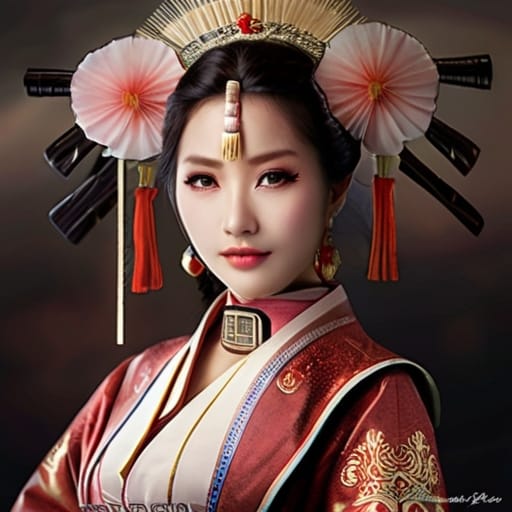
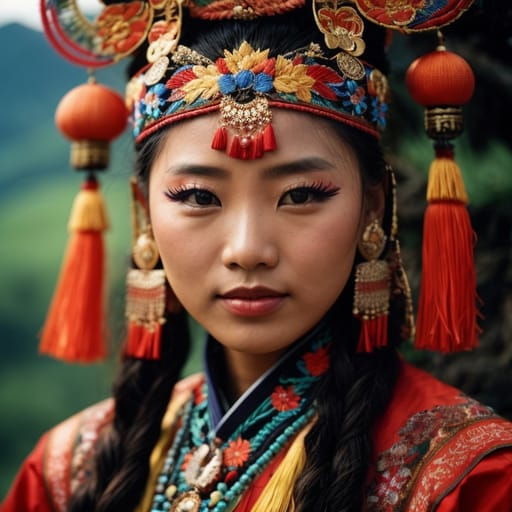
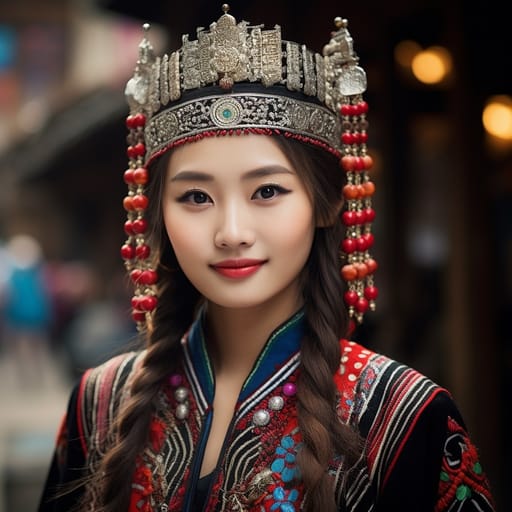
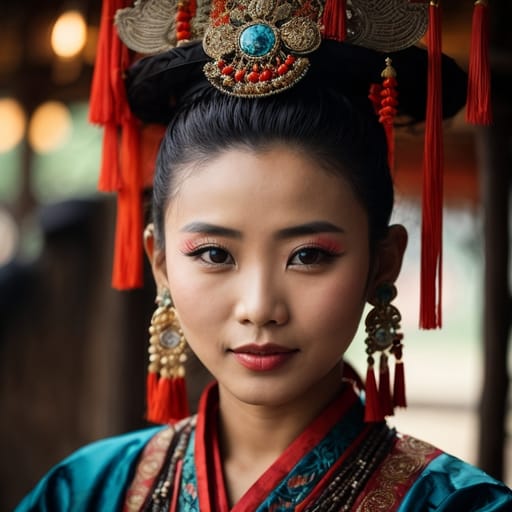
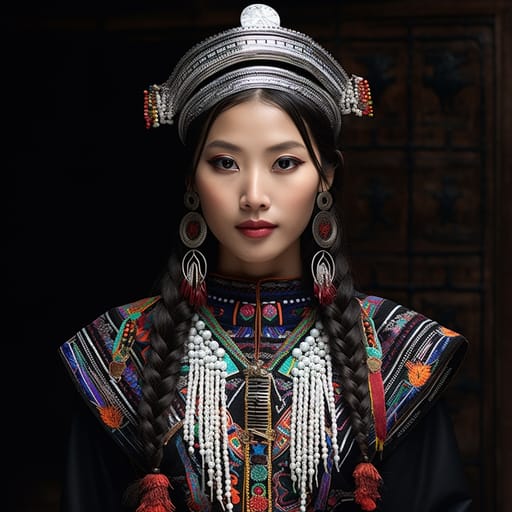
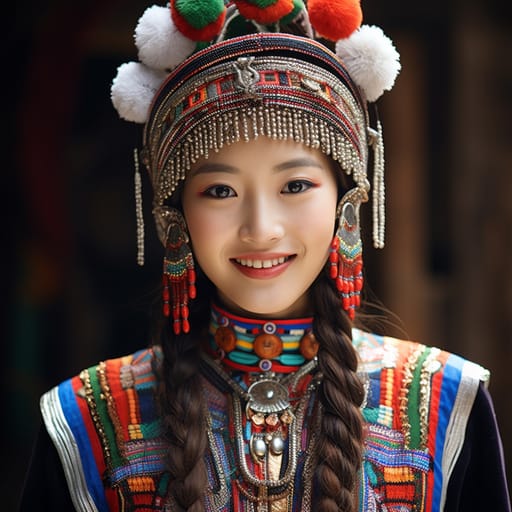
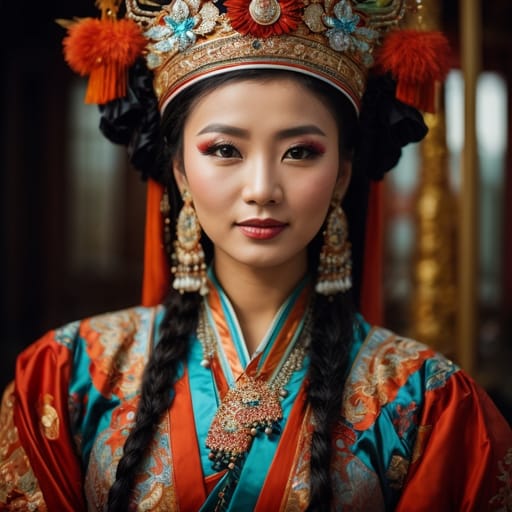
Typical Nu Phenotypes
Reference for AI generation: hair, eyes, skin, facial structure, build
Nu Body & Anatomy Reference
East Asian Sinitic / Mongoloid phenotype: anatomy reference for AI nude generation
Nu Boobs & Breasts
Bust reference for Nu women: small-to-medium cup, modest projection, which is typical of East Asian Sinitic / Mongoloid ancestry. Areolas measure about 26-36mm across, with light-pink to medium-brown pigmentation. Body type (ectomorph-to-mesomorph, lean frame) shapes the bust as well, so Nu tits are usually firm and modestly projecting; smaller cup size than the South Asian or Western Asian average. In AI imagery, keep the forward-set shape rather than drifting toward the fuller South Asian or Levantine bust profile.
Nu Ass & Hips
The Nu ass is typically small-to-medium, modest projection, narrower hip profile, which sets it apart from the fuller projected glutes of the West African or Polynesian phenotype. Underneath, the pelvis shows narrower iliac crests, less gluteal-femoral fat deposition, part of the East Asian Sinitic / Mongoloid skeletal pattern. For Nu butt pics and AI renders, match that silhouette and the overall build (ectomorph-to-mesomorph, lean frame).
Nu Vagina & Pussy
Nu pussy and vulvar anatomy presents light-pink to medium-brown labial pigmentation, smaller labia minora, consistent with the East Asian Sinitic / Mongoloid phenotype's pigmentation pattern. Nu pubic hair is typically straight fine texture, sparser distribution than the South Asian norm, in the inverted-triangle pattern. For anatomically accurate Nu pussy renders the labial coloration should match the surrounding light to medium skin tone with a continuous gradient, and the hair should keep its straight fine texture.
Nu Dicks & Penis
Nu dicks follow the East Asian Sinitic / Mongoloid reference data: regional mean ~11-12cm erect; moderate girth; light-brown shaft pigmentation. Shaft color should track the light to medium skin tone with a smooth change toward the glans, and Nu pubic hair keeps its straight fine texture.
Nu Body, Curves & Build
Nu body type and overall build presents as ectomorph-to-mesomorph, lean frame, with mean adult female BMI 20-23: the characteristic East Asian Sinitic / Mongoloid habitus. Nu curves and proportions should keep the regional skeletal frame (height, shoulder-to-hip ratio, limb proportions) rather than a generic mesomorph default.
Nu Skin Tone & Hair Texture
Nu skin sits in the light to medium (Fitzpatrick II-IV) band. Hair is typically straight 1A, fine-to-medium, predominantly black, in keeping with the East Asian Sinitic / Mongoloid phenotype. In nude renders the skin should stay one even tone from face to body, and body, pubic and head hair should match.
Explore phenotype categories
Structured taxonomy with peer-reviewed scales · 22 anatomical categories
Erotic Poses & Sex Positions
From the pose catalog: 219 named positions with reference skeletons
Frequently asked questions about Nu people
Where is the Nu homeland?
The Nu homeland is The Nu River (Salween) gorge in Nujiang Prefecture, northwestern Yunnan, China, chiefly Gongshan, Fugong and Lanping counties, with small communities in southeastern Tibet. in East Asia.
What language do Nu people speak?
Nu people primarily speak Nusu (Loloish, Tibeto-Burman); Anong and Zauzou (Nungish, Tibeto-Burman); Lisu and Mandarin in wide everyday use..
What religion do Nu people practice?
The predominant religion among Nu people is Ancestor and nature-spirit practice, alongside substantial Catholic and Protestant Christian communities and Tibetan Buddhism in the northern valleys..






Make your own Nu images
Five a day, free, no credits to buy. The studio starts from this group's phenotype data, so you can set body type, pose and style and keep the traits accurate.
Start with Nu