No portrait yet
Nkoya Erotic
Kaoma District and surrounding areas of Western Province, Zambia, between the Zambezi floodplain and the Kafue River, with communities in Central and Southern provinces.
Nkoya, also called ShiNkoya (Bantu, Niger-Congo), with Mashasha, Lukolwe, Lushange and Mbwela dialects; Lozi is widely used as a regional second language.
Christianity, chiefly the Evangelical Church in Zambia and Catholicism, alongside ancestral veneration and spirit healing cults.
Mashasha, Lukolwe, Lushange and Mbwela branches; royal lines of Mwene Mutondo and Mwene Kahare; a Bantu people of the upper Zambezi region with traditions of Lunda origin.
About Nkoya People
The Nkoya are a people of the wooded plateau of western Zambia who have spent the better part of a century insisting that they are not Lozi. That insistence is the key to them. Their heartland is Kaoma District, east of the Zambezi floodplain and west of the Kafue River, a country of sandy soil, miombo woodland and game. It was called Mankoya, after them, until the government renamed it in 1969. Their two senior royal titles, Mwene Mutondo and Mwene Kahare, trace their lines back to migrants from the Lunda court of Mwata Yamvo in what is now southern Congo, and the earliest rulers remembered in Nkoya tradition were women, beginning with Mwene Libupe.
In the nineteenth century the Kololo invaders and then the restored Lozi kingdom pulled the Nkoya chiefs into tributary status, and colonial rule froze the arrangement by treating Nkoya country as a district of Barotseland. A Lozi royal court planted at Naliele, inside Nkoya territory, in the 1930s is still resented. The irony runs the other way too: the royal orchestra of the Lozi king, xylophones and drums, is Nkoya in origin, and its songs are still sung in Nkoya rather than Lozi. When Barotse activists talk about restoring the old kingdom's autonomy, Nkoya leaders are among the loudest objectors.
The language, Nkoya, is a Bantu tongue with several dialects, Mashasha, Lukolwe, Lushange and Mbwela among them, and it stands well apart from Lozi, which descends from the Sotho speech of the Kololo. Its literary monument is Likota lya Bankoya, a history of the people written by the pastor Johasaphat Shimunika, who also translated the New Testament and Psalms. The book works as something close to a national charter. Most Nkoya are Christian, with the Evangelical Church in Zambia, which grew out of the mission at Luampa, especially strong, and church life sits alongside village ancestral shrines and healing cults that treat illness as the work of spirits.
Daily life is farming, cassava, maize and sorghum, with a hunting past that people still talk about, much of the old hunting ground now inside Kafue National Park. Girls are brought out after seclusion with a public coming-out dance, but the Nkoya do not keep mukanda, the boys' circumcision school of their Luvale, Chokwe and Mbunda neighbors, and count that as a line that marks them off. Since 1988 the annual Kazanga festival, a revived harvest ceremony, has gathered the chiefs, the drums and the xylophones in one place, part celebration and part political statement.
Related ethnic groups
Groups that share Nkoya's homeland, region, language, or religious tradition. These are likely candidates for comparative phenotype reference.
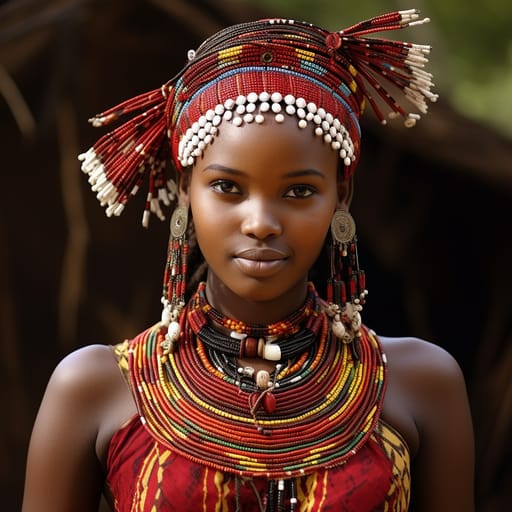
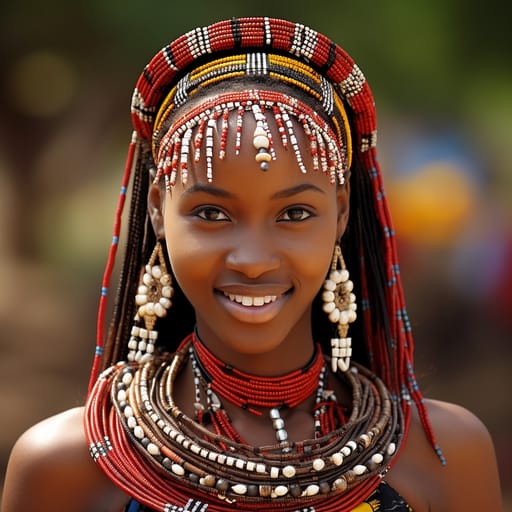
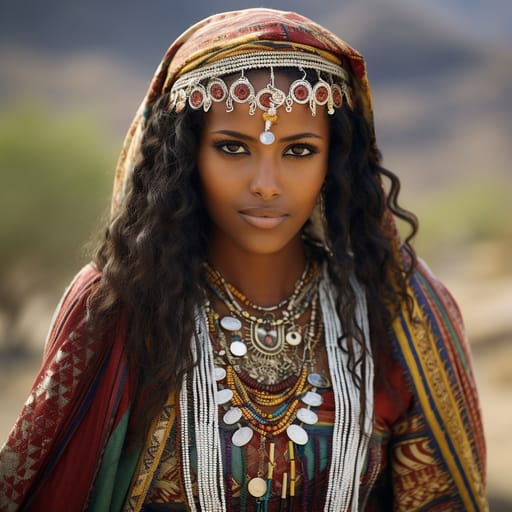
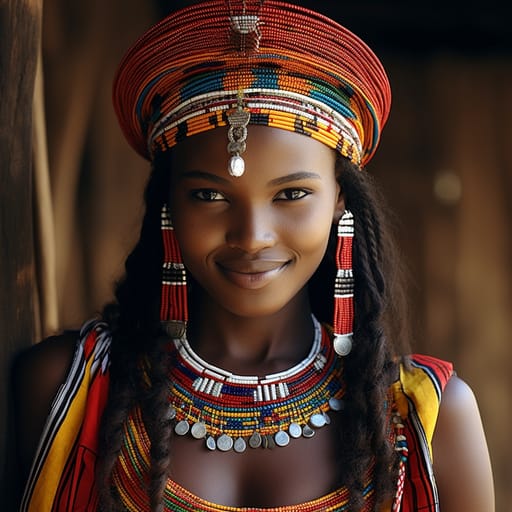
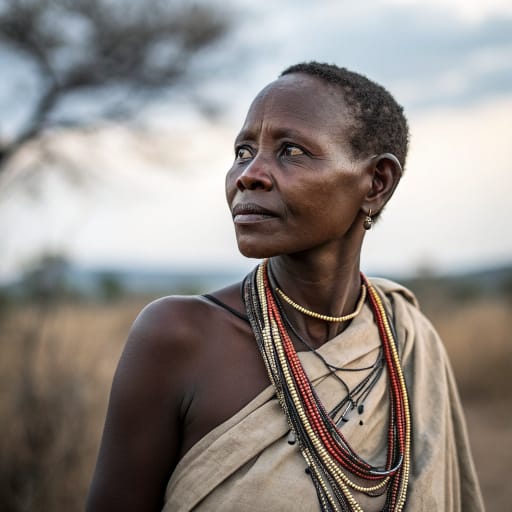
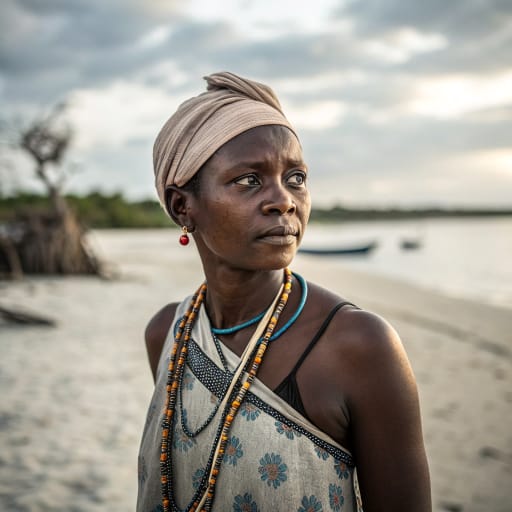
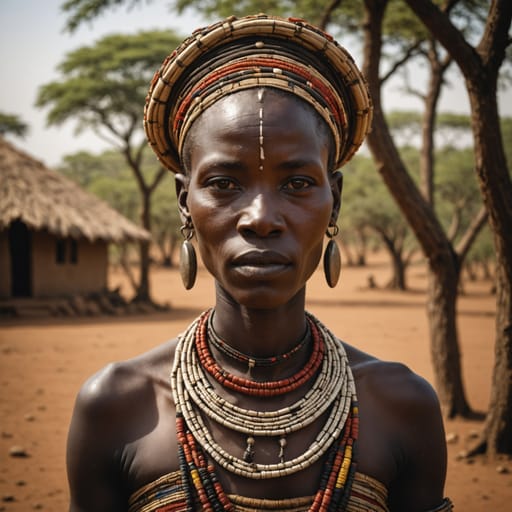
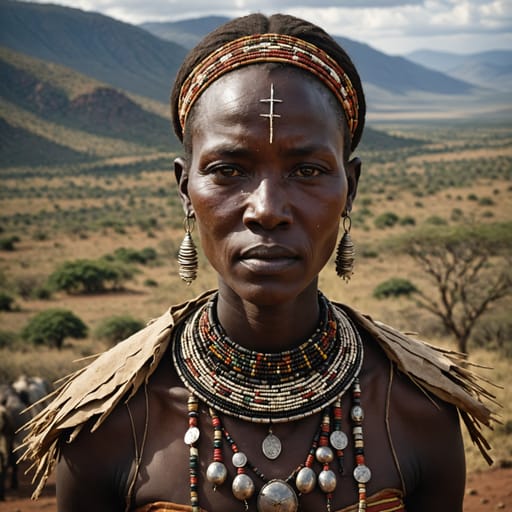
Typical Nkoya Phenotypes
Reference for AI generation: hair, eyes, skin, facial structure, build
Explore phenotype categories
Structured taxonomy with peer-reviewed scales · 22 anatomical categories
Erotic Poses & Sex Positions
From the pose catalog: 219 named positions with reference skeletons
Frequently asked questions about Nkoya people
Where is the Nkoya homeland?
The Nkoya homeland is Kaoma District and surrounding areas of Western Province, Zambia, between the Zambezi floodplain and the Kafue River, with communities in Central and Southern provinces. in Eastern Africa.
What language do Nkoya people speak?
Nkoya people primarily speak Nkoya, also called ShiNkoya (Bantu, Niger-Congo), with Mashasha, Lukolwe, Lushange and Mbwela dialects; Lozi is widely used as a regional second language..
What religion do Nkoya people practice?
The predominant religion among Nkoya people is Christianity, chiefly the Evangelical Church in Zambia and Catholicism, alongside ancestral veneration and spirit healing cults..






Make your own Nkoya images
Five a day, free, no credits to buy. The studio starts from this group's phenotype data, so you can set body type, pose and style and keep the traits accurate.
Start with Nkoya