Help us get this right
Does this portrait look right for Kwegu?
One tap. It takes a second and it is recorded.
1 says it looks right, 0 say it looks off.
Kwegu Erotic
Banks of the Omo River, Lower Omo Valley, South Ethiopia Region, Ethiopia
Kwegu / Koegu (Surmic, Nilo-Saharan); many are bilingual in the languages of neighbouring Mursi, Kara, or Nyangatom
Traditional animism
About Kwegu People
The Kwegu, also known as Koegu, Muguji, Menite, or Nidi, are among the smallest and least documented peoples of Ethiopia's Lower Omo Valley. They number only around one to two thousand, with the 2007 national census recording roughly 1,974 Kwegu, most of them living within the Nyangatom district. They occupy the wooded banks of the Omo River and its tributaries, interspersed among far larger neighbouring groups.
Society and subsistence
Historically the Kwegu were hunter-gatherers, and hunting, wild-honey collection, and above all fishing remain central to their identity. They are renowned canoe builders and boatmen who spend much of their lives on the river, and today they combine fishing and foraging with small-scale flood-retreat cultivation and beekeeping in a mixed economy. Because they have traditionally kept few or no cattle of their own, the Kwegu have long stood in client relationships to more powerful cattle-owning neighbours. They supply meat, honey, and river transport to patrons among the Mursi, Bodi, and Kara in exchange for livestock needed for bride wealth, and their position has often been socially subordinate. Relations with the Nyangatom are described as more open and reciprocal, including intermarriage. Dependence on the seasonal flood cycle has left the Kwegu especially exposed to upstream changes in the river's flow.
Language and appearance
The Kwegu language belongs to the southeastern Surmic branch of the Nilo-Saharan family and is closely related to Mursi, with which it shares a substantial part of its vocabulary. It is endangered, and many Kwegu are bilingual in, or have shifted toward, the languages of their patrons. In appearance the Kwegu resemble their Omo Valley neighbours and frequently take up the adornment fashions of the dominant groups around them: white chalk and ochre body and facial painting, patterned scarification, beaded ornaments, and tanned leather garments. Dress is generally sparse and practical, appropriate to a life spent hunting, gathering, and working the river, while borrowed decorative styles reflect the Kwegu's deep social entanglement with the peoples among whom they live.
Related ethnic groups
Groups that share Kwegu's homeland, region, language, or religious tradition. These are likely candidates for comparative phenotype reference.
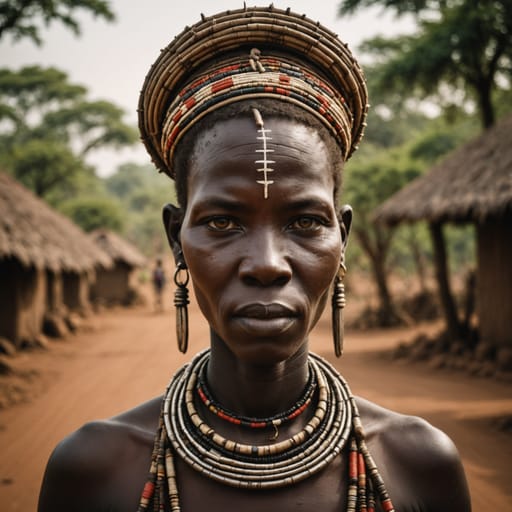
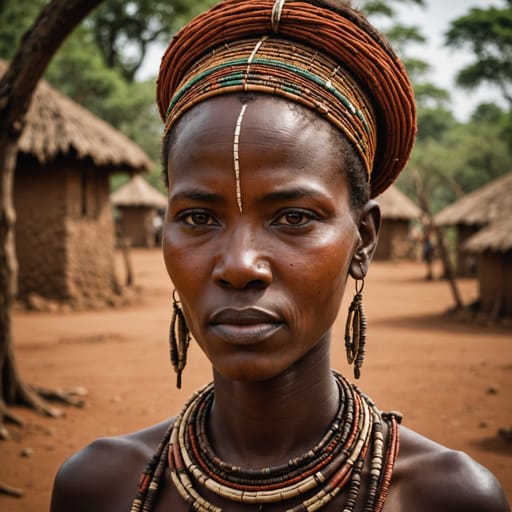
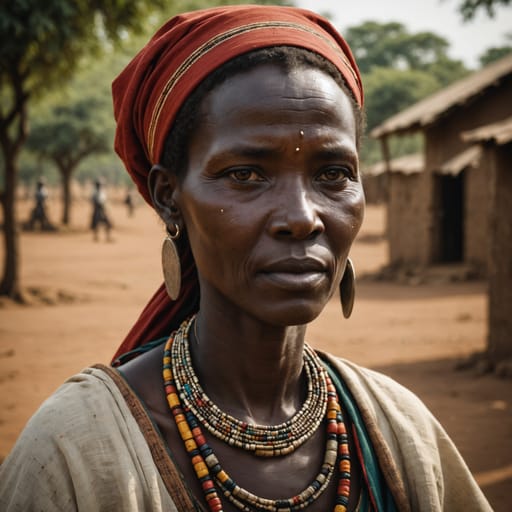
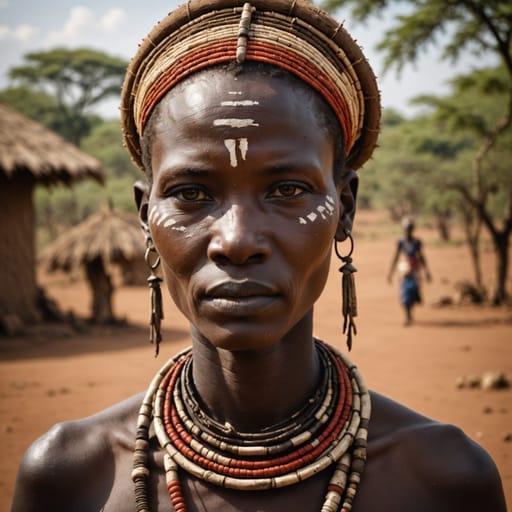
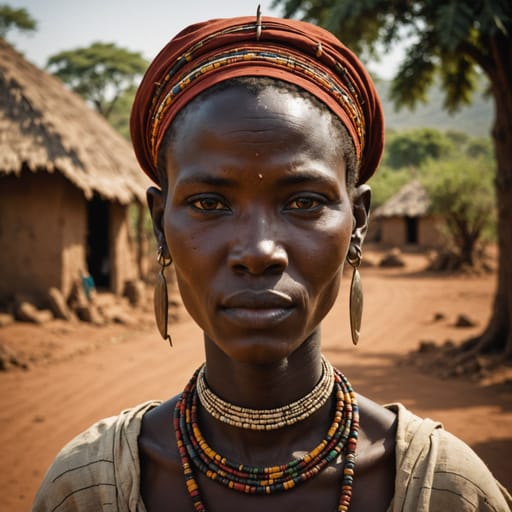
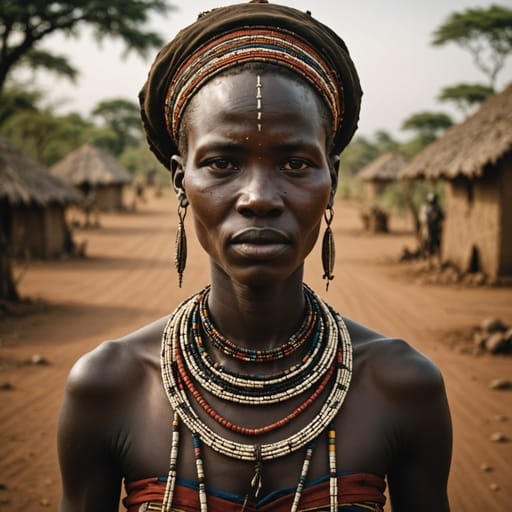
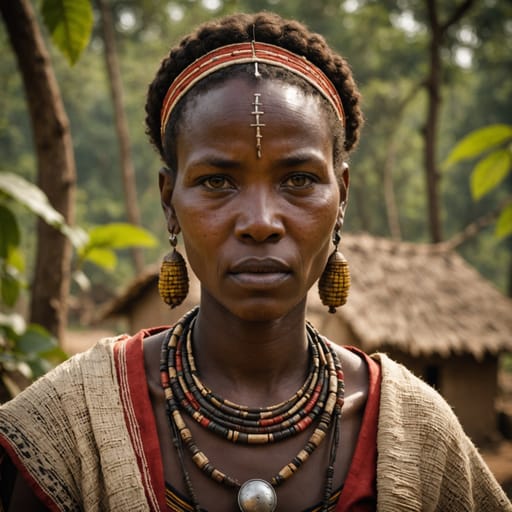
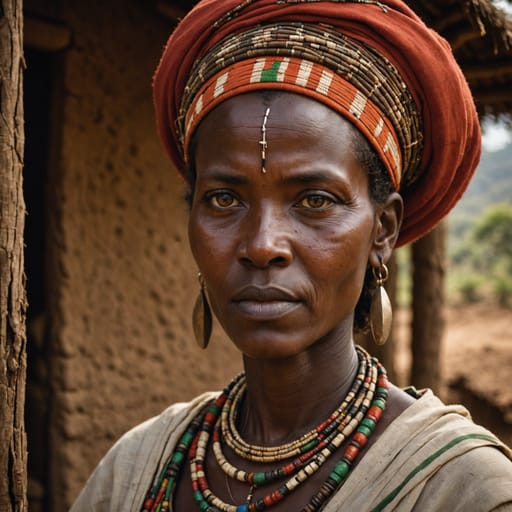
Typical Kwegu Phenotypes
Reference for AI generation: hair, eyes, skin, facial structure, build
Kwegu Body & Anatomy Reference
Per-feature anatomical profile for AI nude generation: Cushitic / Nilo-Cushitic East African phenotype
Kwegu Boobs & Breasts
The typical Kwegu bust is small-to-medium-cup, high-set, conical, in line with the wider Cushitic / Nilo-Cushitic East African pattern. Areolas usually fall in the 28-38mm range, with moderate-to-high areolar pigmentation against the brown-to-deep-brown skin tone. Compared with the lateral spread of the West African phenotype, Kwegu breasts sit forward and are generally firmer and less projecting than the African-American or West African norm. A faithful AI render of Kwegu tits keeps that shape and areola size.
Kwegu Ass & Hips
Butt shape among Kwegu women: small-to-medium, high-set, rounded, over narrow-to-medium iliac crests, longer torso-to-leg ratio. This follows Cushitic / Nilo-Cushitic East African ancestry and looks quite unlike the wide-set heavy-projection West African or African-American norm. An accurate Kwegu ass in adult AI imagery keeps both the silhouette and the overall build (lean ectomorph-to-mesomorph) instead of a generic average.
Kwegu Vagina & Pussy
Vulvar anatomy among Kwegu women: brown-to-deep-brown labial pigmentation, narrow-to-medium labia minora projection. Pubic hair tends to be tightly-coiled coarse texture, densely distributed, in the usual inverted-triangle pattern. Both follow Cushitic / Nilo-Cushitic East African pigmentation, which is why Kwegu pussy renders should not fall back on a pale, sparse Western template.
Kwegu Dicks & Penis
The Kwegu cock profile, from Cushitic / Nilo-Cushitic East African anthropometric data: regional mean ~13.5cm erect; moderate girth, ~12cm circumference; deeper-pigmented than the West African norm. Pubic hair has a tightly-coiled coarse texture and forms the usual inverted-V pattern. Whether Kwegu men are circumcised follows religious and cultural practice rather than phenotype.
Kwegu Body, Curves & Build
Build and curves among Kwegu women follow the Cushitic / Nilo-Cushitic East African pattern: lean ectomorph-to-mesomorph, mean adult female BMI 19-22. Proportions matter as much as skin tone, so Kwegu figures should keep their regional height and limb ratios.
Kwegu Skin Tone & Hair Texture
The Kwegu skin range is brown to deep brown (Fitzpatrick V-VI), and hair tends to be tight 4A-4C coil, often worn natural or in braided/twisted protective styles. That combination marks the Cushitic / Nilo-Cushitic East African phenotype, and skin tone is the trait AI generators most often get wrong for Kwegu women.
Explore phenotype categories
Structured taxonomy with peer-reviewed scales · 22 anatomical categories
Erotic Poses & Sex Positions
From the pose catalog: 219 named positions with reference skeletons
Frequently asked questions about Kwegu people
Where is the Kwegu homeland?
The Kwegu homeland is Banks of the Omo River, Lower Omo Valley, South Ethiopia Region, Ethiopia in Eastern Africa.
What language do Kwegu people speak?
Kwegu people primarily speak Kwegu / Koegu (Surmic, Nilo-Saharan); many are bilingual in the languages of neighbouring Mursi, Kara, or Nyangatom.
What religion do Kwegu people practice?
The predominant religion among Kwegu people is Traditional animism.






Make your own Kwegu images
Five a day, free, no credits to buy. The studio starts from this group's phenotype data, so you can set body type, pose and style and keep the traits accurate.
Start with Kwegu