No portrait yet
Somali Bantu Erotic
The Jubba and Shabelle river valleys of southern Somalia, with ancestral roots in Tanzania, Mozambique and Malawi and resettled communities in Kenya and the United States.
Maay and Maxaa varieties of Somali (Afroasiatic, Cushitic); Zigua, locally called Mushunguli, among some Jubba valley communities (Niger-Congo, Bantu)
Sunni Islam, alongside older drumming, healing and spirit-possession practices
Gosha of the lower Jubba, Zigua or Mushunguli, and Shabelle river communities such as the Shiidle and Makanne; ancestral links to the Zigua, Yao, Makua and Nyasa of East Africa
About Somali Bantu People
The Somali Bantu are the farmers of Somalia's two great rivers, and for most of their history that fact has been both their livelihood and their problem. They are Somali by language, faith and citizenship, yet their neighbors have rarely let them be simply Somali. The common label jareer, a reference to tightly curled hair, draws the line. It sets them apart from the herding clans who see themselves as the core of the nation, and it has long carried a low status that the community has spent generations pushing against.
Most descend from people taken in the 19th century from what is now Tanzania, Mozambique and Malawi, among them Zigua, Yao, Makua and Nyasa. The East African slave trade carried them north to work plantations on the Benadir coast and along the Shabelle. Some escaped and cleared farms in the forests of the lower Jubba valley, founding the settlements known as Gosha. Not every river village began with slavery, though, and some farming communities on the Shabelle were already there. Over time these groups attached themselves to Somali clans, took up Sunni Islam and adopted Somali speech, mostly the Maay variety spoken across the south. The Zigua of the Jubba, often called Mushunguli, are the clear exception. Many kept their ancestral Bantu language, and the tie stayed strong enough that some looked to Tanzania for refuge in the 1990s.
Islam sets the daily rhythm through prayer, fasting and Quranic schooling, but older habits persist beside it: drum-driven dances, spirit-possession ceremonies used for healing, and a deep practical knowledge of hoe farming, with maize, sorghum, sesame and beans planted along the riverbanks. Italian colonial administrators leaned hard on that labor, forcing river villagers to work the plantations they set up.
The collapse of the Somali state in 1991 hit them especially hard. With no armed clan militias of their own, they saw villages looted and farmland seized, and the famine that followed fell heavily on the farming south. Tens of thousands fled to refugee camps in Kenya. In the early 2000s the United States began resettling roughly 12,000 Somali Bantu, one of the largest African refugee programs it had taken on, and communities took root in places like Lewiston, Columbus, Salt Lake City and San Antonio. Today the people live on two tracks: rebuilding farm villages along the Jubba and Shabelle, and raising American-born children who may know those rivers only from their parents' stories.
Related ethnic groups
Groups that share Somali Bantu's homeland, region, language, or religious tradition. These are likely candidates for comparative phenotype reference.
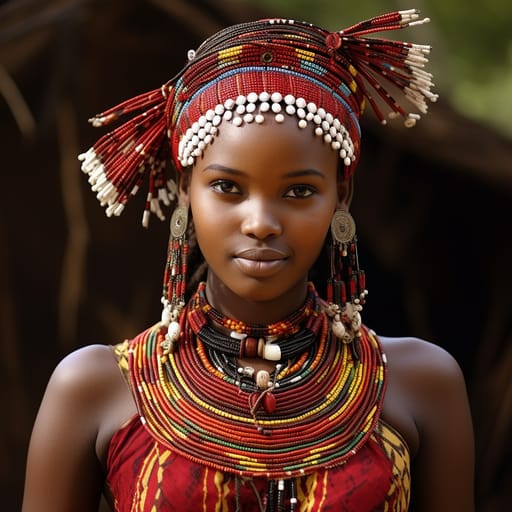
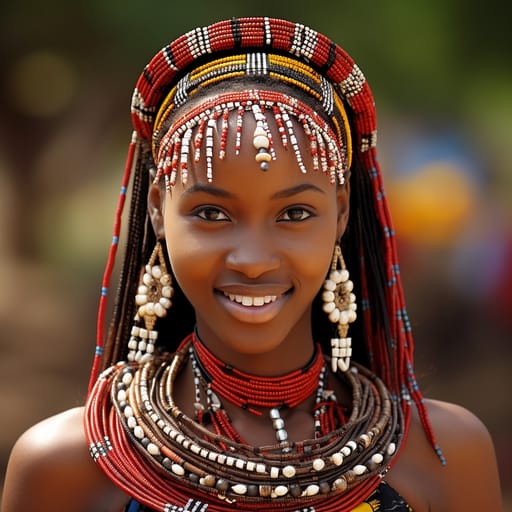
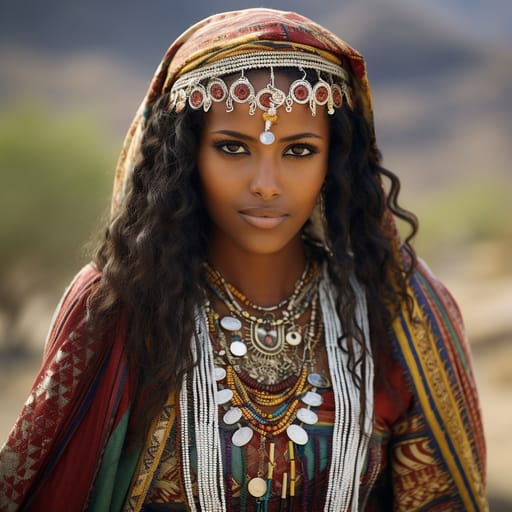
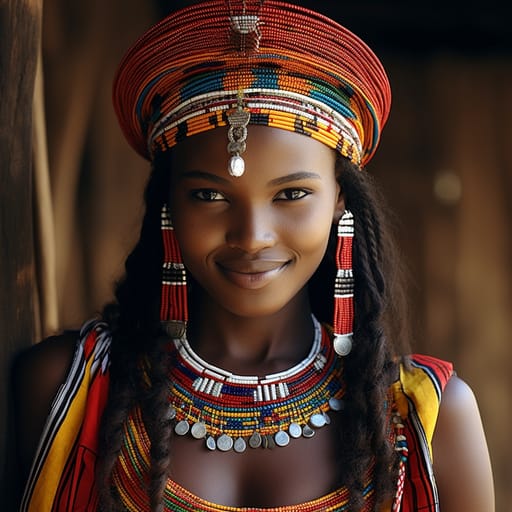
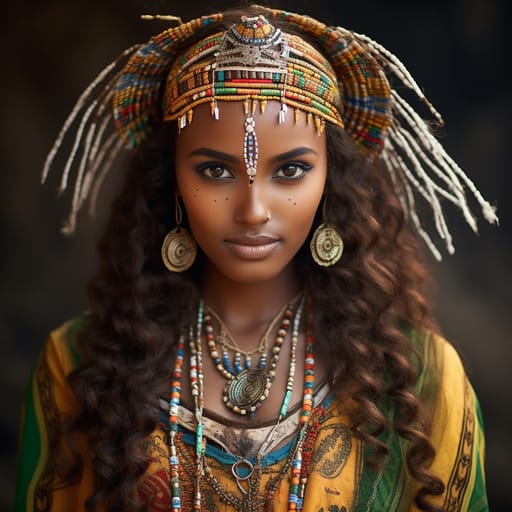
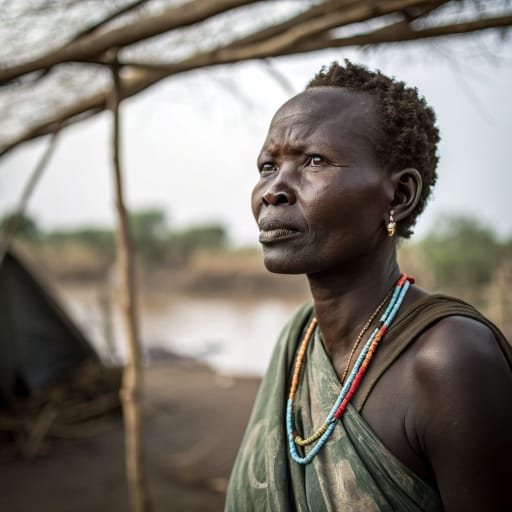
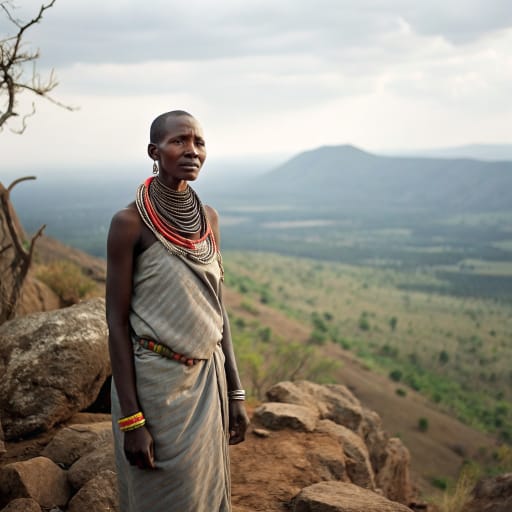
Typical Somali Bantu Phenotypes
Reference for AI generation: hair, eyes, skin, facial structure, build
Somali Bantu Body & Anatomy Reference
Cushitic / Nilo-Cushitic East African phenotype: anatomy reference for AI nude generation
Somali Bantu Boobs & Breasts
Bust reference for Somali Bantu women: small-to-medium-cup, high-set, conical, which is typical of Cushitic / Nilo-Cushitic East African ancestry. Areolas measure about 28-38mm across, with moderate-to-high pigmentation. Body type (lean ectomorph-to-mesomorph) shapes the bust as well, so Somali Bantu tits are usually firmer and less projecting than the African-American or West African norm. In AI imagery, keep the forward-set shape rather than drifting toward the lateral spread of the West African phenotype.
Somali Bantu Ass & Hips
The Somali Bantu ass is typically small-to-medium, high-set, rounded, which sets it apart from the wide-set heavy-projection West African or African-American norm. Underneath, the pelvis shows narrow-to-medium iliac crests, longer torso-to-leg ratio, part of the Cushitic / Nilo-Cushitic East African skeletal pattern. For Somali Bantu butt pics and AI renders, match that silhouette and the overall build (lean ectomorph-to-mesomorph).
Somali Bantu Vagina & Pussy
Somali Bantu pussy and vulvar anatomy presents brown-to-deep-brown labial pigmentation, narrow-to-medium labia minora projection, consistent with the Cushitic / Nilo-Cushitic East African phenotype's pigmentation pattern. Somali Bantu pubic hair is typically tightly-coiled coarse texture, densely distributed, in the inverted-triangle pattern. For anatomically accurate Somali Bantu pussy renders the labial coloration should match the surrounding brown to deep brown skin tone with a continuous gradient, and the hair should keep its tightly-coiled coarse texture.
Somali Bantu Dicks & Penis
Somali Bantu dicks follow the Cushitic / Nilo-Cushitic East African reference data: regional mean ~13.5cm erect; moderate girth, ~12cm circumference; deeper-pigmented than the West African norm. Shaft color should track the brown to deep brown skin tone with a smooth change toward the glans, and Somali Bantu pubic hair keeps its tightly-coiled coarse texture.
Somali Bantu Body, Curves & Build
Somali Bantu body type and overall build presents as lean ectomorph-to-mesomorph, with mean adult female BMI 19-22: the characteristic Cushitic / Nilo-Cushitic East African habitus. Somali Bantu curves and proportions should keep the regional skeletal frame (height, shoulder-to-hip ratio, limb proportions) rather than a generic mesomorph default.
Somali Bantu Skin Tone & Hair Texture
Somali Bantu skin sits in the brown to deep brown (Fitzpatrick V-VI) band. Hair is typically tight 4A-4C coil, often worn natural or in braided/twisted protective styles, in keeping with the Cushitic / Nilo-Cushitic East African phenotype. In nude renders the skin should stay one even tone from face to body, and body, pubic and head hair should match.
Explore phenotype categories
Structured taxonomy with peer-reviewed scales · 22 anatomical categories
Erotic Poses & Sex Positions
From the pose catalog: 219 named positions with reference skeletons
Frequently asked questions about Somali Bantu people
Where is the Somali Bantu homeland?
The Somali Bantu homeland is The Jubba and Shabelle river valleys of southern Somalia, with ancestral roots in Tanzania, Mozambique and Malawi and resettled communities in Kenya and the United States. in Eastern Africa.
What language do Somali Bantu people speak?
Somali Bantu people primarily speak Maay and Maxaa varieties of Somali (Afroasiatic, Cushitic); Zigua, locally called Mushunguli, among some Jubba valley communities (Niger-Congo, Bantu).
What religion do Somali Bantu people practice?
The predominant religion among Somali Bantu people is Sunni Islam, alongside older drumming, healing and spirit-possession practices.






Make your own Somali Bantu images
Five a day, free, no credits to buy. The studio starts from this group's phenotype data, so you can set body type, pose and style and keep the traits accurate.
Start with Somali Bantu