Help us get this right
Does this portrait look right for Moru?
Nobody has judged this one yet. You would be the first.
Moru Erotic
Mundri and Lui area of Western Equatoria, South Sudan, near the Yei River; displaced and diaspora communities in Juba, Uganda and beyond
Moru (Central Sudanic, Moru-Madi branch); Juba Arabic and English also widely used
Predominantly Christian, mainly the Episcopal Church of South Sudan (Anglican), with some older clan and ancestral customs persisting
Sections include Miza, Kediro, Agi, Andri and Lakamadi; linguistically related to the Ma'di, Lugbara, Logo and Avokaya
About Moru People
The Moru are set apart first by their language. It is a Central Sudanic language, and in Western Equatoria that makes it the odd one out. The Dinka to the north speak a Nilotic language and the Azande to the west speak an Ubangian one. The closest relatives of Moru are further south: Ma'di, Lugbara, Logo and Avokaya, all in the same Moru-Madi branch, which reaches into Uganda and Congo. The Moru heartland is the wooded savanna around Mundri and Lui, near the Yei River. Most families there still farm, growing sorghum, cassava and groundnuts on fields they clear and replant by hand.
Moru identity has layers. A person is Moru, and then belongs to a section such as Miza, Kediro, Agi, Andri or Lakamadi. Each section has its own dialect and its own home ground, and clans sit beneath the sections. The Moru never had a kingdom or a single ruler. Authority stayed local, with chiefs and clan elders. In the nineteenth century, raiders in the northern ivory and slave trade reached into the region, and the Moru entered the twentieth century as a small people with little protection.
The mission changed things more than anything else. In 1920 Kenneth Fraser, a Scottish doctor with the Church Missionary Society, opened a mission and hospital at Lui. The Anglican church that grew from it still shapes daily life, and most Moru today belong to the Episcopal Church. Missionaries put the language into writing, so prayers, hymns and scripture in Moru are part of an ordinary Sunday. Mundri became home to a theological college that trained clergy for much of the south. Schools and clinics followed, and church work, teaching and nursing became familiar careers in Moru families. Older customs tied to clan and land have not disappeared, but they now sit quietly beside the church rather than against it.
None of this spared the Moru from war. Both of Sudan's long civil wars reached Equatoria and uprooted families around Mundri and Lui. Fighting after South Sudan's independence emptied villages again, sending people into the bush, to Juba, or across the border into Uganda. Coming home means clearing fields, repairing churches and reopening schools, often more than once. In a typical Moru household, people speak Moru at home, Juba Arabic at the market and English at school. Three languages for three settings is a fair picture of South Sudan today.
Related ethnic groups
Groups that share Moru's homeland, region, language, or religious tradition. These are likely candidates for comparative phenotype reference.
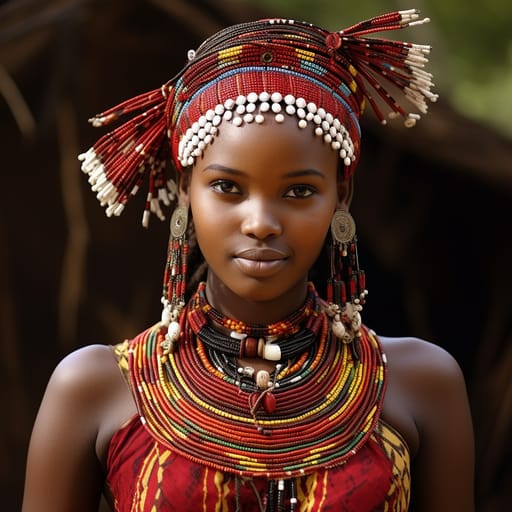
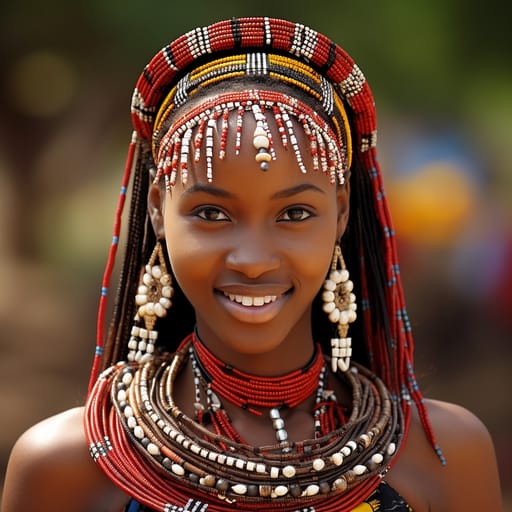
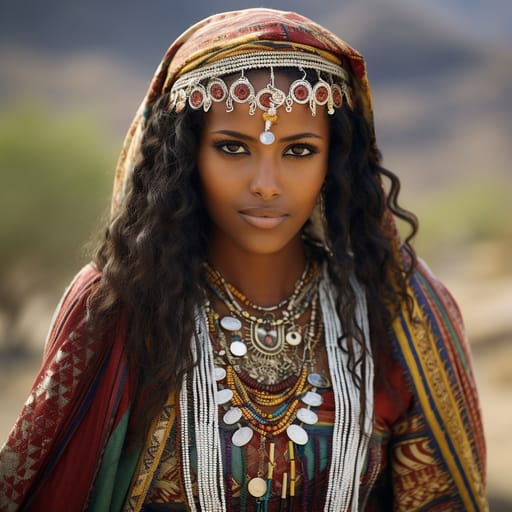
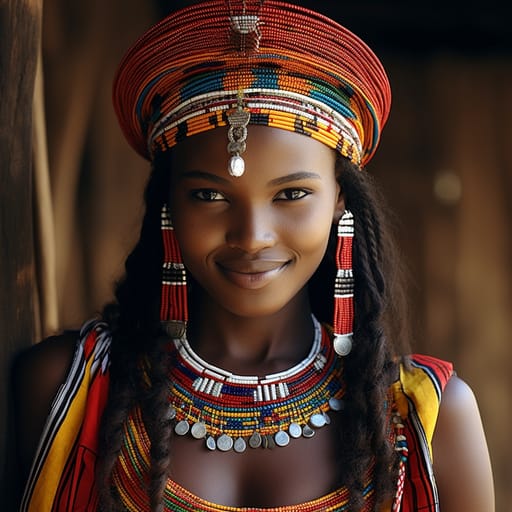
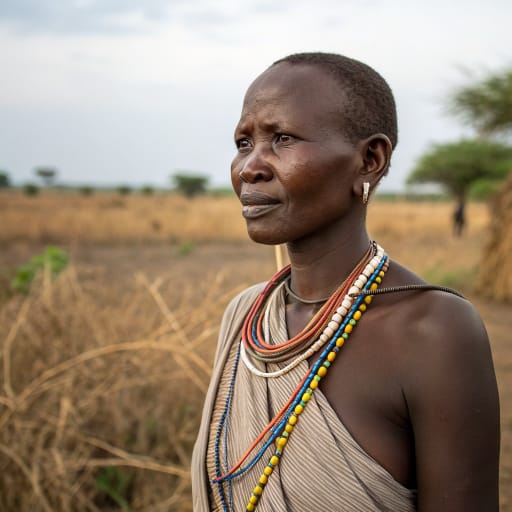
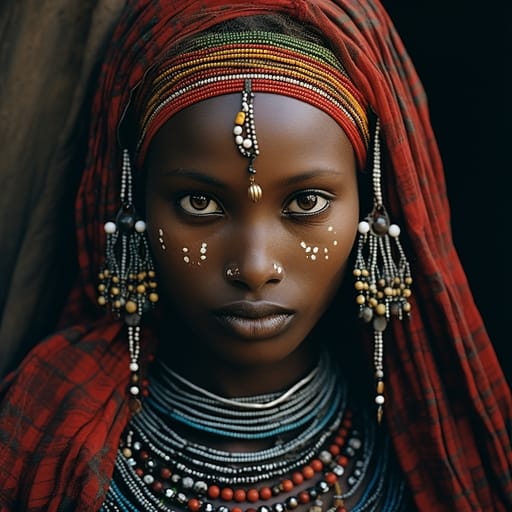
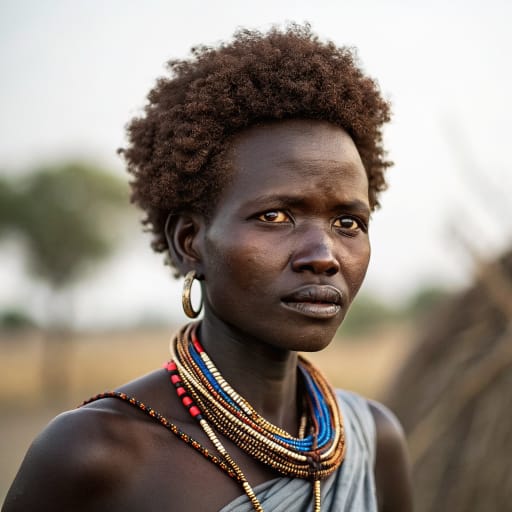
Typical Moru Phenotypes
Reference for AI generation: hair, eyes, skin, facial structure, build
Moru Body & Anatomy Reference
Per-feature anatomical profile for AI nude generation: Cushitic / Nilo-Cushitic East African phenotype
Moru Boobs & Breasts
Bust reference for Moru women: small-to-medium-cup, high-set, conical, which is typical of Cushitic / Nilo-Cushitic East African ancestry. Areolas measure about 28-38mm across, with moderate-to-high pigmentation. Body type (lean ectomorph-to-mesomorph) shapes the bust as well, so Moru tits are usually firmer and less projecting than the African-American or West African norm. In AI imagery, keep the forward-set shape rather than drifting toward the lateral spread of the West African phenotype.
Moru Ass & Hips
The Moru ass is typically small-to-medium, high-set, rounded, which sets it apart from the wide-set heavy-projection West African or African-American norm. Underneath, the pelvis shows narrow-to-medium iliac crests, longer torso-to-leg ratio, part of the Cushitic / Nilo-Cushitic East African skeletal pattern. For Moru butt pics and AI renders, match that silhouette and the overall build (lean ectomorph-to-mesomorph).
Moru Vagina & Pussy
Moru pussy and vulvar anatomy presents brown-to-deep-brown labial pigmentation, narrow-to-medium labia minora projection, consistent with the Cushitic / Nilo-Cushitic East African phenotype's pigmentation pattern. Moru pubic hair is typically tightly-coiled coarse texture, densely distributed, in the inverted-triangle pattern. For anatomically accurate Moru pussy renders the labial coloration should match the surrounding brown to deep brown skin tone with a continuous gradient, and the hair should keep its tightly-coiled coarse texture.
Moru Dicks & Penis
Moru dicks follow the Cushitic / Nilo-Cushitic East African reference data: regional mean ~13.5cm erect; moderate girth, ~12cm circumference; deeper-pigmented than the West African norm. Shaft color should track the brown to deep brown skin tone with a smooth change toward the glans, and Moru pubic hair keeps its tightly-coiled coarse texture.
Moru Body, Curves & Build
Moru body type and overall build presents as lean ectomorph-to-mesomorph, with mean adult female BMI 19-22: the characteristic Cushitic / Nilo-Cushitic East African habitus. Moru curves and proportions should keep the regional skeletal frame (height, shoulder-to-hip ratio, limb proportions) rather than a generic mesomorph default.
Moru Skin Tone & Hair Texture
Moru skin sits in the brown to deep brown (Fitzpatrick V-VI) band. Hair is typically tight 4A-4C coil, often worn natural or in braided/twisted protective styles, in keeping with the Cushitic / Nilo-Cushitic East African phenotype. In nude renders the skin should stay one even tone from face to body, and body, pubic and head hair should match.
Explore phenotype categories
Structured taxonomy with peer-reviewed scales · 22 anatomical categories
Erotic Poses & Sex Positions
From the pose catalog: 219 named positions with reference skeletons
Frequently asked questions about Moru people
Where is the Moru homeland?
The Moru homeland is Mundri and Lui area of Western Equatoria, South Sudan, near the Yei River; displaced and diaspora communities in Juba, Uganda and beyond in Eastern Africa.
What language do Moru people speak?
Moru people primarily speak Moru (Central Sudanic, Moru-Madi branch); Juba Arabic and English also widely used.
What religion do Moru people practice?
The predominant religion among Moru people is Predominantly Christian, mainly the Episcopal Church of South Sudan (Anglican), with some older clan and ancestral customs persisting.






Make your own Moru images
Five a day, free, no credits to buy. The studio starts from this group's phenotype data, so you can set body type, pose and style and keep the traits accurate.
Start with Moru