Help us get this right
Does this portrait look right for Ik?
Nobody has judged this one yet. You would be the first.
Ik Erotic
The Morungole mountains and the escarpment above the Kidepo Valley, Kaabong District, northeastern Uganda, near the Kenyan and South Sudanese borders.
Icetod (Kuliak, also called Rub; often placed provisionally within Nilo-Saharan), with Karimojong and Dodoth widely spoken as second languages.
Mostly Christian today, over an older layer of ancestor observance and a withdrawn creator, Didigwari.
One of the three Kuliak (Rub) peoples, with the Soo (Tepeth) and the nearly extinct Nyang'i.
About Ik People
The Ik live on the ridges of Morungole, in the far northeast corner of Uganda where the country runs out against Kenya and South Sudan. The location is the first thing to understand about them. Below lies the Kidepo Valley; around them on every side are cattle people, the Dodoth, the Turkana, the Toposa, whose raiding parties have shaped Ik settlement for generations. Ik villages sit high, tucked into the slope, compounds packed tight inside a single outer stockade. The second thing is the language. Icetod belongs to the small Kuliak group, whose only relatives are Soo and the nearly vanished Nyang'i. It is not Nilotic, and where it connects to anything else is still a live argument among linguists, who tend to read Kuliak as an older layer of East Africa left standing while later arrivals filled in around it. Ik grammar is intricate enough to have made the language a specialist's favorite. Nearly every Ik also speaks Karimojong or Dodoth, which is exactly where the pressure on Icetod comes from.
Within living memory they hunted and gathered. Now they farm sorghum, maize and beans on slopes too steep for herds, and they keep bees, hanging log hives in the trees and carrying honey down to market, into beer, and into ritual. The old cosmology puts the creator, Didigwari, at a distance: he made the Ik and then withdrew, leaving the ancestors nearer to hand than the god. Most Ik now answer to Christianity, and the two arrangements coexist without much friction. The hinge in their modern history came in the early 1960s, when the Kidepo Valley became a national park and their hunting range was closed to them, just before the rains failed. Colin Turnbull arrived during the famine that followed and wrote The Mountain People, a book presenting the Ik as a society that had abandoned kindness itself. It made them famous, and the fame was a slander. Later researchers, Bernd Heine most pointedly, found hosts rather than monsters, and an author who had mistaken an emergency for a culture and had barely spoken the language he was judging. The Ik have spent fifty years living beside that book. What is actually in front of them is more ordinary and harder: raiding that has not stopped, thin land, a population of perhaps ten to thirteen thousand, and a language with fewer places to be used each year, though literacy and translation work in Icetod has pushed back a little.
Related ethnic groups
Groups that share Ik's homeland, region, language, or religious tradition. These are likely candidates for comparative phenotype reference.
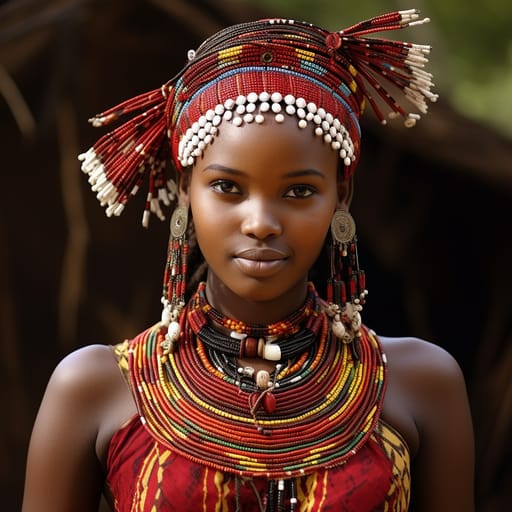
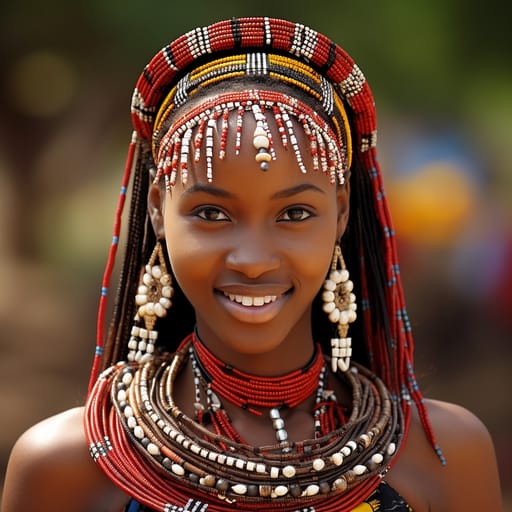
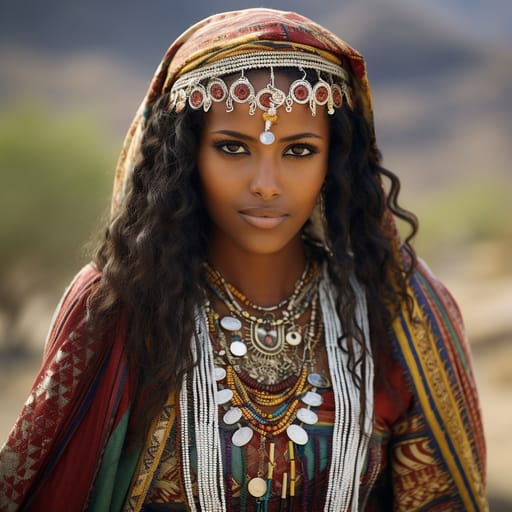
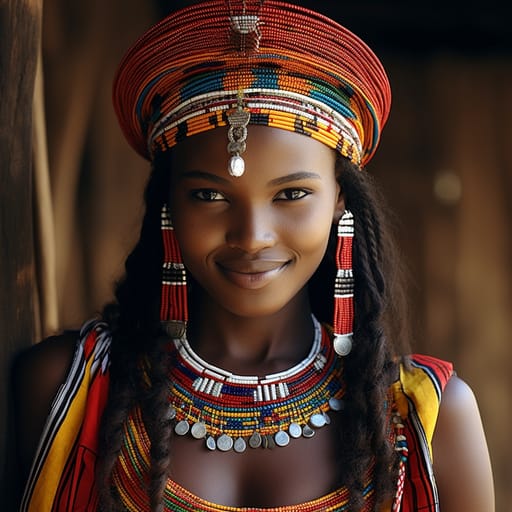
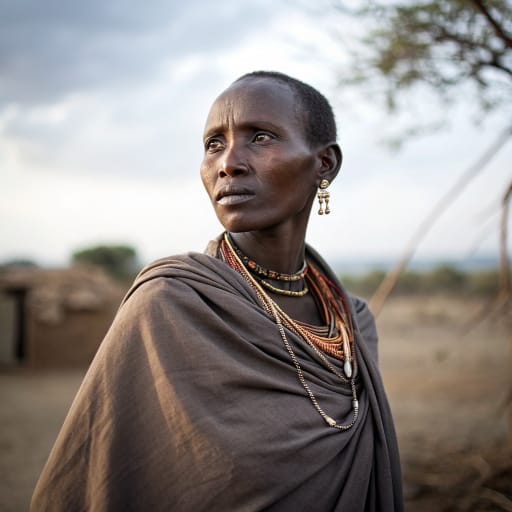
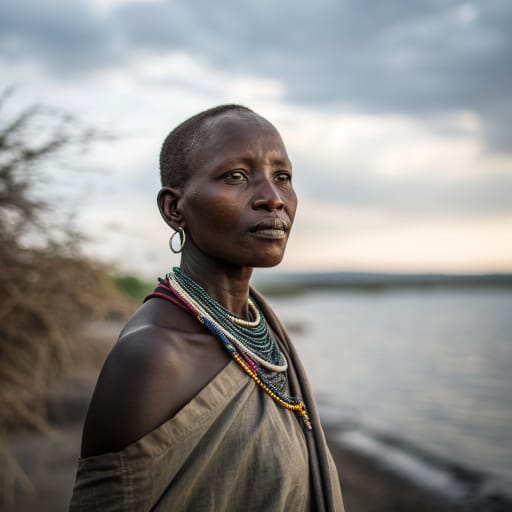
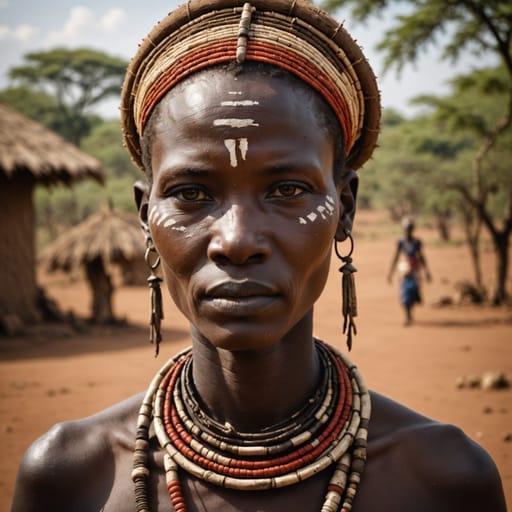
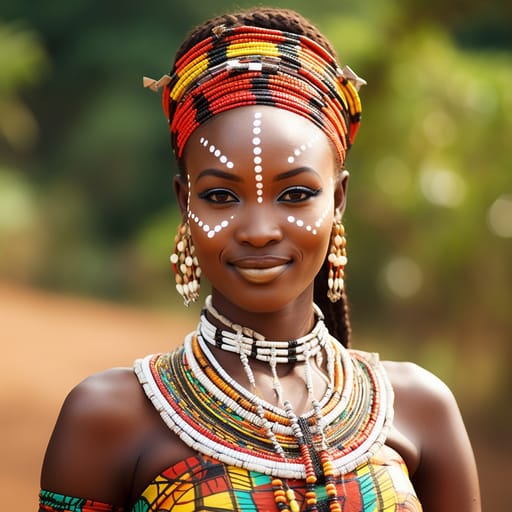
Typical Ik Phenotypes
Reference for AI generation: hair, eyes, skin, facial structure, build
Ik Body & Anatomy Reference
Per-feature anatomical profile for AI nude generation: Cushitic / Nilo-Cushitic East African phenotype
Ik Boobs & Breasts
Ik boobs follow the Cushitic / Nilo-Cushitic East African profile: small-to-medium-cup, high-set, conical. Areolar diameter is usually 28-38mm, and the coloring is moderate-to-high areolar pigmentation against the brown-to-deep-brown skin tone. Breast shape tracks body composition (lean ectomorph-to-mesomorph, mean adult female BMI 19-22), so Ik breasts tend to be firmer and less projecting than the African-American or West African norm. Expect a forward-set shape, not the lateral spread of the West African phenotype.
Ik Ass & Hips
Ik ass and hip morphology presents as small-to-medium, high-set, rounded, distinctly different from the wide-set heavy-projection West African or African-American norm. The Ik pelvic profile shows narrow-to-medium iliac crests, longer torso-to-leg ratio, anchored in the Cushitic / Nilo-Cushitic East African skeletal pattern. Ik butt shots in adult AI imagery should render the small-to-medium, high-set, rounded silhouette with the overall build (lean ectomorph-to-mesomorph) and the fat distribution typical of the Cushitic / Nilo-Cushitic East African phenotype.
Ik Vagina & Pussy
Ik pussy anatomy typically shows brown-to-deep-brown labial pigmentation, narrow-to-medium labia minora projection. Pubic hair is usually tightly-coiled coarse texture, densely distributed. In AI-generated Ik nudes, labial color should blend into the brown to deep brown skin with a gradual transition, and the hair should keep its tightly-coiled coarse texture.
Ik Dicks & Penis
Penis reference for Ik men: regional mean ~13.5cm erect, moderate girth, ~12cm circumference. Coloring: deeper-pigmented than the West African norm. An accurate Ik cock in AI imagery matches the surrounding brown to deep brown skin rather than a generic porn default. Circumcision depends on religion and custom, not ancestry.
Ik Body, Curves & Build
The Ik figure is generally lean ectomorph-to-mesomorph, with mean adult female BMI 19-22, characteristic of Cushitic / Nilo-Cushitic East African ancestry. AI image tools tend to flatten regional body types into a few stock shapes; here the Ik build is kept as its own reference.
Ik Skin Tone & Hair Texture
Skin: brown to deep brown (Fitzpatrick V-VI). Hair: tight 4A-4C coil, often worn natural or in braided/twisted protective styles. Both are typical of Cushitic / Nilo-Cushitic East African ancestry. The most common mistake in AI nudes of Ik women is a body rendered lighter than the face.
Explore phenotype categories
Structured taxonomy with peer-reviewed scales · 22 anatomical categories
Erotic Poses & Sex Positions
From the pose catalog: 219 named positions with reference skeletons
Frequently asked questions about Ik people
Where is the Ik homeland?
The Ik homeland is The Morungole mountains and the escarpment above the Kidepo Valley, Kaabong District, northeastern Uganda, near the Kenyan and South Sudanese borders. in Eastern Africa.
What language do Ik people speak?
Ik people primarily speak Icetod (Kuliak, also called Rub; often placed provisionally within Nilo-Saharan), with Karimojong and Dodoth widely spoken as second languages..
What religion do Ik people practice?
The predominant religion among Ik people is Mostly Christian today, over an older layer of ancestor observance and a withdrawn creator, Didigwari..






Make your own Ik images
Five a day, free, no credits to buy. The studio starts from this group's phenotype data, so you can set body type, pose and style and keep the traits accurate.
Start with Ik