Help us get this right
Does this portrait look right for Karo?
Nobody has judged this one yet. You would be the first.
Karo Erotic
Lower Omo River (Korcho, Dus), South Omo Zone, southern Ethiopia
Karo (Omotic; Afroasiatic)
Traditional animism
About Karo People
The Karo (Kara) are a small agropastoralist people of the eastern bank of the Lower Omo River in South Omo Zone, southern Ethiopia, centered on villages such as Korcho, Dus, and Labuk. With a population of only about 1,000 to 3,000, they are among the smallest ethnic groups in the country. They speak Karo, an Omotic language of the Afroasiatic family closely related to Hamer, with whom they share many customs and intermarry.
Society and subsistence
The Karo practice flood-retreat cultivation along the Omo, planting sorghum, maize, and beans in the fertile silt left by the river's annual rise, supplemented by fishing, beekeeping, and small herds of goats and cattle often kept in partnership with neighboring groups. Their small numbers and riverside position make them dependent on the flood cycle and on alliances with larger neighbors, particularly the Hamar and Banna, for grazing, trade, and defense. Social life follows a system of age grades and a bull-jumping initiation similar to that of the Hamar, through which young men pass into adulthood, while ritual specialists guide planting, rain, and communal ceremonies.
Appearance and adornment
The Karo are celebrated above all for elaborate body painting, using white chalk, yellow mineral rock, red ochre, powdered charcoal, and iron ore to cover the skin in fine dots, stripes, and imitations of guinea-fowl plumage before dances and ceremonies. Faces and torsos are transformed with chalk masks and bold pattern work renewed for each occasion. Scarification carries meaning: a man's chest scars may record enemies or dangerous animals killed, while patterned cuts on a woman's torso are considered marks of beauty. Both sexes wear beaded ornaments, and men fashion painted clay hair buns fixed with ostrich feathers to signal bravery and status. This intensive, ever-changing body art has made the Karo, despite their small numbers, one of the most recognizable peoples of the Omo Valley.
Related ethnic groups
Groups that share Karo's homeland, region, language, or religious tradition. These are likely candidates for comparative phenotype reference.
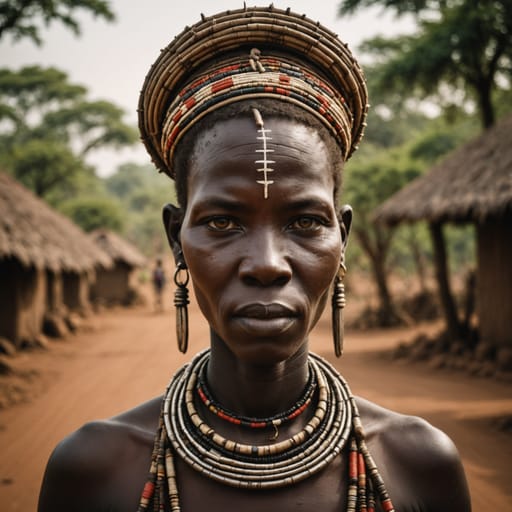
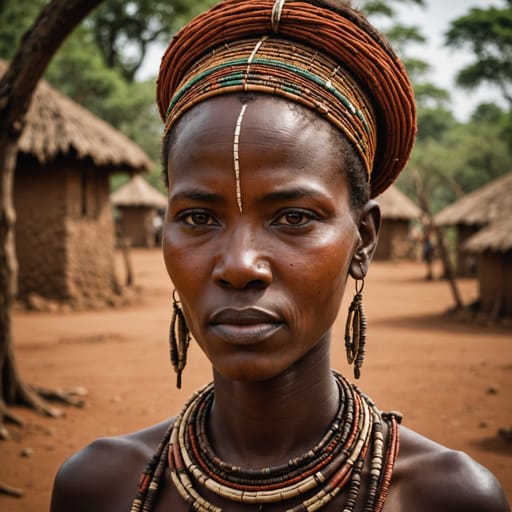
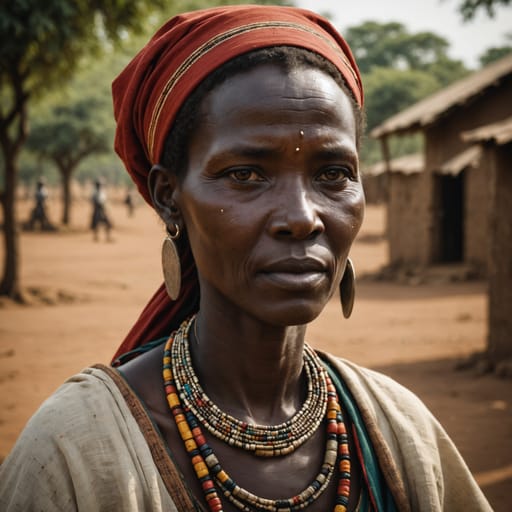
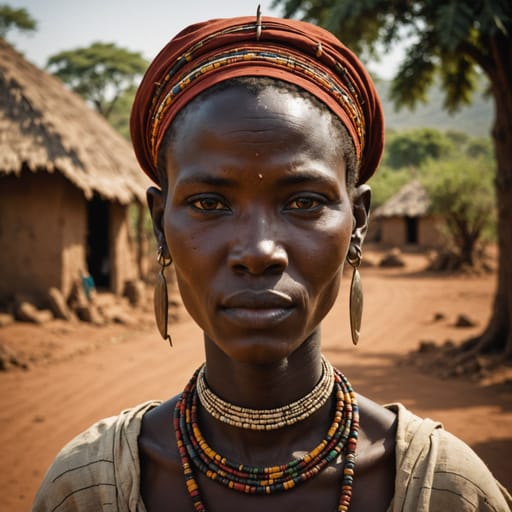
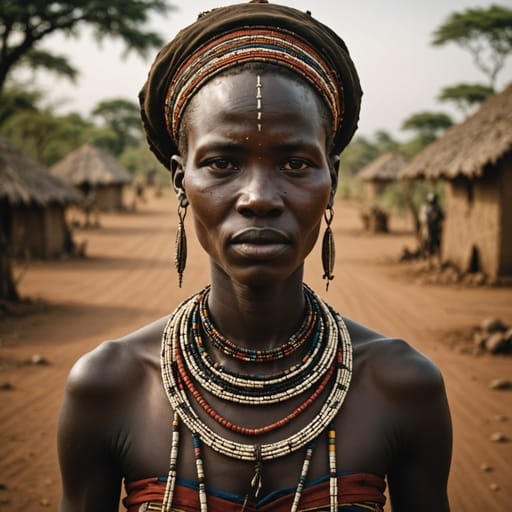
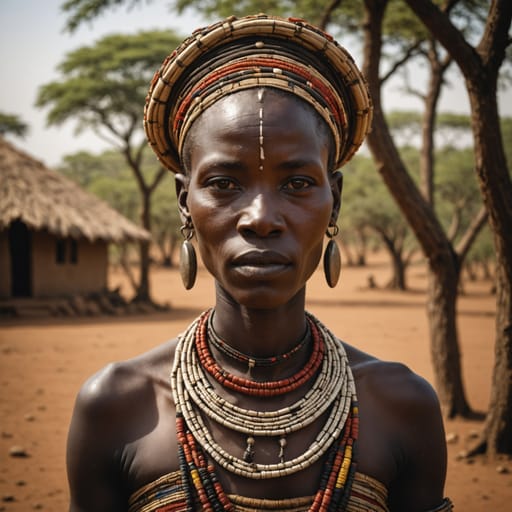
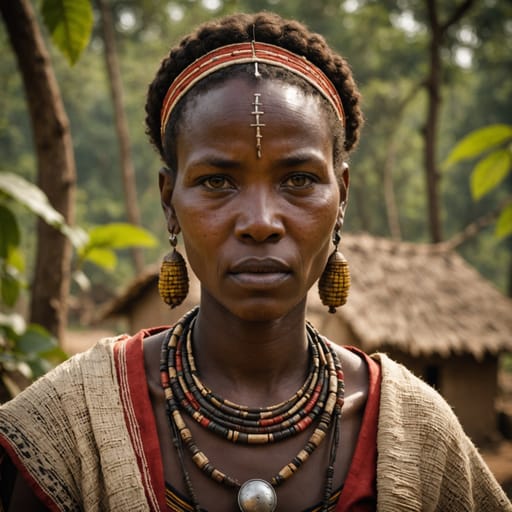
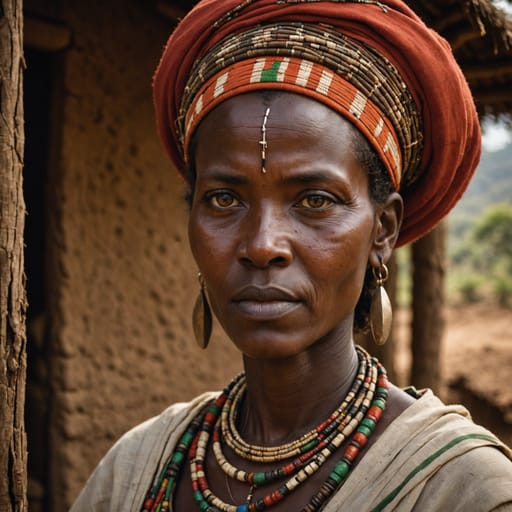
Typical Karo Phenotypes
Reference for AI generation: hair, eyes, skin, facial structure, build
Karo Body & Anatomy Reference
Per-feature anatomical profile for AI nude generation: Cushitic / Nilo-Cushitic East African phenotype
Karo Boobs & Breasts
The typical Karo bust is small-to-medium-cup, high-set, conical, in line with the wider Cushitic / Nilo-Cushitic East African pattern. Areolas usually fall in the 28-38mm range, with moderate-to-high areolar pigmentation against the brown-to-deep-brown skin tone. Compared with the lateral spread of the West African phenotype, Karo breasts sit forward and are generally firmer and less projecting than the African-American or West African norm. A faithful AI render of Karo tits keeps that shape and areola size.
Karo Ass & Hips
Butt shape among Karo women: small-to-medium, high-set, rounded, over narrow-to-medium iliac crests, longer torso-to-leg ratio. This follows Cushitic / Nilo-Cushitic East African ancestry and looks quite unlike the wide-set heavy-projection West African or African-American norm. An accurate Karo ass in adult AI imagery keeps both the silhouette and the overall build (lean ectomorph-to-mesomorph) instead of a generic average.
Karo Vagina & Pussy
Vulvar anatomy among Karo women: brown-to-deep-brown labial pigmentation, narrow-to-medium labia minora projection. Pubic hair tends to be tightly-coiled coarse texture, densely distributed, in the usual inverted-triangle pattern. Both follow Cushitic / Nilo-Cushitic East African pigmentation, which is why Karo pussy renders should not fall back on a pale, sparse Western template.
Karo Dicks & Penis
The Karo cock profile, from Cushitic / Nilo-Cushitic East African anthropometric data: regional mean ~13.5cm erect; moderate girth, ~12cm circumference; deeper-pigmented than the West African norm. Pubic hair has a tightly-coiled coarse texture and forms the usual inverted-V pattern. Whether Karo men are circumcised follows religious and cultural practice rather than phenotype.
Karo Body, Curves & Build
Build and curves among Karo women follow the Cushitic / Nilo-Cushitic East African pattern: lean ectomorph-to-mesomorph, mean adult female BMI 19-22. Proportions matter as much as skin tone, so Karo figures should keep their regional height and limb ratios.
Karo Skin Tone & Hair Texture
The Karo skin range is brown to deep brown (Fitzpatrick V-VI), and hair tends to be tight 4A-4C coil, often worn natural or in braided/twisted protective styles. That combination marks the Cushitic / Nilo-Cushitic East African phenotype, and skin tone is the trait AI generators most often get wrong for Karo women.
Explore phenotype categories
Structured taxonomy with peer-reviewed scales · 22 anatomical categories
Erotic Poses & Sex Positions
From the pose catalog: 219 named positions with reference skeletons
Frequently asked questions about Karo people
Where is the Karo homeland?
The Karo homeland is Lower Omo River (Korcho, Dus), South Omo Zone, southern Ethiopia in Eastern Africa.
What language do Karo people speak?
Karo people primarily speak Karo (Omotic; Afroasiatic).
What religion do Karo people practice?
The predominant religion among Karo people is Traditional animism.






Make your own Karo images
Five a day, free, no credits to buy. The studio starts from this group's phenotype data, so you can set body type, pose and style and keep the traits accurate.
Start with Karo